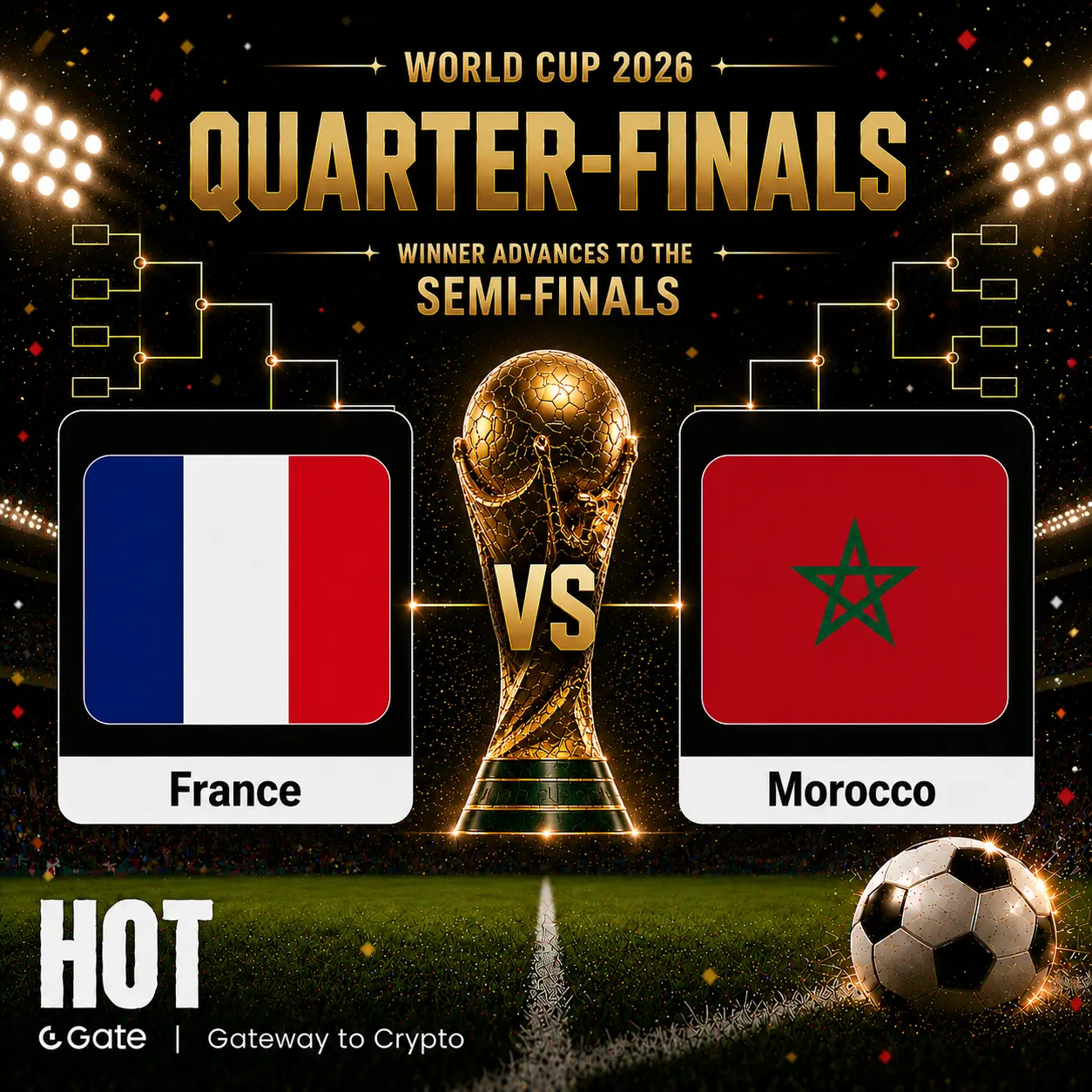
Five wins, one draw, versus four wins: a direct comparison of performance data
France's performance in this World Cup has been dominant. They remain undefeated in five matches, scoring 14 goals and conceding only 2. The front trio of Mbappé, Olise, and Dembélé boasts astonishing attacking power—Mbappé has already scored 7 goals and is a strong contender for the Golden Boot; Olise has 5 assists, leading the assist chart. France eliminated Paraguay 1-0 in the Round of 16, with Mbappé's penalty sealing the victory—an unglamorous but typical trait of a tournament-winning team: relying on key players' individual ability to solve problems when the game is tight.
Morocco's path to the knockout stage has been much tougher. They were in the same group as Brazil in the group stage and faced the Netherlands in the Round of 16. With 4 wins and 1 draw in five matches, they remain unbeaten, demonstrating the resilience of the "North African lions" with their tough defense. They eliminated the Netherlands on penalties in the Round of 16 and defeated co-host Canada 3-0 in the quarterfinals. Notably, Morocco has reached the top eight in two consecutive World Cups, becoming the first African team to achieve this feat in World Cup history.
From an attacking perspective, the gap is even more evident. France's expected goals (xG) per game is 2.6, while Morocco's is 0.8; France averages 19.2 shots per game, Morocco's opponents only 7.1. This reflects a "full control" versus "full suppression" dynamic—France controls the game tempo and creates more chances, while Morocco limits opponents' attacking efficiency through compressed space.
Historical encounters and personnel ties: the script from four years ago and distant memories
The connection between the two teams goes beyond data. Four years ago, in the Qatar World Cup semifinals, France beat Morocco 2-0, with goals from Théo Hernandez and Kolom Muani. That match kept Morocco out of the final and remains etched in the minds of the Moroccan team.
Earlier historical matchups also favor France. They have played each other six times, with France winning four and drawing two, remaining unbeaten. In World Cup finals, they have met only once—1938, with France winning 3-1 in the Round of 16. However, the relevance of these historical stats should be viewed cautiously: their last official match was four years ago, and both teams have undergone significant roster changes since.
This matchup is called the most unconventional "derby" in World Cup history because of the many personnel connections. Over half of Morocco's squad grew up in the French youth training system. Mbappé and Morocco captain Achraf Hakimi were former PSG teammates; Olise will soon join Bayern Munich with Morocco midfielder Saïbari. This web of familiarity makes tactical battles more subtle—both sides know each other's playing habits and movement patterns inside out.
Squad depth: why France commands 63% market confidence
France's 63% win probability isn't just a number. From a roster perspective, France has a balanced and complete three-line setup: goalkeeper starts between the sticks, while the back three is built by Koundé, Saliba, and Upamecano, with Théo and Gusto on the flanks; midfielders Chouaméni and Rabiot cover every inch; and stars like Mbappé, Dembélé, Olise, Bahlakoa, Doue, and others. The team's total market value is €1.47 billion, ranking first in the world.
France's greatest advantage lies in its depth—every position has world-class players ready. In knockout tournaments, where matches are frequent and intense, squad depth provides flexibility for injuries, fatigue, and tactical changes. Deschamps has two top-tier players for each position, with substitutes capable of starting for many teams.
Morocco also boasts a formidable lineup. Goalkeeper Bounou continues his top-level performance from the last World Cup; Achraf Hakimi, Mazraoui are both versatile in attack and defense; midfielder Saïbari started all five matches and scored three goals. However, Morocco's bench strength lags behind France's—there's a significant gap between starters and substitutes, and after intense defending, their stamina may sharply decline.
Tactically, France's attacking diversity is their biggest weapon—wing breakthroughs, interstitial runs, and multiple set-piece options. The only concern is that their full-backs push forward extensively, leaving gaps that Morocco's fastest counterattacks can exploit. Morocco employs a 5-4-1 defensive formation, with a compact 15-meter spacing between lines, and coordinated covering that leaves little room for through passes. This is a classic "spear" versus "shield" matchup.
Morocco's 14%: an underestimated chance of an upset?
Although the market assigns only a 14% chance for Morocco to win, there are several logical layers behind this figure that warrant careful interpretation.
First, Morocco's defensive stats are comparable to France's. France's expected goals against (xGA) is 0.7, Morocco's is 0.6. Morocco has kept three clean sheets in this tournament. In their 2022 campaign, they limited goals from Croatia, Belgium, Spain, and Portugal to under one. This defensive discipline is highly valuable in knockout matches—if their defense isn't breached, the game remains open until the final whistle.
Second, Morocco's counterattack efficiency is very high. Data shows 67% of their goals come from counterattacks or set pieces. Achraf Hakimi's ability to push forward on the right and Mazraoui's all-around play on the left form Morocco's most lethal counterattack weapons. If France pushes high up front and leaves space behind, Morocco can capitalize on transition opportunities.
Third, psychological factors shouldn't be overlooked. Morocco tends to perform better when underestimated—four years ago, they reached the top four almost unnoticed. For Morocco, this is a match with no meaningful downside: winning would make history, losing would be understandable. For France, as reigning champions and favorites, every match carries the pressure to win.
Additionally, the 25% draw probability is noteworthy. This is significantly higher than Morocco's 14%, reflecting a core market judgment: Morocco is most likely to aim for a result that drags the game into extra time or penalties. Their defensive and counterattack tactics proved effective in 2022, and dragging strong teams into extra time is a realistic path for underdogs.
Three key tactical variables that decide the match
Variable 1: Can France break the deadlock before 60 minutes? The first 60 minutes are seen as Morocco's golden window. They will use high-intensity midfield pressing to cut off France's passing lanes and exploit the moment when France's full-backs push forward for quick counters. If France scores in the first half, Morocco's defensive plan will be compromised—pushing for offense means abandoning their strongest defensive system. If the score remains 0-0 after 60 minutes, the situation will gradually tilt in France's favor—Morocco's stamina will decline, exposing defensive gaps.
Variable 2: Set pieces could be the decisive factor. Morocco has scored 4 goals in four matches, three from set pieces or penalties. France often relies on set pieces to break down tight defenses. The efficiency of both teams in set-piece offense and defense could directly determine the final result.
Variable 3: The duel between Mbappé and Achraf Hakimi. Both were PSG teammates and know each other well. Mbappé is the tournament's top scorer with 7 goals; Achraf Hakimi is Morocco's most reliable defender and counterattack initiator. The outcome of this matchup will significantly influence the game.
The limits of prediction market logic: probabilities are not prophecies
It's important to emphasize that the probabilities given by prediction markets are not certainties but collective judgments based on current information. A 63% chance of France winning means the market believes France has nearly a two-in-three chance of victory in regulation time, but also implies a more than one-in-three chance that the game won't end in France's favor within regulation. The 37% margin includes the 25% draw and 14% Morocco win.
From a broader perspective, Gate prediction market data shows France's chance of winning the tournament is as high as 33%, far ahead of Argentina and Spain at 19%. This indicates the market not only favors France beating Morocco but also expects France to go all the way. The quarterfinal match against Morocco is seen as one of the weaker matchups in terms of team strength. If they advance, their potential semifinal opponents would be Spain or Belgium—this path, while challenging, is relatively more manageable compared to the lower half of the bracket where Argentina and England might meet in the semifinals.
However, the beauty of football lies in its unpredictability. Morocco in 2022 proved that on-paper strength and market probabilities don't fully determine the outcome. A 14% chance is low but not negligible. For investors and fans following prediction markets, understanding the logic behind probabilities is more valuable than simply focusing on the numbers.
FAQ
Q: How does Gate prediction market calculate France's 63% win probability?
The market's probabilities are not generated by a single algorithm but are formed through collective pricing based on buy-sell shares of "result options." When more funds are bet on France, the price of France's winning share rises, implying a higher implied probability. The 63% reflects the consensus judgment of current market participants based on team rosters, form, and historical matchups.
Q: Does Morocco's 14% win probability mean the market is completely dismissive of them?
Not exactly. A 14% chance indicates the market believes Morocco has about a one-in-seven chance of winning in regulation. Considering Morocco's defensive resilience, counterattack efficiency, and unbeaten streak of 34 matches, this probability shows cautious recognition of their potential to cause an upset. Including the 25% draw probability, Morocco's total probability of not losing in regulation is about 39%.
Q: How does this match affect France's chances of winning the tournament?
This match is France's first knockout hurdle on the road to the title. Gate's data shows France's overall chance of winning the tournament is 33%, the highest among quarterfinalists. If they beat Morocco, their semifinal opponent will be the winner between Spain and Belgium. The upper half of the bracket is relatively less competitive, making this game a critical step France must take.
Q: Why is the draw probability (25%) higher than Morocco's win probability (14%)?
This distribution reflects the market's core judgment: Morocco is most likely to aim for a result that extends the game into extra time or penalties. Their defensive system and counterattack tactics proved effective in 2022, making dragging strong teams into extra time a realistic strategy for underdogs.
Q: What exclusive activity has Gate prediction market launched for this key France vs Morocco match?
Gate prediction market has launched the 每日焦点赛事预测 challenge around the 2026 World Cup quarterfinals, with this France vs Morocco game designated as one of the official challenge events. During the event, users who register and participate in any key match prediction with a trading volume of at least 50 USDT will receive a 10 USDT reward. Correct predictions do not affect eligibility. (Limited to the top 100 daily participants, with a maximum total reward of 200 USDT per person). The four quarterfinal matches share a total prize pool of 4,000 USDT, and new users can earn an additional 10 USDT exclusive reward.