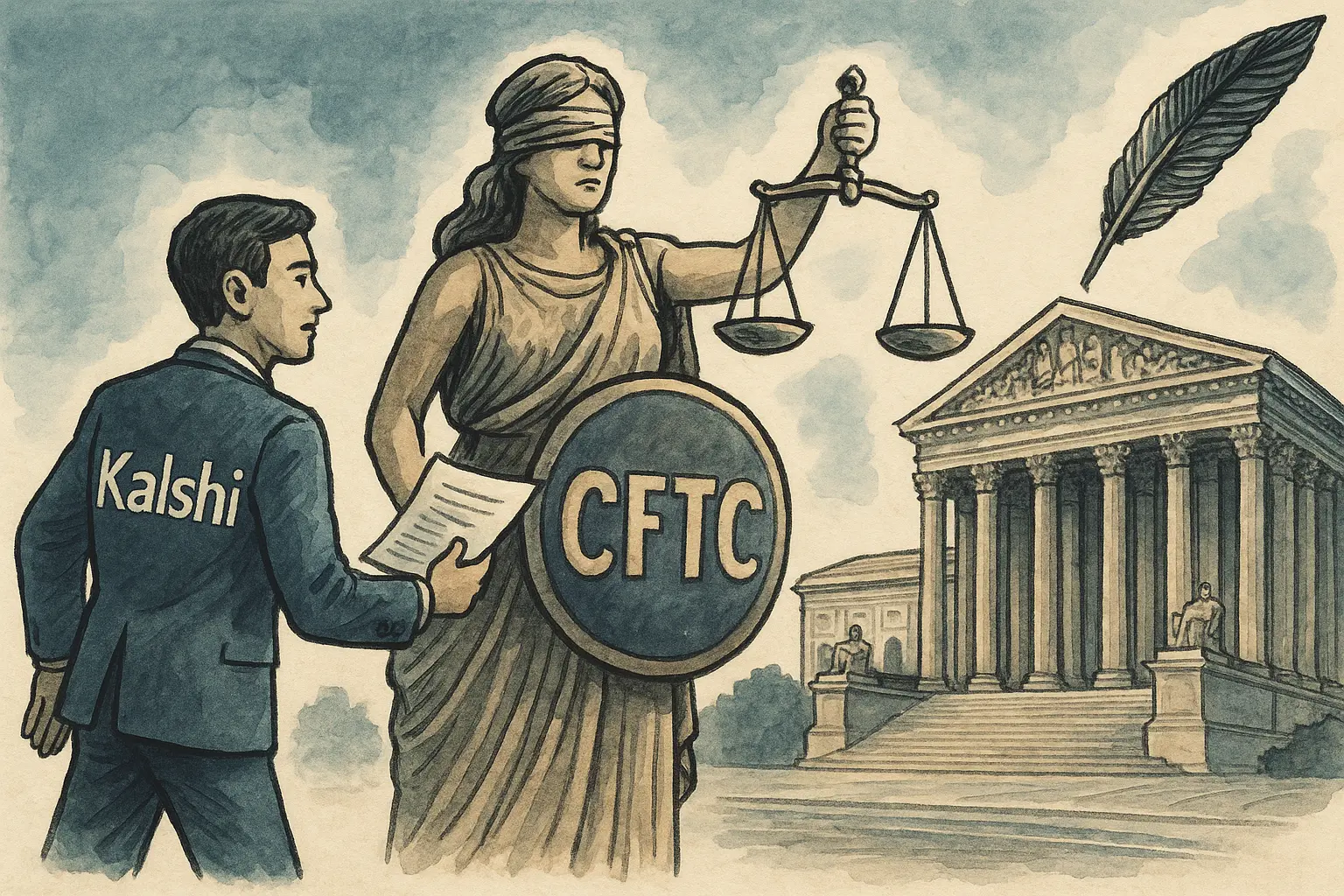
Prediction market platform Kalshi has appealed a ruling by the state of Nevada banning its event contracts, and the U.S. Ninth Circuit Court of Appeals held oral arguments on April 17, but did not issue an immediate decision after the hearing. The core dispute in the case is whether Kalshi’s event contracts are “swap agreements” that fall under the jurisdiction of the Commodity Futures Trading Commission (CFTC), or whether they must be regulated by state-level activity under gambling licensing regimes. Multiple legal experts predict that the case may ultimately be appealed to the U.S. Supreme Court.
Case Core: A Head-On Conflict Between CFTC Federal Jurisdiction and State Gambling Regulations
Kalshi’s key defense position is that the event contracts provided on its platform are “swap transactions” under the framework of the Commodity Exchange Act, and should be subject to exclusive federal oversight by the CFTC rather than constrained by state gambling regulations. The lower court previously ruled that Kalshi’s operations in Nevada require a gambling license issued by the state government, and this appeal challenges that ruling.
Attorney Colleen Sinzdak, representing Kalshi, pointed out during the hearing: “I think what we really need to avoid is state court and federal court simultaneously considering exactly the same issues and potentially reaching different results.” CFTC Chair Michael Celig has also explicitly supported the federal-jurisdiction position in lawsuits between the Crypto.com prediction market and Nevada’s regulators.
Current Multi-State Enforcement: From Arizona Criminal Charges to Federal Court Blockage
The arguments before the court also revealed that state-level enforcement actions against prediction markets have spread across multiple jurisdictions, with direct conflicts emerging at both the federal and state levels:
Arizona: Filed criminal charges against Kalshi event contracts, but were blocked last week by a federal court, prohibiting Arizona authorities from taking enforcement action against Kalshi under state gambling laws
Nevada: The lower court ruled that Kalshi must hold a gambling license, triggering the Ninth Circuit appeal
Multiple States: Have taken enforcement actions of varying degrees against prediction market platforms such as Kalshi and Polymarket
This pattern reflects a fundamental disagreement between federal and state regulatory frameworks on how to characterize prediction markets—an underlying reason this case may ultimately require a final ruling by the Supreme Court.
Supreme Court Outlook: Coinbase’s General Counsel’s Long-Term Prediction
Although not a party to this case, Coinbase Chief Legal Officer Paul Grewal posted after the hearing stating: “The questions raised during oral argument can’t reliably predict the court’s leanings. In any event, I stand by my long-standing prediction—that the Supreme Court will decide whether sports contracts on designated contract markets are swap transactions, and thus subject to the CFTC’s exclusive jurisdiction.”
Any ruling by the Ninth Circuit will directly affect the operating framework of prediction market platforms such as Kalshi and Polymarket. This market—estimated to reach a size of $1 trillion by 2030—is currently facing ongoing legal uncertainty due to the ambiguous zone between state and federal regulation. Notably, in its 2018 ruling in Murphy v. NCAA, the U.S. Supreme Court granted broad power to states to regulate sports betting. How this precedent will interact with the present case is a key focus for legal observers.
Frequently Asked Questions
Why were Kalshi’s event contracts deemed to require a gambling license?
The lower court in Nevada determined that, structurally, Kalshi’s event contracts are similar to gambling activities—users bet on the outcome of a specific event—therefore they should be subject to state gambling regulations and require a license. Kalshi objected, arguing that its contracts are financial derivatives regulated by the CFTC and that state gambling laws should not apply. This classification dispute is the central legal issue throughout the entire litigation.
What role does the CFTC play in this case?
While the CFTC is not a direct party to the lawsuit, its position is crucial. CFTC Chair Michael Celig has clearly supported the stance that prediction market event contracts fall within the scope of federal regulation. If the Supreme Court ultimately rules that the CFTC has exclusive jurisdiction, it would directly limit the ability of states to take independent enforcement actions against prediction markets—constituting a fundamental change to the nationwide industry landscape.
How will the outcome of this case affect the overall prediction market industry?
If the claim of federal jurisdiction is supported, platforms such as Kalshi could expand nationwide under a unified framework, ending the fragmented pattern in which states handle matters independently. If the states’ claims are supported, the industry would continue to face high compliance costs from applying for licenses state by state—similar to the current landscape of online sports betting—and could significantly slow the industry’s overall growth rate.


