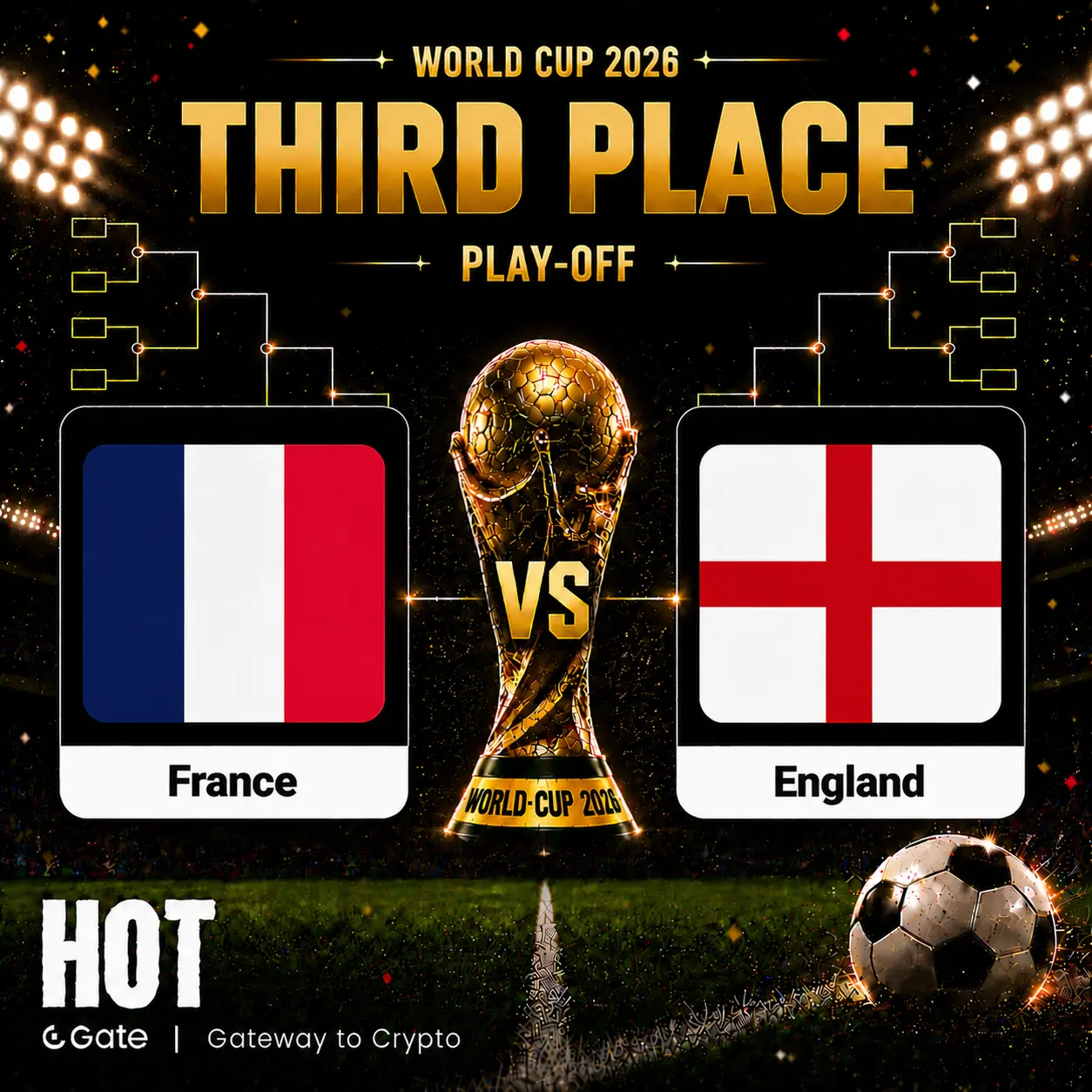
How the ways of losing in the semifinals affect expectations for the third-place match
France was comprehensively outplayed in the semifinals, losing to Spain 0:2. The midfield lost control throughout the match, and the front line went silent. As the tournament’s top title favorite—winning their first 6 matches and scoring 16 goals while conceding just 2—this defeat’s impact on team morale cannot be understated.
England’s exit, meanwhile, was more dramatic. With a one-goal lead, Tuchel chose to pull back defensively, only to be overturned by Argentina with two late goals. The match statistics—possession 35% to 56% and shots 5 to 15—have pushed the German coach’s conservative strategy to the forefront of public debate.
The psychological impact pathways of the two different defeats are entirely different. France suffered a full-on loss after being suppressed on all fronts, exposing problems at the system level; England, after holding the initiative, was reversed due to tactical decision mistakes—this kind of regret, “they could have won,” often leaves deeper psychological scars. From the perspective of market pricing, England’s psychological recovery difficulty is theoretically higher than France’s, which to some extent explains why the prediction market assigns France a greater win-rate weight.
Deschamps’ farewell battle and Tuchel’s redemption battle: how competitive drive is priced
Competitive drive in a third-place match is never equal. For Deschamps, this match has special meaning—it will be the final game of his 14-year tenure as head coach of the French national team. Since taking charge of the “Les Bleus” in 2012, Deschamps has led the team to win the 2018 World Cup and finish runner-up in the 2022 World Cup, ushering in France’s “golden era.” France defender Konaté said: “We want to repay our coach. He has given a lot to the team, and we should be grateful to him.”
France’s star forward Mbappé currently shares the top of the Golden Boot race with Messi on 8 goals. The realistic goal of going for the Golden Boot adds an extra variable of motivation to this third-place match.
For England, Tuchel’s conservative strategy in the semifinals drew widespread criticism, making this third-place match an opportunity to redeem his reputation. Meanwhile, England has never won the World Cup third-place match—both times they participated in a third-place match ended in defeat. For a team that has not touched the World Cup title since 1966, a bronze medal is also among the best results in the program’s history in nearly 60 years.
This asymmetry in competitive drive—France has a sentimental motivation to “send off” a loyal servant, while England has a realistic need to “break history”—becomes a variable that is hard to quantify yet impossible to ignore in market pricing.
Asymmetry in squad completeness: a variable fully priced by the market
The most critical information gap before the match lies in squad completeness. Confirmed by reports from multiple sources, France will make wholesale rotations for the third-place match. Saliba, who was injured in the semifinal, is confirmed to miss the game due to a back injury. Upamecano and Marcus Thuram are also expected not to start. According to RMC Radio, France will replace as many as 7 starting players in one go—only Mbappé and the goalkeeper Maignan are basically confirmed to continue starting.
France’s expected starting lineup will mainly feature fringe players: Gusto, Konaté, Lacroix, and Lucas at the back; Kanté in midfield alongside the 18-year-old newcomer Emery; and Cherki, Thuram, and Akliouch upfront. The cohesion, attacking impact, and intensity of duels of this lineup in major tournaments are far inferior to the core starters. France’s high-speed counterattacking system—what they rely on to win—is directly weakened by much of its effectiveness.
By contrast, England’s rotation will be minimal. Tuchel has clearly kept Kane and Bellingham in the central spine, only rotating a few fringe players who see very limited minutes. The Three Lions’ overall attack-and-defense system is intact, and the team is well-coordinated, with stable output capabilities both in midfield progression and wide attacks.
The asymmetry in squad completeness is the core fundamental basis for the Gate prediction market’s figure of a 52% win rate for France. The market is not evaluating “a full-strength France vs a full-strength England,” but pricing “France with major rotation vs England that remains largely complete.” It’s worth noting that the 67% win rate already includes full digestion of France’s rotation. If France fielded its full starting XI, this number could be higher.
How the Golden Boot suspense drives the on-field behavior of key players
In this World Cup’s top scorers chart, Messi and Mbappé are tied with 8 goals each; the former is currently first due to one more assist. Kane and Bellingham each have 6 goals. In World Cup history, third-place matches are often goal-fests—both sides tend to be relatively relaxed in mindset, and they often produce open, end-to-end exchanges.
Mbappé only needs one goal to temporarily take the lead in the scorers list; if Kane and Bellingham were to pull off a “hat-trick,” a comeback would still be possible. Kane is already 32, and this World Cup could be his last. The suspense of the Golden Boot is not only a pursuit of personal glory—it will directly shape key players’ on-field behavior patterns, including shot selection, run tendencies, and even how much defensive effort they commit.
From the pricing logic of a prediction market, the presence of Golden Boot competition increases the probability of goals in this match, while also raising uncertainty about the match’s overall trajectory. When a core player’s personal targets do not fully align with the team’s collective goals, the actual course of the game may deviate from what tactical planning on the board would suggest. This “tension between personal incentives and collective objectives” is a variable the market struggles to capture with precision.
Do the historical head-to-head records provide pricing power for psychological advantage?
The two teams have faced each other 32 times in men’s senior international matches: England has the edge with 17 wins, 5 draws, and 10 losses. In World Cup matches specifically, the teams have met three times previously, with England also ahead—2 wins and 1 loss.
However, judging by recent head-to-head results, France holds a clear advantage—France has won 6 of their last 9 meetings, with 2 draws and 1 loss. France has remained unbeaten against England in the past four major tournaments. The most lingering grievance for the Three Lions is undoubtedly the 2022 Qatar World Cup quarterfinal: then Joaoaméni and Giroud delivered for France, Kane missed a key penalty, and France barely got through.
The reference value of historical data lies in providing a benchmark for comparing the teams’ strength across different periods. But applying it directly to this match requires extra caution—France’s major rotation breaks the continuity of “France” as the consistent subject in the historical head-to-head records. When the market gives France a 67% win rate, it is more based on currently observable lineup options, form, and competitive drive, rather than psychological advantage from past head-to-head meetings.
What does the prediction market’s pricing mechanism of 52% vs 25% mean?
The Gate prediction market’s probability distribution of France at 52% and England at 25% essentially reflects the result of market participants voting with capital. The core pricing logic of prediction markets is “money talks”—each participant’s trading behavior continuously updates the market’s collective judgment of how likely the event is.
This probability distribution can be understood across several dimensions. First, even with rotation, France’s depth still outperforms most teams—its substitutes include world-class veterans like Kanté and highly watched newcomers like Emery. Second, while England has the edge in squad completeness, the tactical shortcomings and psychological resilience weaknesses exposed in the semifinal have not disappeared. Third, the nature of a third-place match makes uncertainty about the game’s direction higher than in regular knockout rounds—when part of the pressure of “must win” turns into the looseness of “can lose,” the probability of an upset naturally rises.
It should be noted that the prediction market’s probabilities are not an exact forecast of the match outcome, but an immediate measurement of market consensus. A 67% win rate means the market believes France’s probability of winning in regular time is about two-thirds. This pricing already fully incorporates the combined impact of multiple variables, including France’s rotation, England’s completeness, Deschamps’ farewell battle, and the Golden Boot competition.
FAQ
Q1: What exactly does Gate’s 52% win rate refer to?
It refers to the probability that the market capital bets France will defeat England within 90 minutes of regular time (including stoppage time) at 52%, with England’s win probability at 25%. This data is generated from the collective trading behavior of Gate prediction market participants, reflecting market consensus rather than a precise prediction.
Q2: Why does France need wholesale rotation?
There are three main reasons: first, after losing 0:2 in the semifinal, the whole team’s morale has been hit, and a third-place medal has limited appeal for a title favorite; second, the schedule is tight—many starters are playing with injuries, and the coaching staff need to avoid injury risks; third, this is Deschamps’ farewell match, and the team uses it to complete the transition between old and new.
Q3: Is it true that England has never won a World Cup third place?
Yes. England has previously participated in the World Cup third-place match twice, and both ended in defeat. If they can win this match, it will be the first time in Three Lions history that they earn the World Cup bronze medal.
Q4: What practical impact does the Golden Boot competition have on the match?
Mbappé (8 goals) and Messi are tied at the top of the scorers chart, while Kane and Bellingham each have 6 goals. The Golden Boot competition will drive core players to put more effort into the attacking end, which may make the match more open and increase end-to-end exchanges. At the same time, it may also affect how much players commit on the defensive end.
Q5: Will the prediction market probabilities change as the match gets closer?
Yes. Prediction market probabilities are dynamically updated—any new information that affects the match outcome (such as confirmation of the starting lineup, pre-match injury updates, etc.) will trigger market participants’ trading behavior to adjust, thereby pushing changes in the probability distribution.