#KelpDAOBridgeHacked
KelpDAO Bridge Exploit: Technical Breakdown & Industry Impact
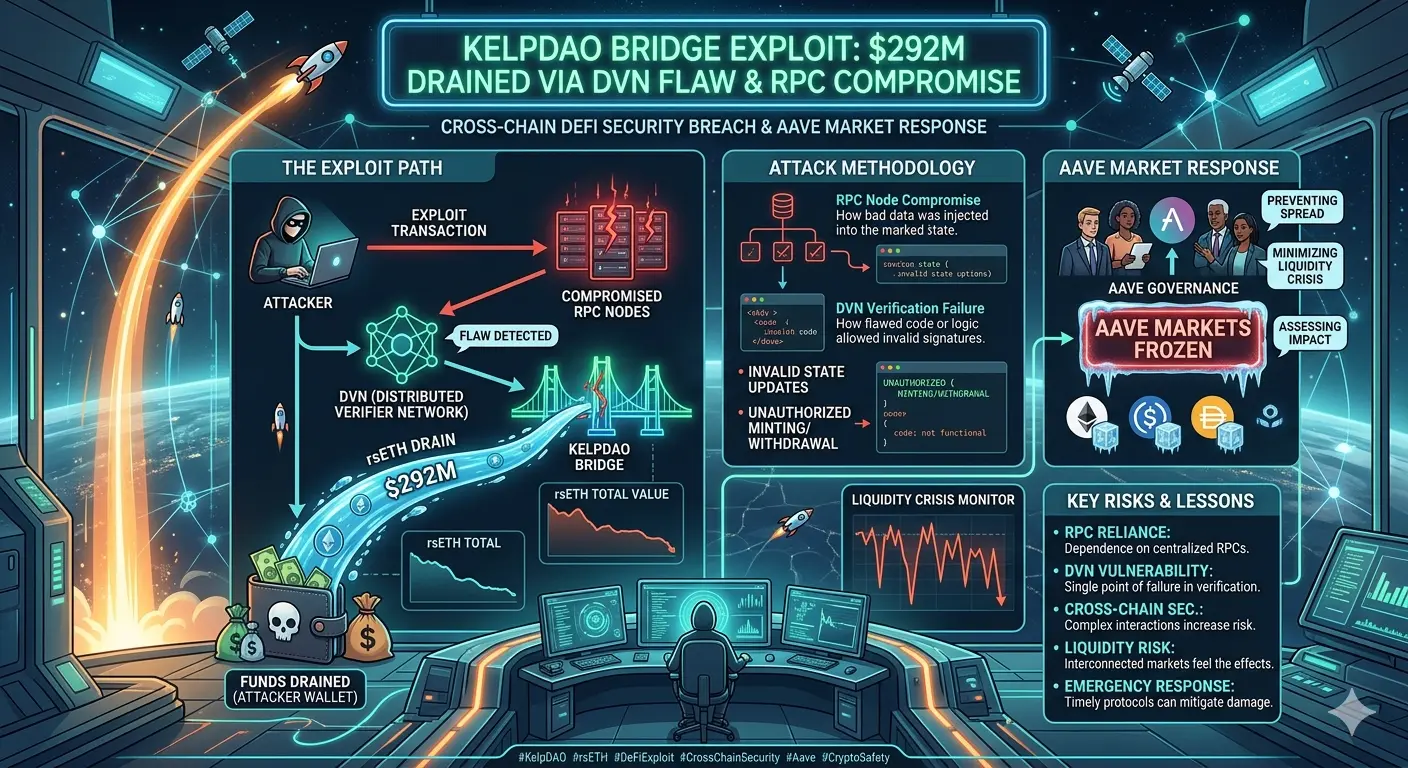
On April 18, 2026, KelpDAO's rsETH cross-chain bridge suffered the largest DeFi exploit of 2026, with attackers draining approximately 116,500 rsETH valued at roughly $292 million. The incident represents approximately 18% of rsETH's total circulating supply and has triggered cascading effects across the DeFi ecosystem.
Attack Vector Analysis
The exploit was executed through a sophisticated multi-stage attack targeting LayerZero's infrastructure. Attackers first compromised two independent RPC nodes operated by LayerZero Labs, replacing legitimate op-geth binaries with malicious versions. These poisoned nodes were specifically configured to deceive LayerZero's Decentralized Verifier Network (DVN) while maintaining truthful responses to other monitoring systems, effectively evading detection.
The attack sequence involved a coordinated DDoS strike against a third clean RPC node, forcing the DVN to failover to the compromised infrastructure. KelpDAO's bridge configuration utilized a 1-of-1 DVN setup, meaning only LayerZero Labs' DVN was required to validate cross-chain messages. The poisoned nodes successfully confirmed a fabricated burn transaction on Unichain, which the EndpointV2 relay system propagated to KelpDAO's OFT Adapter, triggering the unauthorized release of mainnet reserves.
Post-exploitation, the attacker systematically laundered the stolen rsETH across multiple wallets, depositing funds as collateral on Aave V3 markets across Ethereum and Arbitrum. The attacker secured approximately 75,700 WETH on Ethereum and 30,800 WETH on Arbitrum, achieving loan-to-value ratios near 99% before protocol-level freezes halted further borrowing.
Attribution & Threat Actor Profile
Security researchers and blockchain analytics firms have attributed the attack to North Korea's Lazarus Group, specifically the TraderTraitor cluster. The operational characteristics align with documented Lazarus methodologies: patient intrusion tactics, manipulation of trusted infrastructure, and sophisticated detection suppression mechanisms. The malware employed self-destructed following the exploit, systematically erasing forensic evidence from compromised systems.
Protocol Response & Containment
Aave responded within hours by freezing rsETH markets across V3 and V4 deployments, including SparkLend integration. The protocol currently faces approximately $177 million in bad debt, predominantly concentrated on Arbitrum. Total Value Locked across Aave ecosystem dropped from $26 billion to $18 billion, representing $8-14 billion in outflows as liquidity providers withdrew capital.
The contagion extended beyond Aave, with over 15 protocols implementing emergency bridge pauses. WETH lending pools experienced 100% utilization rates, creating secondary liquidation risks for leveraged positions. KelpDAO has blacklisted the exploiter addresses and claims to have prevented an additional $95 million in follow-up attack attempts.
Disputed Root Cause Analysis
A significant dispute exists between KelpDAO and LayerZero regarding fundamental responsibility. LayerZero maintains that KelpDAO's 1-of-1 DVN configuration deviated from recommended security practices, emphasizing that the protocol itself contained no vulnerabilities and that the incident was isolated to rsETH infrastructure. LayerZero has subsequently patched affected DVN and RPC systems.
KelpDAO counters that LayerZero's default documentation and quickstart configurations recommended the 1-of-1 setup, arguing that the infrastructure provider bears responsibility for RPC node security. Both parties agree that no smart contract bugs were exploited; the root cause centers on trust assumptions within single-point-of-failure configurations.
DeFi Security Implications
The incident exposes critical vulnerabilities in cross-chain bridge architectures, particularly regarding RPC infrastructure security. RPC nodes have emerged as a systemic weak link, with most protocols relying on a limited set of providers without adequate failover diversification. The exploit demonstrates that even sophisticated multi-signature and verification systems can be compromised when underlying data sources are poisoned.
Industry analysts recommend immediate implementation of multi-DVN configurations, diversified RPC provider networks, and real-time configuration auditing systems. The modular security architecture of LayerZero contained blast radius to rsETH specifically, with no other OFT or OApp contracts affected, suggesting that cross-chain messaging frameworks can maintain resilience even during targeted infrastructure attacks.
Current Status & Recovery Efforts
Aave governance is currently debating debt socialization mechanisms to address the bad debt situation. KelpDAO, LayerZero, and Aave have established coordination channels for recovery operations. Blockchain security collective Seal-911 is actively tracking fund movements, with portions of stolen assets identified flowing through Tornado Cash and other obfuscation protocols. Whitehat negotiation channels remain open, though no recovery has been confirmed at time of writing.
The exploit establishes a new record for 2026 DeFi hacks, surpassing the $285 million Drift Protocol incident from April 1. The incident reinforces ongoing concerns regarding bridge security as the primary attack vector in DeFi, with cross-chain infrastructure remaining the ecosystem's most contested security frontier.
#KelpDAO #DeFiSecurity #BridgeExploit #CryptoNews
KelpDAO Bridge Exploit: Technical Breakdown & Industry Impact
On April 18, 2026, KelpDAO's rsETH cross-chain bridge suffered the largest DeFi exploit of 2026, with attackers draining approximately 116,500 rsETH valued at roughly $292 million. The incident represents approximately 18% of rsETH's total circulating supply and has triggered cascading effects across the DeFi ecosystem.
Attack Vector Analysis
The exploit was executed through a sophisticated multi-stage attack targeting LayerZero's infrastructure. Attackers first compromised two independent RPC nodes operated by LayerZero Labs, replacing legitimate op-geth binaries with malicious versions. These poisoned nodes were specifically configured to deceive LayerZero's Decentralized Verifier Network (DVN) while maintaining truthful responses to other monitoring systems, effectively evading detection.
The attack sequence involved a coordinated DDoS strike against a third clean RPC node, forcing the DVN to failover to the compromised infrastructure. KelpDAO's bridge configuration utilized a 1-of-1 DVN setup, meaning only LayerZero Labs' DVN was required to validate cross-chain messages. The poisoned nodes successfully confirmed a fabricated burn transaction on Unichain, which the EndpointV2 relay system propagated to KelpDAO's OFT Adapter, triggering the unauthorized release of mainnet reserves.
Post-exploitation, the attacker systematically laundered the stolen rsETH across multiple wallets, depositing funds as collateral on Aave V3 markets across Ethereum and Arbitrum. The attacker secured approximately 75,700 WETH on Ethereum and 30,800 WETH on Arbitrum, achieving loan-to-value ratios near 99% before protocol-level freezes halted further borrowing.
Attribution & Threat Actor Profile
Security researchers and blockchain analytics firms have attributed the attack to North Korea's Lazarus Group, specifically the TraderTraitor cluster. The operational characteristics align with documented Lazarus methodologies: patient intrusion tactics, manipulation of trusted infrastructure, and sophisticated detection suppression mechanisms. The malware employed self-destructed following the exploit, systematically erasing forensic evidence from compromised systems.
Protocol Response & Containment
Aave responded within hours by freezing rsETH markets across V3 and V4 deployments, including SparkLend integration. The protocol currently faces approximately $177 million in bad debt, predominantly concentrated on Arbitrum. Total Value Locked across Aave ecosystem dropped from $26 billion to $18 billion, representing $8-14 billion in outflows as liquidity providers withdrew capital.
The contagion extended beyond Aave, with over 15 protocols implementing emergency bridge pauses. WETH lending pools experienced 100% utilization rates, creating secondary liquidation risks for leveraged positions. KelpDAO has blacklisted the exploiter addresses and claims to have prevented an additional $95 million in follow-up attack attempts.
Disputed Root Cause Analysis
A significant dispute exists between KelpDAO and LayerZero regarding fundamental responsibility. LayerZero maintains that KelpDAO's 1-of-1 DVN configuration deviated from recommended security practices, emphasizing that the protocol itself contained no vulnerabilities and that the incident was isolated to rsETH infrastructure. LayerZero has subsequently patched affected DVN and RPC systems.
KelpDAO counters that LayerZero's default documentation and quickstart configurations recommended the 1-of-1 setup, arguing that the infrastructure provider bears responsibility for RPC node security. Both parties agree that no smart contract bugs were exploited; the root cause centers on trust assumptions within single-point-of-failure configurations.
DeFi Security Implications
The incident exposes critical vulnerabilities in cross-chain bridge architectures, particularly regarding RPC infrastructure security. RPC nodes have emerged as a systemic weak link, with most protocols relying on a limited set of providers without adequate failover diversification. The exploit demonstrates that even sophisticated multi-signature and verification systems can be compromised when underlying data sources are poisoned.
Industry analysts recommend immediate implementation of multi-DVN configurations, diversified RPC provider networks, and real-time configuration auditing systems. The modular security architecture of LayerZero contained blast radius to rsETH specifically, with no other OFT or OApp contracts affected, suggesting that cross-chain messaging frameworks can maintain resilience even during targeted infrastructure attacks.
Current Status & Recovery Efforts
Aave governance is currently debating debt socialization mechanisms to address the bad debt situation. KelpDAO, LayerZero, and Aave have established coordination channels for recovery operations. Blockchain security collective Seal-911 is actively tracking fund movements, with portions of stolen assets identified flowing through Tornado Cash and other obfuscation protocols. Whitehat negotiation channels remain open, though no recovery has been confirmed at time of writing.
The exploit establishes a new record for 2026 DeFi hacks, surpassing the $285 million Drift Protocol incident from April 1. The incident reinforces ongoing concerns regarding bridge security as the primary attack vector in DeFi, with cross-chain infrastructure remaining the ecosystem's most contested security frontier.
#KelpDAO #DeFiSecurity #BridgeExploit #CryptoNews