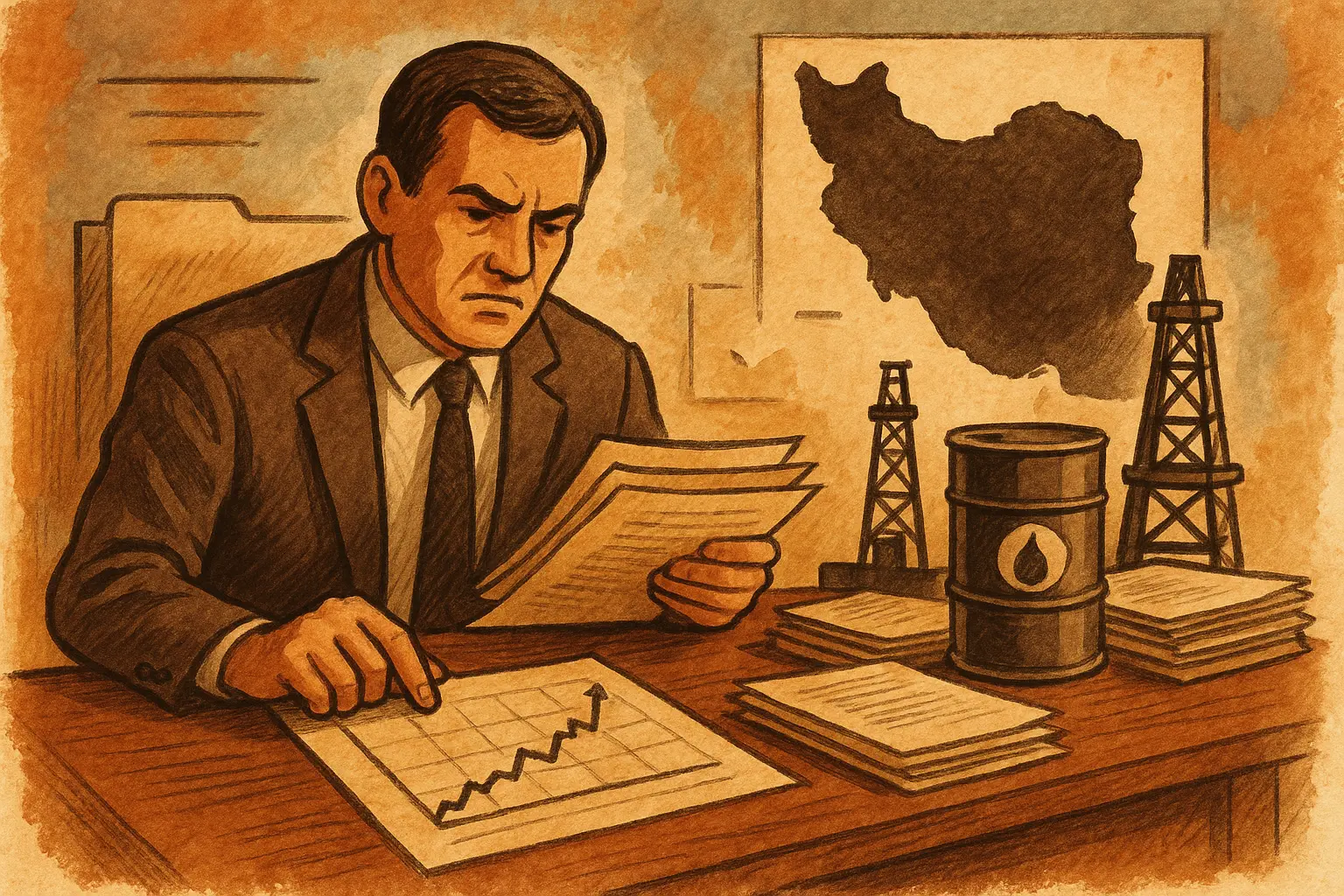
According to a report from Bloomberg on April 16, the U.S. Commodity Futures Trading Commission (CFTC) has opened investigations into multiple crude oil futures trades that occurred before major adjustments to the Trump administration’s Iran policy, involving two major derivatives trading venues: CME Group (Chicago Mercantile Exchange Group) and ICE (Intercontinental Exchange). According to Bloomberg, the CFTC has asked the two exchanges to submit relevant trading data, including the Tag 50 identification markers of the trading entities.
Scope of the investigation: Both CME Group and ICE platforms are under review
According to Bloomberg, CFTC investigators are focusing on at least two crude oil futures trades that took place on March 23 and April 7, respectively. Both exchanges have received requests to submit data.
A CME Group spokesperson issued a statement on the matter saying, “CME Group closely monitors the market and works closely with the CFTC to oversee trading activity.” The spokesperson also noted that any review of market conduct should cover all trading venues, including prediction markets that list relevant products but have limited transparency. ICE and the U.S. Immigration and Customs Enforcement agency declined to comment on the matter.
Key timeline: Oil-price bets totaling more than $950 million in the hours before the ceasefire
According to Bloomberg, in the hours before the U.S. and Iran announced a ceasefire last week, investors built up positions totaling about $950 million in the crude oil futures market; the crude oil market on March 23 also saw similar clustered trading.
The timing of the above trades coincided with key adjustment points in the Trump administration’s Iran policy, drawing attention from lawmakers and legal experts. The White House previously warned staff against using their positions to establish positions in the futures market during the continuing period of the war with Iran.
CFTC chair’s remarks to Congress and response from lawmakers
In written testimony submitted to Congress on Thursday, CFTC Chair Michael Celig said: “Anyone who commits fraud, manipulation, or insider trading in any of our markets—we will find you, and you will face the full weight of the law.” As reflected in the testimony obtained by Reuters, the above remarks did not refer to any specific investigation case. A CFTC spokesperson declined to comment further on the related investigations.
Last month, the CFTC’s head of enforcement publicly said the agency has noted public discussion about insider trading in the markets it regulates and is “closely watching.”
Massachusetts Democratic U.S. Senator Elizabeth Warren issued a statement on the matter, saying the CFTC’s investigation is “just the beginning,” and calling on regulators to further investigate insider-trading conduct by government officials. The White House has not yet responded to Warren’s statement.
Frequently asked questions
What specific trades are targeted by this CFTC investigation?
According to Bloomberg’s April 16 report, what the CFTC is重点 reviewing are two crude oil futures trades—taking place on March 23 and April 7, respectively—that occurred near the key timing of adjustments to the Trump administration’s Iran policy.
Which trading platforms are involved in this investigation?
According to Bloomberg, the investigation involves crude oil futures trading platforms under CME Group and ICE, and both exchanges have received CFTC requests to submit trading data, including the Tag 50 entity identification markers.
Did the CFTC chair confirm the existence of the investigation in Congress?
On Thursday, CFTC Chair Michael Celig stated in written testimony to Congress that he would pursue those responsible for wrongdoing. But according to the complete testimony obtained by Reuters, his remarks did not reference any specific investigation case; the CFTC spokesperson also declined to comment on this investigation.
Disclaimer: The information on this page may come from third parties and does not represent the views or opinions of Gate. The content displayed on this page is for reference only and does not constitute any financial, investment, or legal advice. Gate does not guarantee the accuracy or completeness of the information and shall not be liable for any losses arising from the use of this information. Virtual asset investments carry high risks and are subject to significant price volatility. You may lose all of your invested principal. Please fully understand the relevant risks and make prudent decisions based on your own financial situation and risk tolerance. For details, please refer to
Disclaimer.
Related Articles
Hyperliquid HIP-3 open contracts reach $2.38 billion, up 580% year over year
According to The Block’s report, Hyperliquid’s HIP-3 market open interest reached a peak of $2.38 billion in April, but has recently fallen to $2.1 billion. TradeXYZ dominates the market, accounting for more than 90% of the share. The top ten by trading volume on Hyperliquid are mainly driven by tokenized stocks and commodity futures, offering 24/7 trading services that traditional exchanges cannot provide.
MarketWhisper2h ago
TradFi Rise Alert: COTTON (Cotton) Rises Over 2%
Gate News: According to the latest Gate TradFi data, COTTON (Cotton) has surged by 2% in a short period. Current volatility is significantly higher than recent averages, indicating increased market activity.
GateNews2h ago
CFTC Investigates Suspicious Oil Trades Before Trump Truth Social Posts
The CFTC is investigating unusual oil trades linked to President Trump's announcements on Truth Social, raising concerns of potential insider trading or market manipulation. Details on the trades and involved entities remain undisclosed.
GateNews3h ago
Shrinkflation Hits Brazilians as Middle East Conflict Pushes Prices Higher
Shrinkflation, driven by rising inflation due to the Middle East conflict, is affecting Brazilian consumers as companies reduce product quantities while keeping prices unchanged. Despite Lula's efforts to alleviate financial burdens, public discontent is growing, complicating his reelection prospects.
Coinpedia12h ago
A new dawn for the Iran–U.S. ceasefire extension: both sides have reached “a principled agreement,” accelerating diplomacy before the 4/21 deadline
The United States and Iran reached a “principled agreement” to extend the ceasefire on April 15, bringing hope for the ceasefire deal that expires on April 21, with Pakistan actively mediating. Despite this, three major core disputes—Iran’s nuclear program, navigation rights in the Strait of Hormuz, and war reparations—still need to be resolved. The ceasefire news boosted the financial markets back to strength, pushed oil prices down, and led investors’ risk appetite to rebound. If a formal agreement cannot be signed before the deadline, the situation in the Middle East may flare up again.
ChainNewsAbmedia12h ago
U.S. Energy Secretary Wright Says No Need to Further Release Strategic Petroleum Reserves
Gate News message, April 15 — U.S. Energy Secretary Rick Wright stated that there is no necessity to further release the country's strategic petroleum reserves.
GateNews13h ago


