Author: Jake Nyquist, Founder of Hook Protocol
Translation: Blockchain Knight
By 2026, major institutions will launch entirely new prediction markets.
From the past five years of competition between NFT and perpetual contract exchanges, we have already understood: differentiated products can quickly capture market share.
Although leading platforms currently hold advantages in liquidity and regulation, they carry heavy product and technical debt, making it difficult to respond flexibly to new entrants.
So how should new players compete? In my view, the differentiation in prediction markets revolves around seven key dimensions:
1. Product Quality
Founding teams can create differentiation through front-end user experience, API stability, development documentation, market structure, fee mechanisms, and more.
Most established platforms currently have obvious shortcomings: unreasonable tier settings, opaque fee rules, slow and unstable APIs, and single order types.
A high-quality user experience, especially services tailored for API algorithmic traders, is a lasting core advantage that can help even against channel-strong competitors to establish a foothold.
2. Asset Types and Market Selection
Currently, trading volume in prediction markets is mainly concentrated in sports betting and native crypto markets.
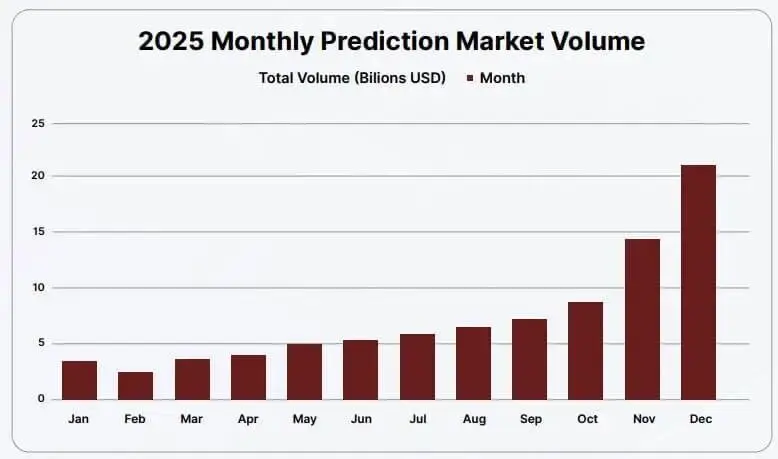
New exchanges can launch exclusive markets unavailable on other platforms. When combined with vertical strategy (point 7), this advantage can be further amplified.
3. Capital Efficiency
Capital efficiency determines how effectively traders can utilize collateral. There are two main approaches:
First, interest-earning collateral: not letting idle funds earn only government bond yields, but providing higher returns—similar to Lighter supporting LP deposits as collateral, and HyENA’s USDE margin perpetual contracts.
Second, margin mechanisms. Due to gap risk, the leverage value of prediction markets is generally underestimated. However, platforms can offer limited leverage for continuous markets or implement portfolio margining for hedging positions.
Exchanges can also subsidize lending pools or act as market-making counterparts to internalize gap risks, rather than passing losses onto users.
4. Oracles and Market Settlement
The reliability of oracles remains a systemic weakness in the industry. Settlement delays and incorrect results can significantly amplify trading risks.
Beyond improving stability, platforms can implement innovative oracle mechanisms: hybrid human-machine systems, zero-knowledge proof-based solutions, AI-driven context-aware oracles, unlocking new markets that traditional oracles cannot support.
5. Liquidity Provision
The survival of an exchange depends on liquidity. Viable paths include: paying for professional market makers, incentivizing regular users with tokens to provide liquidity, and adopting Hyperliquid’s HLP aggregated liquidity model.
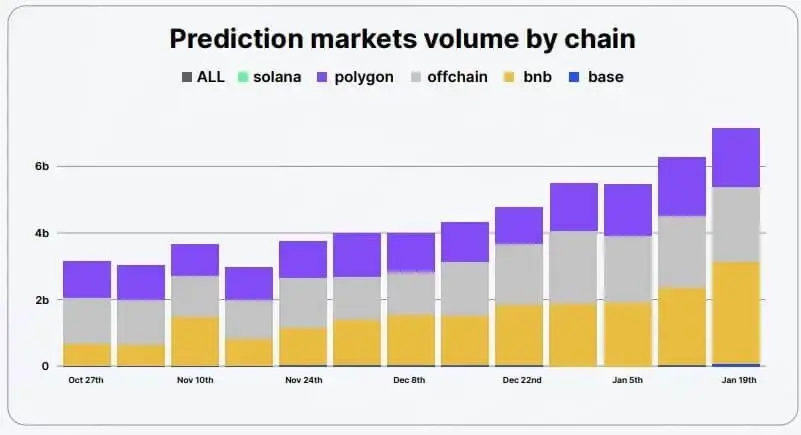
Some platforms may also fully internalize liquidity, emulating FTX’s model of relying on Alameda as an internal trading team.
6. Regulatory Compliance
Kalshi, with its US regulatory approval, has achieved embedded distribution with Robinhood and Coinbase, capturing retail traffic that Polymarket cannot reach.
There are still many jurisdictions and regulatory frameworks to explore. Compliant prediction markets can unlock similar channels, such as adapting to US state gambling regulations.
7. Vertical vs. Horizontal Strategies
Horizontal Strategy: Similar to Hyperliquid in perpetual contracts, focusing on building top-tier underlying trading infrastructure, inviting third parties to develop front-ends and vertical scenarios, and encouraging ecosystem builders to add markets and develop revenue-generating front-ends (like Phantom).
Vertical Strategy: Represented by Lighter, which autonomously controls the front-end, launches mobile apps, and creates a seamless user experience, emphasizing integrated experience and direct user connection.
Polymarket’s resistance to deep embedded cooperation versus Kalshi’s open approach exemplifies the trade-offs between these two strategies.
Disclaimer: The information on this page may come from third parties and does not represent the views or opinions of Gate. The content displayed on this page is for reference only and does not constitute any financial, investment, or legal advice. Gate does not guarantee the accuracy or completeness of the information and shall not be liable for any losses arising from the use of this information. Virtual asset investments carry high risks and are subject to significant price volatility. You may lose all of your invested principal. Please fully understand the relevant risks and make prudent decisions based on your own financial situation and risk tolerance. For details, please refer to
Disclaimer.
Related Articles
Polymarket Prediction: 90% chance that crude oil will break $100 before the end of March
Gate News Report, March 8: According to data from the Polymarket prediction market page, the probability that "crude oil (international commodity benchmark price) will break $100 by the end of March" has reached 90%, and the probability of breaking $110 has increased to 74%.
GateNews42m ago
Kalshi's total nominal trading volume surpasses $48 billion
Gate News Announcement, March 8th, according to a post by KalshiData on the X platform, Kalshi's total nominal trading volume has surpassed $48.2 billion, reaching $48.229 billion. Notably, this data took only about 14 days for Kalshi's nominal trading volume to exceed $43 billion.
GateNews1h ago
Kalshi's trading volume in the first week of March reached $1.9 billion. If the pace continues, the total for the month could reach $11.8 billion.
Gate News Report, March 8: KalshiData posted on the X platform that as of March 5, Kalshi's monthly nominal trading volume was approximately $1.9 billion, averaging about $380 million per day. If this pace continues, Kalshi's nominal trading volume for March will reach approximately $11.8 billion. Previously, it was reported that both Kalshi and Polymarket are seeking funding at a valuation of around $20 billion.
GateNews1h ago
Polymarket website redesign! Probability curves and trading volume become the new headlines, redefining news media
Polymarket has recently undergone a redesign, introducing carousel and Breaking News features that turn capital flow into real-time news, challenging traditional media. The new homepage displays trending events and treats data fluctuations as news, emphasizing the value of real-time predictions. This redesign transforms Polymarket from a betting platform into a real-time news source, solving information overload issues and making prediction markets a real-time infrastructure across multiple industries.
CryptoCity5h ago
Prediction Market Kalshi Faces Class-Action Lawsuit Over Unpaid Winnings on Iran War-Related Contracts
Gate News Report, March 8, - Prediction market platform Kalshi was sued collectively. The platform failed to pay appropriate winnings to users of prediction event contracts related to the Iran war. Kalshi CEO Tarek Mansour previously stated opposition to profiting from individual deaths and claimed he would refund fees for the "Will Khamenei step down" event contract market.
GateNews7h ago


