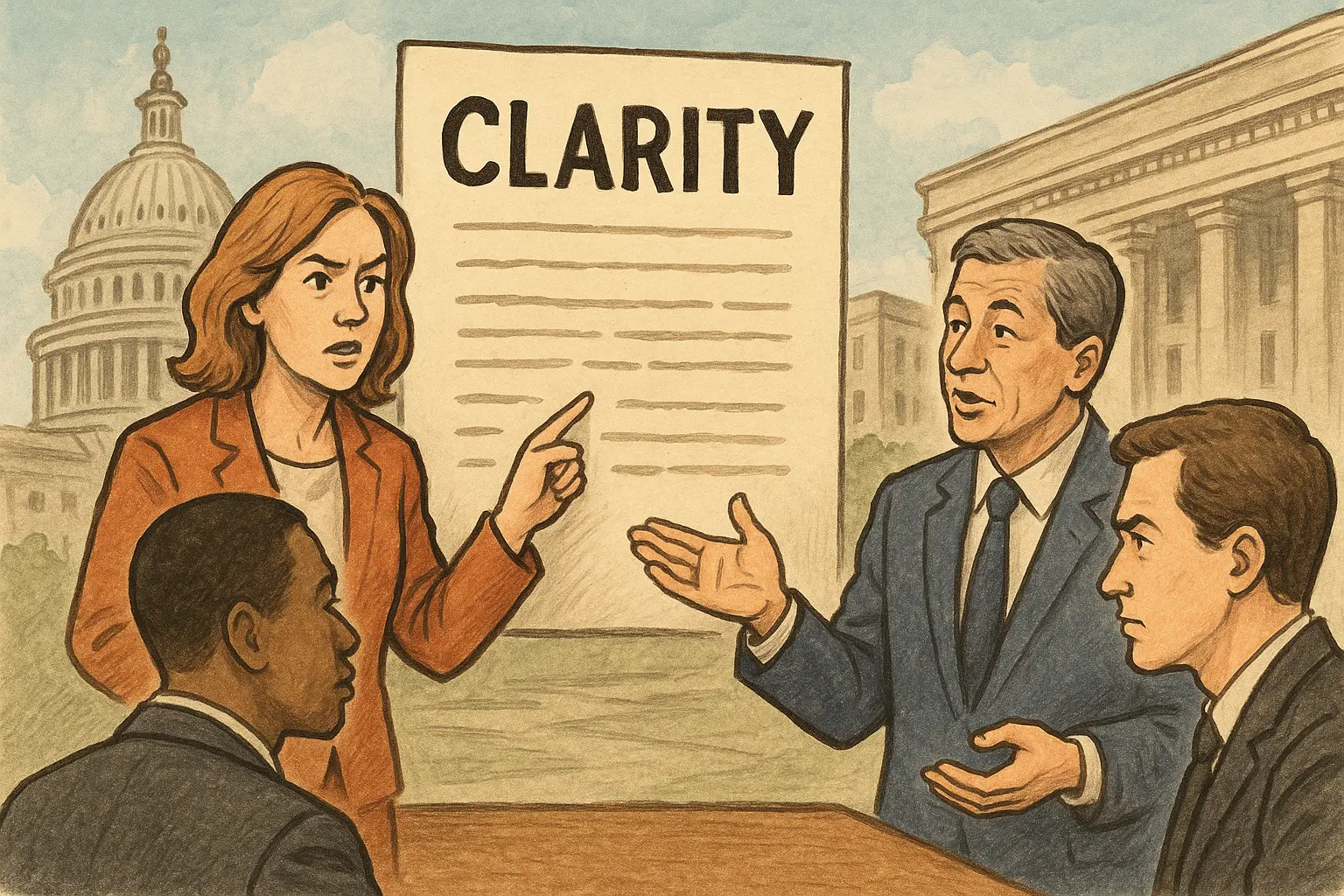
CLARITY Bill dispute de-escalates, JPMorgan report: the draft legislation is nearing completion

MarketWhisper

CLARITY Act controversy

JPMorgan Chase published a report on Wednesday saying that negotiations on the U.S. “CLARITY Act” are nearing the end, and that the number of disputed items—originally as many as a dozen—has been reduced to “2 to 3”; the report also noted that the issue of “stablecoin yield” is moving in a more optimistic direction. The “CLARITY Act” is intended to establish a regulatory framework for the cryptocurrency industry, including delineations of jurisdiction between the SEC and CFTC, stablecoin rules, and more.

Key Findings from the JPMorgan Chase Report

According to JPMorgan Chase’s report released on Wednesday, discussions between lawmakers and regulators show that disputed items have been reduced from the original dozen-plus to “2 to 3.” A statement from a Senate staffer cited in the report said that the legislative draft “is nearing completion,” and that the remaining disputes mainly focus on DeFi regulation and token classification. JPMorgan Chase said in its report that the latest version of the draft may gain support from both the cryptocurrency industry and traditional financial institutions.

The Three Core Regulatory Issues of the CLARITY Act

Based on publicly available information, the core regulatory direction of the “CLARITY Act” is:

Jurisdictional split: clearly defining the boundary of responsibilities between the SEC and the CFTC in regulating crypto assets

Stablecoin rules: covering compliance requirements for stablecoin issuers, including whether it’s allowed to offer yield incentives to users

DeFi platform rules: setting regulatory standards for decentralized finance platforms

Background on the Stablecoin Yield Dispute and Legislative Timeline Risks

According to the JPMorgan Chase report, the stablecoin yield issue previously faced opposition from the traditional banking sector. Banks believed that allowing stablecoin issuers to offer yield incentives to users, without equivalent regulatory requirements, amounts to a disguised deposit-taking business. JPMorgan Chase’s latest report said that the issue is currently moving in a more optimistic direction.

Regarding legislative timeline risks, JPMorgan Chase said in its report that the final text of the “CLARITY Act” has not been released, and Congress has not scheduled a specific voting timeline. The report also mentioned that there is uncertainty surrounding the 2026 midterm elections, and based on market expectations, Democrats could potentially regain control of the House of Representatives, which may affect the legislative priority order for crypto-related legislation at that time.

Frequently Asked Questions

What are the main findings of the JPMorgan Chase report?

According to the report JPMorgan Chase published on Wednesday, negotiations on the “CLARITY Act” are nearing the end, with disputed items reduced from more than a dozen to “2 to 3.” A Senate staffer statement cited in the report said the draft is “nearing completion,” and that the remaining disputes focus on DeFi regulation and token classification.

What core regulatory issues does the “CLARITY Act” cover?

Based on publicly available information, the core regulatory direction of the “CLARITY Act” includes: the jurisdictional split between the SEC and CFTC for crypto asset oversight; compliance rules for stablecoin issuers (including the yield issue); and regulatory standards for DeFi platforms.

What is the main focus of the stablecoin yield dispute?

According to the JPMorgan Chase report, the traditional banking sector believes that allowing stablecoin issuers to offer yield incentives to users, without equivalent regulatory requirements, constitutes disguised deposit-taking; JPMorgan Chase’s latest report said that the issue is currently moving in a more optimistic direction.

Disclaimer: The information on this page may come from third parties and does not represent the views or opinions of Gate. The content displayed on this page is for reference only and does not constitute any financial, investment, or legal advice. Gate does not guarantee the accuracy or completeness of the information and shall not be liable for any losses arising from the use of this information. Virtual asset investments carry high risks and are subject to significant price volatility. You may lose all of your invested principal. Please fully understand the relevant risks and make prudent decisions based on your own financial situation and risk tolerance. For details, please refer to Disclaimer.

Related Articles

Hong Kong SFC Launches Pilot Framework for Secondary Trading of Tokenised Investment Products

Hong Kong's SFC launched a pilot framework for secondary trading of tokenised investment products on licensed platforms, enhancing retail access and blockchain settlement. The framework includes investor protection measures and aims to expand the tokenised products market.

GateNews2h ago

Hong Kong SFC issues two tokenized offering circulars on the same day (26EC22 / 26EC23): Full breakdown of VATP secondary trading and primary subscription and redemption rules

The Hong Kong Securities and Futures Commission will issue two guidance circulars for tokenized products in 2026, covering primary-market subscription and redemption and secondary-market trading requirements, respectively. The circulars will clearly define the responsibilities of product providers, liquidity requirements, and fair pricing mechanisms. The new regulatory framework will affect how the industry operates and will create new business opportunities for compliance lawyers, forming a template for tokenized finance regulation in the Asia-Pacific region.

ChainNewsAbmedia3h ago

Hong Kong SFC prepares the world’s first tokenized assets trading framework for VATP: money market funds to lead the way, gradually expanding to all authorized products

The Hong Kong Securities and Futures Commission will publish a framework in April 2026 that will allow licensed virtual asset trading platforms to conduct secondary-market transactions of tokenized assets, with the first batch including money market funds and future expansion to stocks, bonds, and more. This will make Hong Kong the first market to use Web3 infrastructure, and it will advance in step with the regulatory technology “CrypTech” to establish a regulatory template for tokenized finance. The move is intended to secure Hong Kong’s position as an Asia-Pacific digital-asset hub and to create competitive pressure on Taiwan-based industry players.

ChainNewsAbmedia4h ago

BIS calls for globally coordinated stablecoin regulation: warns that Tether and Circle account for 85% of those showing “security-like characteristics”

The Bank for International Settlements (BIS) once again emphasized the importance of global stablecoin regulatory coordination, pointing out three major risks that stablecoins face at this stage, including regulatory challenges related to cross-border flows and issues with market concentration. BIS proposed a unified ledger framework and argued that central banks need to lead the development of digital currencies, which would pose challenges to existing stablecoin issuers such as Tether and Circle. Overall, in the future, stablecoins may face a more stringent regulatory framework.

ChainNewsAbmedia5h ago

Hong Kong SFC Approves New Framework for Trading Tokenized Investment Products

Hong Kong's SFC introduced a regulatory framework for trading tokenized investment products, enabling secondary market trading on licensed virtual asset platforms and enhancing access for retail investors.

GateNews6h ago

Central Bankers Warn Stablecoins Risk Accelerating Dollarization in Emerging Markets

Central bankers warn that stablecoins may accelerate dollarization in emerging markets and pose financial crime risks due to weak regulatory oversight. They urge for international coordination on stablecoin standards to balance innovation with financial stability.

GateNews6h ago
Comment
0/400
No comments