Don'tLetTheContractScamMy

vip
Age 0.1 Yıl
Peak Tier 0
No content yet
Recently, I saw a bunch of yield aggregators touting APY, often claiming hundreds or thousands, and honestly, when you click "deposit," you're not just saving money—you're shoving your funds into a series of smart contracts that keep moving around. Who wrote these contracts? Are there backdoors? Who has control over permissions? If something goes wrong, who's responsible? None of that matters; they just show you a big number, as tempting as a "special offer" sign at a market.
What's even more annoying is counterparty risk: the underlying could be a lending pool, a market maker, or even a "part
View Original
  • Reward
  • Comment
  • Repost
  • Share
JPMorgan building its own system is fine, but crossing bank interoperability is a tough hurdle.
View Original
CryptoFrontier
JPMorgan, Citi Pursue Different Paths in Digital Payments Race
JPMorgan Chase and Citigroup are competing in the evolving digital payments landscape. Citigroup is embracing stablecoins and partnerships, while JPMorgan focuses on in-house solutions, reflecting differing strategies for future payment systems.
  • Reward
  • Comment
  • Repost
  • Share
In the domestic large models, only a few can truly ignite the capital market, and this move by DeepSeek is very critical.
View Original
CryptoFrontier
DeepSeek Launches First External Fundraising Round Amid Core Staff Departures
DeepSeek Confirms First External Fundraising
On April 18, multiple venture capital sources confirmed that DeepSeek has begun its first external fundraising round, according to澎湃新闻 (Pail News). The company is targeting a valuation exceeding $10 billion and plans to raise at least $300 million to
  • Reward
  • Comment
  • Repost
  • Share
Just now I got itchy again and wanted to chase the surge—I even had my finger on the open position button. The first thing that popped into my head was: is the information pushing me to add to my position, or is it just emotion? To put it plainly, a lot of the time it’s just FOMO taking over, and it has nothing to do with “I understand.”
Lately, people have been comparing RWA, things like US bond yields—things like on-chain yield products—together. The more I look at it, the more I feel: if you truly want “stability,” first figure out what the underlying is, where the money is going, and who y
View Original
  • Reward
  • Comment
  • Repost
  • Share
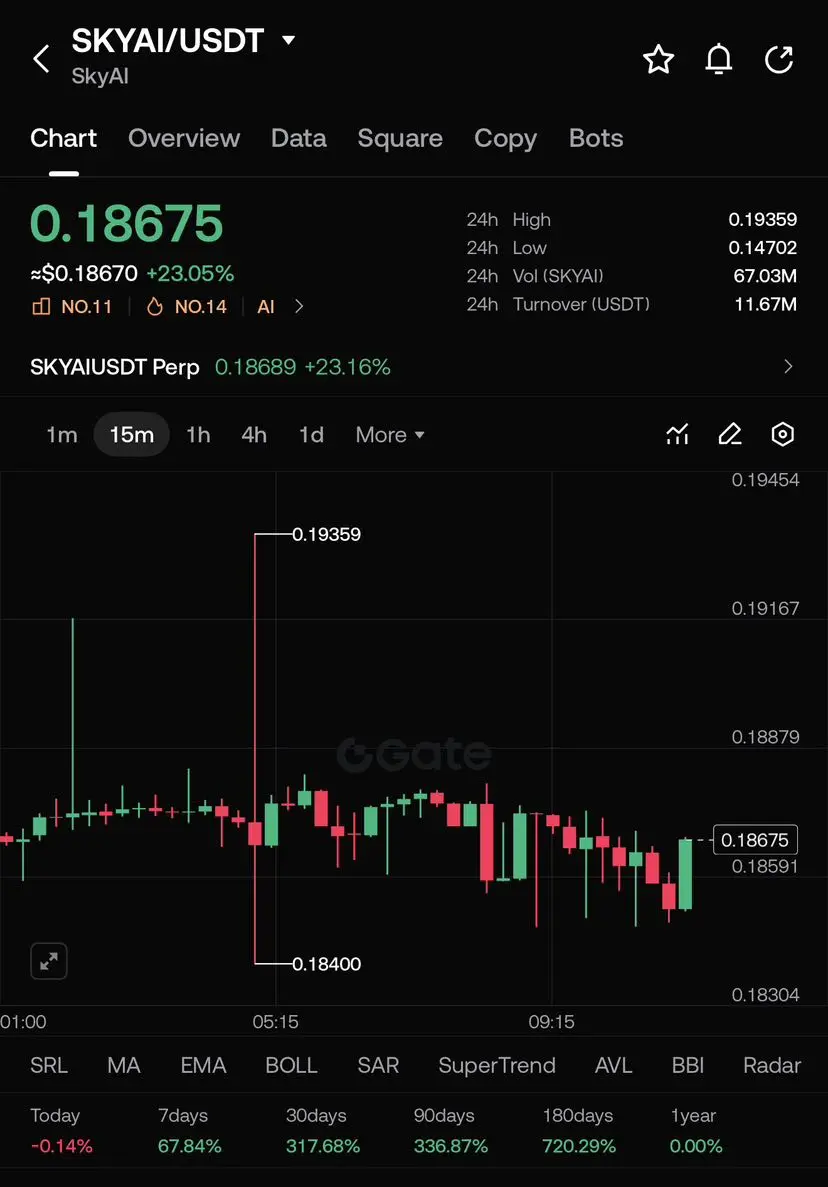
Keep looking for long positions, but don't go all-in; leave some room for stop-loss. If it breaks 0.180, admit you're wrong and exit.
View Original
LedgerBull
$SKYAI showing strength with consolidation after expansion.
Structure remains bullish with buyers holding above key support.
EP
0.1840 – 0.1870
TP
TP1 0.1920
TP2 0.1980
TP3 0.2050
SL
0.1800
Liquidity below 0.185 already tapped with quick reaction. Price stabilizing near range lows with higher low formation, suggesting continuation if momentum builds.
Let’s go $SKYAI ‌
repost-content-media
  • Reward
  • Comment
  • Repost
  • Share
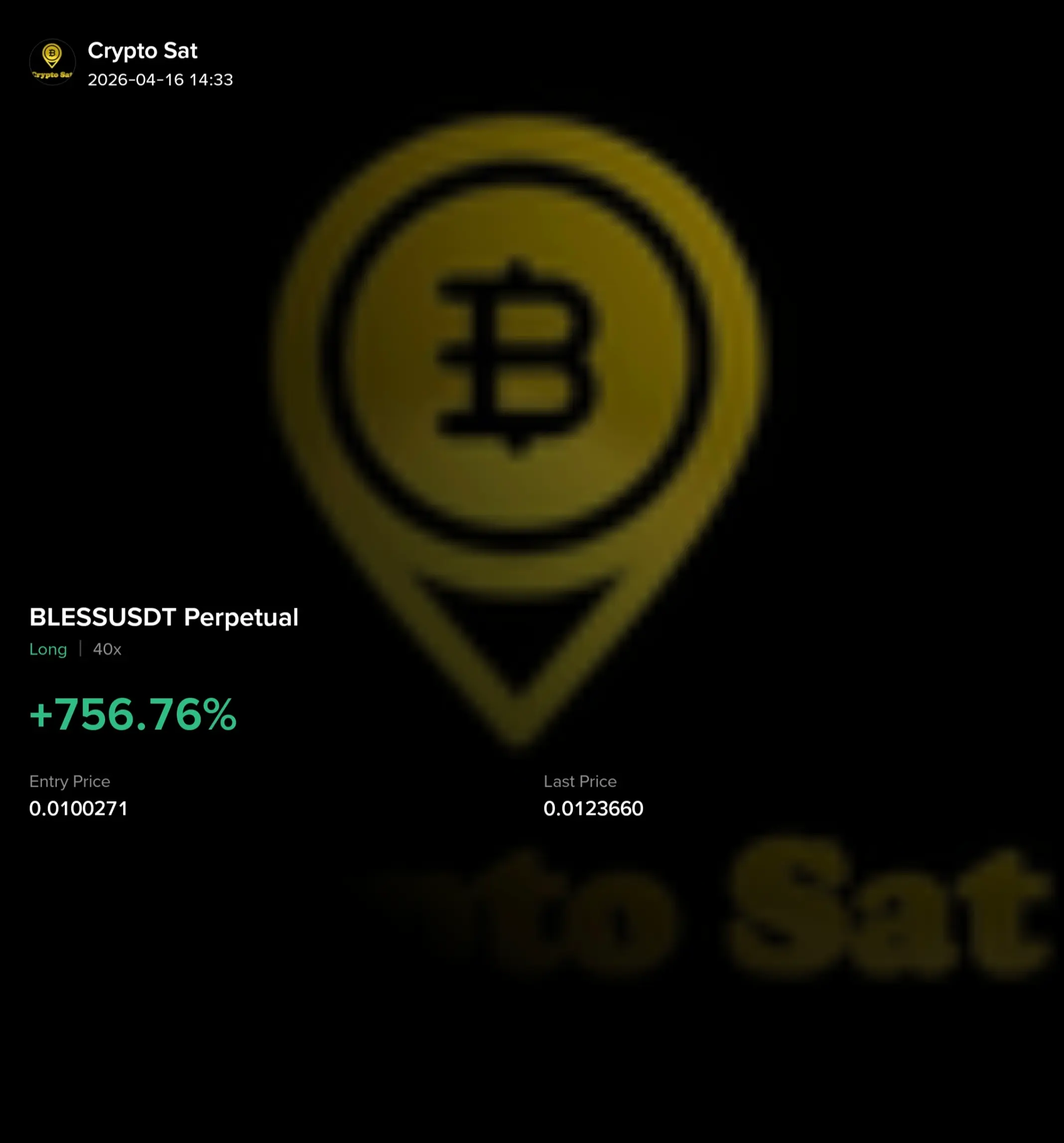
Congratulations on achieving the fourth goal, brothers and sisters on the vehicle.
View Original
CryptoSat
4th Target $BLESS -ed to All 🤑
Set your stop-loss at Target 2 and hit LIKE button 😁
repost-content-media
  • Reward
  • Comment
  • Repost
  • Share
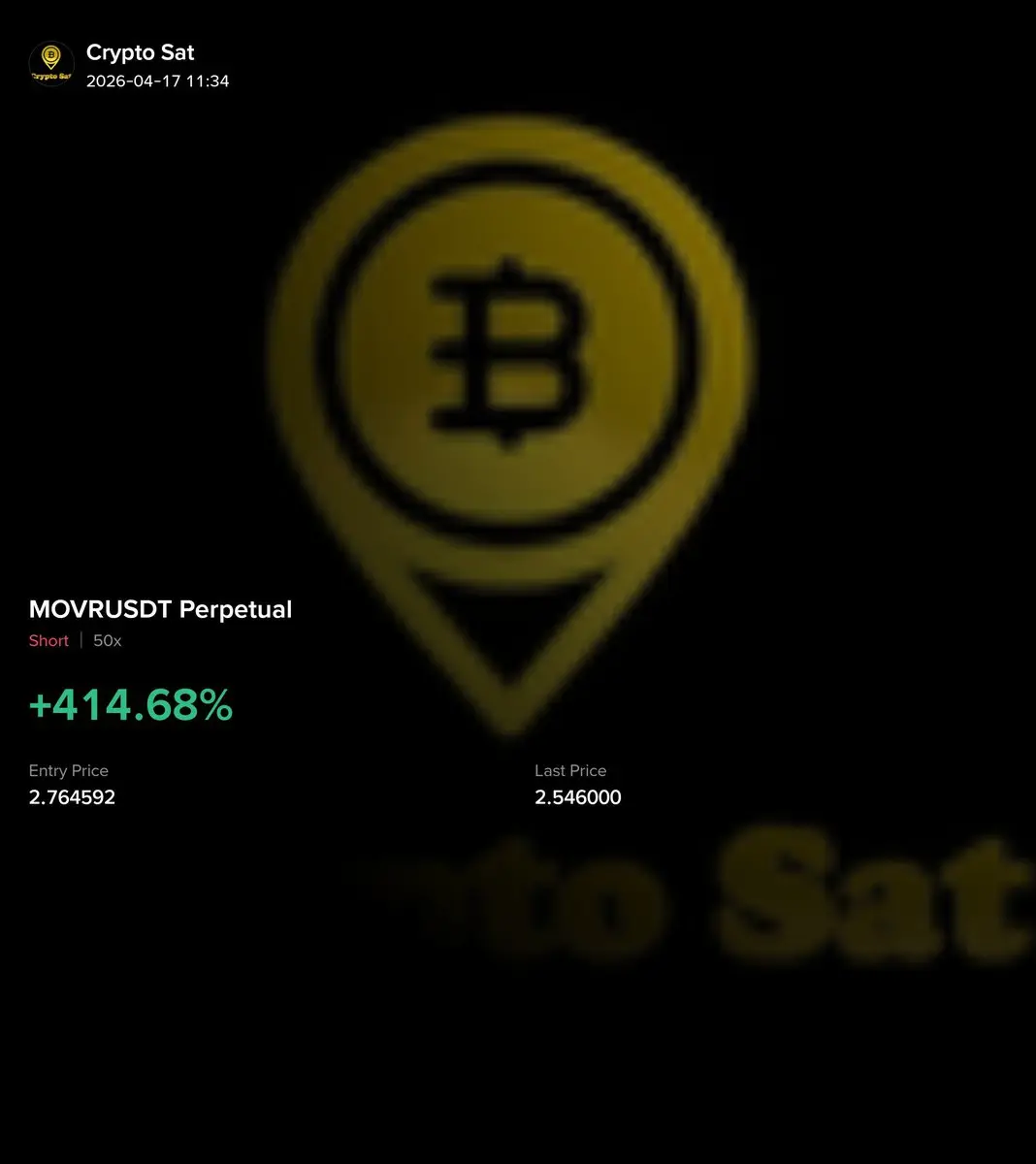
Seeing the 2nd target completed, I feel at ease; now let the profits run.
View Original
CryptoSat
$MOVR 2ND TARGET COMPLETED 🎯
repost-content-media
  • Reward
  • Comment
  • Repost
  • Share
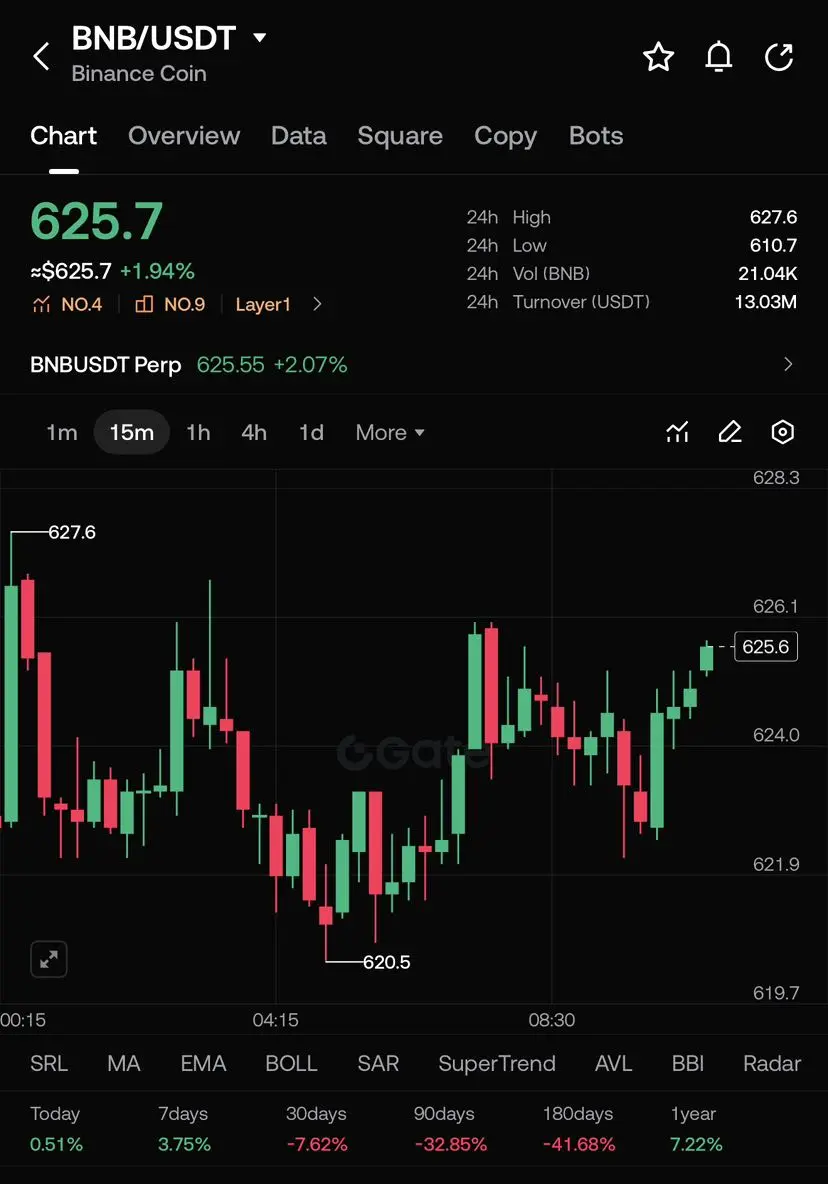
If it's truly to first sweep 627.6 and then retrace to confirm, that would be the most ideal continuation of the upward trend, so watch closely for the retracement reaction.
View Original
LedgerBull
$BNB showing steady strength with a clean recovery toward highs.
Structure remains intact with buyers holding short-term control.
EP
622 - 626
TP
TP1 630
TP2 638
TP3 650
SL
618
Price is pushing toward local highs with liquidity resting above the 627.6 level. Expect a sweep and continuation on breakout, while downside remains supported by higher low structure and strong reaction zones.
Let’s go $BNB ‌
repost-content-media
  • Reward
  • Comment
  • Repost
  • Share
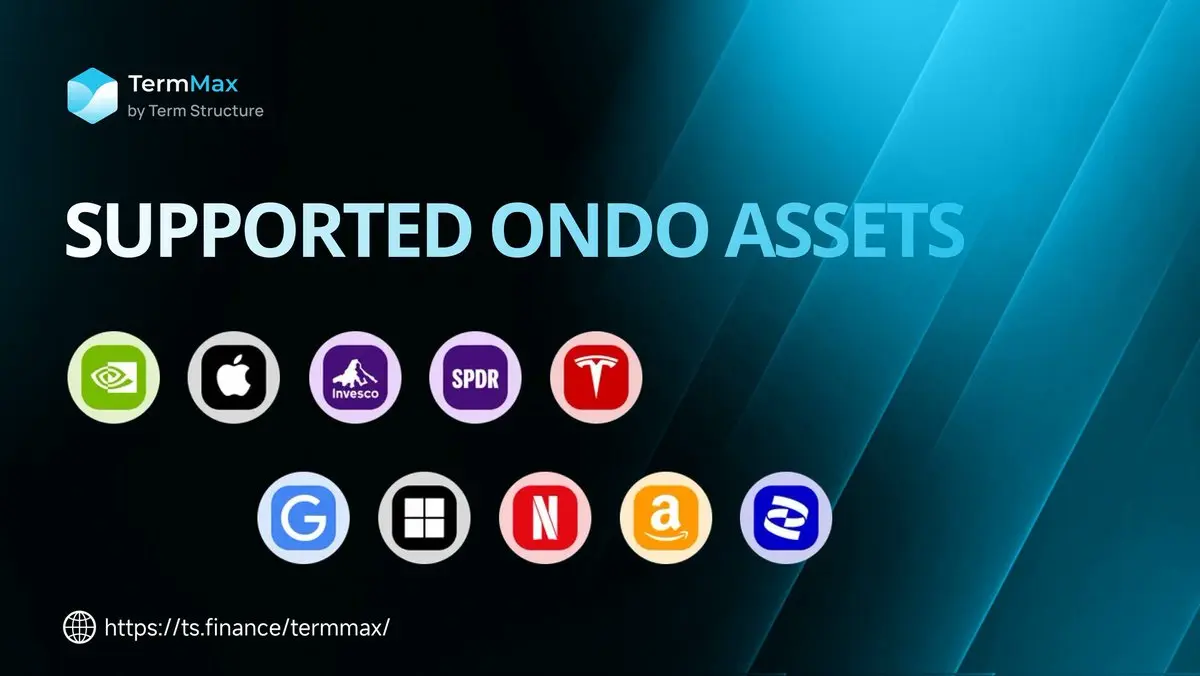
The biggest pain point of traditional DeFi is that interest rates fluctuate wildly; something like TermMax, which offers certainty, is more suitable for institutional entry.
View Original
BlockchainDiary
According to DeFiLlama data:
Currently, the market cap of RWA chains is about $30 billion, but the funds truly entering DeFi are only about $3.6 billion in TVL, leaving significant room for growth.
And @TermMaxFi (TermMax) is precisely filling this gap:
It uses a fixed interest rate + fixed term lending model to truly utilize RWA.
Allowing users to use tokenized stocks, gold, and other assets as collateral to borrow stablecoins on-chain while locking in interest rates in advance.
How RWA is integrated: tokenized stocks, gold, and other RWAs are used as collateral → on-chain borrowing of stablecoins → interest rates are locked from the start.
Core highlights:
1️⃣ Borrow money with RWA collateral without selling assets
2️⃣ Fixed interest rates that won’t fluctuate wildly like traditional DeFi
3️⃣ Supports one-click looping to amplify returns
4️⃣ More aligned with institutional needs for certainty of returns
TermMax uses fixed interest rates to connect RWA + DeFi, making yields more stable and capital more efficient.
repost-content-media
  • Reward
  • Comment
  • Repost
  • Share
Recently, a bunch of people have been asking me where the returns from LST/"re-staking" come from. To put it plainly, there are three “pots” involved: the block rewards generated by staking itself; the interest spread from taking your “staking certificate” and using it as collateral to borrow and loop it; and re-staking, which rents out security to other protocols in exchange for protection fees. It sounds like it’s just free money, but risks also come from each of these three places: LST de-pegging, lending liquidations, and if something goes wrong on the re-staking side, it can directly drag
View Original
  • Reward
  • Comment
  • Repost
  • Share
Recently, people keep talking to me about "modular chains," and honestly, the biggest change for us regular users isn't a technological revolution, but: you might not even know which chain you're using or which layer is doing the work, but the fees, speed, and the number of scapegoats when things go wrong have all increased... In the past, if a transfer failed, you'd blame the chain; now, one card: the execution layer blames the data layer, the data layer blames the sequencer, and in the end, you blame yourself for clicking a fake link.
And that "staking unlock/token unlock calendar" daily flo
View Original
  • Reward
  • Comment
  • Repost
  • Share
Just finished scrolling the group chat and someone is already hyping, “Modular chains will change the world.” I put my phone down on the table first… For ordinary people, the biggest change isn’t some architectural myth—it’s that later you might not even know which chain you’re using: a wallet that works with one click, cross-network transfers, steadier transaction fees, and not getting stuck/freezing all the time—this is what real improvement looks like.
But don’t let the packaging fool you. Once the chain is split into multiple layers, the traps can be split too to骗 you: getting you to “re-s
View Original
  • Reward
  • Comment
  • Repost
  • Share
  • Pin