# 量子计算威胁

1.8K
Computing Singularity and Consensus Moat: The Evolution of Cryptographic Paradigms Under Quantum Threat
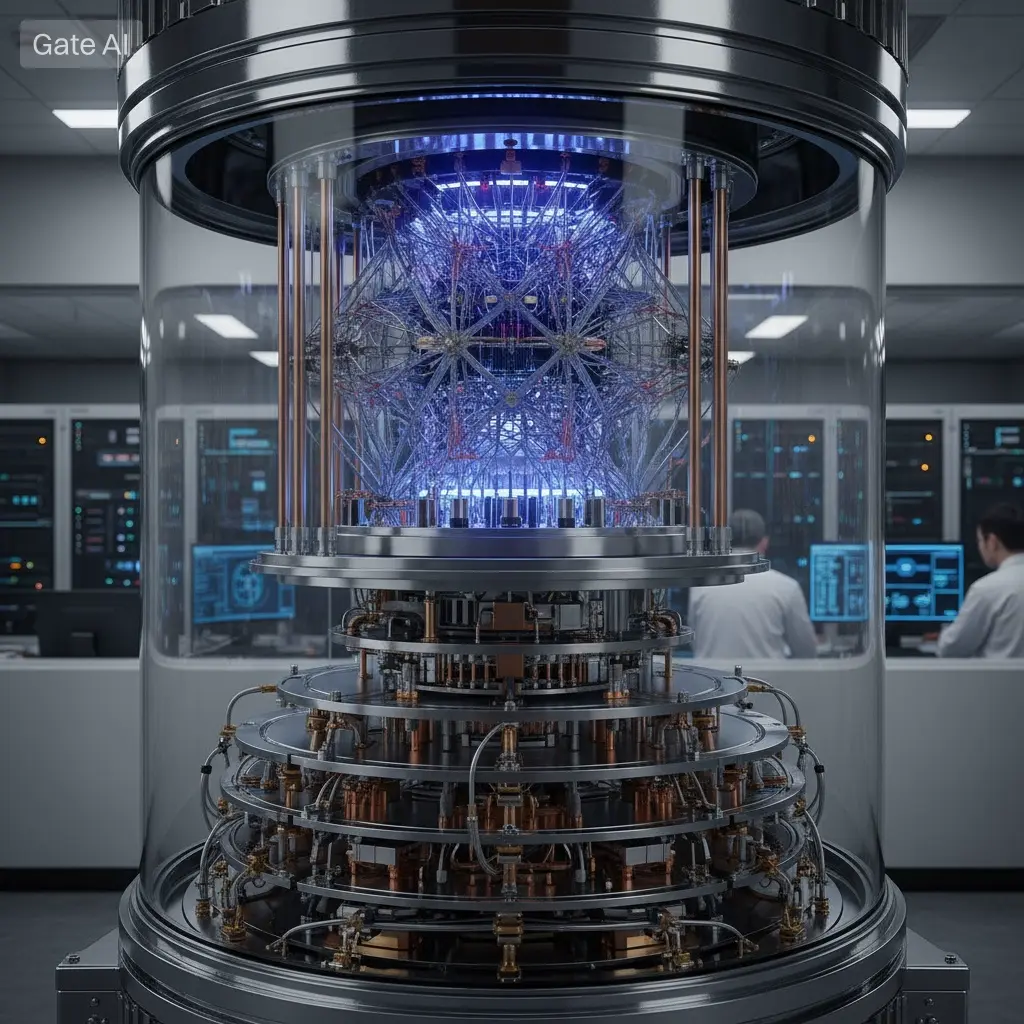
Recently, Google's exponential breakthrough in quantum computing has struck like a heavy bomb on the calm surface of the encryption market. This debate over the pinnacle of computational power essentially challenges the traditional elliptic curve cryptography (ECDSA) with a dimensionality reduction attack by quantum bits. Community concerns about whether Shor's algorithm can instantly compromise Bitcoin private key security not only touch on the technical fundamentals of cryptocurrencies but
BTC1,26%
View Original
post-image
  • Reward
  • Comment
  • Repost
  • Share
#量子计算威胁 Seeing the resurgence of the quantum computing threat discussion, it's time for a serious analysis. The potential risk of 1.7 million BTC is indeed eye-catching, but the key is to understand clearly — this is not something that will happen tomorrow.
Nic Carter is right; going from theoretical breakthroughs to practically cracking Bitcoin is still a decade-long engineering challenge. But this precisely highlights the tricky part: it's not that the technology is impossible, but that the time window and coordination costs are prohibitively high. Soft fork upgrades, migrating tens of mill
BTC1,26%
View Original
  • Reward
  • Comment
  • Repost
  • Share
#量子计算威胁 Recently, there has been quite a heated debate in the community about the threat of quantum computing to Bitcoin. Let me break down this discussion.
The core point is very clear: Bitcoin Core developer Jameson Lopp has provided a relatively rational assessment—quantum computers will not crack Bitcoin in the short term, but if an upgrade to the protocol is needed to prevent this, it would take 5 to 10 years. This time frame actually reveals the truth: we neither need to panic excessively nor can we be complacent.
Why does it take so long? Simply put, Bitcoin is a public blockchain invo
BTC1,26%
View Original
  • Reward
  • Comment
  • Repost
  • Share
#量子计算威胁 The controversy over quantum computing is very clear to me — it's a classic scene in the cycle.
Back in 2011, the Bitcoin community also experienced a similar debate. Some insisted that Bitcoin would be cracked by certain technologies, while others dismissed it as unnecessary worry. Fifteen years have passed, and Bitcoin is still here. But my experience tells me that these debates often reflect not the technical issues themselves, but the interests of the parties involved.
Nic Carter mentioned that 1.7 million Bitcoins are at risk, which sounds alarming. But Jameson Lopp's statement i
BTC1,26%
View Original
  • Reward
  • Comment
  • Repost
  • Share
#量子计算威胁 Does quantum computing threaten Bitcoin? This wave of public opinion is really quite interesting. On one side, Nic Carter says that 1.7 million Bitcoins are at risk, while on the other side, Bitcoin Core developer Jameson Lopp directly dismisses the urgency—there's no need to panic in the short term, and any protocol changes would take at least 5 to 10 years.
I looked into the details and feel that this matter isn't as urgent as it seems on the surface. Quantum computing is indeed a potential threat, but it's still in the "theoretically feasible" stage, and cracking the Bitcoin networ
BTC1,26%
View Original
  • Reward
  • Comment
  • Repost
  • Share
#量子计算威胁 🤔 I just saw the big players discussing the issue of quantum computing potentially cracking Bitcoin, and I was completely stunned... It feels like the crypto world is full of risks! But Bitcoin Core developer Jameson Lopp said there's no need to worry in the short term? How should we understand this?
After taking a closer look, it turns out that: quantum computers can't crack Bitcoin yet, so everyone can breathe a sigh of relief. However, if Bitcoin really needs to be upgraded to defend against quantum attacks, this overhaul could take 5 to 10 years to complete and involve unpreceden
BTC1,26%
View Original
  • Reward
  • Comment
  • Repost
  • Share
#量子计算威胁 Quantum computing is causing trouble again🤦‍♂️ Nic Carter says 1.7 million BTC will be rendered useless, but Jameson Lopp directly retorted: No worries in the short term, the transformation will take 5-10 years. Then Adam Back and F2Pool's Wang Chun started to complain again, this guy is just creating anxiety, and by the way, he's advertising the anti-quantum companies his fund invested in🎭
Honestly, this is a typical pattern in crypto debates. One person shouts "The sky is falling," and a bunch of people jump out saying "Relax and sleep peacefully," while retail investors are stuck
BTC1,26%
View Original
  • Reward
  • Comment
  • Repost
  • Share
#量子计算威胁 Luke Gromen's insights touch on several on-chain signals worth tracking. I've been paying long-term attention to the argument that quantum computing poses a threat—although he provides a 2-9 year time window, this is indeed a potential inflection point for Bitcoin's security that requires ongoing monitoring of related technological developments.
More notably, he mentioned changes in Tether's asset allocation. Such institutional-level balance sheet adjustments often precede market reactions. The signal of gold holdings surpassing Bitcoin holdings should not be ignored. From an on-chain
BTC1,26%
View Original
  • Reward
  • Comment
  • Repost
  • Share
#量子计算威胁 The recent hype around quantum computing has scared quite a few newcomers. Honestly, according to the latest response from Core developer Jameson Lopp, there's no need to panic about Bitcoin in the short term — quantum computers are still far from cracking BTC technically.
The key point is this: even if the quantum threat becomes real, upgrading the Bitcoin network will take 5 to 10 years, which means we have plenty of time to respond. Unlike some project teams that create anxiety to manipulate the market, this is a solid technical judgment.
For us crypto enthusiasts, this might actua
BTC1,26%
View Original
  • Reward
  • Comment
  • Repost
  • Share
Load More