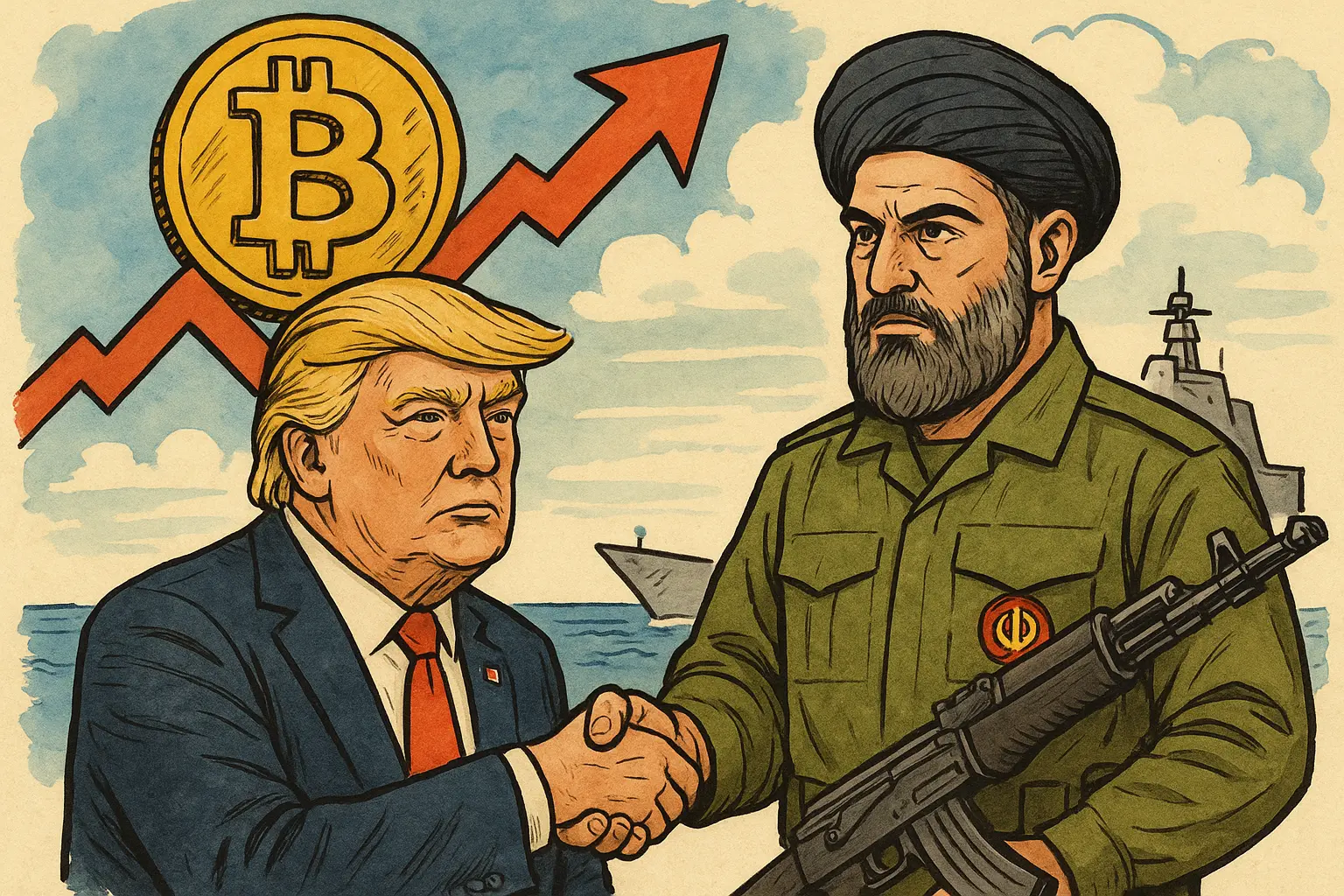
Bitcoin (BTC) rebounded to around $71,000 on Wednesday, sharply recovering from a roughly 5% decline earlier this week. The main factors driving today’s Bitcoin rally include: U.S. President Trump claiming that the U.S. and Iran are “negotiating,” and Iran allowing “non-hostile” vessels to pass through the Strait of Hormuz. These three signals collectively improved market geopolitical risk sentiment marginally, prompting some safe-haven funds to rotate into risk assets.
U.S.-Iran Negotiation Signals and Strait of Hormuz Passage Announcement
On Tuesday, Trump stated from the White House Oval Office that the U.S. and Iran are “currently negotiating,” and that his decision to delay threats to strike Iran’s energy infrastructure “is based on the fact that we are negotiating.” He added that Iran “is acting very rationally.”
However, Iran refused to acknowledge this statement. The chief spokesperson of the Iranian military explicitly denied on national television that negotiations are ongoing and reaffirmed that no agreement will be reached with the U.S. Despite the conflicting statements, the market has already priced in the expectation of a “possible de-escalation of conflict,” which has put downward pressure on oil prices.
Meanwhile, the Iranian government confirmed that “non-hostile” vessels belonging to or associated with other countries can safely pass through the Strait of Hormuz after complying with safety regulations and coordinating with relevant Iranian authorities. This announcement is seen by the market as a signal that the “worst-case” risk for the world’s most critical oil shipping route—the Strait of Hormuz—has cooled, easing concerns that have kept energy prices elevated since the outbreak of Middle East conflicts nearly four weeks ago.
Federal Reserve Maintains Rates, Bitcoin Technical Support Remains Key
The FOMC kept the benchmark interest rate unchanged, in line with market expectations, removing short-term rate hike policy uncertainty. Bitcoin is currently consolidating within a narrow range of $71,000 to $72,000, reflecting a technical correction after a roughly 5% decline earlier this week.
To regain upward momentum, bulls need to confirm a breakout above the $72,000 resistance level; successful breakout targets are at $69,555 (middle Bollinger Band) and $67,500 (low liquidity zone). Bitcoin remains well above the psychologically important $70,000 level, demonstrating stronger resilience compared to gold.
Gold Experiences Longest Decline in a Century, Bitcoin-to-Gold Ratio Surges 30%
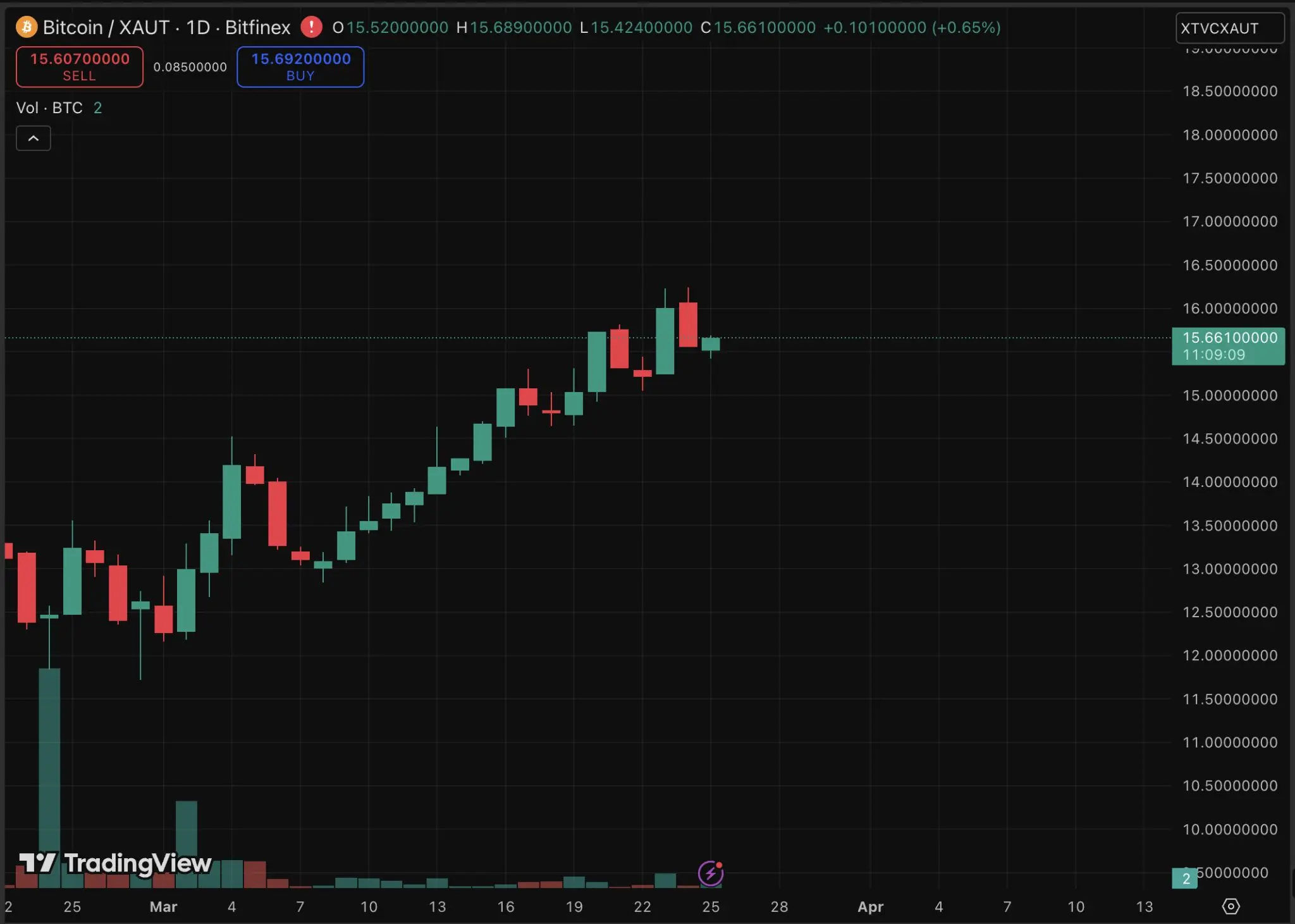
(Source: TradingView)
Gold has experienced its most severe consecutive decline since February 1920, with a 10-day losing streak, dropping approximately 27% from its January all-time high, currently seeking support around $4,090. Daan Struyven, Co-Head of Global Commodities Research at Goldman Sachs, notes that the decline in gold prices aligns with historical patterns, as rising interest rate expectations and increased market volatility have suppressed gold ETF inflows. Nonetheless, Goldman Sachs maintains a medium- to long-term target of $5,400 for gold by year-end, based on the core logic of sustained long-term buying by global central banks.
In stark contrast, the Bitcoin-to-gold ratio has surged about 30% since the Middle East conflict erupted—meaning Bitcoin’s “gold content” per coin has increased from approximately 12 ounces to just under 16 ounces. Bloomberg analysts point out that gold shows signs of “weakness”; if history repeats itself (gold leading a rally followed by consolidation, with Bitcoin catching up), the current consolidation in cryptocurrencies may be building momentum for the next upward wave.
Frequently Asked Questions
Why did Bitcoin rise today? What are the three main driving factors?
Today’s Bitcoin increase was primarily driven by three factors: Trump claiming that the U.S. and Iran are “negotiating,” Iran allowing non-hostile vessels to pass through the Strait of Hormuz (reducing worst-case scenario risks), and the Federal Reserve maintaining rates, which eliminated short-term rate hike policy uncertainty. These signals collectively improved market geopolitical risk sentiment.
Where are Bitcoin’s key technical resistance and support levels?
Bulls need to confirm a breakout above $72,000 to establish clear upward momentum. Support levels are at $69,555 (middle Bollinger Band) and $67,500 (low liquidity zone). Bitcoin remains above the critical psychological level of $70,000.
Did the decline in gold contribute to Bitcoin’s rally?
Gold has fallen about 27% from its all-time high, marking the longest decline in a century, prompting some funds to shift into Bitcoin amid gold’s weakness. Since the Middle East conflict erupted, the Bitcoin-to-gold ratio has surged approximately 30%, indicating that Bitcoin is attracting stronger institutional interest in this asset rotation.
Disclaimer: The information on this page may come from third parties and does not represent the views or opinions of Gate. The content displayed on this page is for reference only and does not constitute any financial, investment, or legal advice. Gate does not guarantee the accuracy or completeness of the information and shall not be liable for any losses arising from the use of this information. Virtual asset investments carry high risks and are subject to significant price volatility. You may lose all of your invested principal. Please fully understand the relevant risks and make prudent decisions based on your own financial situation and risk tolerance. For details, please refer to
Disclaimer.


