The U.S. stock market has gone through the most severe single-day turbulence recently.
From extending the talks by 5 days to extending them by 10 days, various reports and rumors have continued to surface, and the views of both the United States and Iran are strikingly inconsistent. As this U.S.-Iran conflict has now been going on for nearly a month, how much longer will they keep fighting?
A few days ago, the Rhythm editor整理 five of the most likely scenarios in the U.S.-Iran conflict. It mentioned that “ending the war quickly in the short term” is the most ideal scenario, and also the one Trump wants most. But judging from the various signals so far, there is a strong possibility that the U.S.-Iran conflict could end with a rapid ceasefire. Read more: “What comes after the smoke? Five possible outcomes of the war in the Middle East.”
For the sake of midterm election interests and to avoid getting stuck in a quagmire of war, the Trump administration is actively seeking a diplomatic opening. The U.S. and Israel have already removed Iran’s foreign minister and the speaker of its parliament from their list of targets for military strikes. This is widely seen as a direct signal of reserving negotiating leverage and reaching a settlement through key figures.
Trump is eager to step out
Understanding the trajectory of this conflict hinges, first of all, on understanding Trump’s mindset.
A report published by The Wall Street Journal 14 hours ago, titled “Trump Tells Aides He Wants Speedy End to Iran War,” reveals that Trump has privately told his advisers that he believes the conflict is in its final stage, and he urged the team to stick to the “four to six weeks” timeline he had previously laid out publicly.
According to people familiar with the matter, White House officials are planning a trip to China in mid-May, and they expect the war to end before the summit begins. This detail is especially telling: Trump wants to visit China in the posture of a “winner,” rather than as a wartime president mired in a quagmire.
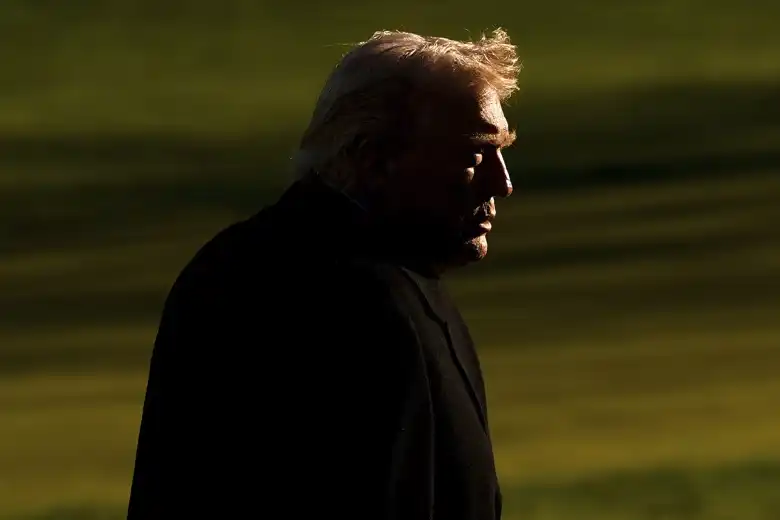
Another signal came on March 25, when Trump delivered a lengthy speech on Iran at the annual fundraising dinner of Republican congressional committees across the United States.
Observers noted that when the topic shifted from domestic politics to the fighting in the Middle East, his tone changed from anger to something closer to a repeatedly explanatory, slightly defensive style. He repeatedly emphasized that Iran is “extremely eager” to reach an agreement, claiming that Iran’s leadership is secretly engaging with the U.S. “They really want to make this deal, they just don’t dare say it publicly, because they’re afraid of being killed by their own people, and they’re also afraid of being killed by us.” He also said something that is quite thought-provoking: “There’s no country’s leader who doesn’t want to get out of this job more than Iran’s leader. I don’t want to do it either.” In many ways, that line is almost a most direct disclosure of his own will.
At the dinner, he boasted that the United States has “won big,” arguing that large-scale military strikes have already completed the core mission—implying that it’s time to stop. He also showed clear concern that the war is driving up oil prices, which is typically the most realistic economic indicator he uses to judge whether a war should continue. Trump has told an aide plainly that the war is distracting him from other priorities, including the upcoming midterm elections, immigration enforcement policies, and pushing for voter eligibility legislation to pass in Congress.
In addition, some analysts pointed out that based on Trump’s body language that night, he displayed a very impatient demeanor. He even snapped at the Supreme Court justices he had elevated—Gorsuch and Barrett—publicly denouncing them: “It makes me sick because they’re harmful to the country.”
Including in his speech, he also revealed concern about the war driving up oil prices—again, the most realistic economic metric he uses to determine whether the war should stop.
In the face of oil-price fluctuations, Wall Street is trying to find patterns in the policy swings of the Trump administration.
Many observers have found that whenever energy prices or borrowing costs hit certain thresholds, the White House’s rhetoric shifts toward a more calming tone—the so-called Trump “TACO moment” (abbreviation for “Trump Always Chickens Out”).
Wall Street Market Watch has previously pointed out that, according to veteran energy traders, whenever U.S. crude oil prices approach $95 to $100 per barrel, the White House’s cooling rhetoric becomes noticeably stronger, and market expectations of government intervention heat up accordingly. Jorge Montepeque, an oil market analyst at Onyx Capital Group, said that politically, gas prices above $4 per gallon are extremely damaging, and Trump is clearly worried about high oil prices.
U.S. Treasury yields are another trigger line for cooling down. Monica Defend, head of research at Amundi Investment Institute, said Trump has become extremely sensitive to Treasury yields in his second term: “Whenever the 10-year Treasury yield is nearing 4.5%, the government truly gets nervous, and usually that’s when they take action.” To that end, Maximilian Uleer, head of strategy at Deutsche Bank, has built a “pressure index,” combining indicators such as inflation expectations and Treasury yields, to help anticipate the timing of strategic adjustments by the White House.
Political pressure brought on by economic pressure should not be overlooked either.
At present, the political landscape for Republicans ahead of the midterm elections is difficult. On Tuesday, a Democratic candidate pulled off a reversal in a state legislative seat in South Florida—this district is also the same area where Trump’s Mar-a-Lago estate is located.
Concerns within the Republican Party are spreading: high war costs and persistently low approval ratings are weighing down candidates in key state-level races. The shadow of the midterm elections is getting closer and closer, and a dragging, muddled Middle East war is the last political burden Trump needs.
Israel “rushing the clock” strikes
Another noteworthy key detail—also disclosed by The Wall Street Journal—is that the U.S.-Israeli joint forces have explicitly removed Iran’s foreign minister, Araqchi, and the speaker of its parliament, Kalibaf, from the strike list.
This is also an extremely precise, extremely deliberate diplomatic signal.
Abbas Araqchi is Iran’s current foreign minister. He is a veteran diplomat by background and a core member in prior rounds of nuclear deal negotiations, deeply familiar with Western diplomatic rules.
Meanwhile, Mohammad Bagher Kalibaf is the current speaker of Iran’s parliament. He has a deep background in the Islamic Revolutionary Guard Corps, but in terms of political stance he is viewed as a relatively pragmatic “realist” faction, with political energy to coordinate among domestic factions—especially moderates and remaining elements of the Guard Corps.
With the death of Supreme Leader Khamenei already having dealt a severe blow to Iran’s command structure and Tehran now caught in a power vacuum, this move by the U.S. and Israel is effectively sending a clear message to Iran’s remaining senior leadership: “We’ve left people you can talk to—now it’s your turn to speak.”
Through this kind of “targeted exemption,” the U.S. and Israel create a subtle psychological separation among Iran’s top leadership. This gives Araqchi and Kalibaf a very concrete set of options: either step forward as “ceasefire intermediaries” to facilitate an agreement that allows both sides to end things decently; or remain in the chain of command that could be destroyed at any moment, waiting for the next round of strikes.
At present, there are reports that U.S.-Iran sides may hold secret contacts this weekend in Islamabad, Pakistan’s capital. The safety endorsements obtained by these “exempted” individuals are a prerequisite for whether the talks can actually take place.
At the same time that Trump is eager to get out, Israel is accelerating the strike tempo with all its might, presenting an almost frantic density of attacks.
From March 21 to 22, Iran’s Natanz nuclear facility was hit. Iran characterized it as an attack by the Israeli side or the U.S. side and launched missile retaliation. On March 25, Israel’s Air Force struck again, conducting a precise strike on an important naval research and underwater drone production base in Isfahan, aiming to weaken Iran’s asymmetric maritime combat capability. Israel outwardly claimed it “was not aware” of the relevant situation, but on the battlefield, the facts already need no further explanation.
One interpretation is that Israel’s leadership may have realized the ceasefire window is about to close. Once the U.S. and Iran reach an agreement, Israel will lose the political backing to continue its actions, since they do not have the courage or opportunity to launch a war on their own. Therefore, this intensified wave of strikes is intended to accomplish as many set goals as possible before the window is completely shut.
Releasing 10 oil tankers is a calming signal
For Iran, it also appears to be responding to these diplomatic undertones with a cautious posture and practical actions.
Since the war broke out in early March 2026, the Strait of Hormuz has seen near-zero traffic due to Iran’s substantive blockade, and international oil prices have consequently surged to $126 per barrel, plunging global energy markets into severe turmoil.
And recently, Iran has released 10 oil tankers, allowing them to pass through the strait to depart. This is the most important passage breakthrough in nearly a month. Trump publicly released this information during a White House cabinet meeting. Initially, Iran proposed releasing 8 tankers, later increasing it to 10. (As of the time Rhythm BlockBeats issued this report, there were also news reports that the number of vessels that passed during March 23 to 26 was 12.)
Reuters, Fox News, and the professional energy information provider Argus Media have all documented this development in detail. Notably, these tankers are flying Pakistan’s flag.
Some commentators believe that the political meaning of Iran’s move is multi-layered.
First, it demonstrates that Iran’s negotiation representatives from this camp hold real power within the country and can effectively rein in the blockade intensity of the Revolutionary Guard Corps—not just talking about it at the negotiation table—hence the release of 10 tankers.
Second, according to reports, this move directly traded for the U.S. side’s five-day pause on airstrikes against some of Iran’s electricity infrastructure. This is a tangible “action-for-action” exchange, with both sides using concrete concessions to test the other’s sincerity.
Send a signal, test the response, then send even more signals. This is a set of diplomatic language that both U.S. and Iran are extremely familiar with. Even though the strait is still not fully open and the bans targeting vessels linked to the U.S. and Israel remain harsh, this “8+2” release action has been interpreted by multiple sides as a conciliatory and communications signal that Iran is sending while under sustained military pressure. Therefore, Trump said: “I think we’re talking to the right people.”
Iran’s “price tag demands”
Many people have been shocked by Iran’s current demands, such as “war reparations” or “putting Trump on trial,” believing negotiations are impossible to move forward and that the sides’ positions are separated by far more than just tens or hundreds of thousands. But those familiar with the history of U.S.-Iran diplomacy are not unfamiliar with this kind of asking price approach—in fact, you could even say it follows a traditional playbook with discernible patterns.
Diplomatic games between the U.S. and Iran are often described as a high-density “Persian carpet-style trade”: the asking price is extremely high and the posture extremely hard, but the core logic is always to find the balance point that allows both sides to save face.
The classic example is the 1981 “Algiers Declaration” that resolved the hostage crisis. During the 1979 crisis, Iran initially demanded that the U.S. return the deposed Shah Pahlavi, return global assets estimated to be worth hundreds of billions of dollars, and demand that the U.S. formally apologize for and compensate for past “interference acts” over the past several decades. At the time, these demands were also regarded as pure fantasy. However, in the end, mediated through Algeria, both sides signed a declaration: Iran released the hostages, and the U.S. returned about $8 billion in frozen assets, most of which was used to repay Iran’s debts to American banks, and they also promised not to interfere in Iran’s domestic affairs in the future. Both sides claimed they had won, and those initially “sky-high demands” had already quietly disappeared from the final text of the agreement.
The negotiation process of the 2015 Iran nuclear deal (JCPOA) was similar. In the early stage of negotiations, Iran claimed it had an “absolute right to unlimited enrichment of uranium,” would never accept any inspections of military facilities, and demanded the immediate removal of all sanctions by the U.S. The U.S., in turn, threatened with military strikes, demanding that Iran fully abandon its nuclear program. The two sides dragged on for years in the Vienna hotel, and whenever negotiations hit a stalemate, Iran would increase the enrichment level to raise the stakes, while the U.S. would respond by tightening sanctions. Ultimately, the agreement that took shape was essentially a precise trade of “nuclear delay in exchange for economic breathing room.” The sides’ initial positions had already been quietly abandoned, even if nobody openly admitted it.
In the context of March 2026, Iran’s proposal of reparations and trials carries very strong characteristics of a bargaining tool. With the horrific background of Khamenei’s death and the destruction of multiple core military facilities, if Iran’s moderates do not put forward extreme compensation demands, they would be labeled as “traitors” by the


