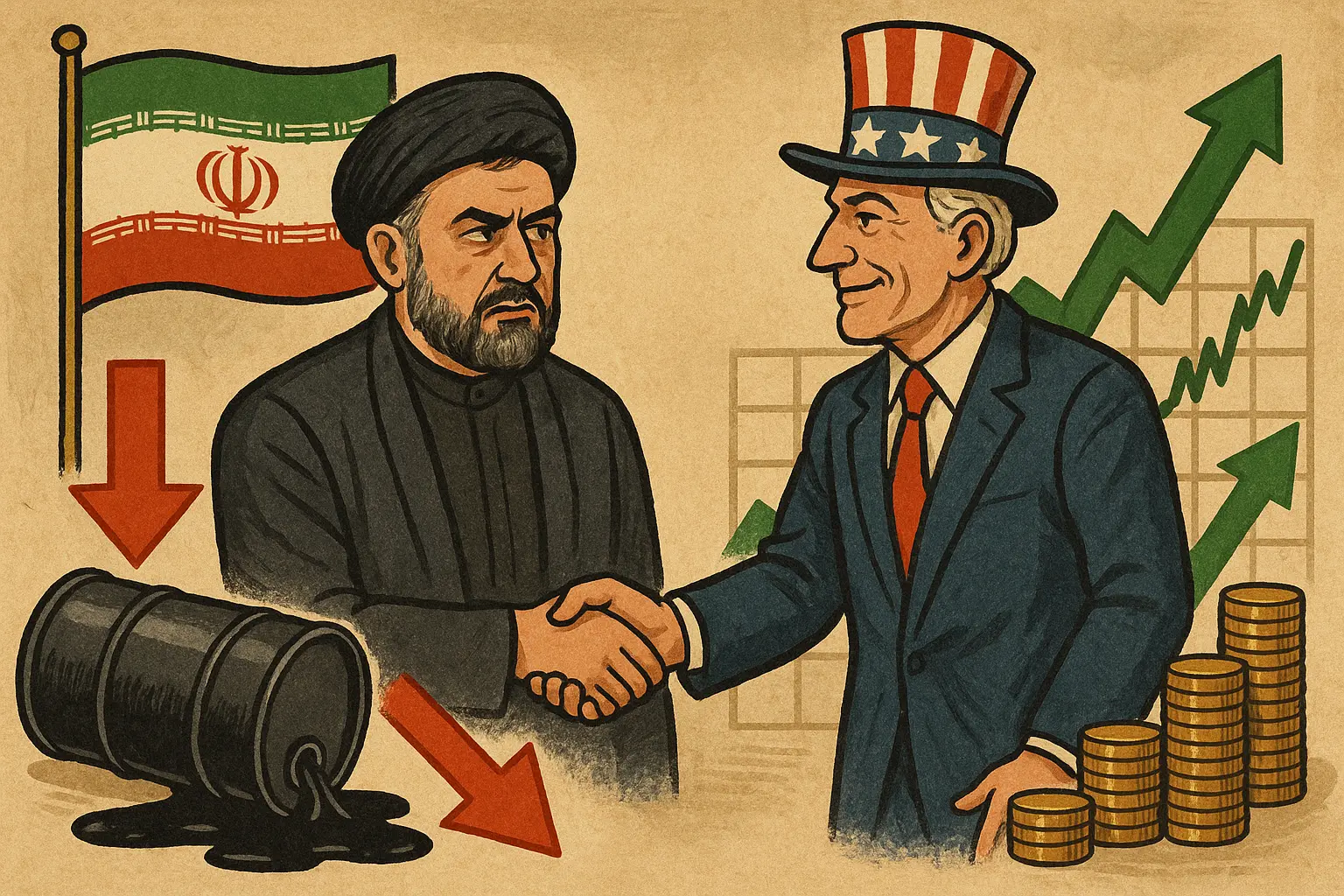
Iran’s Supreme National Security Council confirmed on April 8 that it would accept Pakistan’s proposed two-week ceasefire, but it also issued a stern warning, claiming that the committee “still has the trigger in hand.” It emphasized that a ceasefire does not mean the war is over, and that Iran has “complete distrust” of the U.S. Iran released a comprehensive peace plan with ten key conditions. After the ceasefire announcement, U.S. crude oil futures plunged 18%, while S&P 500 index futures rose 2.4%.
A Fragile Ceasefire Framework: Pakistan Mediates, While Israel Keeps Striking
The successful achievement of the ceasefire is largely due to Pakistan’s emergency diplomatic intervention. Pakistan’s prime minister Shehbaz Sharif publicly urged Trump (Donald Trump) to extend the deadline by two weeks and demanded that Iran commit to keeping the Hormuz Strait open. Trump then announced on Truth Social that he agreed to pause military action against Iran, arguing that Iran’s military objectives had been “achieved and even exceeded.”
Iran’s foreign minister confirmed that, in the next two weeks, ships can pass through the Hormuz Strait under military coordination, but added “technical limitations” that did not exist before the war as a condition. In normal circumstances, about one-fifth of the world’s oil supply is transported via the Hormuz Strait, and any passage restrictions have a direct impact on global energy markets.
The sustainability of the ceasefire is highly doubtful. According to a report by The Jerusalem Post, even though the U.S.-Iran ceasefire has been announced as in effect, Israel “is still continuing to strike Iran.” During the entire conflict, an IRGC (Islamic Revolutionary Guard Corps) commander maintained independent operations. Whether the ceasefire order can be effectively relayed to the grassroots command chain is a highly watched uncertain variable for the outside world.
Iran’s Ten-Point Peace Plan: A Demands Checklist for a Comprehensive Restructuring of U.S.-Iran Relations
The ten-point plan announced by Iran’s Supreme National Security Council goes far beyond the ceasefire itself, representing Iran’s demands for a comprehensive reshaping of U.S.-Iran relations.
Core Requirements of Iran’s Ten-Point Peace Plan
· The U.S. commits to not taking any aggressive actions against Iran
· Iran continues to control the Hormuz Strait
· The U.S. formally recognizes Iran’s nuclear enrichment rights
· Remove all major U.S. sanctions on Iran
· Remove all U.S. secondary sanctions affecting third-party entities
· End all resolutions by the United Nations Security Council targeting Iran
· End all resolutions by the International Atomic Energy Agency (IAEA) board targeting Iran
· The U.S. pays Iran war reparations and compensation
· U.S. combat forces fully withdraw from the region
· Stop hostile actions on all fronts, including the Lebanon front
Trump said the plan is “feasible,” but the White House has not yet publicly explained what the specific meaning of this stance is. The U.S. has clearly told Israel that during the negotiations it will insist that Iran remove nuclear materials, stop uranium enrichment, and eliminate the threat of ballistic missiles.
Financial Market Response and Key Takeaways for Follow-Up Talks
The ceasefire announcement had an immediate and significant impact on financial markets. After Trump announced the pause in military action, U.S. crude oil futures fell sharply by 18%, to about $92.60 per barrel; S&P 500 index futures rose 2.4%, reflecting the market’s positive response to easing tensions. However, oil prices are still far above the pre-war level of about $70 per barrel, showing that the market has not fully removed the geopolitical risk premium.
The representatives of U.S.-Iran negotiations are scheduled to hold formal talks in Pakistan’s capital, Islamabad, on April 10 (Friday). Iran’s position that U.S. forces must fully withdraw from the Middle East remains a highly contentious issue for Gulf Arab countries. Whether Iran’s Islamic Revolutionary Guard Corps will comply with the ceasefire agreement will be a key observation indicator for assessing whether the next two weeks of negotiations can achieve substantive progress.
Frequently Asked Questions
What does Iran’s “still holding the trigger” warning mean?
While confirming acceptance of the ceasefire agreement, Iran’s Supreme National Security Council emphasized that “we still have the trigger in hand,” underscoring that its forces maintain a high state of readiness. This wording reflects Iran’s conditional acceptance of the ceasefire and its complete distrust of U.S. intentions. At the level of actual implementation, the effectiveness of the ceasefire still faces a high degree of uncertainty.
How do the “technical limitations” on the Hormuz Strait affect the global energy market?
The Hormuz Strait is the world’s most crucial oil transport chokepoint, with about one-fifth of the world’s oil supply passing through it. The “technical limitations” Iran added during the ceasefire imply that transit conditions are different from before the war. This uncertainty keeps oil prices, even after a sharp 18% drop, at a level still far above pre-war levels.
Is there any realistic chance that Iran’s ten-point peace plan will be accepted?
The ten-point plan includes requirements such as the U.S. acknowledging nuclear enrichment rights, a comprehensive withdrawal of U.S. troops from the region, and payment of war reparations—issues that are fundamentally at odds with the U.S.’s currently stated public position. The U.S. has clearly told Israel that it will insist on Iran stopping uranium enrichment, which directly conflicts with Iran’s third point requirement. This shows that the gap between the two sides on core issues remains huge for now.
Disclaimer: The information on this page may come from third parties and does not represent the views or opinions of Gate. The content displayed on this page is for reference only and does not constitute any financial, investment, or legal advice. Gate does not guarantee the accuracy or completeness of the information and shall not be liable for any losses arising from the use of this information. Virtual asset investments carry high risks and are subject to significant price volatility. You may lose all of your invested principal. Please fully understand the relevant risks and make prudent decisions based on your own financial situation and risk tolerance. For details, please refer to
Disclaimer.


