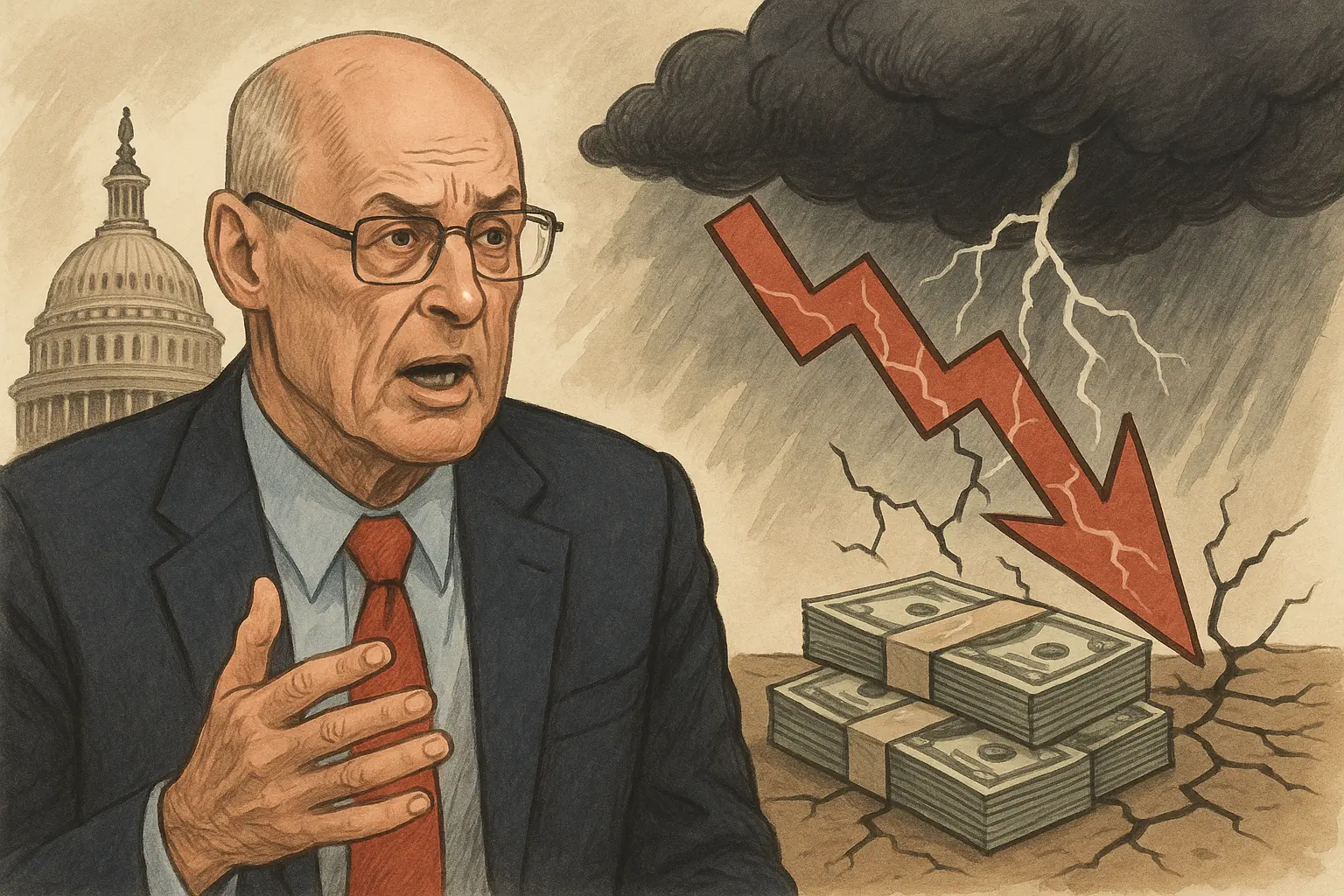
Former U.S. Treasury Secretary Henry Paulson urged U.S. authorities to draw up contingency plans to address a potential collapse in demand for U.S. national debt when he was interviewed by Bloomberg on April 17, 2026 (Thursday). He said that once a crisis erupts, the consequences would be extremely severe. On the same day, the U.S. Department of the Treasury completed the largest debt buyback in a single transaction in history, accepting approximately $15 billion in old bonds maturing from 2026 to 2028.
Paulson Bloomberg Interview Statement
According to Bloomberg’s interview report dated April 17, 2026, Paulson said: “We need an emergency, targeted, short-term contingency plan, put on the shelf, so that when we run into trouble, we can activate it immediately.”
Paulson added in the same interview: “People will ask, when are you going to hit a bottleneck? I don’t know, it’s not possible. But when we hit a bottleneck, it will be very bad, so we have to be prepared for that.”
U.S. National Debt Market Snapshot Data
According to USDebtClock data, the size of U.S. national debt is currently close to $40 trillion, and the yield on 10-year Treasury notes stands at 4.3%. Bloomberg reports that if the Treasury encounters financing difficulties, there is discussion that the Federal Reserve (Fed) could become the main buyer of Treasuries.
According to Tether’s transparency report, in the total reserves of Tether, the world’s largest stablecoin issuer, 63% are made up of U.S. national debt, 10% are made up of overnight reverse repurchase agreement transactions, and together they hold more than $120 billion in U.S. national debt. Andri Fauzan Adziima, Head of Research at Bitrue, in an interview with Cointelegraph, listed the potential volatility in the U.S. national debt market as a “macroeconomic tail risk that needs attention.”
U.S. Treasury Completes $15 Billion Largest-Scale Debt Buyback
According to a Treasury announcement, on April 17, 2026 (Thursday) the U.S. Department of the Treasury completed the largest debt buyback in a single transaction in history, accepting approximately $15 billion in old bonds maturing from 2026 to 2028. Such buyback operations enhance overall liquidity in the Treasury market by canceling less liquid older bonds.
Frequently Asked Questions
When and on which media platform did Paulson issue a warning about the U.S. national debt market?
According to a Bloomberg report, on April 17, 2026 (Thursday), former U.S. Treasury Secretary Henry Paulson issued a warning about a potential collapse in demand for U.S. national debt during an interview with Bloomberg and urged authorities to prepare contingency plans in advance.
What details are involved in the largest-scale debt buyback completed by the U.S. Treasury on Thursday?
According to the Treasury announcement, on April 17, 2026, the U.S. Department of the Treasury completed the largest debt buyback in a single transaction in history, accepting approximately $15 billion in old bonds maturing from 2026 to 2028. The purpose of these operations is to enhance liquidity in the Treasury market.
What proportion of Tether’s reserves is made up of U.S. national debt?
According to Tether’s transparency report, 63% of Tether’s total reserves are made up of U.S. national debt, 10% are made up of overnight reverse repurchase agreement transactions, and together they hold more than $120 billion in U.S. national debt.
Disclaimer: The information on this page may come from third parties and does not represent the views or opinions of Gate. The content displayed on this page is for reference only and does not constitute any financial, investment, or legal advice. Gate does not guarantee the accuracy or completeness of the information and shall not be liable for any losses arising from the use of this information. Virtual asset investments carry high risks and are subject to significant price volatility. You may lose all of your invested principal. Please fully understand the relevant risks and make prudent decisions based on your own financial situation and risk tolerance. For details, please refer to
Disclaimer.
Related Articles
Tether Freezes $3.29M USDT Linked to Rhea Finance Exploit
Tether froze $3.29 million in USDT linked to Rhea Finance exploit, ensuring user protection and ecosystem trust. Blockchain tracking enabled this action against suspicious wallets after attackers moved funds to evade detection.
GateNews4h ago
Tether 挹注 150M美元救援 Drift Protocol,反觀 Circle 因疏失遭集體訴訟
Drift Protocol faced a $280 million loss due to a hack, prompting Tether to launch a $150 million recovery plan, switching settlement assets to USDT. Meanwhile, Circle faces a lawsuit for failing to freeze stolen funds, highlighting regulatory ambiguities in the crypto industry.
ChainNewsAbmedia8h ago
Drift Protocol Secures $147.5M Funding from Tether to Relaunch as USDT-Based Exchange
Drift Protocol, a Solana-based decentralized derivatives exchange, plans to relaunch as a USDT-based perpetual futures exchange after a $270 million exploit, securing up to $147.5 million in funding from Tether and partners for recovery and operations.
GateNews12h ago
Tether Freezes 3.29M USDT in Rhea Finance Hacker Address
Tether CEO Paolo Ardoino announced the freezing of 3.29 million USDT connected to a hacker linked to Rhea Finance's $7.6 million theft due to a fake token contract attack.
GateNews12h ago
Drift Protocol Switches From USDC to USDT, Secures $127.5M Recovery Support From Tether
Drift Protocol announced a recovery plan backed by $150 million after a $280 million exploit, transitioning from USDC to USDT, impacting 128,000 users. The plan links user balance restoration to ongoing trading, following criticism of Circle's response to the hack.
GateNews17h ago


