
The U.S. Department of Labor proposed a rule draft on March 31, aiming to make it easier for 401(k) retirement plans to include alternative assets such as cryptocurrencies, private equity, and real estate. This proposal directly echoes an executive order signed by President Trump last August, which instructed the Department of Labor and the U.S. Securities and Exchange Commission (SEC) to jointly move forward with expanding investment channels for alternative assets in 401(k) plans.
The Core Changes in the Department of Labor’s Proposal: A Policy Shift Toward Allowing Pension Funds to Include Alternative Assets
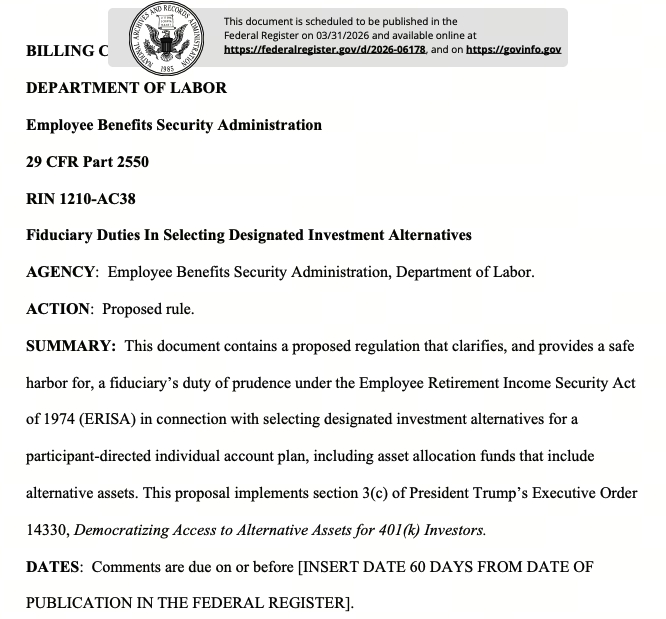 (Source: Federal Register)
The core of this rule draft lies in a structural shift in how retirement plans are set up. For years, most 401(k) retirement plans have focused primarily on stocks and bonds as investment targets, and even when considering adding alternative assets, they have faced numerous regulatory obstacles. If the new rules are approved, they will allow plan providers to add digital tokens (including crypto assets such as Bitcoin) and private-market funds that are not traded on public exchanges.
In a statement, U.S. Secretary of Labor Lori Chavez-DeRemer said: “This proposed rule will show how each plan can consider products that better reflect today’s investment environment.”
Key Timeline for the 401(k) Crypto Policy Reform
May 2025: The Department of Labor withdrew earlier guidance that had urged fiduciaries to take an “extremely cautious” approach before including cryptocurrencies
August 2025: President Trump signs an executive order requiring digital assets to be treated on par with other investment choices
March 31, 2026: The Department of Labor formally issues a rule draft to make it easier for 401(k) plans to include alternative assets such as cryptocurrencies
Controversy Emerges: The Dilemma Between Diversification and Protecting Working-Class Employees
Supporters argue that allowing 401(k) retirement funds to access a wider range of asset classes can help improve portfolio diversification, making retirement plans reflect the actual structure of today’s investment markets rather than being limited to traditional stock-and-bond allocations. From the perspective of economies of scale, if a large company with tens of thousands of employees allocates 1% of its 401(k) investment portfolio to Bitcoin, it would mean that hundreds of millions of dollars flow into crypto funds or the token market—adding a structural increment of capital to the entire industry.
Opponents are equally clear. In a statement, Senator Elizabeth Warren criticized that cracks have appeared in the private credit market, private equity returns have fallen to the lowest level in 16 years, crypto asset prices have also continued to decline, and pushing for reform at this time is questionable. She warned that this regulation could expose working-class people to losses while large financial institutions profit from it. She said bluntly: “But President Trump decided that now is the time to stuff all these high-risk assets into Americans’ 401(k) retirement accounts.”
At present, the rule draft is still in the public comments stage, and the final form and approval timeline have not yet been determined.
Frequently Asked Questions
What is a 401(k) retirement plan, and why is this reform drawing attention from the crypto market?
A 401(k) is the most important employer-sponsored retirement savings account in the United States, with total assets held in the trillions of dollars. Because of its massive funding base, even a tiny allocation of flows into crypto assets could have a significant impact on the crypto market. As a result, it is one of the key policy channels through which institutional capital can enter the crypto market.
If the Department of Labor’s new rules are approved, will retirement plan holders be required to invest in cryptocurrencies?
No. The new rules allow plan providers to “add” alternative asset options, but they do not require that all 401(k) plans must include cryptocurrencies. The final investment decisions depend on each company’s plan design and each employee’s individual asset allocation choices.
How large could the potential impact on funding volumes into the crypto market be from this reform?
U.S. 401(k) plans hold assets totaling in the trillions of dollars. Even if only 1% flows into crypto assets, the amount of money involved could reach hundreds of billions of dollars. Because the crypto market is relatively smaller in size, this influx of institutional capital at such a scale could have far-reaching and long-lasting effects on market structure.
Disclaimer: The information on this page may come from third parties and does not represent the views or opinions of Gate. The content displayed on this page is for reference only and does not constitute any financial, investment, or legal advice. Gate does not guarantee the accuracy or completeness of the information and shall not be liable for any losses arising from the use of this information. Virtual asset investments carry high risks and are subject to significant price volatility. You may lose all of your invested principal. Please fully understand the relevant risks and make prudent decisions based on your own financial situation and risk tolerance. For details, please refer to
Disclaimer.


