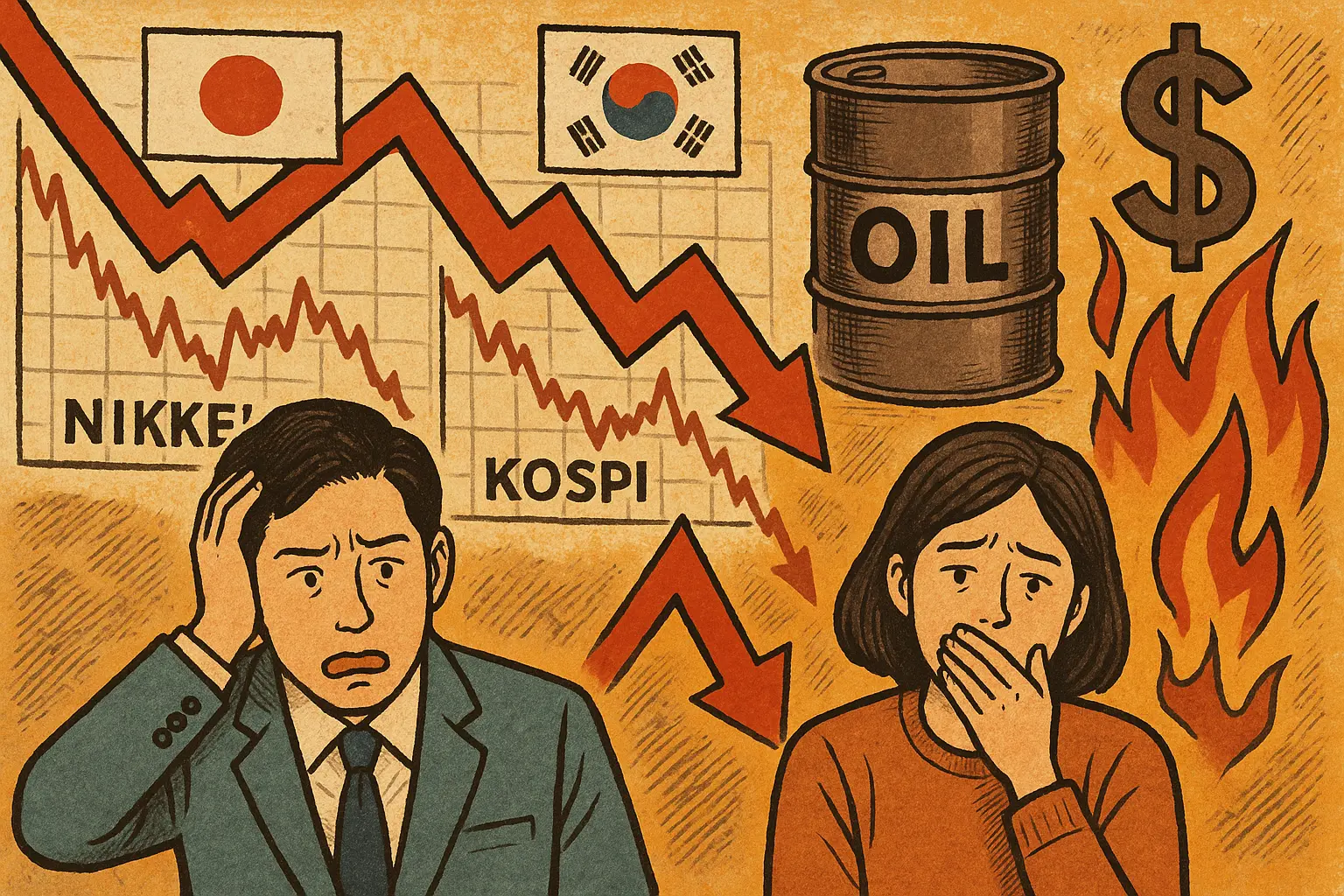
Monday, as the Iran military conflict enters its second week and continues to escalate, Asian stock markets experienced their worst single-day decline in years. The Nikkei 225 index plummeted 6.2% to 52,166 points at opening, and South Korea’s Kospi index fell 6.3%. WTI crude oil surged to $111 per barrel at Asian market open, and Brent crude approached $110 per barrel, reaching the highest levels since early 2022.
Asian Stock Market Collapse: The Chain Reaction Behind the Numbers
The sell-off in Asian markets was led by Japan and South Korea, both experiencing over 6% decline in a single day, with the Tokyo Stock Exchange’s broad index, TOPIX, dropping 4.3%. S&P 500 futures fell 1.6%, and Nasdaq 100 futures briefly declined 2%, indicating continued pressure after the European and American markets open.
Analysts note that this round of sell-off has gone beyond short-term emotional reactions, reflecting a systemic re-pricing of assets due to the prolonged conflict. As Iran expands its attacks into Gulf neighboring countries, investors are adjusting their expectations from a quick resolution to a more sustained disruption of energy supplies, re-evaluating asset prices accordingly.
Ongoing Geopolitical Escalation: New Supreme Leader Fires Missiles at Israel for the First Time
The geopolitical situation rapidly worsened over the weekend:
-
Iran expands attack scope: On Sunday, Qatar, Kuwait, and Bahrain reported missile and drone attacks. Iran’s targets have extended from Israel to the entire Gulf region.
-
U.S. evacuates embassy personnel: The U.S. ordered non-essential embassy staff to evacuate Saudi Arabia, indicating an assessment that the situation may further deteriorate.
-
New Supreme Leader’s first military action: On Monday, under the leadership of Iran’s new Supreme Leader, Ayatollah Ali Khamenei, Iran launched missiles at Israel for the first time, marking a formal assertion of a hardline stance through military action.
-
Trump’s tough stance: U.S. President Trump stated that strikes against Iran would continue until “they surrender, or more likely, collapse entirely.”
Dollar as Safe Haven, Gold Falls, Cryptocurrencies Follow Risk Sentiment
Capital flows show a clear crisis pattern. The U.S. dollar index (DXY) rose 0.69% to 99.67, continuing its safe-haven appreciation. Analysts point out that the U.S. benefits most from this conflict due to its status as a safe haven and a net energy exporter.
Gold, however, unexpectedly fell 2.2% to $5,056 per ounce. The logic behind this is that rising energy inflation expectations push long-term interest rates higher, with the 10-year U.S. Treasury yield rising 5 basis points to 4.19%. The high interest rate environment reduces the attractiveness of non-yielding assets like gold.
Cryptocurrencies also declined in tandem, with Bitcoin down 1.4% to $66,374 and Ethereum down 1.1% to $1,950, following the risk-off sentiment in broader markets. Notably, last month, U.S. non-farm payrolls decreased by 92,000, one of the largest drops since the pandemic outbreak, which, amid soaring energy inflation, deepens macroeconomic concerns about stagflation—a combination of slowing growth and rising inflation—adding complexity to asset valuation.
Frequently Asked Questions
Why are Asian stocks falling so sharply this time?
The decline is driven by two main factors: first, oil prices have surpassed $100 per barrel for the first time since 2022, sharply increasing energy costs and impacting corporate profit expectations; second, the escalation of Iran’s military conflict into its second week has heightened fears of a long-term closure of the Strait of Hormuz, prompting institutional investors to rapidly reduce risk exposure across markets.
Why did gold fall during the escalation of the war?
Gold declined because rising energy inflation expectations increased market anticipation that long-term interest rates would stay high, with the 10-year U.S. Treasury yield rising to 4.19%. As a non-yielding asset, gold’s opportunity cost increases in a rising interest rate environment, leading some safe-haven funds to flow into interest-bearing dollar assets instead.
Can cryptocurrencies serve as a safe haven during this geopolitical crisis?
In this event, both Bitcoin and Ethereum declined along with overall risk assets, showing no independent safe-haven characteristics. Capital flows indicate that, under extreme geopolitical stress, the dollar remains the preferred safe haven, while cryptocurrencies are still viewed as high-beta risk assets rather than safe assets, moving in tandem with tech stocks.
Disclaimer: The information on this page may come from third parties and does not represent the views or opinions of Gate. The content displayed on this page is for reference only and does not constitute any financial, investment, or legal advice. Gate does not guarantee the accuracy or completeness of the information and shall not be liable for any losses arising from the use of this information. Virtual asset investments carry high risks and are subject to significant price volatility. You may lose all of your invested principal. Please fully understand the relevant risks and make prudent decisions based on your own financial situation and risk tolerance. For details, please refer to
Disclaimer.


