
South Korea Plans to Amend Laws Requiring Financial Influencers to Disclose Holdings and Compensation; Violations Will Face Heavy Penalties Similar to Market Manipulation, and AI Monitoring Will Be Introduced to Strengthen Virtual Asset Regulation.
Enhancing Transparency in Virtual Assets: South Korea Revises Regulations for Financial Influencers
According to The Korea Herald, the South Korean government is drafting strict new regulations to address the growing issues caused by financial influencers (Finfluencers). Kim Seung-won, a member of the Democratic Party in the National Assembly, is leading the development of amendments to the Capital Markets Act and the Virtual Asset User Protection Act. The core goal of this legislation is to require individuals who frequently give investment advice or receive compensation to influence public buying and selling behavior on social media platforms, online messaging apps, or broadcast channels, to disclose the types and amounts of assets they hold, as well as any related compensation received.
Kim Seung-won pointed out that these highly influential financial influencers often provide investment advice to the public without professional qualifications. The lack of regulation and potential conflicts of interest can lead to unpredictable financial losses for investors.
Data from the Financial Supervisory Service (FSS) shows that the number of quasi-investment advisory firms (QIAB) in South Korea has grown dramatically from 132 in 2018 to 1,724 in 2024, indicating that gray-area advisory activities are rapidly expanding and clearly need regulatory clarification to maintain market order.
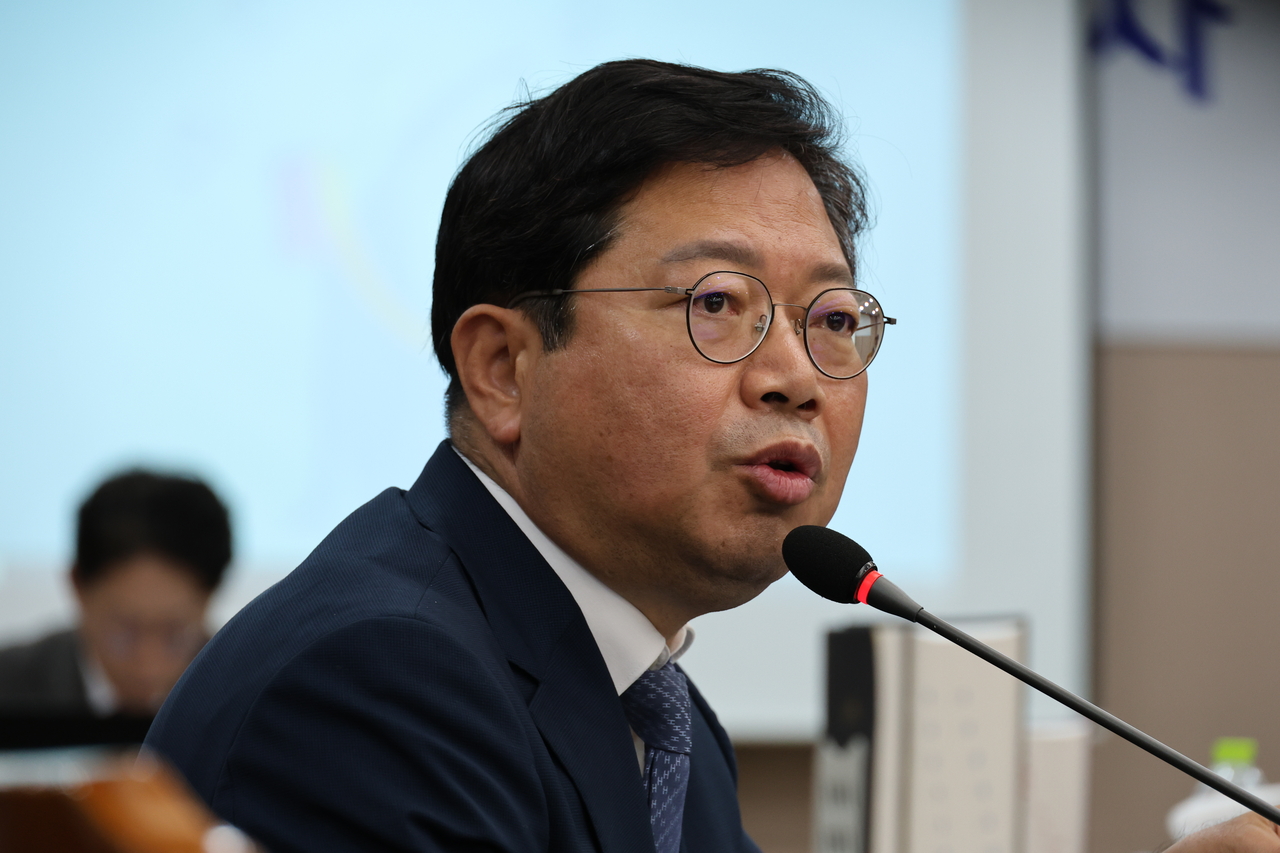
Image Source: The Korea Herald, South Korean Democratic Party Member Kim Seung-won
Obligation to Disclose Holdings and Compensation to Prevent “Pump-and-Dump” Social Media Traps
The draft law mandates that influencers promoting specific cryptocurrencies or stocks on YouTube, Telegram, or other social media platforms must honestly disclose their personal financial motives. If an influencer holds the asset they recommend or receives cash, tokens, or other forms of compensation from the issuer during the promotion, they must clearly state this in their content.
This measure aims to combat common “pump-and-dump” schemes in the market. Influential KOLs may buy tokens at low prices, then leverage their social influence to attract retail investors, inflate the price, and sell at a profit at the high point, risking losses for followers.
The disclosure obligation covers publications, online communications, broadcasts, and various internet streaming platforms. Specific standards and details will be further defined by subsequent presidential decrees. The law grants regulators the authority to pursue legal action. Failure by financial influencers to fulfill disclosure obligations or intentionally spreading false information for improper gains will be considered market harm. The South Korean government places high importance on the risks of unofficial investment advice, especially in the highly active digital asset trading market, where ensuring information accuracy and transparency is a top priority to protect investors.
Imposing Market Manipulation Penalties and Strengthening Oversight with AI Monitoring Systems
To demonstrate its commitment to combating financial crimes, South Korea’s proposed regulations stipulate that influencers who violate disclosure obligations face severe legal penalties. Penalties will be comparable to those for market manipulation or insider trading under the Capital Markets Act, including hefty fines or criminal charges. In 2026, regulators will also upgrade technical tools. The FSS has deployed AI-based market monitoring systems capable of detecting abnormal trading patterns in real-time. These systems can effectively track the relationship between social media commentary and market fluctuations, helping to identify potential violations.
Further Reading
Laying the Foundation for a Digital Asset Law! South Korea Introduces AI Monitoring to Prevent Crypto Market Manipulation
Additionally, the South Korean government has introduced new reporting requirements for foreign real estate investors, requiring disclosure of cryptocurrency transaction histories under certain circumstances. These measures reflect efforts to establish comprehensive regulation to prevent digital assets from being used for tax evasion or money laundering. The legislation positions South Korea as one of the first countries to directly penalize social media-driven financial promotions. This law aims to regulate financial influencers and reshape the investment environment by enforcing transparency in profit structures, allowing retail investors to distinguish between professional analysis and paid advertisements before making decisions.
Global Regulatory Trends Converge: Europe and America Tighten Social Media Investment Regulations
South Korea’s regulatory actions are part of a broader global trend to tighten oversight of financial influencers. In the UK, the Financial Conduct Authority (FCA) has implemented strict rules prohibiting unlicensed entities from conducting financial promotions, and in 2023, issued specific guidelines for crypto asset promotions. The U.S. Securities and Exchange Commission (SEC) and the Financial Industry Regulatory Authority (FINRA) have repeatedly fined public figures for undisclosed compensation related to crypto promotions, including high-profile cases involving Kim Kardashian and NBA Hall of Famer Shaquille O’Neal for failing to report endorsement fees.
In Europe, Italy’s market regulator has echoed the European Securities and Markets Authority (ESMA)’s guidelines, emphasizing that EU investment and advertising laws apply fully to financial influencers promoting cryptocurrencies and high-risk products. As international standards align, previously borderline promotional practices on social media will become increasingly difficult to sustain. South Korea’s legislation links digital asset user protection with capital market stability, signaling that cryptocurrencies will be regulated on par with traditional finance. For influencers and KOLs, future social media strategies will need to prioritize legal compliance and maintain public trust.
Disclaimer: The information on this page may come from third parties and does not represent the views or opinions of Gate. The content displayed on this page is for reference only and does not constitute any financial, investment, or legal advice. Gate does not guarantee the accuracy or completeness of the information and shall not be liable for any losses arising from the use of this information. Virtual asset investments carry high risks and are subject to significant price volatility. You may lose all of your invested principal. Please fully understand the relevant risks and make prudent decisions based on your own financial situation and risk tolerance. For details, please refer to
Disclaimer.
Related Articles
U.S. Treasury Report Proposes AML rules for DeFi Sector
U.S. Department of the Treasury recommended AML and counter-terror financing rules for DeFi platforms.
The report proposes a digital asset “hold law” allowing institutions to freeze suspicious crypto funds during
CryptoFrontNews1h ago
U.S. financial regulators bypass Basel Accords to promote the development of tokenized securities, with several major financial institutions launching pilot programs
The U.S. financial regulatory agencies led by Trump are bypassing the Basel Accords to promote the development of tokenized securities, believing that technology-neutral regulatory strategies should be provided. Several financial institutions have taken this opportunity to initiate related pilot projects.
GateNews1h ago
South African Economist Flags Authoritarian Risks in CBDCs
Economist Dawie Roodt has issued a warning that central bank digital currencies could become tools for authoritarian control due to their “programmable” nature.
The Authoritarian Risk
South African economist Dawie Roodt warned that central bank digital currencies, or CBDCs, could become
Coinpedia4h ago
People's Bank of China Governor Pan Gongsheng: Maintain high-pressure efforts to crack down on illegal financial activities such as virtual currency speculation
People's Bank of China Governor Pan Gongsheng stated at the National People's Congress that over the past year, China's financial risks have been effectively controlled, and the financial market has operated stably. In the future, efforts will continue to crack down on illegal financial activities, maintain financial stability, assess the impact of external shocks, and implement policy measures to manage risks.
GateNews5h ago
Hong Kong Legislative Council Chairman Calls for Cautious Development of Stablecoins and Virtual Assets, Emphasizing the Need to Regulate AI Oversight
Hong Kong Legislative Council Chairman Regina Ip stated that she will support the development of the first five-year plan and proposed recommendations for financial and technological development. Hong Kong's National People's Congress delegate Chan Zhenying emphasized the need for cautious development of emerging financial products and regulation of AI usage to ensure financial security. Wu Jiezhuang mentioned that Hong Kong should leverage its advantages, consolidate its status as an international financial center, and promote technological innovation.
GateNews7h ago
A certain CEX criticizes the new U.S. digital asset tax reporting regulations as too complicated, potentially increasing the burden on retail investors.
A Vice President of Tax at a certain CEX pointed out that the IRS's new regulation 1099-DA is overly complicated, requiring the reporting of small transactions such as stablecoin trades and Gas fees, which may lead to over-reporting and increase administrative burdens for cryptocurrency holders.
GateNews8h ago


