Why Is “Is Altcoin Season Still Here?” the Hottest Topic Right Now?
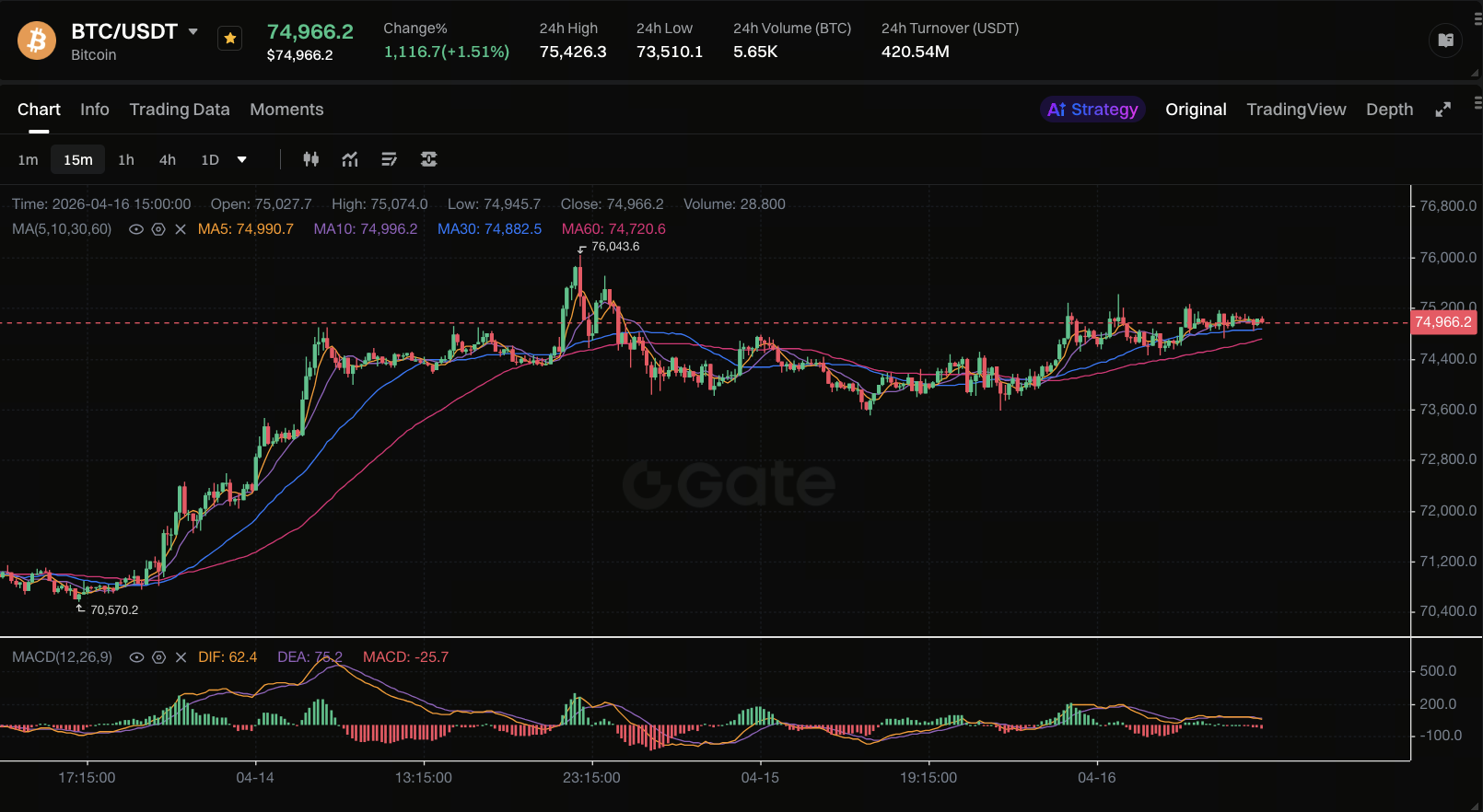
Image source: Gate Marketplace Page
The most notable market dynamics in recent days are as follows:
- On one side, BTC surged to $76,000 before retracing, with the overall price center remaining elevated;
- On the other, funding rates on major CEXs and DEXs are subdued, and futures sentiment remains pessimistic;
- Meanwhile, certain altcoins have seen sharp, short-lived rallies, fueling a rapid surge in social media discussions about the “return of altcoin season.”
These three signals combined can easily lead to misinterpretation.
Many traders mistake “localized spikes” for a “broad-based altcoin season.” However, from a capital flow perspective, the current market is better characterized as “core assets dominating + thematic asset pulses.”
The Market Isn’t Experiencing a “Full Altcoin Season”—It’s a “Structural Altcoin Window”
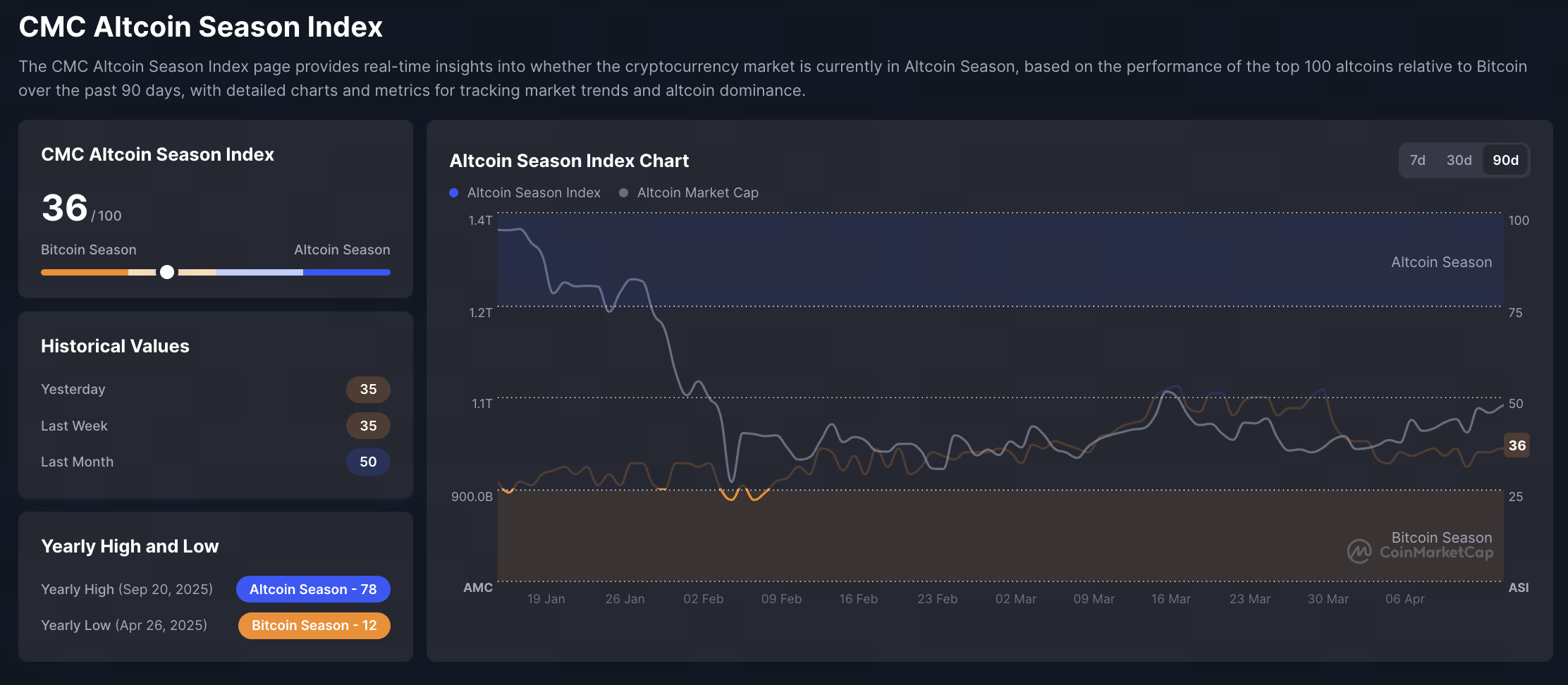
Image source: Altcoin Season Index Chart
Altcoin season hasn’t vanished, but its structure has fundamentally changed.
Classic features of previous altcoin seasons included:
- After BTC consolidation, capital flowed broadly into mid- and small-cap assets;
- Most sectors rallied in tandem, with high correlation across zones;
- Even low-quality projects benefited from liquidity premiums.
Today’s landscape is different:
- Capital now prioritizes BTC, ETH, and a select few highly liquid assets;
- Altcoin opportunities are concentrated in coins with strong narratives and deep liquidity;
- Rallies are shorter, drawdowns are sharper, and the margin for error is slimmer.
In short, today’s “altcoin season” is a series of brief windows, not an extended, broad-based expansion.
Why Isn’t Capital Spreading Broadly Like Before?
Institutional Capital Allocates to Core Assets First
With Wall Street’s entry, new funds are mainly coming in via ETFs, compliant accounts, and institutional custody channels.
These funds focus first on BTC and top-tier assets, not on high-volatility, small-cap coins.
The Market Has Entered a Productization Phase
From spot ETFs to yield-oriented ETFs, institutions are offering “manageable crypto exposure,” not “broad market Beta.”
This naturally reinforces core assets and weakens the passive premium for long-tail assets.
Risk Budgets Are More Conservative
After enduring several high-volatility cycles, capital is more focused on managing drawdowns.
In this risk-averse environment, altcoins must deliver stronger fundamentals or clear catalysts to attract sustained capital inflows.
Three Core Drivers and Three Key Constraints of the Current Altcoin Market
Core Drivers
- High-frequency narrative rotation: Themes like AI, BTCFi, RWA, and infrastructure upgrades each attract short-term capital, creating localized opportunities.
- High leverage and low float resonance: In coins with limited circulating supply and concentrated holdings, capital can trigger rapid price swings.
- Risk release as core assets stabilize: When BTC and ETH volatility contracts, short-term capital is more willing to rotate into high Beta assets.
Key Constraints
- Stablecoin inflows haven’t fully reached long-tail assets: If total stablecoin supply and exchange reserves don’t rise together, the altcoin rally’s sustainability is limited.
- Unhealthy funding rates and OI structure: If funding rates are bearish and OI surges without spot volume, altcoins are vulnerable to “pump and dump” scenarios.
- Shallow liquidity: Altcoin rallies often come with wider slippage and fragile order books, making liquidity crunches and sharp drawdowns more likely.
Practical Indicators to Assess Altcoin Season
Don’t just watch the top gainers—at minimum, track these five indicators:
- Is BTC dominance (BTC.D) consistently declining? This signals whether capital is rotating out of core assets.
- Are net stablecoin inflows and exchange stablecoin reserves rising? This is the cash foundation for sustained altcoin buying.
- Is ETH/BTC strength improving and holding? ETH is typically the bridge from BTC to altcoins.
- Is altcoin trading volume share rising and steady for at least 3–5 days? If price rises without volume, momentum is usually weak.
- Are funding rates and OI on major exchanges aligned? Extreme funding with rapid OI growth often signals crowded trades and reflexive drawdowns.
A simple framework:
- If 4 or more indicators are met, the “altcoin window” is strengthening;
- If only 2–3 are met, it’s a “trading rebound”;
- If fewer than 2 are met, be cautious about the “altcoin season” narrative.
What’s Next for Altcoins: Scenario Analysis
Structural Altcoin Window Continues (Medium–High Probability)
Conditions: BTC consolidates at high levels, ETH remains relatively strong, and stablecoin inflows improve moderately.
Result: A handful of leading narratives continue to rotate, with profit opportunities but significant differentiation.
False Altcoin Season (Medium Probability)
Conditions: Short-term price spikes, but stablecoin and spot volume don’t follow.
Result: Quick retracement after high-level consolidation, with sentiment shifting from FOMO to de-leveraging.
Full Altcoin Season Reignites (Medium–Low Probability)
Conditions: BTC.D declines clearly, stablecoin supply surges, and both on-chain and exchange volumes expand together.
Result: Rotation from leading altcoins to mid- and lower-tier coins, higher sector correlation, and greater sustainability.
Conclusion: Altcoin Season Is Driven by Capital Structure, Not Slogans
You can’t answer whether altcoin season is here by price alone. The real deciding factor is whether capital is consistently rotating out of core assets and finding deep support in the altcoin market. At this stage, altcoin opportunities exist, but they are structural, periodic, and thematic.
For traders, the key isn’t shouting “altcoin season is here,” but following three rules:
- Assess capital flows first, then check the top gainers;
- Trade the most liquid assets before chasing the hottest narratives;
- Set exit conditions before setting return targets.
Altcoin season will still exist in 2026, but it will reward those who understand capital, timing, and risk control—not those who cast a wide net.







