cryptoLog

vip
Market Analyst
Futures Trading Strategist
Diamond Hands
Trader
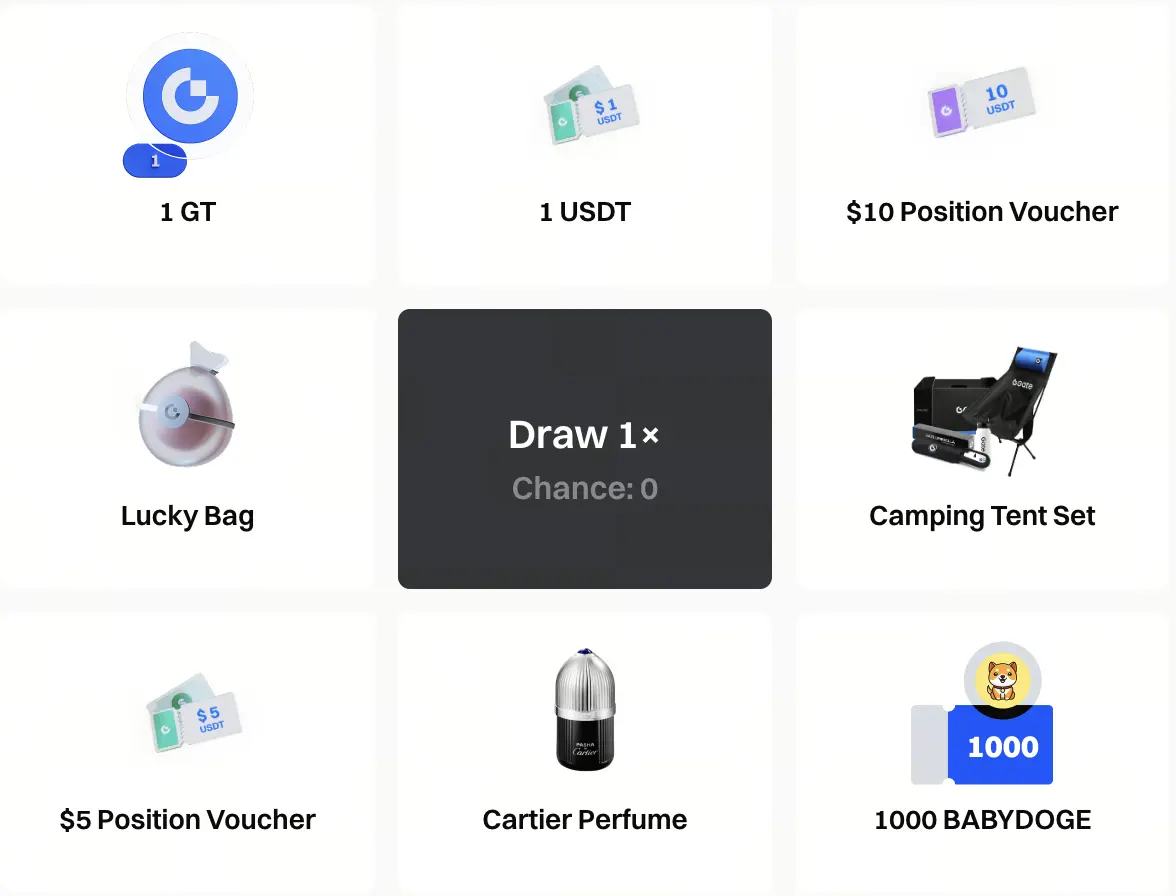
🔥 Only 5 days left in Live Lucky Draw Carnival Round 24!
Watch · Comment · Share → Earn Heat Points 🎰
Win GT, USDT, a camping tent set, Cartier perfume, and more!
🎁 The prize pool has just been refreshed, and the top prizes are still waiting to be won. Don't miss today's lucky draw chance!
👉 Join the Lucky Draw:
https://www.gate.com/activities/watch-to-earn?now_period=24
👀 Watch Live:
https://www.gate.com/live
GateLive
🔥 Only 5 days left in Live Lucky Draw Carnival Round 24!
Watch · Comment · Share → Earn Heat Points 🎰
Win GT, USDT, a camping tent set, Cartier perfume, and more!
🎁 The prize pool has just been refreshed, and the top prizes are still waiting to be won. Don't miss today's lucky draw chance!
👉 Join the Lucky Draw:
https://www.gate.com/activities/watch-to-earn?now_period=24
👀 Watch Live:
https://www.gate.com/live
repost-content-media
  • Reward
  • 2
  • Repost
  • Share
Venüs_:
To The Moon 🌕
View More
#StrategySells3588BTC
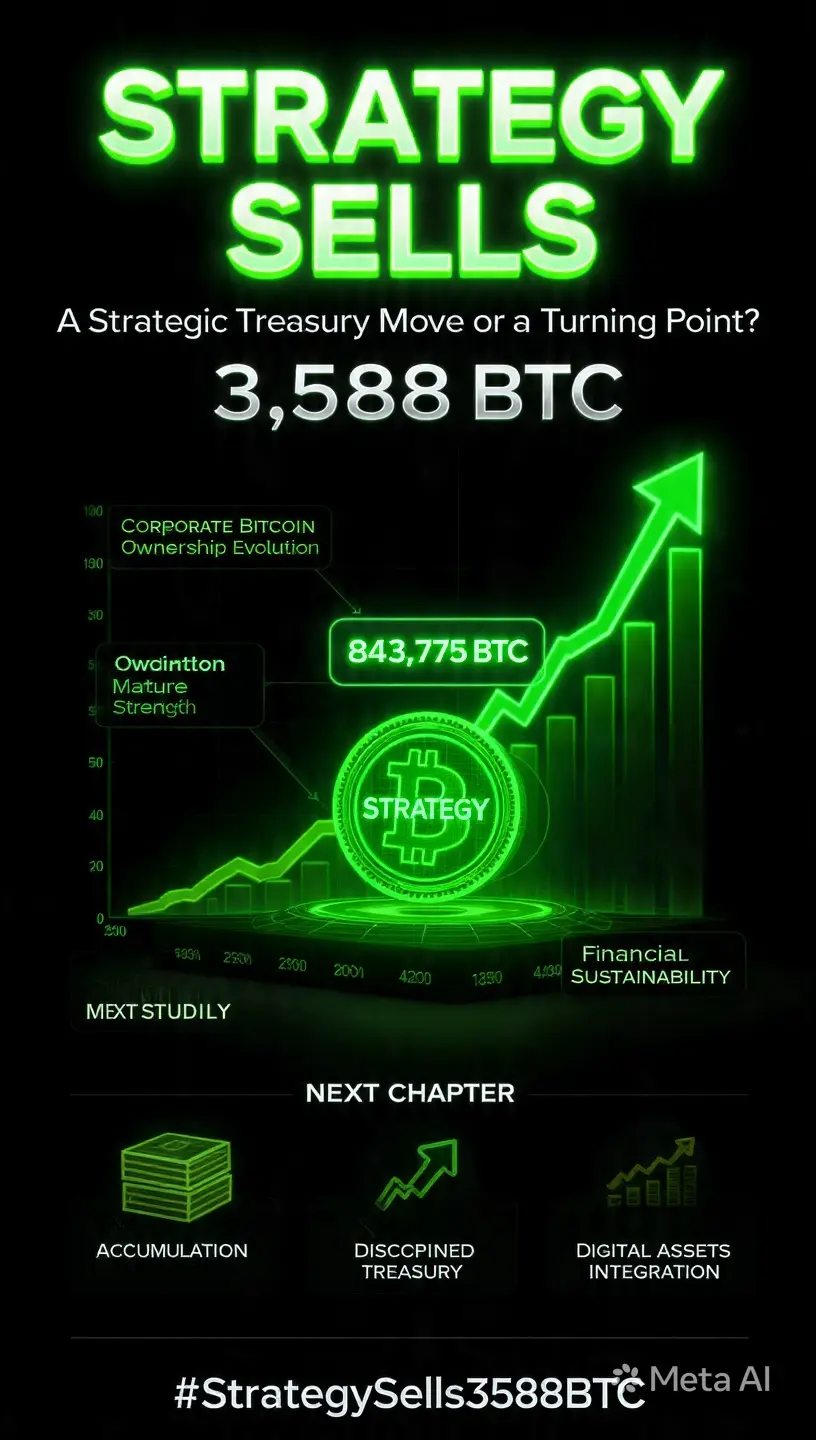
Strategy Sells 3,588 BTC: A Strategic Treasury Move or a Turning Point for Corporate Bitcoin Holdings?
For years, Strategy has been synonymous with unwavering confidence in Bitcoin. Every acquisition reinforced the company's long-term conviction, helping shape the corporate Bitcoin treasury model that inspired businesses worldwide. That is why the announcement that Strategy sold 3,588 BTC for approximately $216 million immediately became one of the most discussed stories in the digital asset industry. Yet the transaction tells a far more nuanced story than a simple sale.
BTC-1.21%
Venüs_
#StrategySells3588BTC
Strategy Sells 3,588 BTC: A Strategic Treasury Move or a Turning Point for Corporate Bitcoin Holdings?
For years, Strategy has been synonymous with unwavering confidence in Bitcoin. Every acquisition reinforced the company's long-term conviction, helping shape the corporate Bitcoin treasury model that inspired businesses worldwide. That is why the announcement that Strategy sold 3,588 BTC for approximately $216 million immediately became one of the most discussed stories in the digital asset industry. Yet the transaction tells a far more nuanced story than a simple sale.
According to the company's latest disclosure, the proceeds were primarily allocated to fund dividend payments on its Digital Credit securities and strengthen its U.S. dollar reserve. Rather than signaling a retreat from Bitcoin, the move reflects a broader treasury management strategy designed to meet corporate financial obligations while preserving long-term balance sheet stability. Even after the transaction, Strategy continues to hold 843,775 BTC, maintaining its position as the world's largest publicly traded corporate Bitcoin holder.
More Than a Sale
The market initially reacted with surprise because Strategy built its reputation on aggressive Bitcoin accumulation. However, corporate treasury management extends beyond buying assets. Public companies must also manage liquidity, shareholder commitments, and financing obligations.
In this case, the sale demonstrates that digital assets can serve not only as long-term reserve assets but also as a source of financial flexibility when required. The company has previously indicated that limited Bitcoin sales could be used under its monetization framework to support corporate obligations.
Why Investors Are Paying Close Attention
Large corporate Bitcoin transactions often influence market psychology, even when they represent only a small percentage of total holdings.
Investors are watching several important factors:
- How corporate treasury strategies continue to evolve.
- Whether other public companies adopt similar liquidity frameworks.
- The impact on institutional confidence in Bitcoin.
- Strategy's future accumulation plans.
Despite selling 3,588 BTC, the company still controls one of the largest Bitcoin reserves in existence, indicating that its long-term commitment to the asset remains substantial.
A Maturing Corporate Bitcoin Strategy
The digital asset market has entered a new phase where treasury management is becoming increasingly sophisticated. Early corporate strategies focused almost entirely on accumulation. Today, companies are balancing digital asset exposure with capital management, dividend commitments, and shareholder value.
This evolution reflects the broader maturation of the cryptocurrency industry. Bitcoin is no longer viewed solely as a speculative investment—it is increasingly being managed alongside traditional corporate financial assets.
Looking Ahead
Strategy's decision to sell 3,588 BTC should be viewed within the context of corporate finance rather than interpreted as a loss of confidence in Bitcoin. The company retains an enormous Bitcoin position while using a relatively small portion of its holdings to strengthen liquidity and meet financial commitments.
For investors, the announcement serves as a reminder that institutional adoption is evolving. The next chapter of corporate Bitcoin ownership will likely be defined not only by accumulation but also by disciplined treasury management, capital efficiency, and long-term financial sustainability. As more companies integrate digital assets into their balance sheets, Strategy's latest move may become an important case study in how corporate Bitcoin reserves are managed in an increasingly mature market.
repost-content-media
  • Reward
  • 2
  • 1
  • Share
Venüs_:
To The Moon 🌕
View More
#StakeUSD1Earn8.88%APR
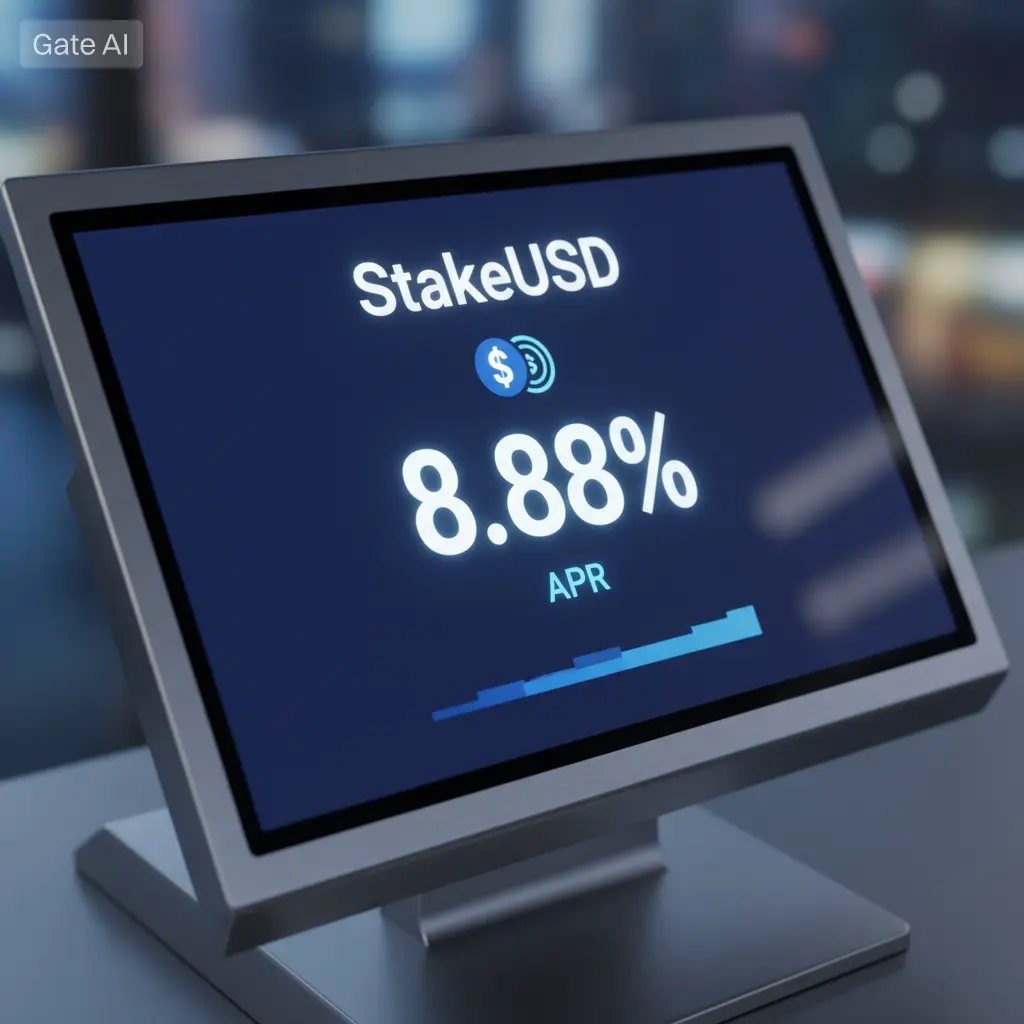
Stake USD1 and Earn Up to 8.88% APR: Transforming Stable Assets into Productive Capital
Introduction: The Evolution of Stablecoin Investing
The digital asset industry has evolved far beyond simple buying, holding, and trading. As blockchain technology matures, investors are increasingly seeking strategies that combine capital preservation with consistent yield generation. Stablecoins have become one of the most important financial innovations within this ecosystem because they offer price stability while enabling participation in decentralized and blockchain-based finan
Yusfirah
#StakeUSD1Earn8.88%APR
Stake USD1 and Earn Up to 8.88% APR: Transforming Stable Assets into Productive Capital
Introduction: The Evolution of Stablecoin Investing
The digital asset industry has evolved far beyond simple buying, holding, and trading. As blockchain technology matures, investors are increasingly seeking strategies that combine capital preservation with consistent yield generation. Stablecoins have become one of the most important financial innovations within this ecosystem because they offer price stability while enabling participation in decentralized and blockchain-based financial services.
Today, the focus is no longer on keeping stable assets idle. Instead, investors are looking for opportunities to make every dollar work more efficiently. This shift has accelerated the growth of staking products that reward long-term participation without requiring exposure to the high volatility often associated with traditional cryptocurrencies.
The Stake USD1 Earn Up to 8.88% APR campaign reflects this evolution by demonstrating how stable assets can become productive financial instruments. Rather than remaining inactive in a wallet, USD1 can contribute to long-term portfolio growth through yield generation while maintaining its role as a dollar-backed digital asset.
Understanding USD1
USD1 is designed as a dollar-backed stable asset that aims to maintain a value closely linked to the U.S. dollar. Stablecoins such as USD1 play an increasingly important role across the digital asset economy by providing liquidity, facilitating trading, supporting payments, and serving as a bridge between traditional finance and blockchain technology.
Because of their relatively stable value, stablecoins have become the preferred choice for many investors during periods of market uncertainty. They provide flexibility while reducing exposure to the price swings commonly experienced by other digital assets.
As adoption continues to expand, stablecoins are becoming essential building blocks for decentralized finance, tokenized real-world assets, cross-border settlements, and institutional blockchain applications.
Why Staking Matters
Staking has emerged as one of the most attractive methods of generating passive returns within the digital asset ecosystem. Instead of allowing assets to remain idle, staking enables investors to earn rewards simply by committing their holdings to an eligible program.
For long-term investors, this creates an additional source of value that complements capital preservation. Rather than relying exclusively on market appreciation, staking introduces a predictable income component that can improve overall portfolio efficiency.
The ability to earn up to 8.88% APR highlights how digital finance continues to develop more sophisticated opportunities for investors seeking sustainable returns.
The Power of Compound Growth
One of the most overlooked aspects of yield-generating products is the long-term impact of compounding.
When rewards are consistently reinvested, future earnings are calculated on both the original capital and previously accumulated returns. Over extended investment periods, this compounding effect can significantly enhance overall portfolio growth.
For disciplined investors, steady yield generation combined with regular reinvestment often creates stronger long-term outcomes than frequently attempting to time market fluctuations.
Capital that remains continuously productive has historically been one of the defining characteristics of successful long-term investment strategies.
Improving Capital Efficiency
Traditional investing often forces individuals to choose between preserving stability and pursuing higher returns. Yield-bearing stable assets help narrow this gap by allowing investors to maintain exposure to a relatively stable asset while simultaneously generating income.
This represents an important shift in portfolio management philosophy.
Rather than viewing stablecoins solely as defensive assets, investors increasingly recognize them as productive financial tools capable of supporting long-term wealth accumulation.
The result is improved capital efficiency, where idle liquidity is transformed into an active contributor to portfolio performance.
Stablecoins and the Future of Digital Finance
Stablecoins continue to become more deeply integrated into blockchain infrastructure.
Their applications now extend far beyond simple trading pairs.
They support decentralized finance, cross-border payments, institutional settlements, tokenized securities, real-world asset platforms, lending protocols, and treasury management.
As governments, financial institutions, and blockchain developers continue expanding digital financial infrastructure, stablecoins are expected to play an even larger role within the global financial system.
Yield-generating products built around stable assets demonstrate how blockchain technology is evolving beyond speculation toward practical financial utility.
Risk Management and Long-Term Investing
Although attractive yields naturally receive significant attention, successful investing always requires careful risk management.
Investors should evaluate product structure, eligibility requirements, lock-up conditions, liquidity considerations, and overall portfolio diversification before participating in any yield-generating opportunity.
Balanced portfolio construction remains essential regardless of prevailing market conditions.
Long-term success is rarely determined by pursuing the highest available yield alone. Instead, sustainable results typically emerge from disciplined capital allocation combined with consistent investment strategies.
My Perspective
In my view, products such as Stake USD1 Earn Up to 8.88% APR illustrate the continuing maturity of blockchain-based finance. The industry is increasingly focused on creating practical financial solutions that improve capital productivity while maintaining accessibility for a broad range of participants.
The growing popularity of yield-bearing stable assets reflects a broader transformation in investor behavior. Rather than simply protecting capital, investors increasingly expect their assets to generate sustainable returns without unnecessary operational complexity.
This trend is likely to continue as tokenized finance expands and blockchain infrastructure becomes more closely integrated with traditional financial markets.
Conclusion
The Stake USD1 Earn Up to 8.88% APR initiative represents more than a promotional campaign. It highlights the broader evolution of digital finance toward efficient capital management, productive stable assets, and long-term wealth creation.
As blockchain ecosystems continue to mature, investors are placing greater emphasis on sustainable income, transparency, and practical financial innovation. Yield-generating stable assets align with these objectives by combining stability with consistent earning potential.
The future of digital finance will likely be shaped by products that maximize capital efficiency while remaining simple, transparent, and accessible. Making stable assets productive is becoming one of the defining trends of this new financial era, and initiatives like this demonstrate how blockchain technology continues to redefine the relationship between savings, investment, and long-term financial growth.
repost-content-media
  • Reward
  • Comment
  • Repost
  • Share
#SKHynixADROversubscribed
SK Hynix ADR Oversubscribed: A Powerful Vote of Confidence in the AI Semiconductor Boom
Investor enthusiasm for artificial intelligence shows no signs of slowing. SK Hynix's ADR offering has been oversubscribed, meaning investor demand exceeded the number of shares available. In capital markets, this is widely regarded as a strong indicator of confidence, suggesting that institutional and retail investors were willing to compete for limited allocation rather than wait to buy later in the open market.
The strong demand is no coincidence. SK Hynix has become one of the
Venüs_
#SKHynixADROversubscribed
SK Hynix ADR Oversubscribed: A Powerful Vote of Confidence in the AI Semiconductor Boom
Investor enthusiasm for artificial intelligence shows no signs of slowing. SK Hynix's ADR offering has been oversubscribed, meaning investor demand exceeded the number of shares available. In capital markets, this is widely regarded as a strong indicator of confidence, suggesting that institutional and retail investors were willing to compete for limited allocation rather than wait to buy later in the open market.
The strong demand is no coincidence. SK Hynix has become one of the most important companies in the AI supply chain thanks to its leadership in High Bandwidth Memory (HBM)—a critical technology used in AI servers and advanced computing systems. While powerful GPUs perform the calculations, HBM enables those processors to access massive amounts of data at extremely high speeds. Without advanced memory, even the most powerful AI chips cannot operate at their full potential.
A simple comparison illustrates why this matters. Imagine an AI processor as the engine of a high-performance sports car. The memory system is the fuel delivery mechanism. A world-class engine cannot reach maximum performance if fuel cannot be supplied quickly enough. In AI infrastructure, HBM performs that essential role, making companies like SK Hynix indispensable to the industry's future.
The oversubscription also reflects a broader investment trend. Rather than focusing only on AI software developers, investors are increasingly allocating capital to the companies building the infrastructure behind the AI revolution. Data centers, advanced memory, networking hardware, and semiconductor technologies have become some of the market's most closely watched growth areas because every major AI application depends on them.
Looking ahead, demand for AI computing power is expected to continue rising as cloud providers, enterprise software companies, and technology leaders expand their AI capabilities. If this investment cycle continues, suppliers of advanced memory and semiconductor solutions are likely to remain among the biggest beneficiaries.
For investors, the oversubscribed SK Hynix ADR offering is more than a successful capital market event—it reflects growing confidence that the AI revolution is entering its next phase. In today's technology landscape, the companies powering artificial intelligence behind the scenes are becoming just as valuable as the applications capturing the world's attention.
repost-content-media
  • Reward
  • 2
  • Repost
  • Share
Venüs_:
To The Moon 🌕
View More
#SamsungProfitBeatsNvidiaApple
Samsung Outpaces Nvidia and Apple in Profit: What This Means for the Future of the AI Economy
When people think about the AI revolution, names like Nvidia and Apple usually dominate the conversation. Yet the latest earnings surprise has shifted the spotlight to another technology giant. Samsung's stronger-than-expected profit performance has reminded investors that the AI race is not won by chip designers alone—it is powered by an entire ecosystem of companies supplying the world's digital infrastructure.
Behind every AI model, cloud platform, and high-performan
Venüs_
#SamsungProfitBeatsNvidiaApple
Samsung Outpaces Nvidia and Apple in Profit: What This Means for the Future of the AI Economy
When people think about the AI revolution, names like Nvidia and Apple usually dominate the conversation. Yet the latest earnings surprise has shifted the spotlight to another technology giant. Samsung's stronger-than-expected profit performance has reminded investors that the AI race is not won by chip designers alone—it is powered by an entire ecosystem of companies supplying the world's digital infrastructure.
Behind every AI model, cloud platform, and high-performance data center lies an enormous demand for advanced memory, storage, and semiconductor manufacturing. Samsung has positioned itself at the heart of this transformation. As demand for AI servers continues to accelerate, the company's memory business has become one of its strongest growth engines, benefiting from the rapid expansion of High Bandwidth Memory (HBM) and advanced DRAM technologies.
History has shown that every major technological revolution creates unexpected winners. During the smartphone era, companies producing displays, memory chips, and mobile processors quietly became global leaders alongside the brands selling the devices. The AI revolution is following a remarkably similar path. While software companies capture headlines, hardware suppliers are building the foundation that makes artificial intelligence possible.
For investors, Samsung's performance sends an important message. The opportunity within AI extends far beyond a handful of well-known names. Companies supplying memory, advanced packaging, semiconductor manufacturing, and data center infrastructure are becoming increasingly valuable as global technology firms continue investing billions of dollars into next-generation computing.
Institutional investors are also broadening their exposure across the semiconductor industry rather than concentrating on a single company. This diversification reflects a growing belief that the AI boom will benefit the entire supply chain—from chip designers and memory manufacturers to equipment suppliers and cloud infrastructure providers.
Samsung's results demonstrate that strong execution, technological leadership, and strategic positioning can deliver exceptional financial performance even in one of the world's most competitive industries. As AI adoption accelerates across finance, healthcare, manufacturing, and enterprise software, demand for advanced semiconductor technology is expected to remain one of the defining growth themes of the decade.
The latest earnings are more than a quarterly success—they reinforce a larger investment story. The future of artificial intelligence will belong not only to the companies creating AI applications, but also to those building the powerful hardware that keeps the digital world running.
repost-content-media
  • Reward
  • 2
  • 1
  • Share
Venüs_:
To The Moon 🌕
View More
#VitalikUnveilsLeanEthereum
Vitalik Unveils Lean Ethereum: Why Simplicity Could Define the Next Era of Blockchain Innovation
Introduction: The Future of Blockchain Depends on Continuous Evolution
Blockchain technology has progressed far beyond its original purpose as a decentralized payment system. Today, it supports decentralized finance, tokenized assets, digital identity, gaming ecosystems, artificial intelligence applications, and enterprise-grade financial infrastructure. As adoption accelerates worldwide, blockchain networks face an increasingly difficult challenge: they must process mo
Yusfirah
#VitalikUnveilsLeanEthereum
Vitalik Unveils Lean Ethereum: Why Simplicity Could Define the Next Era of Blockchain Innovation
Introduction: The Future of Blockchain Depends on Continuous Evolution
Blockchain technology has progressed far beyond its original purpose as a decentralized payment system. Today, it supports decentralized finance, tokenized assets, digital identity, gaming ecosystems, artificial intelligence applications, and enterprise-grade financial infrastructure. As adoption accelerates worldwide, blockchain networks face an increasingly difficult challenge: they must process more users, secure billions of dollars in value, and support increasingly sophisticated applications without sacrificing decentralization or security.
Achieving this balance is one of the greatest engineering challenges in modern technology. A network that prioritizes speed alone may compromise decentralization. A network focused exclusively on security may struggle with scalability. Sustainable blockchain development therefore requires continuous refinement rather than constant expansion of complexity.
This is why Vitalik Buterin's Lean Ethereum vision deserves significant attention. Rather than introducing another headline-grabbing feature, the proposal emphasizes a principle that has guided many of the world's most successful engineering projects: simplicity. The objective is not to reduce Ethereum's capabilities but to streamline its underlying architecture, making the protocol easier to maintain, more resilient, and better prepared for decades of future innovation.
Ethereum's Journey: From Smart Contracts to the Foundation of Web3
Since its launch in 2015, Ethereum has transformed the blockchain industry by introducing programmable smart contracts. Unlike earlier blockchain networks that focused primarily on transferring digital value, Ethereum enabled developers to build decentralized applications capable of executing complex logic without relying on centralized intermediaries.
This innovation laid the foundation for an entirely new digital economy. Decentralized finance emerged as one of Ethereum's first major success stories, allowing users to lend, borrow, trade, and provide liquidity directly through smart contracts. Soon after, non-fungible tokens revolutionized digital ownership by enabling verifiable ownership of art, collectibles, music, gaming assets, and intellectual property.
Ethereum also became the preferred infrastructure for blockchain gaming, decentralized autonomous organizations, tokenized securities, and real-world asset tokenization. Financial institutions increasingly began exploring Ethereum-based solutions for settlement, digital bonds, and asset management, reinforcing its position as the leading smart contract platform.
As adoption expanded, Ethereum faced growing pressure to improve scalability. The network responded through one of the most significant upgrades in blockchain history: the transition from Proof of Work to Proof of Stake. This shift dramatically reduced energy consumption while establishing a more sustainable consensus mechanism for long-term growth.
At the same time, Layer-2 scaling solutions—including optimistic rollups and zero-knowledge rollups—began processing increasing transaction volumes while relying on Ethereum's security. Today, Ethereum functions not only as an independent blockchain but also as the settlement layer for an expanding ecosystem of interconnected scaling networks.
Understanding the Lean Ethereum Vision
Despite its success, Ethereum has grown considerably more sophisticated over the years. Every major upgrade has introduced additional functionality designed to improve scalability, security, and usability. While these improvements have strengthened the network, they have also increased protocol complexity.
Vitalik Buterin's Lean Ethereum vision addresses this challenge by emphasizing simplification rather than expansion. The concept focuses on reducing unnecessary complexity within Ethereum's core architecture while preserving the functionality that has made the network the industry's leading programmable blockchain.
Rather than continuously adding new layers of technical complexity, Lean Ethereum proposes refining existing systems to improve maintainability, reduce engineering overhead, and create a protocol that remains sustainable over decades rather than years.
This philosophy reflects an important engineering principle. Mature technologies often become stronger not by accumulating endless features but by simplifying existing systems until they become easier to understand, operate, secure, and upgrade.
Why Protocol Simplicity Matters
In software engineering, complexity is often one of the greatest sources of long-term risk. Every additional component increases the number of interactions developers must understand, maintain, and secure.
Simpler systems generally offer several important advantages.
First, they are easier to audit. Security researchers can analyze cleaner codebases more effectively, increasing the likelihood of identifying vulnerabilities before they become critical issues.
Second, simplified architectures reduce implementation risk. Smaller and more focused protocols contain fewer opportunities for unexpected interactions between different components.
Third, cleaner protocol design improves maintainability. Future upgrades become easier to develop, review, test, and deploy when the underlying architecture remains understandable.
For blockchain networks securing hundreds of billions of dollars in value, these advantages become especially important.
Ethereum's long-term success depends not only on innovation but also on maintaining a secure and reliable foundation capable of supporting continuous development.
Simplicity Strengthens Security
Blockchain security extends far beyond cryptographic algorithms. It also depends on implementation quality, protocol consistency, and software reliability.
Complex systems naturally create more opportunities for bugs, unexpected behaviors, and operational challenges.
By reducing unnecessary protocol complexity, Lean Ethereum aims to strengthen overall network security through architectural clarity.
Simpler systems allow developers to reason more effectively about network behavior. Security audits become more comprehensive, software testing becomes more reliable, and client implementations become easier to verify.
For validators operating network infrastructure, reduced complexity can also improve operational stability while minimizing technical difficulties associated with maintaining full network participation.
Rather than treating security as an isolated feature, Lean Ethereum recognizes that security emerges from thoughtful engineering decisions made throughout the protocol's design.
Improving Validator Accessibility and Decentralization
One of Ethereum's defining principles has always been decentralization.
Maintaining this principle requires ensuring that network participation remains accessible to a broad range of validators rather than becoming concentrated among a small number of highly specialized operators.
A leaner protocol could reduce technical barriers associated with running validator infrastructure by simplifying software requirements, improving documentation, and reducing operational complexity.
Lower technical barriers encourage broader participation, strengthening decentralization by distributing responsibility across a larger validator community.
Greater decentralization enhances censorship resistance while improving network resilience against failures or coordinated attacks.
This relationship illustrates why protocol simplicity extends beyond software engineering into the broader governance and security of decentralized networks.
Benefits for Developers and Ecosystem Innovation
Ethereum's success ultimately depends on its developer community.
Thousands of applications continue to be built across decentralized finance, gaming, social networks, identity systems, tokenization platforms, and enterprise blockchain solutions.
However, as protocols become increasingly sophisticated, the learning curve for new developers also rises.
Lean Ethereum seeks to make the ecosystem more approachable by reducing unnecessary architectural complexity.
A clearer protocol enables developers to understand Ethereum's core mechanisms more quickly, accelerating innovation while lowering barriers to entry.
Improved developer accessibility also benefits educational institutions, independent researchers, startups, and enterprise software teams seeking to build secure decentralized applications.
The easier a platform becomes to understand, the broader its innovation ecosystem can grow.
In the long term, developer experience may become one of Ethereum's most valuable competitive advantages.
Conclusion
Vitalik Buterin's Lean Ethereum vision represents a mature approach to blockchain evolution. Rather than measuring progress by the number of new features added, it emphasizes the importance of refining the protocol's foundation through simplicity, clarity, and sustainable engineering.
Ethereum has already transformed decentralized finance, NFTs, gaming, tokenization, and Web3 infrastructure. As adoption continues to expand globally, maintaining this leadership will require not only innovation but also disciplined architectural improvements that strengthen security, decentralization, and long-term resilience.
In my view, Lean Ethereum reflects one of the most valuable lessons in technology: the strongest systems are rarely the most complicated. They are the ones that combine powerful capabilities with elegant, understandable, and maintainable design. If successfully implemented, this philosophy could help ensure that Ethereum remains the backbone of decentralized innovation for many years to come.
@Gate_Square
repost-content-media
  • Reward
  • Comment
  • Repost
  • Share
#StrategySells3588BTC
Strategy Sells 3,588 BTC, A Strategic Portfolio Move That Draws Market Attention
Strategy has once again become a major topic of discussion across the digital asset industry after announcing the sale of 3,588 Bitcoin. The move immediately attracted the attention of investors, analysts, and market observers who closely follow the company's long-term Bitcoin strategy. While the transaction generated significant interest, many experts view it as part of disciplined portfolio management rather than a shift away from the company's broader digital asset vision.
Over the years,
BTC-1.21%
Yusfirah
#StrategySells3588BTC
Strategy Sells 3,588 BTC, A Strategic Portfolio Move That Draws Market Attention
Strategy has once again become a major topic of discussion across the digital asset industry after announcing the sale of 3,588 Bitcoin. The move immediately attracted the attention of investors, analysts, and market observers who closely follow the company's long-term Bitcoin strategy. While the transaction generated significant interest, many experts view it as part of disciplined portfolio management rather than a shift away from the company's broader digital asset vision.
Over the years, Strategy has built a reputation for treating Bitcoin as a strategic treasury asset. Its consistent approach has influenced institutional discussions around digital assets and encouraged businesses to explore diversified treasury management. Every transaction involving the company is therefore closely monitored because it can provide insights into institutional investment practices.
The sale of 3,588 BTC demonstrates that professional portfolio management is not only about acquiring assets but also about making timely financial decisions that support long-term objectives. Companies regularly adjust their holdings to improve liquidity, strengthen balance sheets, finance new initiatives, or optimize capital allocation. Such actions are a normal part of financial management and should be viewed within the broader context of corporate strategy.
Bitcoin remains one of the world's most recognized digital assets, attracting participation from institutional investors, financial firms, technology companies, and retail participants. As adoption continues to expand, many organizations are integrating digital assets into diversified investment and treasury strategies. Strategy's latest transaction highlights how institutions actively manage these holdings while maintaining a long-term perspective.
One important factor behind institutional portfolio management is flexibility. Financial markets constantly evolve, creating new opportunities for investment, innovation, and business expansion. Maintaining adequate liquidity allows companies to respond efficiently to changing market conditions while continuing to invest in future growth.
The broader cryptocurrency ecosystem has matured considerably over recent years. Improved market infrastructure, expanding regulatory clarity in several regions, and increased institutional participation have created a more stable environment for professional investors. Companies now have access to sophisticated custody solutions, risk management tools, and financial products that support strategic asset management.
Bitcoin continues to play a central role within this ecosystem. Its limited supply, global accessibility, and growing institutional recognition have strengthened its position as a widely followed digital asset. Although market prices naturally fluctuate over time, long-term adoption continues to be supported by technological innovation, expanding infrastructure, and increasing awareness among investors.
Strategy's transaction also highlights the importance of disciplined financial planning. Successful organizations regularly evaluate capital efficiency, assess investment opportunities, and balance risk with future growth objectives. Portfolio adjustments are a common element of responsible corporate finance and often reflect evolving business priorities rather than changes in long-term confidence.
The digital asset market itself continues to expand beyond simple investment opportunities. Blockchain technology is supporting innovation across decentralized finance, tokenized assets, digital identity, payments, and enterprise solutions. As these sectors grow, institutional participation is expected to remain an important driver of market development.
Investor attention is also focused on macroeconomic conditions, technological progress, and global capital flows. These factors influence investment decisions across traditional and digital financial markets alike. Companies managing significant digital asset holdings often consider these broader economic conditions when making treasury decisions.
Another notable trend is the growing integration between traditional finance and blockchain technology. Financial institutions continue exploring tokenization, digital settlement systems, and blockchain-based infrastructure to improve efficiency and expand access to modern financial services. This evolution strengthens the long-term outlook for the broader digital asset ecosystem.
Innovation remains one of the strongest foundations supporting Bitcoin and blockchain technology. Developers continue improving scalability, security, interoperability, and user accessibility, creating new opportunities for businesses and investors around the world. As adoption increases, institutional strategies are likely to become even more sophisticated.
For investors, Strategy's sale of 3,588 BTC serves as an example of professional treasury management rather than a simple market event. Large organizations frequently adjust asset allocations while maintaining long-term investment frameworks designed to support sustainable growth and financial flexibility.
Looking ahead, the cryptocurrency market continues to evolve through technological advancement, expanding institutional participation, and increasing global awareness. Companies that combine disciplined financial management with strategic innovation may be well positioned to benefit from the next phase of digital asset development.
Overall, Strategy's latest Bitcoin transaction reflects the growing maturity of institutional participation in the cryptocurrency market. Portfolio management, liquidity planning, and long-term capital allocation remain essential components of corporate financial strategy. As blockchain technology continues to reshape the global financial landscape, thoughtful institutional decision-making is expected to play an increasingly important role in supporting the sustainable growth of the digital asset economy.
  • Reward
  • Comment
  • Repost
  • Share
#TradFiCFDGoldMasters
TradFi CFD Gold Masters: Why the Smartest Traders Never Ignore Gold
When markets become unpredictable, experienced traders don't chase noise—they follow capital. And time after time, that capital finds its way to gold. From inflation shocks and central bank policy shifts to geopolitical uncertainty and currency volatility, gold has remained one of the most reliable assets for identifying opportunity in global markets.
This is exactly why Gold CFDs continue to attract professional traders. Unlike physical gold, CFDs allow market participants to trade price movements in bo
XAUUSD-1.41%
XAGUSD-3.32%
XBRUSD5.40%
NAS100-1.82%
Venüs_
#TradFiCFDGoldMasters
TradFi CFD Gold Masters: Why the Smartest Traders Never Ignore Gold
When markets become unpredictable, experienced traders don't chase noise—they follow capital. And time after time, that capital finds its way to gold. From inflation shocks and central bank policy shifts to geopolitical uncertainty and currency volatility, gold has remained one of the most reliable assets for identifying opportunity in global markets.
This is exactly why Gold CFDs continue to attract professional traders. Unlike physical gold, CFDs allow market participants to trade price movements in both directions, giving them the flexibility to respond quickly whether the market is rallying or correcting. In fast-moving markets, speed and flexibility often matter just as much as direction.
History offers countless examples. During periods of financial stress, gold has repeatedly become a focal point for global investors seeking stability. At the same time, major economic events—such as interest rate decisions, inflation reports, and changes in bond yields—have consistently created high-probability trading opportunities for those following the precious metals market.
Professional traders rarely view gold as just a safe-haven asset. Instead, they see it as a real-time indicator of global risk sentiment. Rising gold prices often reflect growing caution across financial markets, while pullbacks can signal improving confidence in economic growth. Understanding these relationships helps traders make more informed decisions rather than relying on emotion.
In today's interconnected financial system, where a single economic report can move markets within seconds, gold remains one of the few assets capable of combining liquidity, volatility, and global relevance. That is why it continues to hold a permanent place in the playbook of experienced market participants.
The world's biggest opportunities often emerge when uncertainty is at its highest—and for generations, gold has remained one of the first markets professionals turn to when that moment arrives.
$XAUUSD $XAGUSD $XBRUSD $NAS100
  • Reward
  • 2
  • 1
  • Share
Venüs_:
To The Moon 🌕
View More
Gate has launched a learn-and-earn campaign to promote Espresso Systems' ESP token, with a total of 897,505 ESP to be distributed. The campaign will run for two weeks, from July 6th at 08:00 to July 20th at 08:00 UTC.
The participation process consists of three stages. First, users learn about Espresso by reading a designated article, then they complete a quiz. An important detail to note is that all questions must be answered correctly for the quiz to be successfully submitted; incorrect answers will result in the submission being unsuccessful. Each user can only submit the quiz once, so care
ESP-2.86%
User_any
Gate has launched a learn-and-earn campaign to promote Espresso Systems' ESP token, with a total of 897,505 ESP to be distributed. The campaign will run for two weeks, from July 6th at 08:00 to July 20th at 08:00 UTC.
The participation process consists of three stages. First, users learn about Espresso by reading a designated article, then they complete a quiz. An important detail to note is that all questions must be answered correctly for the quiz to be successfully submitted; incorrect answers will result in the submission being unsuccessful. Each user can only submit the quiz once, so careful reading and correct answers are crucial.
The reward structure consists of two separate tiers. The first tier is a participation reward of 577,505 ESP, equally shared among all those who successfully complete the quiz. This amount is divided among the eligible users. The second tier is a draw, where 4,000 users are randomly selected from those who successfully complete the quiz and have traded at least $100 worth of ESP spot volume during the campaign period. Each winner receives an additional 80 ESP, creating a separate pool of 320,000 ESP. This second prize can be claimed separately from the first prize.
To participate, you must first click the "Participate" button on the campaign page and complete identity verification. This step must be done before the campaign ends. Trading volume calculations consider both buy and sell volume. Abuse attempts such as creating multiple accounts, malicious transactions, or coordinated transactions are strictly prohibited. Multiple accounts linked to the same verified identity will be counted as a single account; sub-accounts cannot participate in this campaign. Market makers, institutional, corporate, and affiliate accounts are also excluded.
For users wishing to participate in this campaign via Gate, the practical steps are as follows: first, carefully reading the article and answering the quiz correctly guarantees the first prize. Then, by performing a small ESP spot transaction during the campaign period, you can gain a chance to enter the second draw. Prizes are credited to accounts within fourteen business days after the campaign ends.
https://www.gate.com/campaigns/5409?ref=BVVEVQ9c&ref_type=132
https://www.gate.com/announcements/article/100519
repost-content-media
  • Reward
  • 2
  • 1
  • Share
Venüs_:
To The Moon 🌕
View More
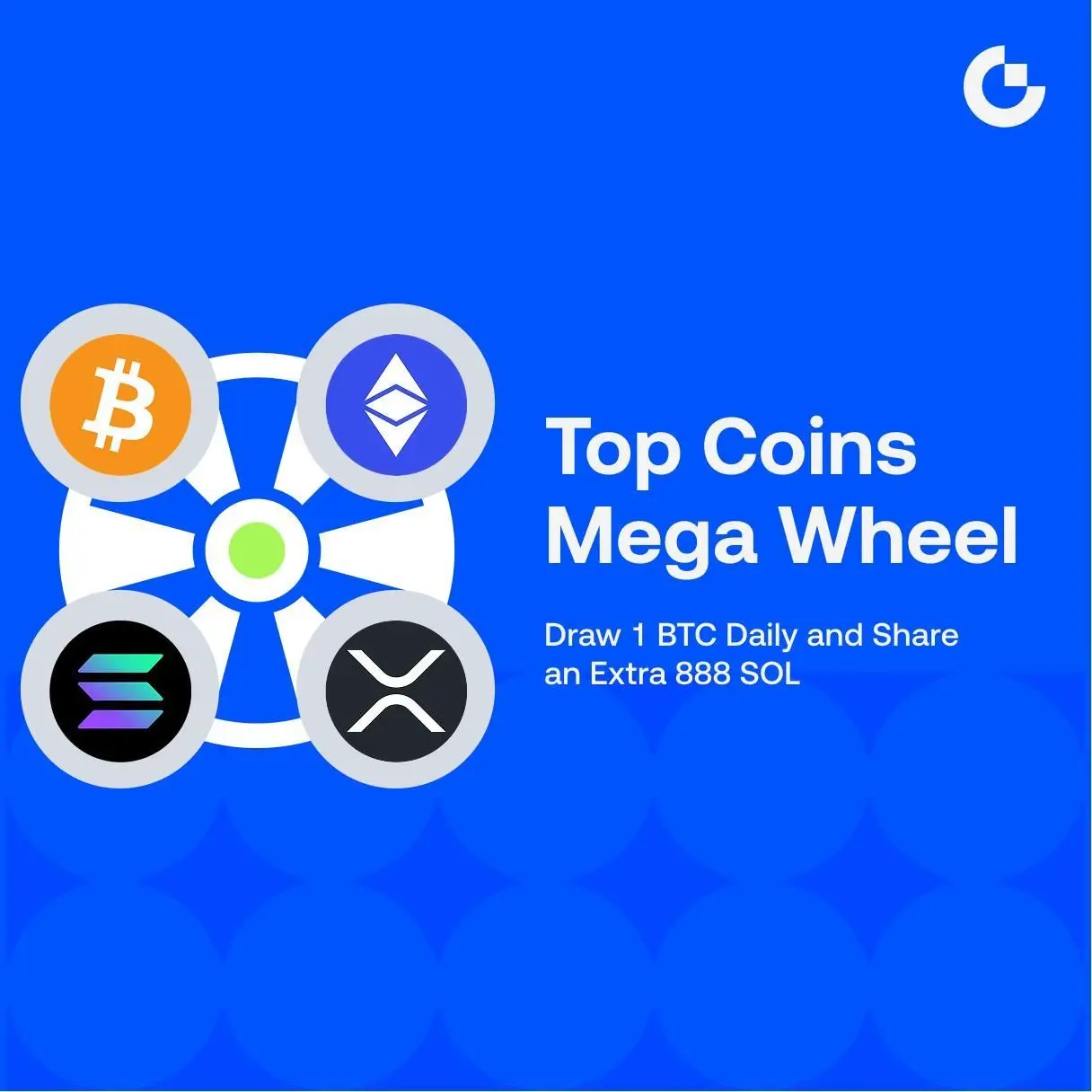
Gate has launched a daily 1 BTC giveaway campaign, distributing BTC, ETH, and XRP rewards via a crypto wheel of fortune.
Participation starts with a simple step: registered users instantly receive 10 USDT. Following this, they can participate in daily wheel of fortune draws, offering a chance to win BTC, ETH, and XRP. A separate tier of the campaign is based on cumulative futures trading volume; users who reach certain volume thresholds can also share in an additional prize pool of 888 SOL.
The logic behind these wheel of fortune-based campaigns is generally as follows: Entry into the daily dr
BTC-1.21%
ETH-1.98%
XRP-3.09%
SOL-2.23%
User_any
Gate has launched a daily 1 BTC giveaway campaign, distributing BTC, ETH, and XRP rewards via a crypto wheel of fortune.
Participation starts with a simple step: registered users instantly receive 10 USDT. Following this, they can participate in daily wheel of fortune draws, offering a chance to win BTC, ETH, and XRP. A separate tier of the campaign is based on cumulative futures trading volume; users who reach certain volume thresholds can also share in an additional prize pool of 888 SOL.
The logic behind these wheel of fortune-based campaigns is generally as follows: Entry into the daily draw is tied to specific activity, such as a minimum trading volume or subscribing to a particular product, and a new entry is generated each day. The cumulative futures trading volume-based additional reward tier aims to reward users who trade regularly and consistently with a larger prize, rather than a one-time draw.
There are a few general points to consider before participating in such campaigns. Details such as participation conditions, account type restrictions, and campaign duration are usually shared in detail on the relevant announcement page, so it is recommended to review this page before participating. Also, in most similar campaigns, market makers, institutional accounts, and sub-accounts are excluded, and attempts at abuse such as creating multiple accounts or artificial trading volume usually lead to the cancellation of participation rights.
For users who want to participate in this campaign via Gate, the practical approach is as follows: first, receive 10 USDT immediately after registration, then follow the daily draws and try to get a share from the additional 888 SOL pool by maintaining your current futures trading activity. It is recommended that those wishing to participate check the current campaign conditions and duration on the relevant page.
https://www.gate.com/campaigns/5411?ch=4682&ref=BVVEVQ9c&ref_type=132
Details: https://www.gate.com/announcements/article/100518
repost-content-media
  • Reward
  • 2
  • Repost
  • Share
Venüs_:
To The Moon 🌕
View More
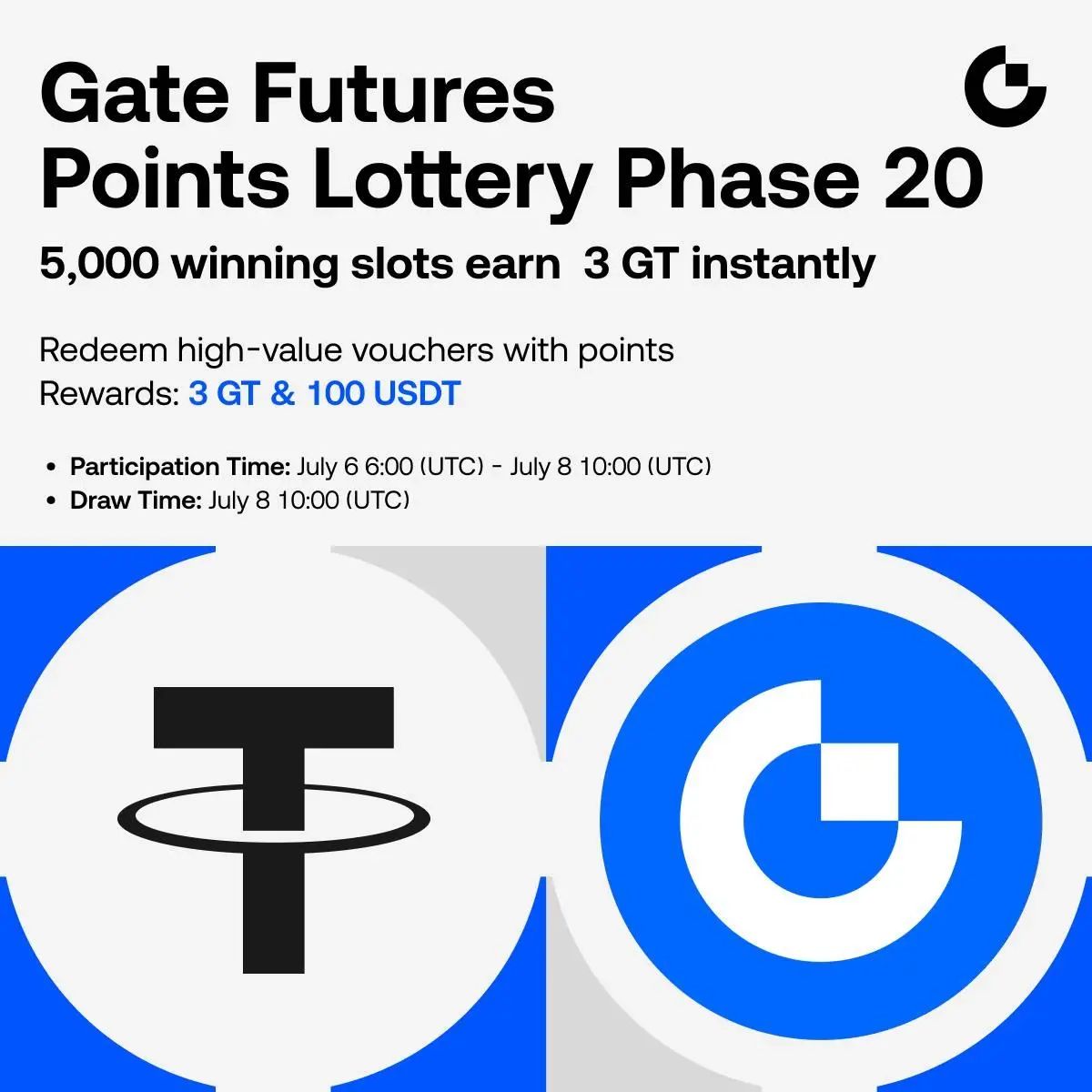
The twentieth round of Gate Futures Points has begun, and in this round, users can earn both GT and USDT using their accumulated points, creating a double prize pool structure.
Participation is based on redeeming points; users can use their futures points to enter a 3 GT draw. This draw runs from 06:00 on July 6th to 10:00 on July 8th (UTC). Following the draw, in a narrow window between 10:00 and 15:59 on July 8th, winners can claim a coupon worth 100 USDT.
The notable aspect of this structure is its two-stage mechanism. First, participation in the draw is achieved with points, and then, in a
User_any
The twentieth round of Gate Futures Points has begun, and in this round, users can earn both GT and USDT using their accumulated points, creating a double prize pool structure.
Participation is based on redeeming points; users can use their futures points to enter a 3 GT draw. This draw runs from 06:00 on July 6th to 10:00 on July 8th (UTC). Following the draw, in a narrow window between 10:00 and 15:59 on July 8th, winners can claim a coupon worth 100 USDT.
The notable aspect of this structure is its two-stage mechanism. First, participation in the draw is achieved with points, and then, in a separate time period, winners are offered a second prize, a USDT coupon. This requires users to follow both the draw window and the coupon request window, as the coupon request period is compressed into a narrow range of only a few hours.
Futures trading points normally accumulate through regular trading activity on the platform, meaning there's no need to complete an additional task to participate in these draws; ongoing futures trading activity naturally accumulates points. This makes the campaign an opportunity that active futures traders can take advantage of without any extra effort.
The main practical point for users trading futures through Gate is that those who want to use their accumulated points in this round need to note both the draw window and the subsequent coupon request window in their calendars, as the coupon request period is kept quite short. Those who wish to participate can check their point balances on the relevant page and enter the draw.
https://www.gate.com/futures/points?nav=1§ion=lottery
repost-content-media
  • Reward
  • 2
  • Repost
  • Share
Venüs_:
To The Moon 🌕
View More
Gate has launched a limited-time Flexible Term Earnings campaign for USDE, offering an annual yield of up to 3.75%.
The participation requirement is quite low, starting with just 1.5 USDE. The most practical aspect of this product is its complete flexibility; you can subscribe and withdraw at any time. Earnings are also credited to accounts hourly, not daily, meaning the money isn't truly stagnant, but rather a continuously functioning structure.
USDE is the synthetic dollar of the Ethereum protocol, a stable asset created by delta-hedging staked Ethereum collateral. The project describes it a
USDE0.02%
ETH-1.98%
User_any
Gate has launched a limited-time Flexible Term Earnings campaign for USDE, offering an annual yield of up to 3.75%.
The participation requirement is quite low, starting with just 1.5 USDE. The most practical aspect of this product is its complete flexibility; you can subscribe and withdraw at any time. Earnings are also credited to accounts hourly, not daily, meaning the money isn't truly stagnant, but rather a continuously functioning structure.
USDE is the synthetic dollar of the Ethereum protocol, a stable asset created by delta-hedging staked Ethereum collateral. The project describes it as a censorship-resistant, scalable, and crypto-native currency solution, fully collateralized and transparently managed on-chain, allowing for free integration with other protocols.
It's important to note that these short-term promotional rates are not permanent; the annual yield shown is updated as of July 6th, and the actual rate may vary depending on the current figure on the subscription page. It's important to consider that crypto investments, by their nature, carry high volatility, influenced by market trends and regulatory developments. Users in the UK and some restricted regions are not eligible for this service.
For users holding USDE or seeking short-term, flexible returns via Gate, the main practical advantage is the ability to start with a very low entry threshold and earn hourly returns without any risk of lock-up. Those wishing to participate can check the current rate on the subscription page and complete the process.
https://www.gate.com/announcements/article/100530
repost-content-media
  • Reward
  • 2
  • Repost
  • Share
Venüs_:
2026 GOGOGO 👊
View More
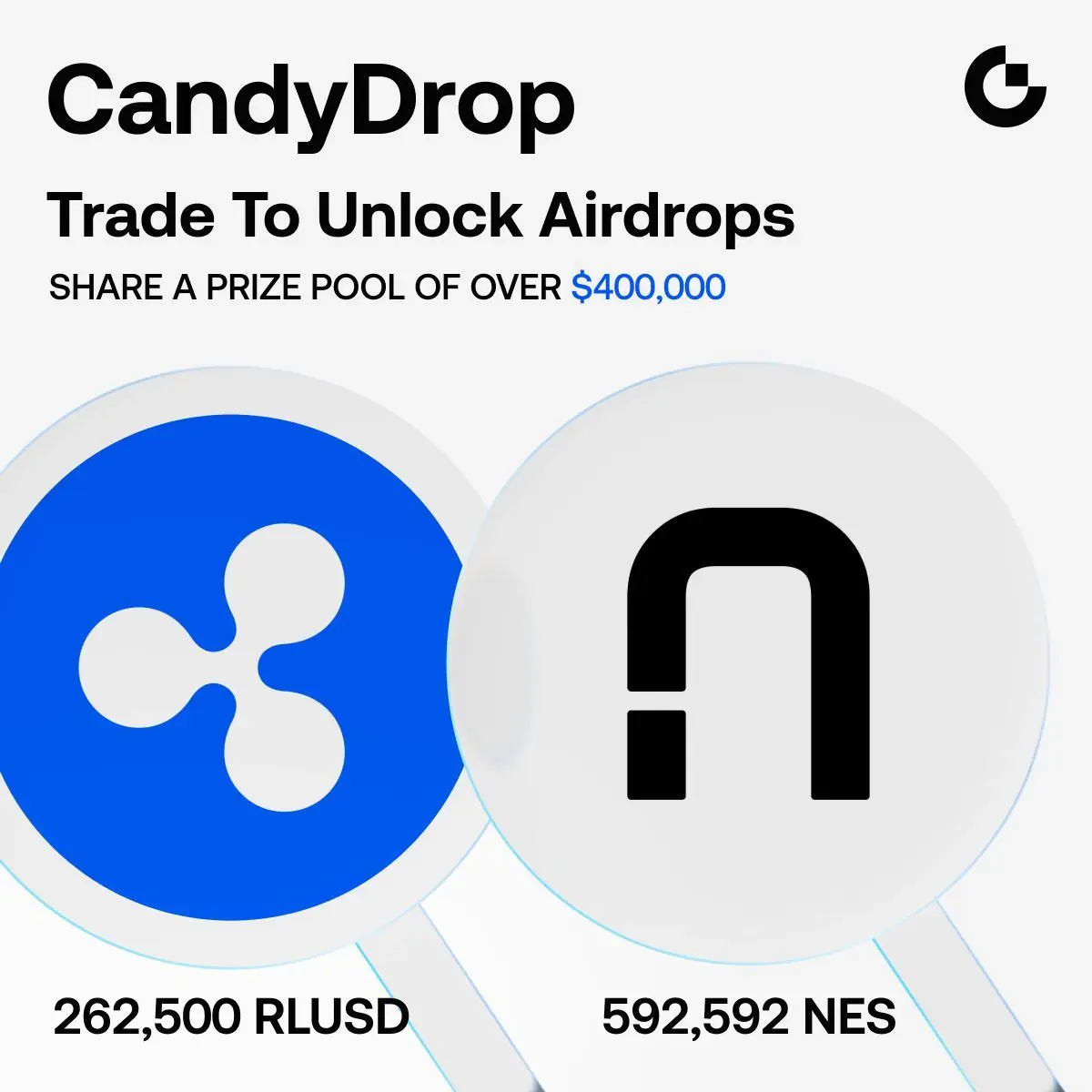
Gate is combining its CandyDrop campaigns for two different tokens, sharing a total prize pool of over $400,000 with users. The campaign consists of a combination of Ripple's stablecoin RLUSD and the newly listed NESA token, with a total of 262,500 RLUSD and 592,592 NES tokens to be distributed.
CandyDrop works on a task-based participation system. Users earn Candy points by completing designated tasks such as spot trading, futures trading, and inviting friends. These points are then used to receive a share of the total prize pool at the end of the campaign. The formula is simple: the amount o
RLUSD0.01%
NES9.07%
User_any
Gate is combining its CandyDrop campaigns for two different tokens, sharing a total prize pool of over $400,000 with users. The campaign consists of a combination of Ripple's stablecoin RLUSD and the newly listed NESA token, with a total of 262,500 RLUSD and 592,592 NES tokens to be distributed.
CandyDrop works on a task-based participation system. Users earn Candy points by completing designated tasks such as spot trading, futures trading, and inviting friends. These points are then used to receive a share of the total prize pool at the end of the campaign. The formula is simple: the amount of tokens a user earns is equal to the product of their own Candy points multiplied by the total Candy points of all participants. The more tasks completed, the larger the share.
There is no specific threshold for participation; any user who has completed identity verification can participate. In spot trading, reaching a minimum volume on specific trading pairs, and in futures trading, trading a contract worth at least 1 USDT, earns candies. In the friend referral task, the invited person needs to exceed a specified trading threshold, creating a structure that simultaneously incentivizes both new user acquisition and the activity of existing users.
Some practical details are also important to know before participating. Market makers, institutional and corporate accounts cannot participate in these campaigns, and sub-accounts are also excluded. Multiple accounts linked to the same verified ID are considered a single account; only the first account linked to that ID is eligible to participate. Abuse attempts such as creating multiple accounts, malicious transactions, or coordinated transactions are strictly prohibited. Earned candies are campaign-specific and do not carry over to the next campaign, so it is recommended to carefully read the rules of each campaign. Rewards are usually credited to the account within a few hours of completing the task, and any remaining transactions are completed within fourteen business days of the campaign ending.
For users wishing to participate in this campaign via Gate, the logical approach is that their regular spot and futures trading activity already generates significant candy earnings, so it's possible to leverage their existing trading habits within the scope of this campaign without extra effort. For those who want to complete more tasks, the referral program offers an additional income stream; interested parties are advised to click the "Join" button on the campaign page and review the updated task list.
https://www.gate.com/candy-drop/detail/RLUSD-347
repost-content-media
  • Reward
  • Comment
  • 1
  • Share
The Gate Futures Store's fifth season has begun, and this season's highlight prize is the opportunity to participate in a football tour across North America, coinciding perfectly with the 2026 World Cup taking place in the USA, Canada, and Mexico.
The campaign runs from July 1st at 8:00 AM to July 31st at 8:00 AM UTC, a one-month window. Participation is simple: for every 20,000 USDT of futures trading volume, users earn miles, which can be redeemed for rewards in the store. There's no need to complete extra tasks to earn rewards; normal futures trading activity is a natural result of accumula
User_any
The Gate Futures Store's fifth season has begun, and this season's highlight prize is the opportunity to participate in a football tour across North America, coinciding perfectly with the 2026 World Cup taking place in the USA, Canada, and Mexico.
The campaign runs from July 1st at 8:00 AM to July 31st at 8:00 AM UTC, a one-month window. Participation is simple: for every 20,000 USDT of futures trading volume, users earn miles, which can be redeemed for rewards in the store. There's no need to complete extra tasks to earn rewards; normal futures trading activity is a natural result of accumulating miles.
A separate tier of the campaign focuses on VIP upgrades. Whether you're a first-time VIP or a VIP and upgrading again, these upgrades unlock high mileage rewards. This creates a system that rewards overall activity and status on the platform, rather than just trading volume.
Another important detail in the store is the offer of instant exchange up to 200 USDT, which operates on a first-come, first-served basis. This means users who reach a certain mileage threshold can claim this reward immediately, but since these instant rewards have limited stock, acting early is advantageous.
The main logic behind this structure is that active futures traders continue to earn rewards cumulatively based on their normal trading activity, creating an extra incentive for both experienced and novice users. The highlighting of a large-scale reward like the North American football tour also shows that the campaign isn't limited to small cash prizes, but also offers access to larger, experiential rewards.
For users trading futures through Gate, the most practical step is to maintain normal trading volume throughout the month, which is the most direct way to accumulate miles. For those planning to upgrade to VIP level, upgrading this month can provide additional mileage earnings. It is recommended to check the relevant campaign page for an up-to-date list of rewards and mileage requirements, as a limited number of rewards are offered based on stock availability.
https://www.gate.com/competition/futures-mall/s5
repost-content-media
  • Reward
  • Comment
  • Repost
  • Share
Gate has launched a new gold-themed campaign for futures traders, incentivizing both new and existing users with the chance to win both cash and gold.
The first tier of the campaign is for new users; those who make their first futures trade of 300 USDT or more receive 2 USDT directly. The second tier operates through a referral program; users who invite friends and help them complete their first trades can earn up to an additional 10 USDT.
The most notable aspect of the campaign is the gold raffle. Users earn one raffle entry for every 2,000 USDT in futures trading volume, and each raffle entr
XAU-1.43%
XAUT-1.39%
User_any
Gate has launched a new gold-themed campaign for futures traders, incentivizing both new and existing users with the chance to win both cash and gold.
The first tier of the campaign is for new users; those who make their first futures trade of 300 USDT or more receive 2 USDT directly. The second tier operates through a referral program; users who invite friends and help them complete their first trades can earn up to an additional 10 USDT.
The most notable aspect of the campaign is the gold raffle. Users earn one raffle entry for every 2,000 USDT in futures trading volume, and each raffle entry offers a chance to win up to 10 grams of gold in XAUT, which is automatically credited to their account. XAUT is a tokenized asset backed one-to-one with physical gold, meaning the prize from this raffle is credited to the account as an asset based on the value of real gold.
This structure reflects Gate's recent emphasis on gold and commodity-related products. The platform ranks highly globally in both XAUT and physical gold-backed futures contracts, and these types of lottery-based campaigns aim to increase user interest, especially given the recent high volatility in gold prices.
Participation generally doesn't require registration; users simply need to meet the minimum trading volume and are automatically included in the lottery pool with cash prizes. As futures trading volume increases, the number of lottery entries increases proportionally, offering active traders a greater chance of winning.
For users considering or already actively trading futures through Gate, the main practical advantage is that their regular trading activity automatically counts towards these rewards, offering both instant cash earnings and participation in the gold lottery without extra effort. It's recommended to check the relevant announcement page for current details regarding participation conditions and campaign duration, as account type restrictions and time limits may apply to such campaigns.
Join 👉https://www.gate.com/campaigns/5421?ref_type=132
DYOR 🔍 NFA ✅
repost-content-media
  • Reward
  • Comment
  • Repost
  • Share
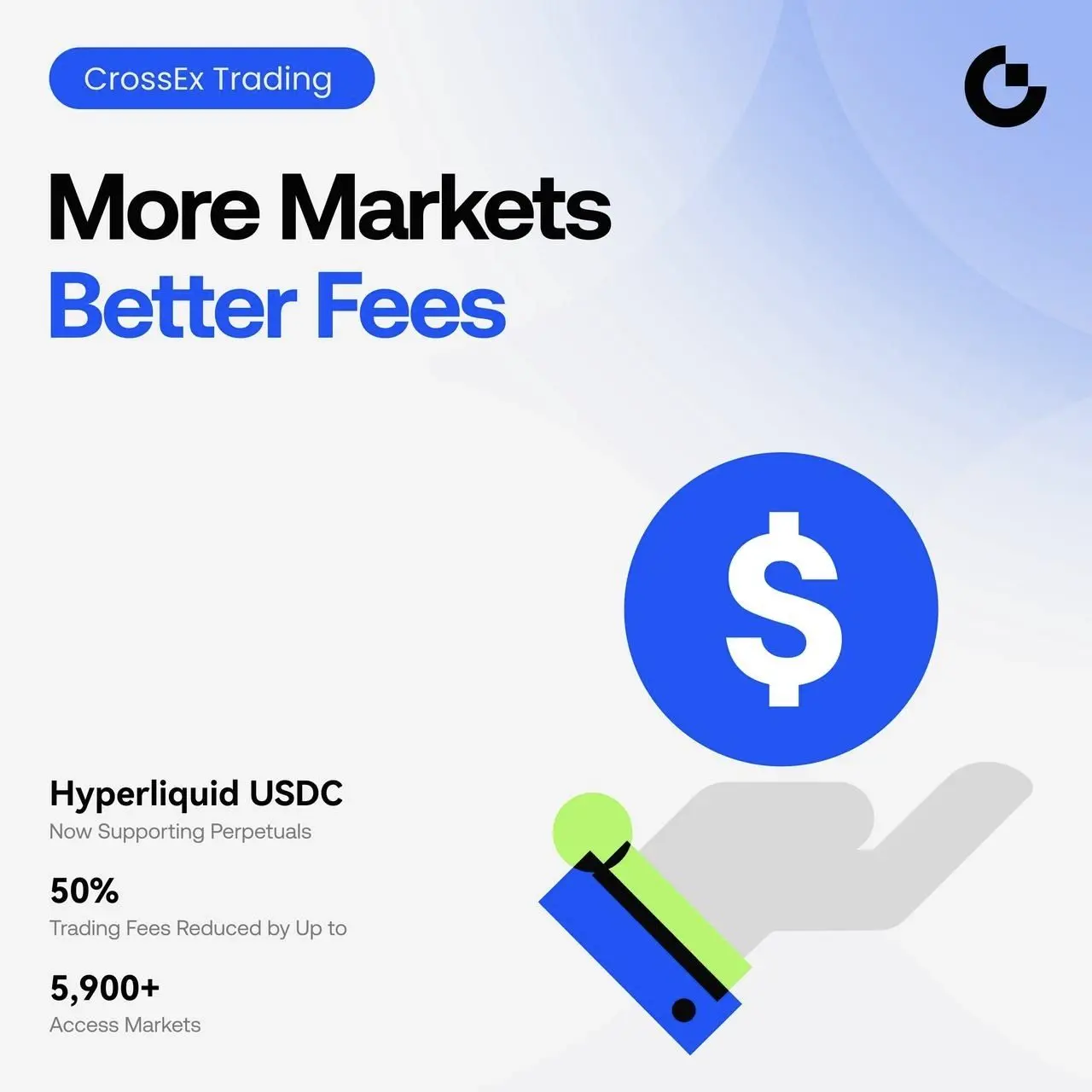
Gate has launched CrossEx Trading, a product designed for professional investors and institutional desks, providing access to over 5,900 spot and derivatives markets through a single interface.
One of the product's most notable features is its support for Hyperliquid's USDC margin perpetual contracts. Hyperliquid is a prominent protocol in decentralized derivatives markets with its own on-chain order book infrastructure, and making such on-chain liquidity sources accessible through a single interface alongside Gate's own platform markets provides a real advantage for professional investors who
HYPE-2.76%
USDC-0.11%
User_any
Gate has launched CrossEx Trading, a product designed for professional investors and institutional desks, providing access to over 5,900 spot and derivatives markets through a single interface.
One of the product's most notable features is its support for Hyperliquid's USDC margin perpetual contracts. Hyperliquid is a prominent protocol in decentralized derivatives markets with its own on-chain order book infrastructure, and making such on-chain liquidity sources accessible through a single interface alongside Gate's own platform markets provides a real advantage for professional investors who want to benefit from both centralized and decentralized market depth simultaneously.
CrossEx's core value proposition is the ability to access liquidity circulating across different markets through a single account and a single interface. For institutional desks and quantitative investment teams that normally have to open separate accounts and allocate capital on multiple platforms, this significantly reduces operational complexity. The reduction in transaction fees, a significant cost item for high-volume transactions, can also create cumulative savings, especially for teams running high-frequency strategies.
The practical advantage of such a cross-exchange infrastructure is the reduction of liquidity fragmentation. Crypto markets are inherently spread across many different platforms, which can lead to problems such as price discrepancies and lack of depth. Access to multiple markets from a single point means both better price finding and the execution of large orders with less market impact.
For users who trade professionally, run quantitative strategies, or hold positions on an institutional scale through Gate, the main practical benefit of CrossEx Trading is the ability to efficiently combine liquidity from different markets through a single account and a lower-cost structure, instead of managing it separately. Those interested can examine the product on Gate to see the supported markets and fee structure in detail.
https://www.gate.com/crossex
repost-content-media
  • Reward
  • Comment
  • Repost
  • Share
#SamsungProfitBeatsNvidiaApple
Samsung Electronics has achieved a profit figure unprecedented in the history of technology companies for a single quarter. According to preliminary data released on July 7th, the company expects an operating profit of 89.4 trillion won in the second quarter, approximately $58.4 to $58.6 billion, representing a nineteenfold increase compared to the same period last year.
What makes this result truly striking is not only that Samsung broke its own record, but also that it surpassed the single-quarter records of the world's two most profitable technology companies
DRAM-6.54%
User_any
#SamsungProfitBeatsNvidiaApple
Samsung Electronics has achieved a profit figure unprecedented in the history of technology companies for a single quarter. According to preliminary data released on July 7th, the company expects an operating profit of 89.4 trillion won in the second quarter, approximately $58.4 to $58.6 billion, representing a nineteenfold increase compared to the same period last year.
What makes this result truly striking is not only that Samsung broke its own record, but also that it surpassed the single-quarter records of the world's two most profitable technology companies. Nvidia's highest quarterly profit earlier this year was approximately $53.5 billion, while Apple's peak at the end of last year was around $50.9 billion. It is stated that Samsung's effective profit, even excluding the approximately 10 trillion won allocated for performance bonuses, exceeds 100 trillion won.
The main driving force behind this result is that demand for memory chips for AI infrastructure has exceeded supply for the third quarter. DRAM and NAND contract prices jumped between forty and sixty-five percent in a single quarter, and Samsung is now requesting an additional twenty percent increase in DRAM prices for the third quarter. The company's chip division's operating profit margin exceeded seventy percent, surpassing even Nvidia and TSMC's margins for the same period. This indicates that Samsung has closed the throughput gap it has experienced in recent years, particularly in the high-bandwidth memory market, compared to its competitor SK Hynix, on a commercial scale. The full results report, to be released on July 30, will clarify the details of this chip mix.
On the other hand, the picture is different. The same price increases are reflected in costs for Samsung's mobile and appliance businesses, with profits in these divisions declining by approximately forty percent year-on-year. Some internal assessments indicate that the mobile division could face a risk of incurring an annual loss for the first time in its history in 2026, with core component costs exceeding forty percent of total device costs. In other words, Samsung is both the biggest winner and the biggest loser of these price increases; the same price hike appears as a profit in the chip division's books, but a loss in the mobile division's books.
The company also announced it will build new production facilities to meet the growing demand, but details such as location, timeline, and investment amount have not yet been shared. This news coincides with Samsung's planned ADR listing on Nasdaq on July 10th, creating another catalyst for investors to re-price the company's true value.
For those following the semiconductor sector and the Korean market via Gate, the key point is that this record profit figure is a strong signal confirming the robust and persistent demand for AI memory, but it also serves as an example of how this sharp increase in memory prices is creating cost pressure on other segments of the consumer electronics sector.
repost-content-media
  • Reward
  • Comment
  • 1
  • Share
Strategy's $216 million bitcoin sale last week initially raised questions in the market, but analysts' assessments indicate that this move actually strengthens the company's financial structure.
According to Grayscale's research team, Strategy's balance sheet had not previously shown any serious problems; the company's assets easily covered its liabilities. Investors' main concern wasn't the health of the balance sheet, but rather the uncertainty surrounding liquidity and cash reserves. Cash reserves, which had fallen to approximately $870 million by the end of May, were only sufficient to cov
BTC-1.21%
User_any
Strategy's $216 million bitcoin sale last week initially raised questions in the market, but analysts' assessments indicate that this move actually strengthens the company's financial structure.
According to Grayscale's research team, Strategy's balance sheet had not previously shown any serious problems; the company's assets easily covered its liabilities. Investors' main concern wasn't the health of the balance sheet, but rather the uncertainty surrounding liquidity and cash reserves. Cash reserves, which had fallen to approximately $870 million by the end of May, were only sufficient to cover a few quarters of dividend payments, fueling speculation about potential large-scale bitcoin sales.
The new capital and financing framework announced at the end of June was the turning point that altered this balance. The company shifted from its long-held "never sell" stance to a more flexible management model, and the $216 million sale last week was the first concrete application of this new plan. Following the transaction, the company's cash reserves rose to approximately $2.5 billion, representing a strong liquidity buffer capable of meeting dividend obligations for about 17 months.
One of the biggest risks investors have long harbored was the possibility that the company might be forced to make a much larger-scale bitcoin sale in the future due to financial necessity. According to analysts, this strong cash position, created through small-scale and planned sales, mitigates precisely this risk, reducing the likelihood of a sudden and large sell-off. This is considered a positive development that positively impacts market confidence, both for the company and the bitcoin price.
Perhaps the most striking aspect of this assessment is the view that small and controlled sales could create a healthy structure for the bitcoin market in the long run. The logic is that, instead of a potentially large and sudden wave of selling in the future, pre-planned and limited-scale sales create far less shock to the market. This increase in the company's financial flexibility could also reduce institutional investors' risk perception towards both Strategy and bitcoin over time.
For those following MSTR and bitcoin treasury companies through Gate, the key question is whether this new framework will truly remain predictable and limited, because the real element the market trusts is discipline rather than size. Whether the company maintains this controlled approach in each subsequent quarter will determine whether the current positive perception is permanent.
$BTC
#StrategySells3588BTC
repost-content-media
  • Reward
  • Comment
  • Repost
  • Share
SAYLOR SOLD #StrategySells3588BTC , TOM LEE #BitMineAdded42197ETH .
These two developments, occurring within the same week, demonstrate that institutional crypto treasury strategies can no longer be reduced to a single model, and the contrast between the two is truly striking.
Between June 29 and July 5, Strategy sold 3,588 bitcoins, generating $216 million in return. This was the first truly noteworthy bitcoin sale in the company's institutional history, following founder Michael Saylor's long-held "never sell" stance. The proceeds from the sale were used to fund dividend payments on the com
BTC-1.21%
ETH-1.98%
User_any
SAYLOR SOLD #StrategySells3588BTC , TOM LEE #BitMineAdded42197ETH .
These two developments, occurring within the same week, demonstrate that institutional crypto treasury strategies can no longer be reduced to a single model, and the contrast between the two is truly striking.
Between June 29 and July 5, Strategy sold 3,588 bitcoins, generating $216 million in return. This was the first truly noteworthy bitcoin sale in the company's institutional history, following founder Michael Saylor's long-held "never sell" stance. The proceeds from the sale were used to fund dividend payments on the company's preferred stock series and increase its dollar reserves to approximately $2.55 billion, marking the first actual application of its newly adopted Digital Credit Capital Framework. Following the sale, the company still holds the title of the world's largest institutional bitcoin holder with 843,775 BTC.
Meanwhile, during the same period, BitMine moved in the completely opposite direction. Last week, the company purchased an additional 42,197 ETH, bringing its total holdings to 5,742,237 ETH, which is approximately 4.8% of Ethereum's circulating supply. BitMine's acquisition rate increased compared to the previous week, and the company is now ninety-five percent closer to its five percent target, which it calls the "alchemy of five." 4.88 million ETH of its total holdings are actively staked, generating approximately $235 million in annual staking revenue.
The real question is whether BitMine will adopt Strategy's new capital management model in the future, or remain a pure accumulation vehicle. The fundamental difference in the structure of the two companies provides a key clue here. Strategy's preferred stock series create obligations requiring regular cash dividend payments, which can sometimes force the company to sell assets to meet its cash needs. BitMine's model is built on a different revenue mechanism; staked ETH generates yield directly on the network, meaning a continuous income stream can be created without the company needing to sell assets to meet its cash needs. This structural difference suggests that BitMine may not face the same level of liquidity pressure as Strategy at the same pace.
But this doesn't mean BitMine will never transition to a similar framework. BitMine's preferred stock is already traded on the exchange, and if the company moves towards issuing similar fixed-income instruments over time, the likelihood of facing cash flow pressure similar to what Strategy experienced may increase. The company's current aggressive buying pace and staking revenue-based model keep it away from such pressure in the short term, but as it continues to raise more funds from capital markets in the long term, similar liabilities are a likely scenario.
How the market interprets these two movements is also important; some commentators see it as a partial rotation of institutional capital from Bitcoin to Ethereum, especially with ETH's strong performance against Bitcoin in recent weeks. For those following both assets and institutional treasury companies through Gate, the key question is whether BitMine's staking revenue-based model can continue to grow without facing the kind of structural cash flow problem Strategy encountered, because the path these two companies are following provides the most concrete example of the direction institutional crypto treasury strategies will evolve in the coming period.
$BTC $ETH
repost-content-media
  • Reward
  • Comment
  • Repost
  • Share
#StrategySells3588BTC
Strategy, for the first time in its corporate history, conducted a truly significant bitcoin sale, a piece of news that is both symbolic and strategically important for the market.
Between June 29 and July 5, the company sold a total of 3,588 bitcoins in two separate transactions, generating approximately $216 million in return. In the first transaction, 1,363 BTC were sold between June 29-30 at an average price of $59,256, while in the second transaction, 2,225 BTC were sold between July 1-5 at an average price of $60,773. With this sale, the company's total bitcoin hol
BTC-1.21%
User_any
#StrategySells3588BTC
Strategy, for the first time in its corporate history, conducted a truly significant bitcoin sale, a piece of news that is both symbolic and strategically important for the market.
Between June 29 and July 5, the company sold a total of 3,588 bitcoins in two separate transactions, generating approximately $216 million in return. In the first transaction, 1,363 BTC were sold between June 29-30 at an average price of $59,256, while in the second transaction, 2,225 BTC were sold between July 1-5 at an average price of $60,773. With this sale, the company's total bitcoin holdings decreased to 843,775 BTC, while its dollar reserves remained at $2.55 billion.
The significance of this sale stems not so much from its size, but from its direction. Founder Michael Saylor has publicly stated for years that he would buy bitcoin "at any price" and never sell it. Last week, the company announced its Digital Credit Capital Framework, under which it can now fund preferred stock dividends and interest payments by selling bitcoin under certain conditions. This sale was the first actual application of that framework. The proceeds were used to cover the second-quarter dividends of STRF, STRE, STRK, and STRD preferred stocks, as well as STRC's June dividend payment – these five instruments form the backbone of the company's Digital Credit business.
The market reaction was mixed. Following the news of the sale, MSTR shares fell by approximately 2% in pre-trading, and bitcoin also lost over 2% of its value that same day, dropping below the $62,000 level. However, this needs to be considered in the context of the overall picture from last week; MSTR shares had risen by over 21% in total last week following the Digital Credit Capital Framework announcement, closing at $100.77 on Thursday. Nevertheless, the stock is still trading with a significant loss of 73.7% over the last twelve months.
There's no clear consensus among analysts on what this new framework means. Some argue it means the company can now be both a buyer and a seller, directly converting Bitcoin's volatility into stock volatility and limiting upside potential when Bitcoin falls, as seen in the subsequent drop in the stock price. Others believe these sales are too small and strategic to be interpreted as liquidity management, rather than a bearish signal for the market. The company still holds the world's largest institutional Bitcoin holder with 843,775 BTC, according to Bitcoin Treasuries data, significantly ahead of its closest competitor, Twenty One Capital, which holds 43,514 BTC.
For those following MSTR and Bitcoin treasury companies through Gate, the crucial question is whether this sale is a one-off liquidity need or the first sign that Saylor has permanently abandoned his long-held "never sell" stance. How frequently the company repeats these types of sales in subsequent quarters will determine whether the market prices the new framework as a genuine risk management tool or as a sign of structural weakness.
repost-content-media
  • Reward
  • Comment
  • Repost
  • Share
  • Pinned