
Iran Closes the Strait of Hormuz Again: Will Oil Prices and Global Markets Face Another Shock?
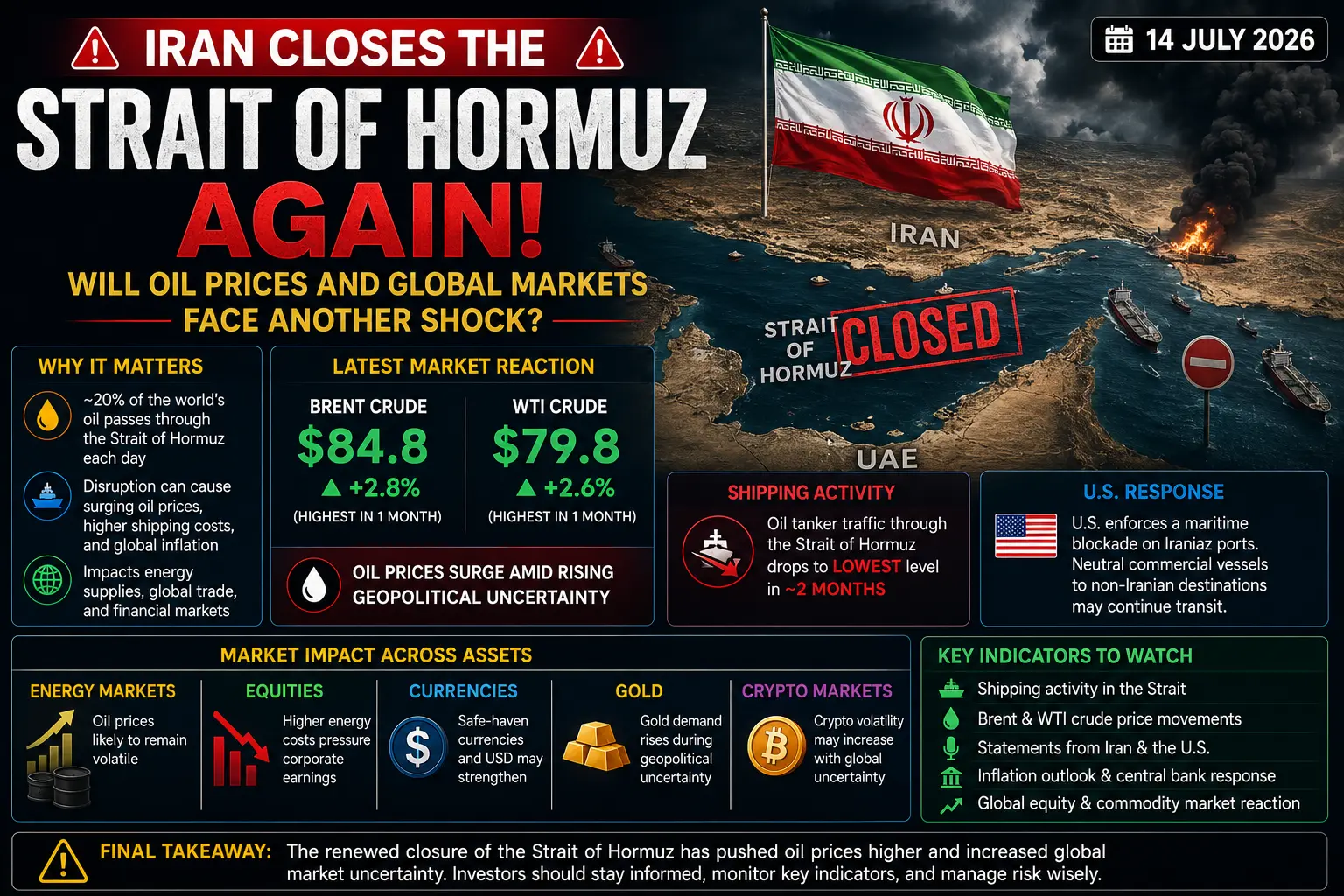
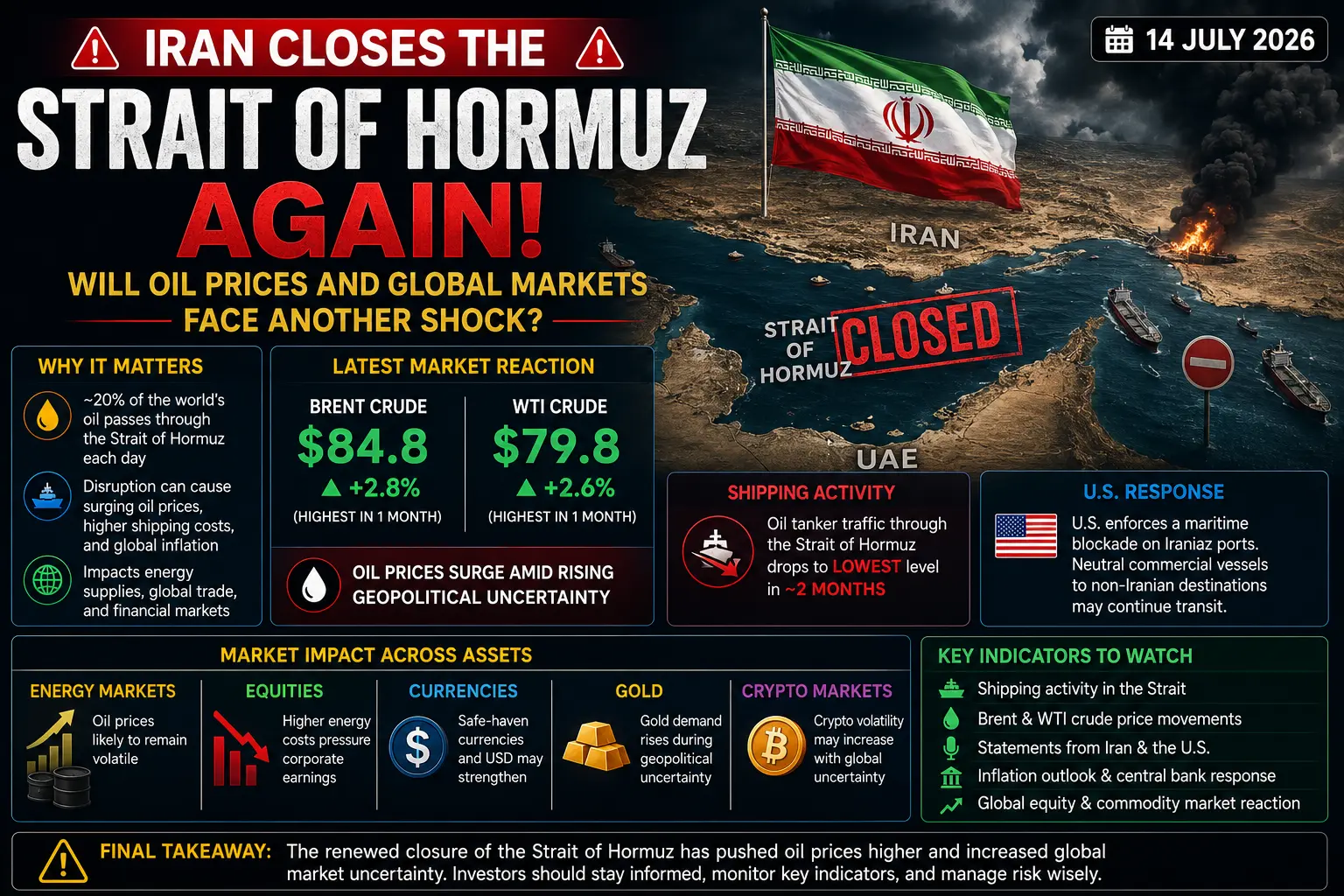
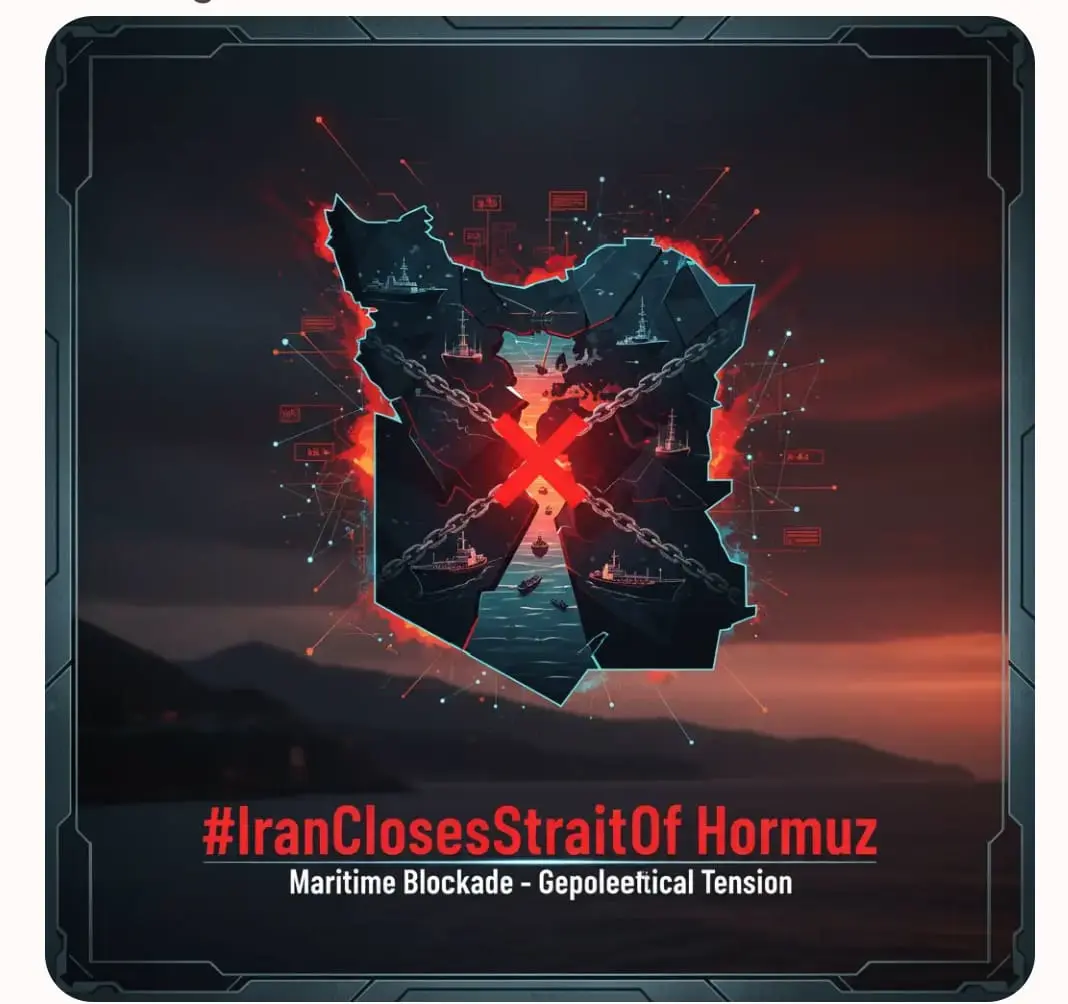
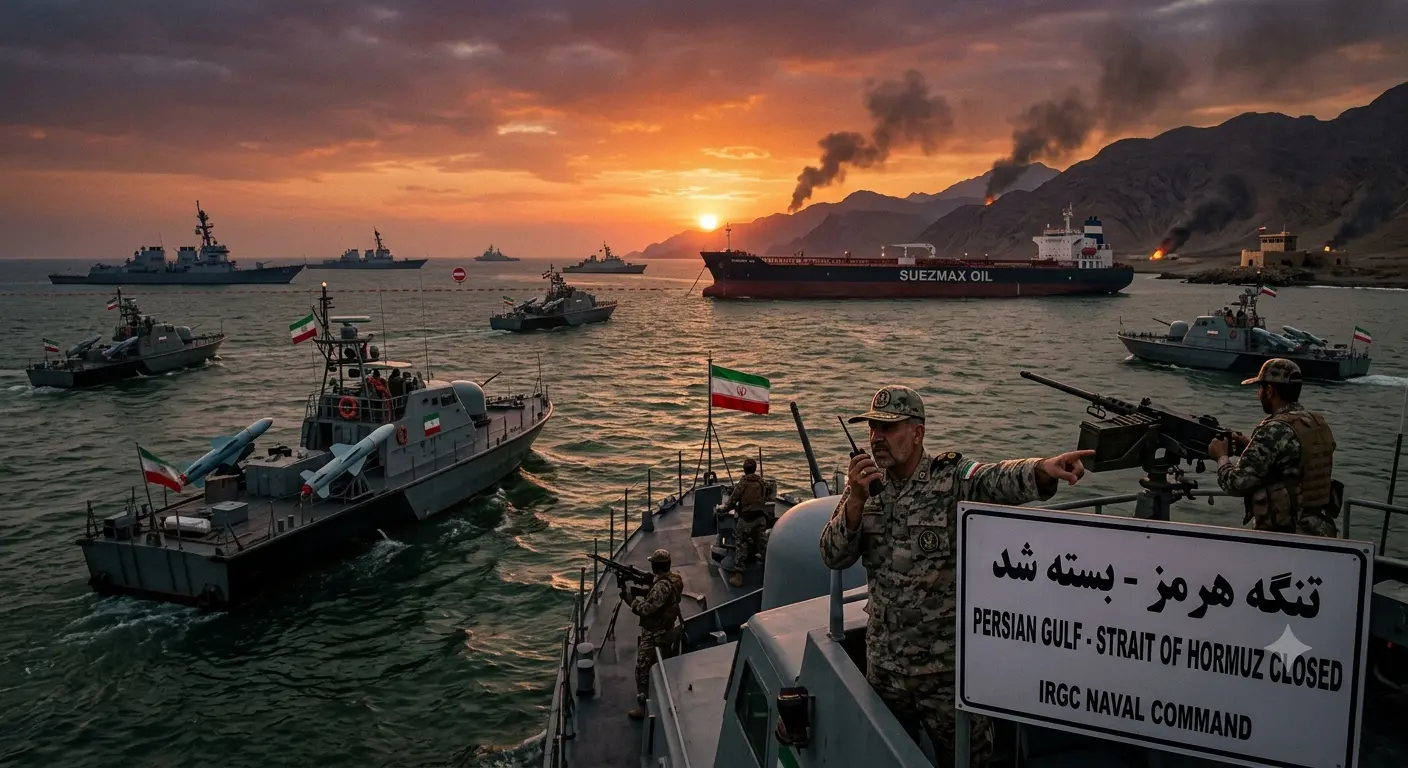
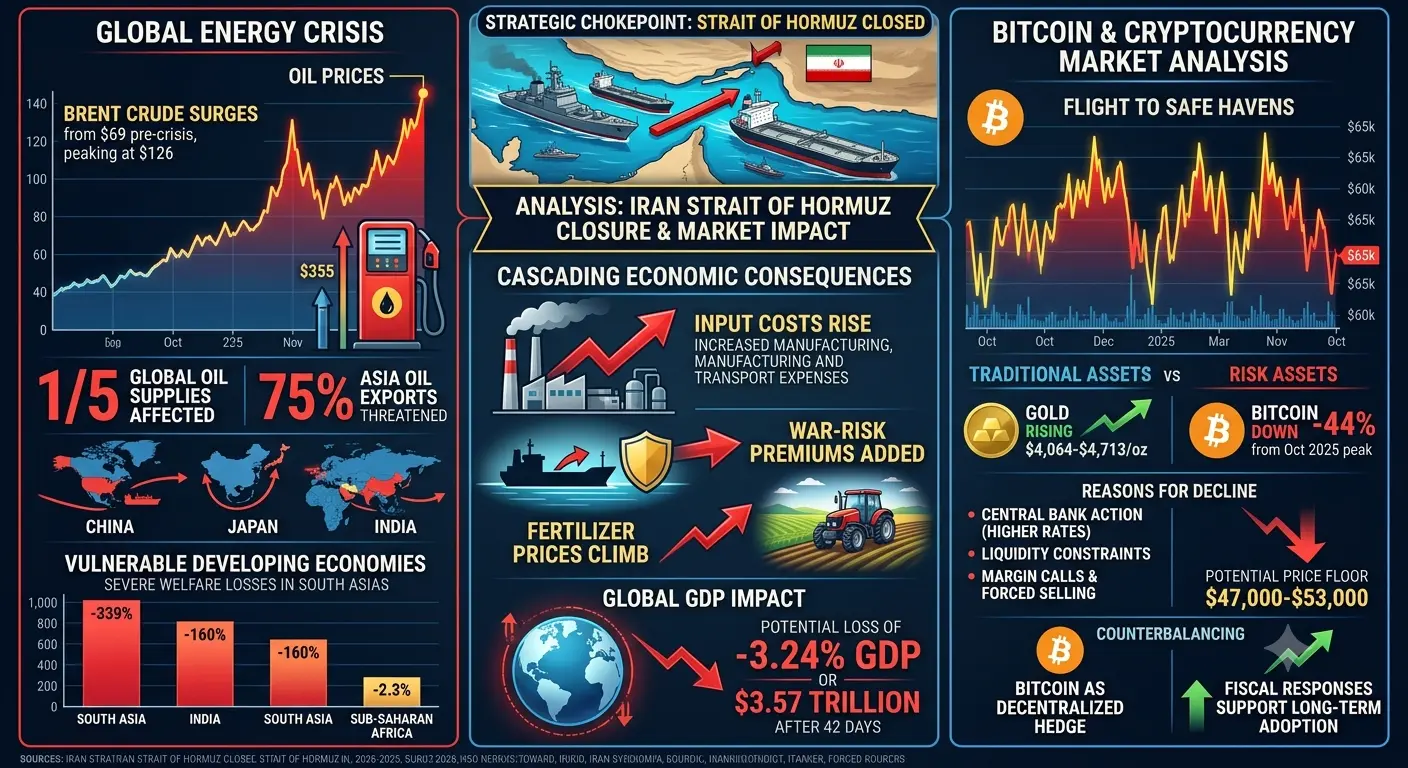
The Strait of Hormuz has once again become the center of global market attention. As of 14 July 2026, Iran has declared the strategic waterway closed following renewed military tensions with the United States, creating fresh uncertainty across energy markets and raising concerns about inflation, global trade, and financial market stability.
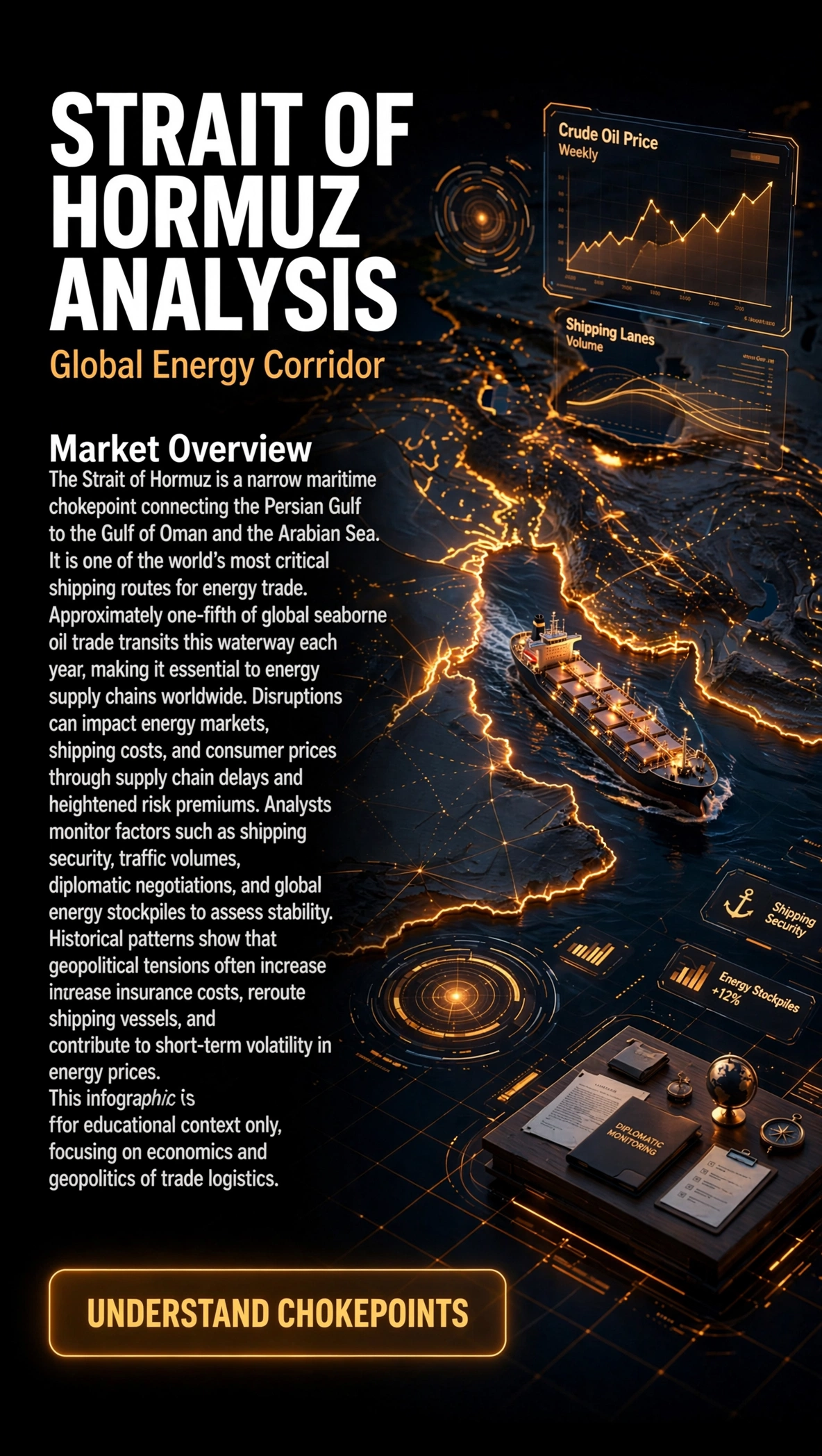
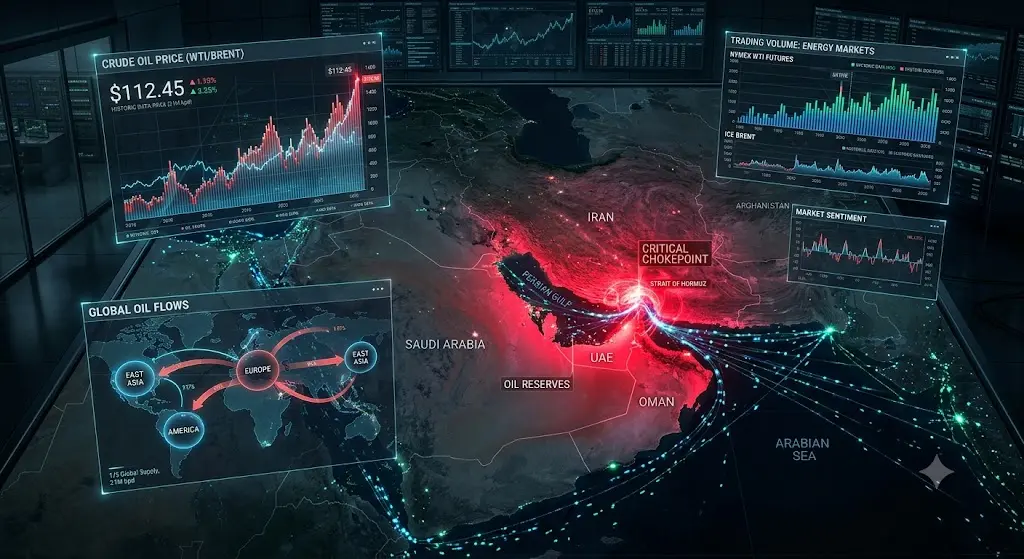
The Strait of Hormuz remains one of the world's most important energy corridors, serving as a critical route for crude oil exports from the Middle East. Any disruption to shipping activity through this narrow passage immediately attracts worldwide attention because of its potential impact on energy supplies, transportation costs, and global economic growth.
Why the Strait of Hormuz Matters
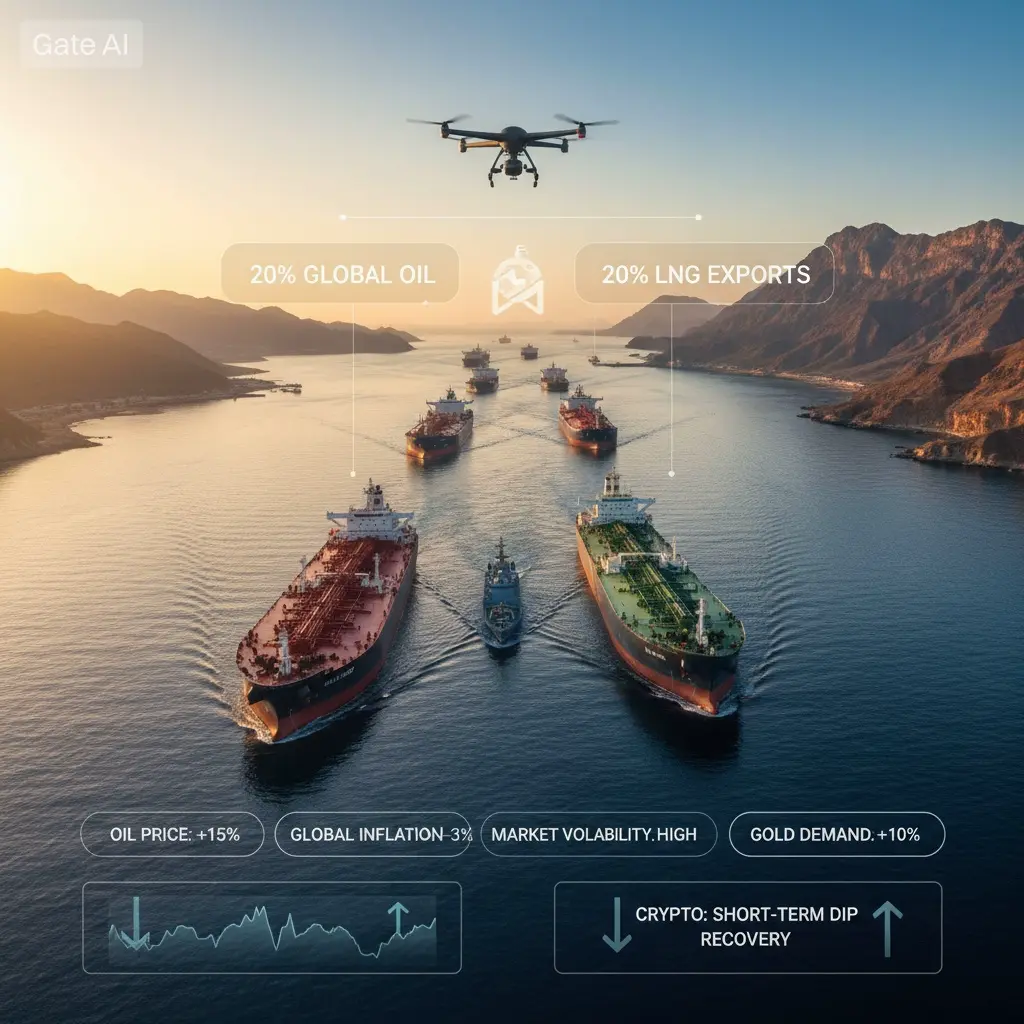
A significant portion of internationally traded crude oil normally passes through the Strait of Hormuz each day.
Because many major oil-producing countries depend on this route for exports, any interruption can quickly influence global supply expectations.
Even temporary disruptions often increase uncertainty among traders, resulting in higher oil prices and greater volatility across financial markets.
This explains why geopolitical developments in the region frequently become major drivers of global market sentiment.
Latest Market Developments
Following Iran's latest announcement, energy markets reacted immediately.
Current market developments include:
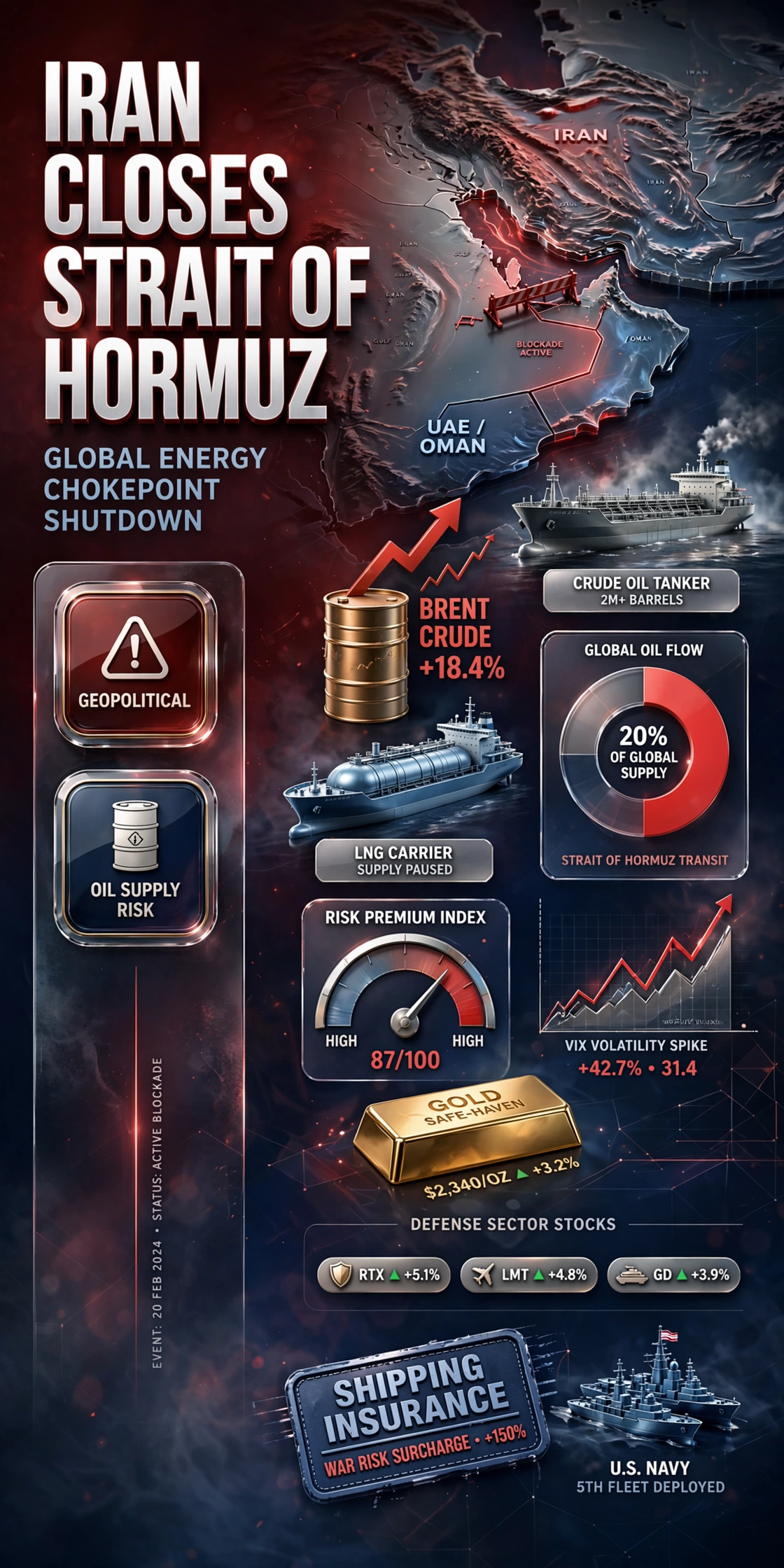
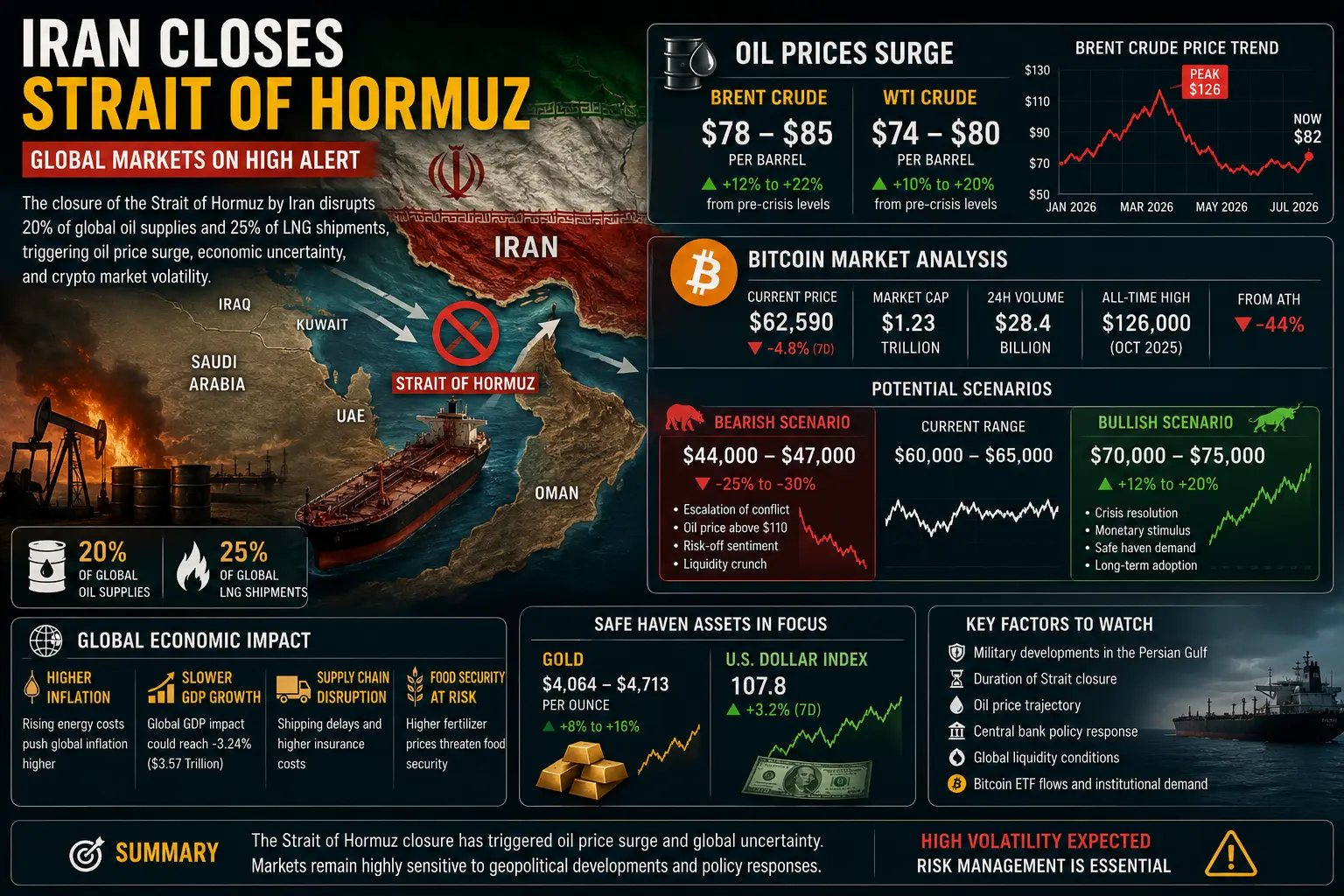
• Brent crude rising to approximately $84.8 per barrel.
• WTI crude increasing to around $79.8 per barrel.
• Oil prices reaching their highest levels in roughly one month.
The price increase reflects growing concerns that reduced shipping activity could tighten global crude supplies if disruptions continue.
Although physical supply has not completely stopped, markets are pricing in additional geopolitical risk as uncertainty surrounding regional security increases.
Shipping Activity Remains Under Pressure
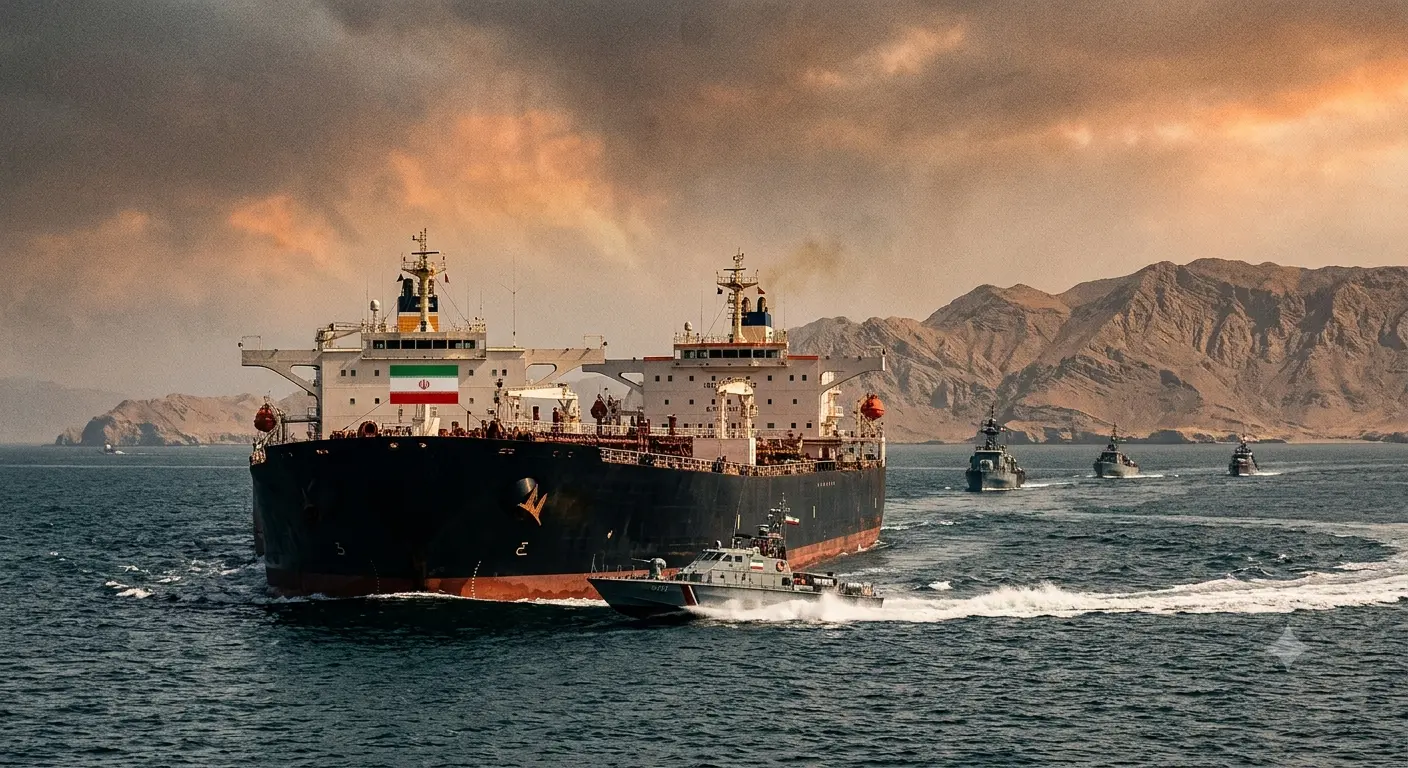
Recent reports indicate that oil tanker traffic through the Strait of Hormuz has fallen to its lowest level in approximately two months.
Lower shipping volumes have raised concerns about:
• Delays in crude oil exports.
• Higher transportation and insurance costs.
• Increased freight expenses.
• Potential supply chain disruptions.
Shipping companies continue evaluating security conditions before increasing vessel movements through the region, while energy markets remain sensitive to every new geopolitical development.
U.S. Response
The United States has announced the enforcement of a maritime blockade targeting Iranian ports while maintaining that neutral commercial vessels traveling to non-Iranian destinations may continue transiting through the Strait.
This distinction is important because it suggests that commercial energy transportation has not been universally prohibited.
However, the broader military situation continues to create uncertainty, making market participants cautious about future shipping conditions.
Any additional escalation could quickly alter current transportation dynamics.
Potential Impact Across Financial Markets
The implications extend well beyond crude oil.
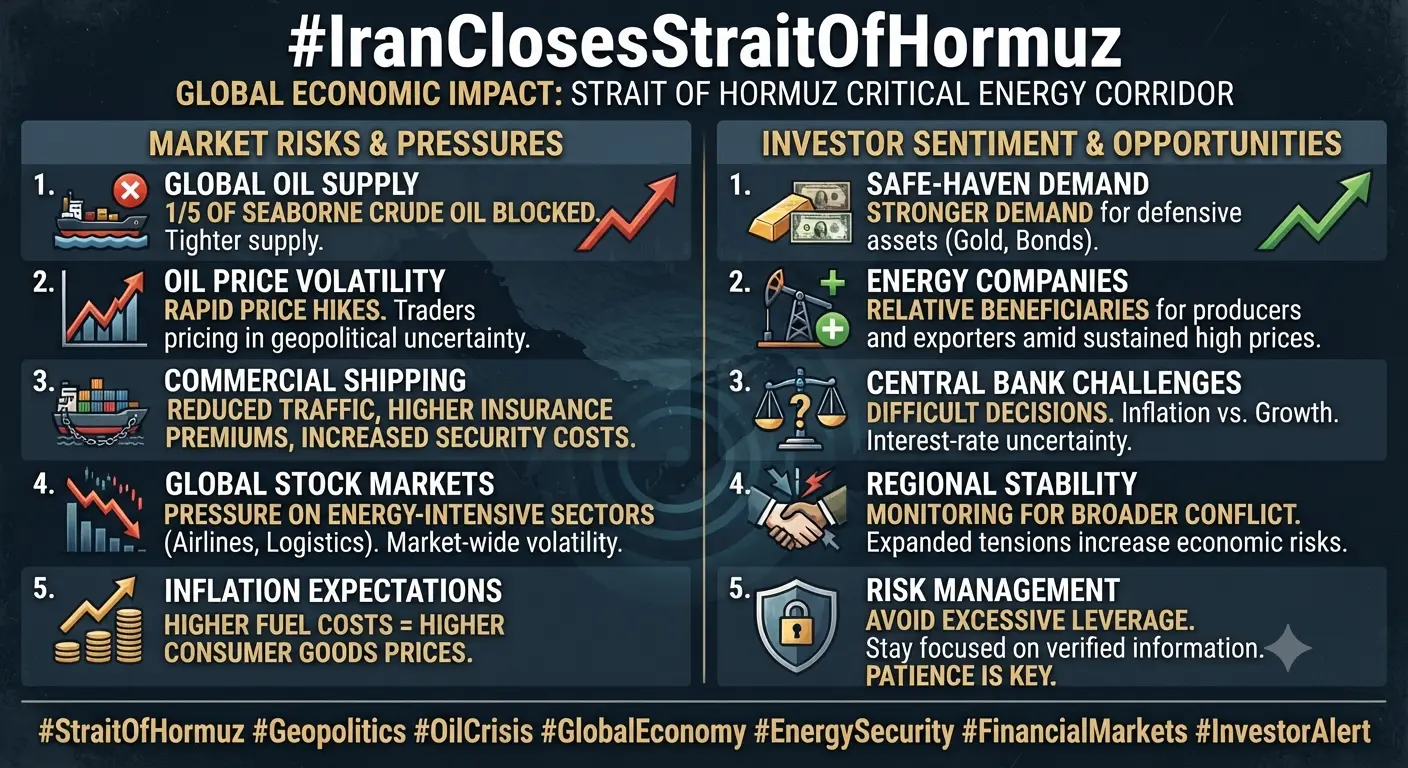
Higher energy prices often contribute to rising inflation expectations by increasing transportation and production costs throughout the global economy.
Several asset classes could remain sensitive to ongoing developments:
Energy Markets
Oil prices may remain volatile as traders monitor shipping activity and regional security conditions.
Equities
Higher energy costs can increase business expenses, particularly for transportation, manufacturing, and industrial sectors.
Currencies
Safe-haven currencies and the U.S. dollar often experience stronger demand during periods of geopolitical uncertainty.
Gold
Precious metals frequently benefit when investors seek defensive assets during periods of elevated global risk.
Cryptocurrencies
Digital asset markets may experience increased volatility as investors balance geopolitical uncertainty with broader macroeconomic conditions and liquidity expectations.
Key Indicators Investors Should Watch
Over the coming days, market participants will closely monitor several developments:
• Shipping activity through the Strait of Hormuz.
• Brent and WTI crude price movements.
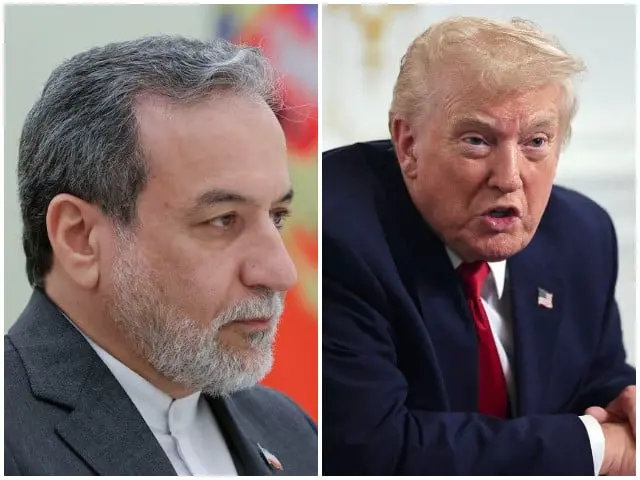
• Official statements from Iran and the United States.
• Inflation expectations.
• Central bank responses to rising energy prices.
• Global equity and commodity market reactions.
Each new geopolitical update has the potential to influence short-term market sentiment, making information flow particularly important for investors.
Final Takeaway
The renewed closure of the Strait of Hormuz has once again highlighted how geopolitical events can rapidly influence global financial markets.
With Brent crude trading near $84.8 per barrel, WTI approaching $79.8, tanker traffic declining, and military tensions remaining elevated, investors are closely monitoring whether current disruptions remain temporary or develop into a more prolonged energy supply challenge.
While uncertainty remains high, the coming days will be critical in determining whether diplomatic efforts help stabilize the situation or whether continued geopolitical tensions place additional pressure on oil prices, inflation expectations, and global financial markets.
For investors, maintaining disciplined risk management while following verified geopolitical developments remains essential during periods of heightened market uncertainty.
#IranClosesStraitOfHormuz
@Gate_Square
The Strait of Hormuz has once again become the center of global market attention. As of 14 July 2026, Iran has declared the strategic waterway closed following renewed military tensions with the United States, creating fresh uncertainty across energy markets and raising concerns about inflation, global trade, and financial market stability.
The Strait of Hormuz remains one of the world's most important energy corridors, serving as a critical route for crude oil exports from the Middle East. Any disruption to shipping activity through this narrow passage immediately attracts worldwide attention because of its potential impact on energy supplies, transportation costs, and global economic growth.
Why the Strait of Hormuz Matters
A significant portion of internationally traded crude oil normally passes through the Strait of Hormuz each day.
Because many major oil-producing countries depend on this route for exports, any interruption can quickly influence global supply expectations.
Even temporary disruptions often increase uncertainty among traders, resulting in higher oil prices and greater volatility across financial markets.
This explains why geopolitical developments in the region frequently become major drivers of global market sentiment.
Latest Market Developments
Following Iran's latest announcement, energy markets reacted immediately.
Current market developments include:
• Brent crude rising to approximately $84.8 per barrel.
• WTI crude increasing to around $79.8 per barrel.
• Oil prices reaching their highest levels in roughly one month.
The price increase reflects growing concerns that reduced shipping activity could tighten global crude supplies if disruptions continue.
Although physical supply has not completely stopped, markets are pricing in additional geopolitical risk as uncertainty surrounding regional security increases.
Shipping Activity Remains Under Pressure
Recent reports indicate that oil tanker traffic through the Strait of Hormuz has fallen to its lowest level in approximately two months.
Lower shipping volumes have raised concerns about:
• Delays in crude oil exports.
• Higher transportation and insurance costs.
• Increased freight expenses.
• Potential supply chain disruptions.
Shipping companies continue evaluating security conditions before increasing vessel movements through the region, while energy markets remain sensitive to every new geopolitical development.
U.S. Response
The United States has announced the enforcement of a maritime blockade targeting Iranian ports while maintaining that neutral commercial vessels traveling to non-Iranian destinations may continue transiting through the Strait.
This distinction is important because it suggests that commercial energy transportation has not been universally prohibited.
However, the broader military situation continues to create uncertainty, making market participants cautious about future shipping conditions.
Any additional escalation could quickly alter current transportation dynamics.
Potential Impact Across Financial Markets
The implications extend well beyond crude oil.
Higher energy prices often contribute to rising inflation expectations by increasing transportation and production costs throughout the global economy.
Several asset classes could remain sensitive to ongoing developments:
Energy Markets
Oil prices may remain volatile as traders monitor shipping activity and regional security conditions.
Equities
Higher energy costs can increase business expenses, particularly for transportation, manufacturing, and industrial sectors.
Currencies
Safe-haven currencies and the U.S. dollar often experience stronger demand during periods of geopolitical uncertainty.
Gold
Precious metals frequently benefit when investors seek defensive assets during periods of elevated global risk.
Cryptocurrencies
Digital asset markets may experience increased volatility as investors balance geopolitical uncertainty with broader macroeconomic conditions and liquidity expectations.
Key Indicators Investors Should Watch
Over the coming days, market participants will closely monitor several developments:
• Shipping activity through the Strait of Hormuz.
• Brent and WTI crude price movements.
• Official statements from Iran and the United States.
• Inflation expectations.
• Central bank responses to rising energy prices.
• Global equity and commodity market reactions.
Each new geopolitical update has the potential to influence short-term market sentiment, making information flow particularly important for investors.
Final Takeaway
The renewed closure of the Strait of Hormuz has once again highlighted how geopolitical events can rapidly influence global financial markets.
With Brent crude trading near $84.8 per barrel, WTI approaching $79.8, tanker traffic declining, and military tensions remaining elevated, investors are closely monitoring whether current disruptions remain temporary or develop into a more prolonged energy supply challenge.
While uncertainty remains high, the coming days will be critical in determining whether diplomatic efforts help stabilize the situation or whether continued geopolitical tensions place additional pressure on oil prices, inflation expectations, and global financial markets.
For investors, maintaining disciplined risk management while following verified geopolitical developments remains essential during periods of heightened market uncertainty.
#IranClosesStraitOfHormuz
@Gate_Square