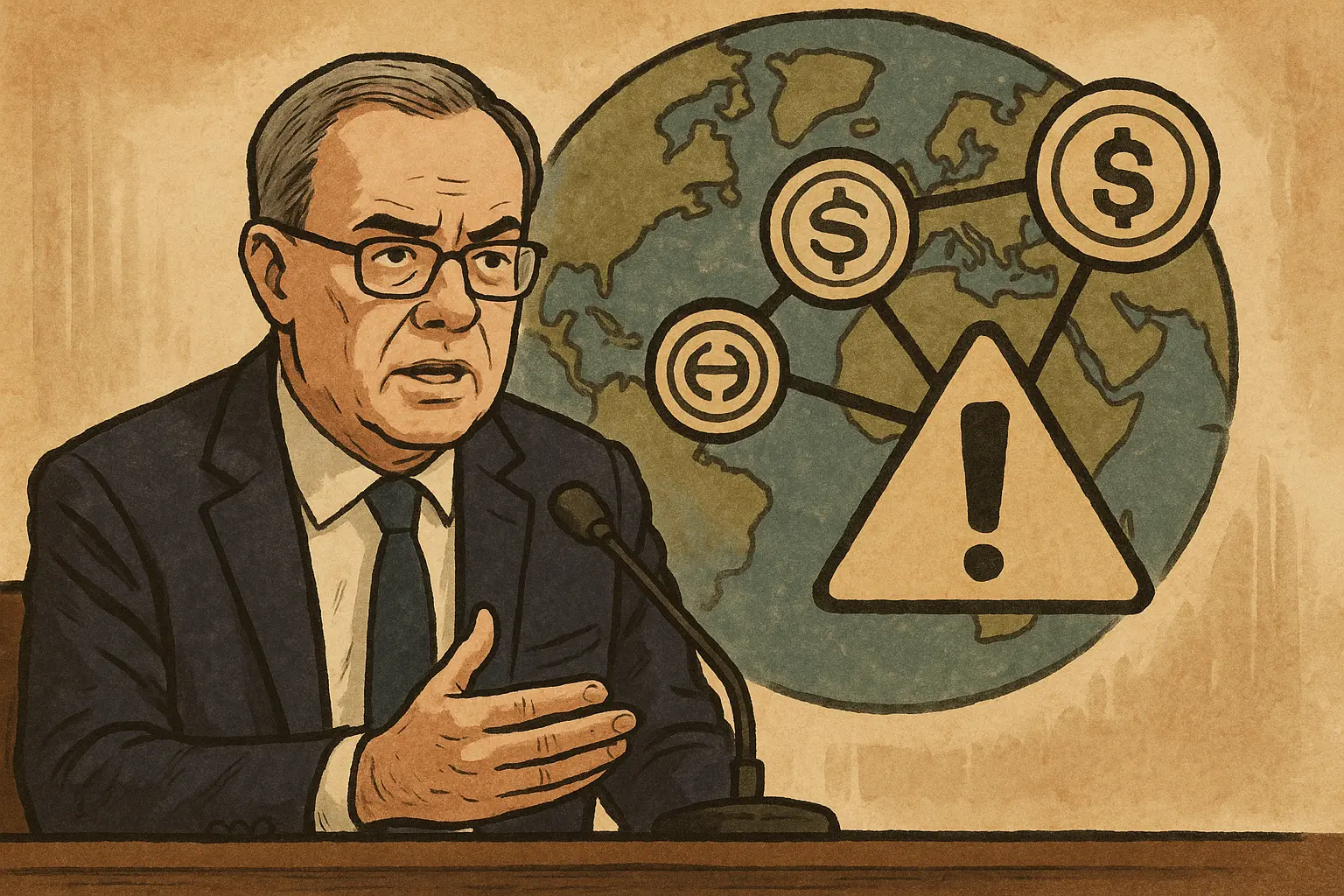
Andrew Bailey, Governor of the Bank of England and Chair of the Financial Stability Board (FSB), said at an event hosted by the Institute of International Finance (IIF) on April 15 (Wednesday) that progress in setting global stablecoin international standards has slowed over the past year, and that countries need to develop common rules to ensure that stablecoins can be redeemed at full value.
Andrew Bailey’s Remarks: The FSB Position at the IIF Event
According to publicly available coverage of the IIF event, Andrew Bailey made a statement on April 15, saying that the effective operation of stablecoins depends on users’ confidence in full-value redemption mechanisms, which Bailey defined as the core element of “value protection.”
Bailey said clearly at the event: “We have to set international standards to safeguard value. And I don’t think we can tolerate different countries applying different rules in this area.”
Bailey also noted that although stablecoins continue to go deeper into the global financial system, progress in developing stablecoin international standards has been slow over the past year. Bailey currently holds both positions at the same time: Governor of the Bank of England and Chair of the Financial Stability Board (FSB).
U.S. GENIUS Act NPRM: FinCEN and OFAC Jointly Publish a Compliance Framework
Under the NPRM jointly issued by FinCEN and OFAC on April 8, payment stablecoin issuers (PPSI) authorized to operate under the “GENIUS Act” framework must meet the following compliance obligations starting in January 2027:
· Establish AML (anti-money laundering) and CFT (counter-terrorist financing) compliance programs and sanctions compliance programs under the oversight of senior management
· Conduct financial crime risk assessments
· Implement risk-based customer due diligence (KYC/CDD) and related review policies
· Designate dedicated AML/CFT compliance officers
· Conduct employee compliance training
· Ensure that AML control measures pass independent audits and testing
According to the NPRM, the compliance obligations and standards described above are consistent with the financial crime compliance requirements currently applicable to U.S. financial institutions.
South Korea Stablecoin Regulatory Controversy: Circle CEO Seoul Visit and Legislative Stalemate
According to media reports this week, Circle CEO Jeremy Allaire said in interviews this week in Seoul that Circle currently has no plans to launch a won-pegged stablecoin, but is closely watching relevant legislative debates in South Korea’s National Assembly.
In the interview, Allaire said: “If we can build a legal route for market access and operations for a global company like Circle—as we have done in Hong Kong, Singapore, Japan and Europe—we would be very willing to obtain a license and establish a subsidiary in South Korea.”
Allaire held meetings this week in Seoul with South Korea’s banking industry executives and several large South Korean crypto companies, and provided consultations to South Korean domestic institutions interested in issuing stablecoins on technical support for stablecoins.
There is currently a legislative controversy in South Korean politics over the qualification of tech companies and banking institutions to issue stablecoins. South Korea’s President Lee Jae-myung had promised during the campaign to launch a won-pegged stablecoin, and since his election last June, his government has continued to face resistance from the banking industry and from South Korean banks.
Frequently Asked Questions
Where and when did Andrew Bailey make the above statement on global stablecoin international standards?
According to publicly available reports, Andrew Bailey made the above statement on April 15 (Wednesday) at an event hosted by the Institute of International Finance (IIF). Bailey currently holds both positions: Governor of the Bank of England and Chair of the Financial Stability Board (FSB).
What are the issuing bodies and the effective timeline for the U.S. GENIUS Act stablecoin NPRM?
Under the NPRM jointly issued by FinCEN and OFAC on April 8, the compliance regime planning for the “GENIUS Act” will fully take effect in January 2027. At that time, authorized payment stablecoin issuers (PPSI) will be required to comply with AML, CFT, and sanctions compliance obligations.
What is Circle CEO Jeremy Allaire’s public position on the South Korea stablecoin market?
According to media reports this week, Jeremy Allaire said that Circle currently has no plans to launch a won-pegged stablecoin. If South Korean regulators establish a lawful global company market-access framework, Circle is willing to apply for a license and establish a subsidiary in South Korea.


