The rise of zero-commission retail trading and multi-asset accounts has made it easier for individual investors to access public markets and digital assets. As a publicly traded, integrated brokerage, Robinhood’s financial disclosures, product lineup, and regulatory interactions are widely used to monitor the evolving intersection of US retail brokerage and crypto businesses.
From the Gate Stocks perspective, HOOD is an independent US stock ticker—it is not the same as the individual stocks or crypto assets users buy and sell within the App, nor is it equivalent to the Robinhood Chain on-chain network. When searching, placing orders, or reviewing positions, always confirm the ticker and corporate entity first.
What Is Robinhood Markets (HOOD)? How Should You Understand Its Public Entity and Mission?
Robinhood Markets, Inc. is a US retail-focused fintech company, trading under the ticker HOOD on NASDAQ. Its mission—democratize finance for all—emphasizes using technology to lower barriers to financial markets, providing a simplified interface and multi-asset trading to a broad retail audience.
Robinhood operates as a retail gateway for US equities and derivatives, a provider of crypto trading and wallet services, and an organizer of subscription-based value-added services (Robinhood Gold) and select banking and credit products. When analyzing HOOD stock, distinguish between “public company equity” and “tradable products within the platform.”
| Dimension |
Robinhood Markets, Inc. (HOOD) |
| Listing Market |
NASDAQ |
| Stock Ticker |
HOOD |
| Headquarters |
Menlo Park, California, USA |
| Core Positioning |
Retail multi-asset brokerage and fintech platform |
| Main Users |
Retail traders, subscription users |
| Key Products |
Stocks/ETFs, options, futures, event contracts, crypto, Gold, Strategies |
This table summarizes HOOD’s core identity. In trading platforms, financial reports, and industry comparisons, Robinhood should be clearly distinguished from pure crypto exchanges, traditional full-service brokerages, and Bitcoin-holding companies.
Where Is HOOD Stock Traded? What Are the Ticker, Market, and Investor Relations Resources?
HOOD is listed on NASDAQ under the ticker HOOD. The investor relations page provides financial reports, governance documents, and event materials. Buy HOOD on Gate covers account setup, ticker search, order placement, and fee review.
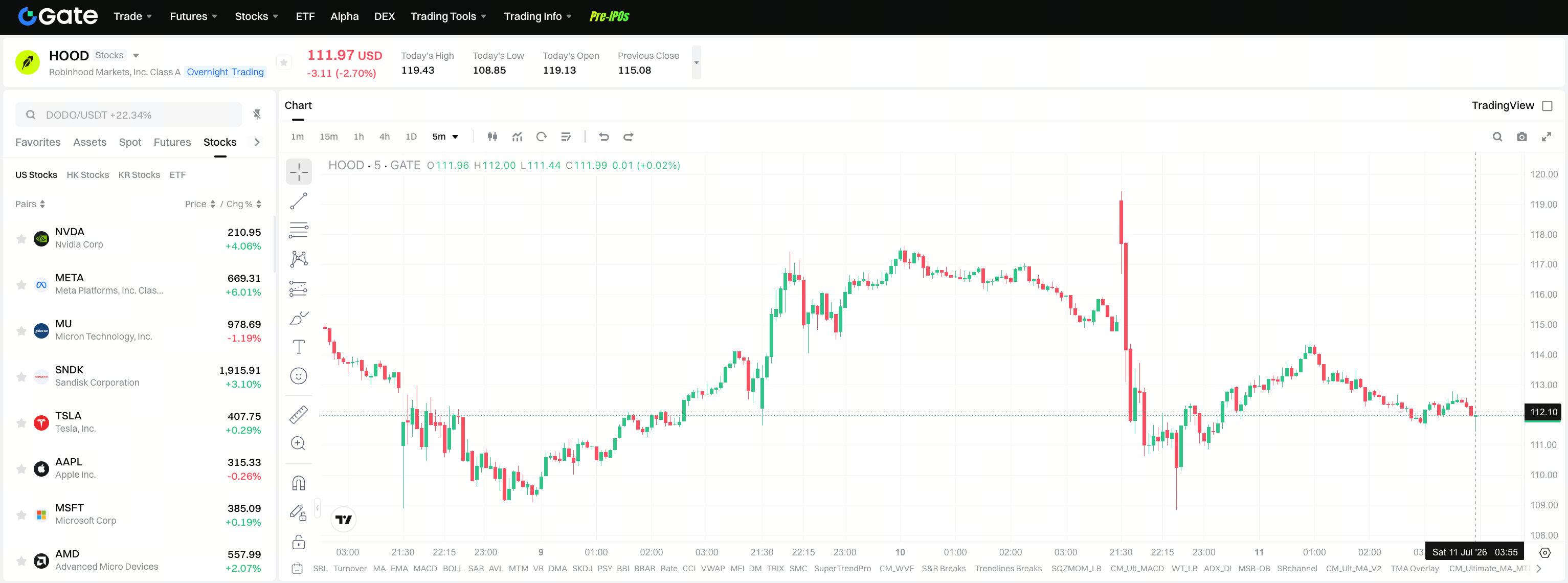
When viewing HOOD on the Gate Stocks page, confirm the page displays Robinhood Markets, Inc. and NASDAQ information. The trading page handles ticker identification and order execution; fundamental analysis should also consider revenue mix, product structure, and regulatory environment.
How Is Robinhood’s Business and Product Structure Organized? What Are the Segments for Brokerage, Crypto, and Subscription?
Robinhood’s business is structured across several segments: brokerage trading (stocks, ETFs, options, futures, event contracts), crypto services, subscription and advisory products (such as Robinhood Gold and Robinhood Strategies), and banking and credit extensions. A comprehensive analysis of the HOOD stock business model requires understanding how each segment contributes to trading revenue, net interest income, and subscription fees.
| Segment |
Core Content |
Key Focus |
| Brokerage Trading |
Stocks/ETFs, options, futures, event contracts |
Trading activity, asset class mix |
| Crypto Services |
Spot trading, transfers, Wallet, institutional expansion |
Crypto trading, custody vs self-custody |
| Subscription & Advisory |
Robinhood Gold, Strategies |
Subscription penetration, recurring revenue |
| Banking & Credit |
Cash card, credit card, and partner products |
Interest and rewards structure, partner bank roles |
The brokerage segment determines the breadth of retail market access, the crypto segment connects to the digital asset cycle, subscriptions provide stable recurring fees, and banking and credit extend funding and spending scenarios. The product matrix answers “what the platform offers”; revenue analysis explains “how the public company recognizes income.”
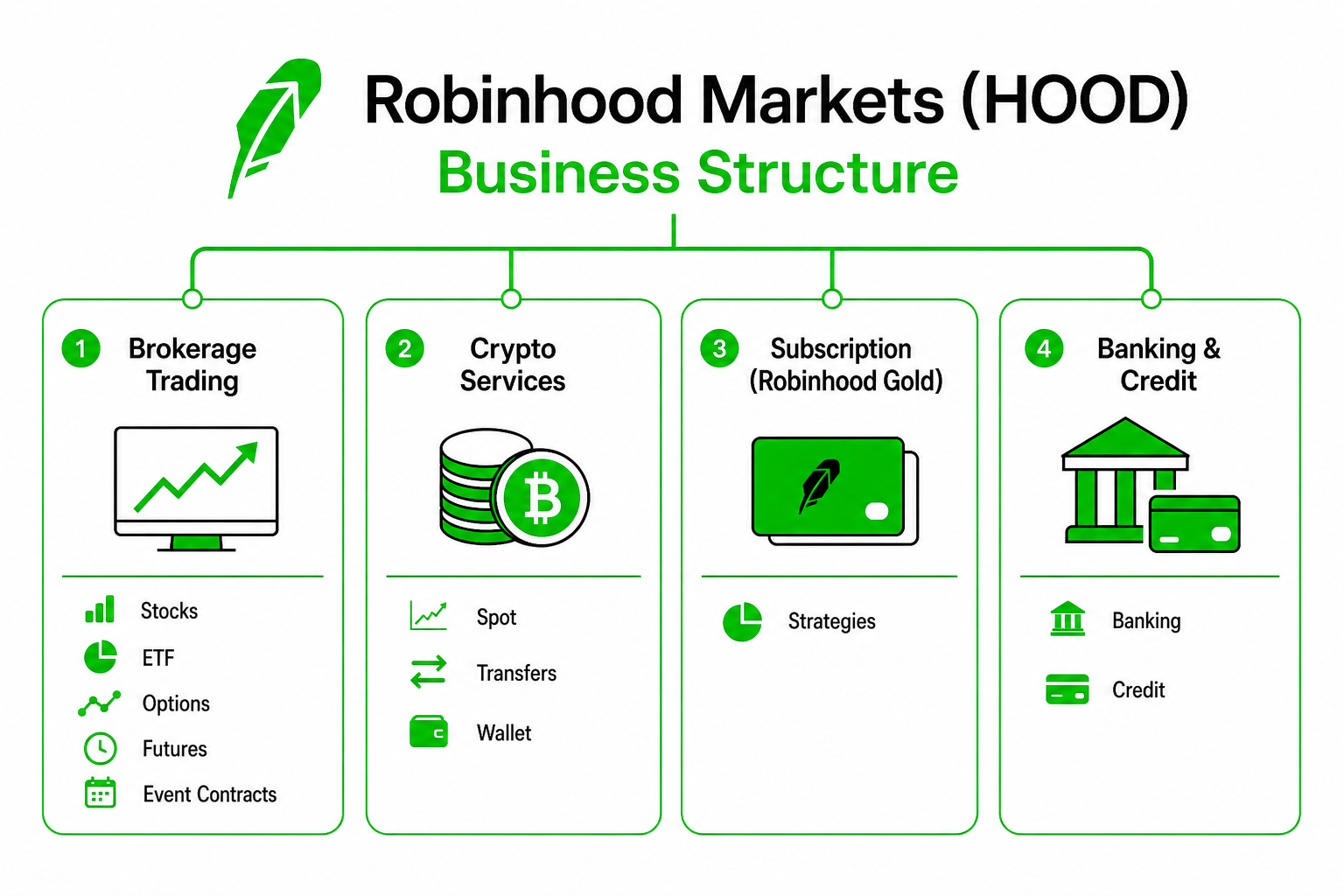
Figure 1. Robinhood’s business structure: segmentation of brokerage trading, crypto services, Gold subscriptions, and banking/credit.
What Drives HOOD’s Revenue? How Are Trading, Net Interest, and Subscriptions Structured?
HOOD’s revenue falls into three main categories: trading revenue, net interest income, and subscriptions/other income. Trading revenue is tied to payment for order flow (PFOF), options, crypto, and related transaction activities; net interest comes from margin, cash balances, and securities lending; subscriptions are driven by Robinhood Gold and other membership fees.
Trading revenue is sensitive to market activity, net interest to the rate environment, and subscriptions provide a relatively stable recurring stream. For a complete analysis, evaluate these three drivers separately—do not reduce HOOD’s profit model to a single “zero commission” concept.
What Is Robinhood’s Crypto and On-Chain Strategy? How Does It Relate to Robinhood Chain?
Robinhood provides crypto trading, transfers, and jurisdictional expansion through subsidiaries, along with self-custody Wallet and other offerings. The company also develops tokenization and Robinhood Chain as on-chain infrastructure, connecting retail access to Layer 2 execution. HOOD crypto and Robinhood Chain covers product boundaries, account models, and compliance transparency.
The key distinction: HOOD is the public company stock; Robinhood Chain is the on-chain network and application infrastructure. When reviewing account and transaction mechanisms, Robinhood Chain vs Base vs Arbitrum, and security, compliance, and on-chain transparency, separate on-chain experience from equity analysis.
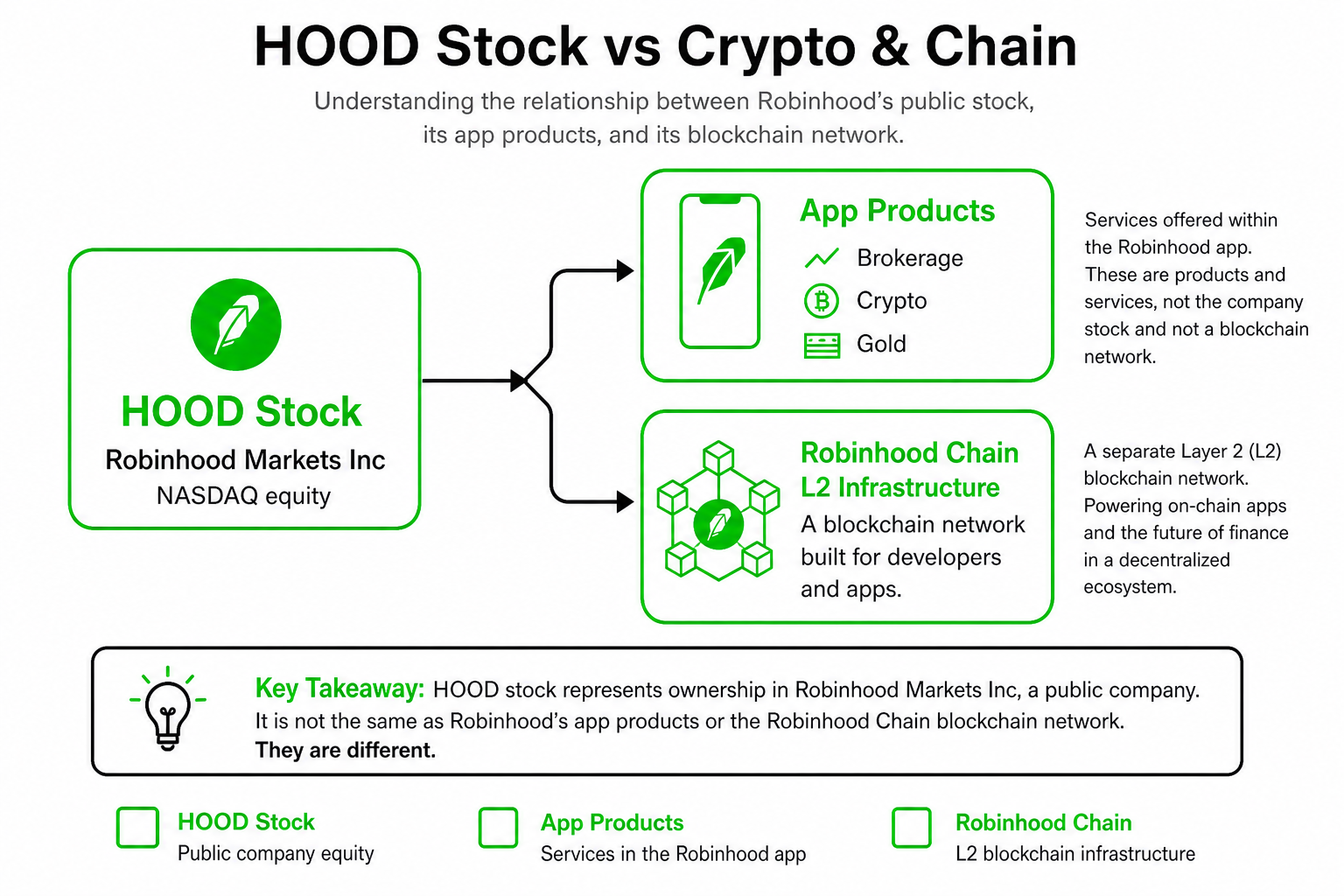 Figure 2. Relationship between HOOD stock, crypto products, and Robinhood Chain: distinguish between equity and on-chain network.
How Does HOOD Compare to Other US Stocks? How Is It Different from Coinbase (COIN)?
Robinhood Markets, Inc. (HOOD) and Coinbase Global, Inc. (NASDAQ: COIN) both serve retail users and offer crypto exposure, but their business models differ. HOOD is a multi-asset retail brokerage, with revenue driven by trading activity, net interest, and Gold subscriptions; COIN is focused on digital asset trading and custody, with revenue concentrated in crypto trading fees and subscription services.
| Dimension |
Robinhood (HOOD) |
Coinbase (COIN) |
| Core Business |
Multi-asset retail brokerage |
Digital asset trading platform |
| Main Revenue |
Trading, net interest, Gold |
Trading fees, subscriptions |
| Asset Focus |
US equities, options, some crypto |
Primarily crypto assets |
| Regulatory Model |
Brokerage and crypto regulation |
Crypto trading and custody regulation |
| User Profile |
Broad retail traders |
Higher share of native crypto users |
HOOD vs COIN offers a side-by-side comparison of product boundaries, revenue structure, and regulatory exposure. When comparing, first identify whether the company is an integrated broker or pure crypto exchange, then analyze market cycle sensitivity.
What Are the Advantages, Risks, and Limitations of Holding or Trading HOOD Stock?
Advantages: Public listing ensures standardized disclosures; multi-asset retail access and subscription layers provide insight into revenue diversity; investor relations materials clarify business descriptions and risk factors. Risks: Trading activity and interest rates impact trading and net interest income; PFOF and order routing face regulatory review; crypto business is subject to volatility and compliance; competition comes from both traditional brokerages and other fintechs. HOOD regulation and compliance details constraints for brokerage, PFOF, and crypto.
Limitations: Zero commission does not mean zero cost or zero risk; Gate Stocks’ trading process supports execution verification but does not replace independent review of filings and regulatory documents; company stock performance is not directly linked to the price movement of any individual asset within the App.
Summary
Robinhood Markets, Inc. (HOOD) is a US-listed retail multi-asset brokerage and fintech firm. Its core structure combines brokerage, crypto, subscription, and extended financial products, with revenue derived from trading, net interest, and subscription fees. To understand HOOD, distinguish between public company equity, tradable platform products, and Robinhood Chain’s on-chain infrastructure, and consider Gate Stocks’ trading process and regulatory risks—don’t oversimplify HOOD as just a “zero commission App.”
FAQ
What is Robinhood Markets (HOOD)?
Robinhood Markets, Inc. is a US retail fintech company listed on NASDAQ under ticker HOOD. Its subsidiaries offer trading in stocks, options, futures, event contracts, and crypto, and operate subscription products like Robinhood Gold.
What is HOOD’s stock ticker? Where is it listed?
HOOD is Robinhood Markets, Inc.’s stock ticker, listed on NASDAQ. The investor relations page provides financial and governance documents; Gate Stocks users can search for and verify the company name with the HOOD ticker.
How does Robinhood make money?
Robinhood’s revenue comes mainly from trading (including order routing compensation and various trading activities), net interest (margin, cash balances, securities lending), and subscription fees such as Robinhood Gold. Each revenue stream has a different sensitivity to market activity and interest rates.
How is Robinhood different from Coinbase?
HOOD is a multi-asset retail broker covering US equities, options, and some crypto; COIN is primarily a digital asset trading and custody platform. Revenue structure, regulatory focus, and user base differ—these should not be grouped under the same “crypto stock” label.
What is Robinhood Chain? Is it the same as HOOD stock?
No. HOOD is the public company’s common stock; Robinhood Chain is the company’s on-chain/Layer 2 infrastructure, built to connect wallet experience and on-chain execution. On-chain network parameters should not be equated with stock fundamentals.
What are the risks of trading Robinhood stock?
Key risks include the effects of trading activity and interest rate changes on revenue, PFOF and brokerage regulatory shifts, crypto compliance and volatility, industry competition, and operational factors such as ticker selection, order types, and fee rules. These risk statements do not constitute investment advice.