In traditional gaming systems, assets are usually controlled by a single platform. Players may use virtual items, but they cannot transfer them across games or platforms. After blockchain technology was introduced, asset ownership could be recorded onchain, yet structural isolation between different games still remained. The core issue this protocol addresses is how to give these onchain assets true interoperability, rather than leaving them at the tradable stage alone.
From the perspective of digital assets, this kind of mechanism does more than change how assets circulate, it also reshapes the structure of game economies by allowing assets to share value and usage logic across multiple systems. This design extends the boundaries of asset utility, turning them from single application resources into cross-ecosystem resources.
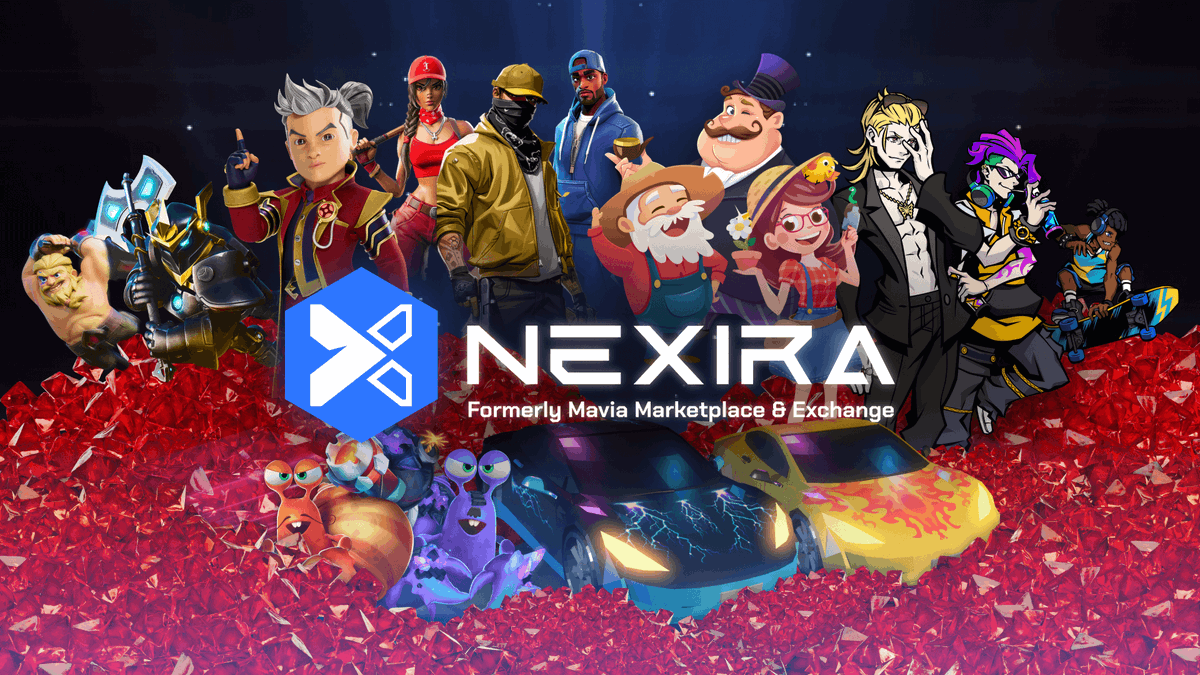
What Is Nexira DAEP (NEXI)? The Basic Definition of a Cross-Game Asset Protocol
This protocol is built around a unified framework for cross-game asset circulation, with the goal of breaking down asset silos between different games. By standardizing asset representation and abstracting rules, it allows assets from different sources to be recognized, used, and exchanged within the same system.
Within this structure, assets are no longer tied to the logic of a single game, but are instead defined in a unified way at the protocol layer. This means their form shifts from being “in-application objects” to becoming “network-level resources,” and their range of use is no longer limited by the environment in which they were originally issued.
This design can be understood as separating game assets from closed systems and turning them into digital resources that can be shared across multiple applications, thereby forming a cross-game asset network.
How Nexira Evolved from a Game Marketplace into a Cross-Game Asset Protocol
The original goal of the game asset marketplace was to solve a trading problem, namely how players could buy and sell virtual items with one another. At that stage, the focus was on circulation, but assets still remained tied to specific game environments.
With the introduction of blockchain, assets began to carry onchain ownership, and trading could take place outside centralized platforms. Even so, those assets were still confined to a single ecosystem and could not be used across games.
The move toward protocolization allowed the system to evolve from a marketplace into infrastructure. The key to this shift is that assets are not only traded, they are redefined as resources that can circulate and be used across multiple systems, creating a higher-level economic structure.
The Role and Functional Mechanism of NEXI in the Nexira Ecosystem
NEXI plays a central role in connecting assets, users, and the protocol within this system. Its function is reflected not only in value transfer, but also in system coordination and incentive design.
During asset circulation, NEXI participates in the logic of value exchange, allowing different types of assets to form a unified relationship. At the same time, as the protocol token, it supports system operations and ecosystem incentives, enabling participants to interact within a shared framework.
This design makes NEXI more than just a medium of exchange, it is also part of the protocol’s structure, with its role running through the entire asset circulation process.
How Nexira’s Cross-Game Asset Mechanism Works
The cross-game asset mechanism relies on a combination of standardization and an intermediary layer. Once assets enter the protocol, they are mapped through a unified set of rules so they can be recognized across different game environments.
In this process, assets are not moved directly from one game to another. Instead, they are routed and converted through the protocol layer. This reduces direct dependence between systems and makes the overall structure more scalable.
By introducing an abstraction layer, asset logic is decoupled from specific applications, making cross-system use possible. This mechanism allows different games to operate within the same economic system without having to share the same underlying architecture.
The Role of Ruby in the Nexira System: A Breakdown of the Universal In-Game Currency Mechanism
Ruby serves as a unified unit of account within this system, allowing different assets to be measured in value under the same framework.
In a multi-game environment, different assets usually have their own separate value systems and lack a common standard. The introduction of Ruby allows these assets to be exchanged through a single unit, thereby improving circulation efficiency.
In addition, Ruby connects different markets, helping assets maintain continuity as they move between games. This mechanism is similar to an intermediary currency in traditional economics, used to unify value relationships across different markets.
Nexira’s Use Cases: From Game Asset Trading to Cross-Ecosystem Circulation
The protocol’s use cases revolve around asset circulation capabilities. At the foundational level, it supports game asset trading, allowing players to freely exchange virtual items.
At the extended level, it supports cross-game use, enabling assets to be called and used across multiple environments. This ability means assets are no longer limited to a single application, but instead become cross-ecosystem resources.
In addition, this structure can be extended to scenarios such as digital collectibles, virtual economies, and multi-platform asset management, reflecting its nature as infrastructure.
How Nexira Differs from Traditional Game Asset Systems and Web3 Markets
| Dimension |
Traditional Game Assets |
General NFT Marketplaces |
Nexira DAEP |
| Ownership |
Platform-controlled |
Onchain ownership |
Protocol-layer ownership |
| Scope of use |
Single game |
Primarily for trading |
Cross-game use |
| Circulation method |
Closed marketplace |
Open trading |
Cross-system circulation |
| Asset structure |
Application-bound |
Independent assets |
Unified protocol management |
Structurally, traditional systems and NFT marketplaces tend to emphasize “use” and “trading” respectively, while this protocol emphasizes “circulation and interoperability.” That difference makes it closer to the infrastructure layer than to a standalone application or marketplace.
The Advantages, Limitations, and Common Misconceptions of Nexira DAEP
Its main advantage is that it can break down asset silos, giving digital assets greater liquidity and a broader range of use. At the same time, its unified economic model helps improve the overall efficiency of the system.
Its limitations mainly lie in its dependence on ecosystem participation. Compatibility between different games will affect how assets can be used. In addition, differences in rules may also create adaptation challenges.
A common misconception is to view it as an ordinary NFT marketplace, or to understand it only as a trading tool. Its core lies in asset interoperability, not in any single function alone.
Conclusion
Nexira DAEP (NEXI) redefines digital assets and their circulation model at the protocol layer, allowing them to be used and exchanged across multiple game environments. Its core value lies in building a cross-ecosystem asset network, transforming assets from application-bound resources into shareable digital resources.
FAQ
What is the main purpose of Nexira DAEP (NEXI)?
It is used to enable asset circulation and interoperability between different games.
What does cross-game asset interoperability mean?
It means assets can be used across multiple games rather than being restricted to a single system.
What is the difference between NEXI and Ruby?
NEXI is used for protocol operations and value transfer, while Ruby is used for asset pricing and exchange.
Is this protocol the same as an NFT marketplace?
No, its core lies at the protocol layer rather than in being a simple trading platform.
Can cross-game assets be used completely freely?
How they can be used depends on the rules and compatibility of different game systems.