In a cross-game asset ecosystem, assets are no longer confined to a single application environment. Instead, they need to move across multiple systems. In this process, a unified value relationship and exchange logic must be established between different assets, which is exactly where NEXI becomes essential.
This mechanism can be understood from three dimensions: asset flow paths, system structure, and token division of roles. Together, these dimensions form the complete picture of how NEXI functions within the Nexira ecosystem.
What Role Does NEXI Play in the Nexira Ecosystem
Within the overall architecture, NEXI sits at the protocol layer, connecting assets, users, and system rules. Its role goes beyond value transfer, extending to maintaining the stability of the system structure.
During asset circulation, NEXI provides a unified value reference, allowing assets from different sources to be integrated into a single economic framework. This design avoids the lack of standardization between asset types and improves overall liquidity efficiency.
Structurally, as a protocol token, NEXI enables the system to operate without centralized coordination. Its presence allows participants to interact under a shared set of rules, forming a sustainable asset network.
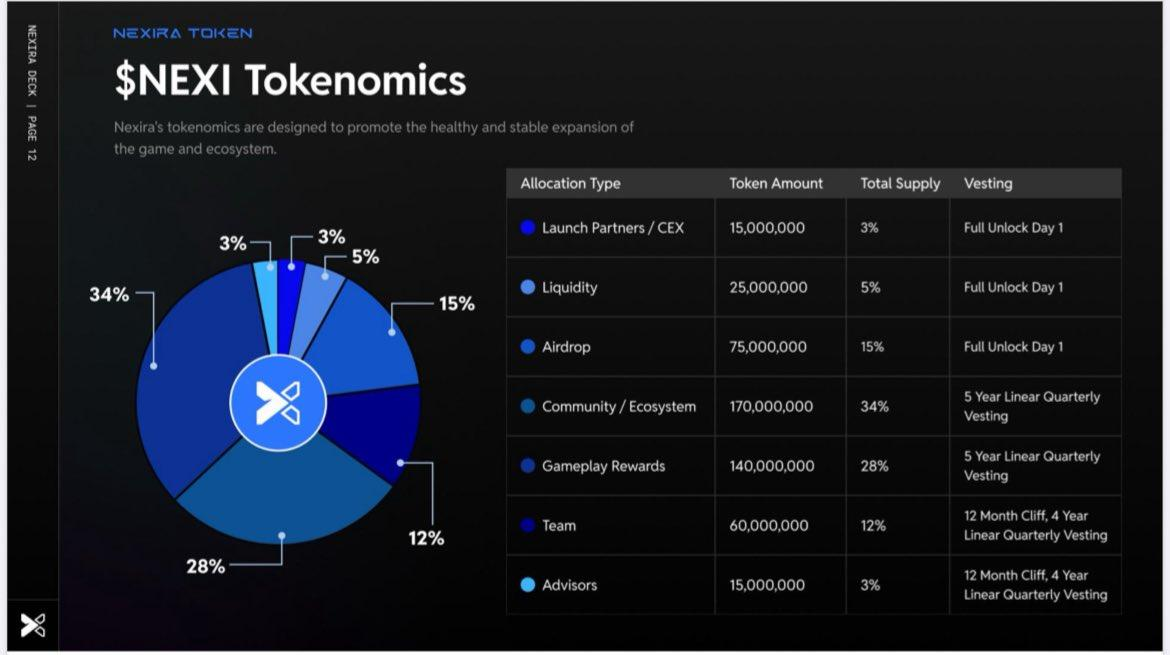
How Cross-Game Assets Circulate Through NEXI
Cross-game asset circulation is not a simple “transfer,” but a transformation process completed at the protocol layer.
When an asset enters the Nexira system from a specific game, its value is mapped through NEXI, enabling it to be exchanged with other assets. It can then be reused in another game environment.
This process typically includes three stages: entering the protocol layer, value mapping and conversion, and reapplication in the target environment. NEXI acts as the bridge throughout, allowing assets from different systems to operate under a unified logic.
Through this mechanism, assets are no longer tied to a single system but become resources that can circulate across environments.
What Role Does NEXI Play Across the Asset Lifecycle
NEXI’s role spans multiple stages of the asset lifecycle.
At the creation stage, assets are typically generated by games or systems, but their value has not yet entered a unified framework. Once they enter the protocol, NEXI participates in defining their value, enabling cross-system circulation.
During the trading stage, NEXI acts as an intermediary, supporting exchanges and transfers between assets so they can be priced within the same system.
At the usage stage, after being transformed through the protocol layer, assets can be deployed in target environments, still relying on NEXI for value support.
This end-to-end involvement makes NEXI not just a transaction tool, but a key structural component throughout the asset lifecycle.
How NEXI and Ruby Divide Responsibilities
Within the Nexira system, NEXI and Ruby operate at different layers with distinct responsibilities.
NEXI functions at the protocol layer, handling system operations and value connections. Ruby operates at the application layer, mainly used for asset pricing and actual transactions. Their relationship resembles a layered structure of “underlying resource” and “usable currency.”
During asset circulation, NEXI provides the foundational value framework, while Ruby is used for real exchanges and pricing. This division ensures both structural stability and a smooth user experience.
By separating functions across different tokens, the system avoids the complexity that would arise if a single token had to handle too many roles.
How the Cross-Game Economy Operates Around NEXI
The core of a cross-game economy lies in how assets move between systems while maintaining consistent value.
In this system, NEXI provides a unified value reference, allowing assets from different games to be exchanged within the same economic framework. Each game acts as an independent node connected through the protocol, forming a networked structure.
This structure allows assets to move beyond a single market and share value across multiple systems. NEXI ensures consistency across this distributed environment.
From a macro perspective, this system resembles a distributed economic network rather than a single-platform marketplace.
Boundaries and Limitations of NEXI
Although NEXI plays an important role, its functionality has clear boundaries.
First, its role is primarily at the protocol layer and does not directly determine how assets are used within individual games. Each game can still impose its own rules and restrictions.
Second, cross-game circulation depends on system compatibility. If certain environments are not integrated into the protocol, asset mobility will be limited.
In addition, NEXI does not determine asset value itself. It provides the framework for value connection, while actual pricing is driven by market behavior and usage scenarios.
Common Misconception: Is NEXI Just a Game Token
A common misunderstanding is to view NEXI as a typical in-game token.
In reality, it is not designed for a single game but for supporting an entire cross-game asset ecosystem. Its role is closer to a core component of the underlying protocol rather than a payment tool within a single application.
Compared to traditional game tokens, NEXI focuses more on structure and connectivity rather than consumption or rewards. This distinction highlights its positioning as infrastructure.
Summary
NEXI serves as a core protocol-layer component within the Nexira system, connecting assets, users, and system rules to enable cross-game asset circulation and usage across multiple environments.
Its role spans the entire asset lifecycle and works alongside Ruby in a layered structure to build a cross-game economic system. This design transforms digital assets from isolated in-app resources into cross-ecosystem resources.
FAQ
What is the main function of NEXI?
It connects assets from different games and supports their circulation across multiple systems.
Is NEXI used for in-game consumption?
Its primary role is at the protocol layer; actual consumption is typically handled by other tokens.
What is the difference between NEXI and Ruby?
NEXI handles system structure and value connection, while Ruby is used for transactions and pricing.
Why is NEXI needed for cross-game assets?
Because different assets require a unified value framework for conversion and exchange.
Does NEXI determine asset prices?
Not directly; it provides the structure for value connection, while prices are determined by market dynamics.