In global asset allocation, U.S. equities represent not only corporate growth opportunities but also broader trends in the global economy, technological innovation, and capital flows. As the digital asset industry continues to evolve, a growing number of crypto investors are turning their attention to the U.S. stock market. Through services like Gate Stocks, investors can use digital assets such as USDT to trade stocks, further bridging the gap between TradFi (Traditional Finance) and Crypto (crypto finance).
What Is U.S. Stock Trading?
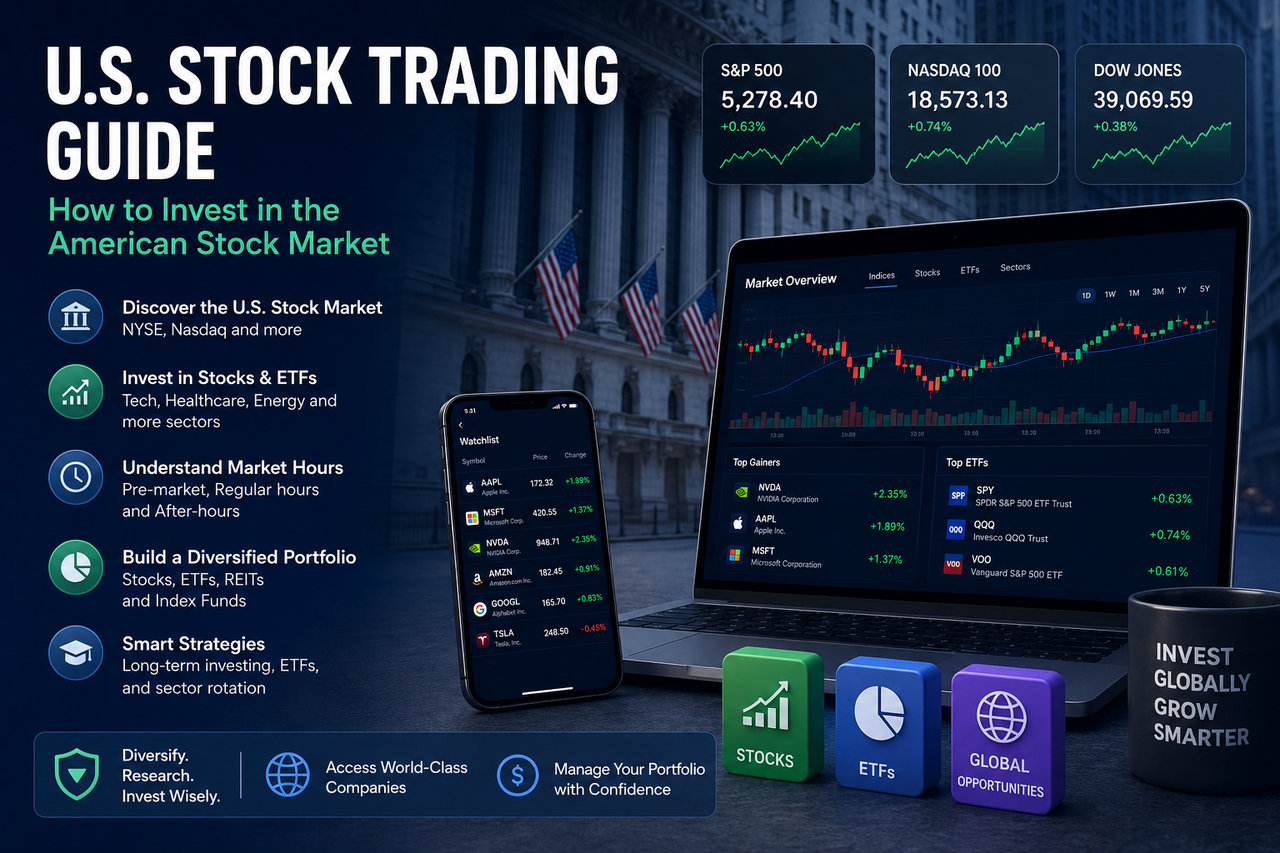
U.S. stock trading refers to the buying and selling of stocks and ETFs listed on U.S. securities exchanges.
Stocks represent partial ownership in publicly traded companies. When investors purchase shares, they are essentially participating in the value creation process of those companies' future growth. ETFs, on the other hand, are exchange-traded funds that track the performance of an index, sector, or basket of assets, offering a more diversified investment approach.
As the world's largest and most liquid equity market, the U.S. stock market has long been considered a key barometer of global financial health.
What Makes Up the U.S. Stock Market?
The U.S. stock market is not a single trading venue but a network of multiple exchanges.
New York Stock Exchange (NYSE)
The NYSE is one of the oldest and largest stock exchanges globally. Many major multinational corporations are listed here, spanning sectors such as finance, industry, and consumer goods.
Nasdaq
Nasdaq is best known for its concentration of technology companies. Industry giants like Apple, Microsoft, and Amazon trade on Nasdaq, making it a leading indicator of global tech sector development.
ETFs and Electronic Trading
Beyond traditional exchanges, the U.S. market boasts a robust ETF ecosystem and electronic trading infrastructure, providing investors with a wide range of products and high market liquidity.
What Can You Trade in the U.S. Stock Market?
The U.S. market offers extensive investment options to suit various strategies.
Individual Stocks
Investors can buy shares in publicly listed companies across sectors such as technology, finance, healthcare, energy, consumer services, and industrial manufacturing. Each company carries its own growth story and risk profile.
ETFs
ETFs are among the most popular investment vehicles in the U.S. market. Through ETFs, investors can gain exposure to:
- S&P 500 Index
- Nasdaq Index
- Technology sector
- Energy sector
- Healthcare sector
- High-dividend assets
Compared to individual stocks, ETFs typically offer better diversification.
REITs and Other Assets
The U.S. market also includes asset classes like Real Estate Investment Trusts (REITs), providing additional diversification opportunities.
What Are the Trading Hours for U.S. Stocks?
Knowing the trading hours is essential for market participation.
Regular Trading Session
U.S. stock exchanges are generally open on business days. Due to time zone differences, investors around the world need to convert these hours to their local time.
Pre-Market Trading
Some traders transact before the official market open. Pre-market sessions usually have lower liquidity, which can lead to more pronounced price swings.
After-Hours Trading
Certain stocks can still be traded after the market closes. Corporate earnings reports and major announcements often influence after-market activity.
How to Invest in U.S. Stocks
With the expansion of global investment channels, investors now have multiple ways to access the U.S. market.
Through Traditional Brokers
The traditional route typically involves:
- Opening a brokerage account
- Completing identity verification
- Making a bank deposit
- Converting to U.S. dollars
- Placing stock trades
This approach has long been the primary gateway for international investors.
Through Digital Asset Platforms
As digital asset infrastructure matures, leading crypto exchanges like Binance and Gate have begun offering stock trading services.

Investors can open a stock account via Gate Stocks and use stablecoins like USDT as a funding source to trade U.S. stocks.
This model simplifies cross-market investing and accelerates the convergence of traditional finance and digital assets.
How Should Beginners Choose Their First U.S. Stock Investment?
For newcomers, selecting assets that match their risk tolerance is crucial.
Large-Cap Blue-Chip Stocks
Established companies with mature business models and strong market positions are often the first choice for many entry-level investors.
Leading Tech Stocks
The technology sector has long been a major growth driver in U.S. capital markets.
Areas like artificial intelligence, semiconductors, cloud computing, and data centers continue to attract significant investor attention.
ETFs
For those without the time or expertise to research individual stocks, ETFs offer a convenient way to achieve diversified exposure.
What Factors Influence the U.S. Stock Market?
Stock prices are shaped by a combination of factors.
Federal Reserve Policy
Interest rate changes affect corporate financing costs and market liquidity, making Fed policy a critical driver of stock market performance.
CPI and Inflation Data
Inflation levels influence monetary policy expectations, which in turn affect capital markets.
Non-Farm Payrolls
Employment data is widely viewed as a key indicator of U.S. economic health.
Corporate Earnings
The financial performance of listed companies directly impacts investor sentiment and valuation.
Technological Innovation
Developments in AI, robotics, cloud computing, and other frontier technologies can significantly affect the valuations of related companies.
How Do U.S. Stocks Differ from Crypto Investments?
While both are investable assets, their underlying fundamentals are distinct.
Different Asset Bases
Stocks represent equity in a company.
Crypto assets are primarily built on blockchain networks and digital ecosystem growth.
Different Drivers of Volatility
Stock prices are typically influenced by corporate performance and macroeconomic conditions.
Crypto prices are more sensitive to technological breakthroughs, market sentiment, and ecosystem developments.
Different Portfolio Roles
Stocks and digital assets often provide uncorrelated risk-return profiles, prompting more investors to allocate to both classes.
Why Are More Crypto Investors Turning to U.S. Stocks?
As the digital asset market matures, investors increasingly seek cross-market diversification.
The U.S. stock market offers abundant opportunities and exposure to trends in AI, semiconductors, renewable energy, and global industrial upgrades.
For long-term investors, combining U.S. stocks with digital assets can create a more balanced and diversified allocation framework.
Summary
As one of the world's largest and most liquid capital markets, the U.S. stock market is a cornerstone of global asset allocation. From mega-cap tech names to index ETFs, it offers a wealth of investment opportunities within a mature market framework.
With the ongoing evolution of digital assets, the pathways to U.S. stock investing are becoming more diverse. Whether through traditional brokers or digital platforms, understanding market structure, trading rules, and allocation logic is essential for building long-term investment capabilities.
Frequently Asked Questions
What is U.S. stock trading?
U.S. stock trading refers to the buying and selling of stocks, ETFs, and other securities listed on U.S. exchanges.
How can beginners start investing in U.S. stocks?
Beginners should first learn market basics, open an account, and choose stocks or ETFs that align with their risk tolerance.
How do U.S. stocks differ from A-shares?
Differences exist in market structure, trading rules, listed company composition, and investor base. The U.S. market features more globally diversified companies and a broader range of products.
What are the trading hours for U.S. stocks?
U.S. markets are open on business days, with pre-market and after-hours sessions. Exact times require conversion based on the investor's time zone.
What’s the difference between ETFs and stocks?
Stocks represent ownership in a single company, while ETFs hold a basket of assets, providing built-in diversification.
How can I invest in U.S. stocks using USDT?
Some platforms that support stock trading allow users to fund their accounts with USDT and use it to buy U.S. stocks and ETFs.
Are U.S. stocks suitable for long-term holding?
Many investors adopt a buy-and-hold strategy for U.S. stocks, but individual decisions should factor in personal goals and risk appetite.
Why are more crypto investors paying attention to U.S. stocks?
U.S. stocks offer risk-return characteristics distinct from digital assets and provide exposure to global innovation and industrial trends, making them increasingly attractive to crypto investors.







