What Are Moonbirds and the BIRB Token?
Moonbirds is an NFT project that quickly gained significant attention after its launch in 2022. Its distinctive PFP design and innovative Nesting mechanism established strong recognition in the early NFT market. By encouraging long-term holding over short-term trading, the Nesting mechanism helped foster a stable community structure.
Recently, Moonbirds officially announced the launch of its ecosystem token, BIRB, marking a transition from a standalone NFT collectible to a broader Web3 ecosystem. BIRB is designed as a central connector for NFT assets, community engagement, and external ecosystem partnerships, rather than serving as a traditional transactional or incentive token.
Unlike some NFT projects that issue tokens retroactively, BIRB was purpose-built from the start with clearly defined functional boundaries, making its tokenomics a focal point in the market.
Detailed Overview of BIRB Tokenomics
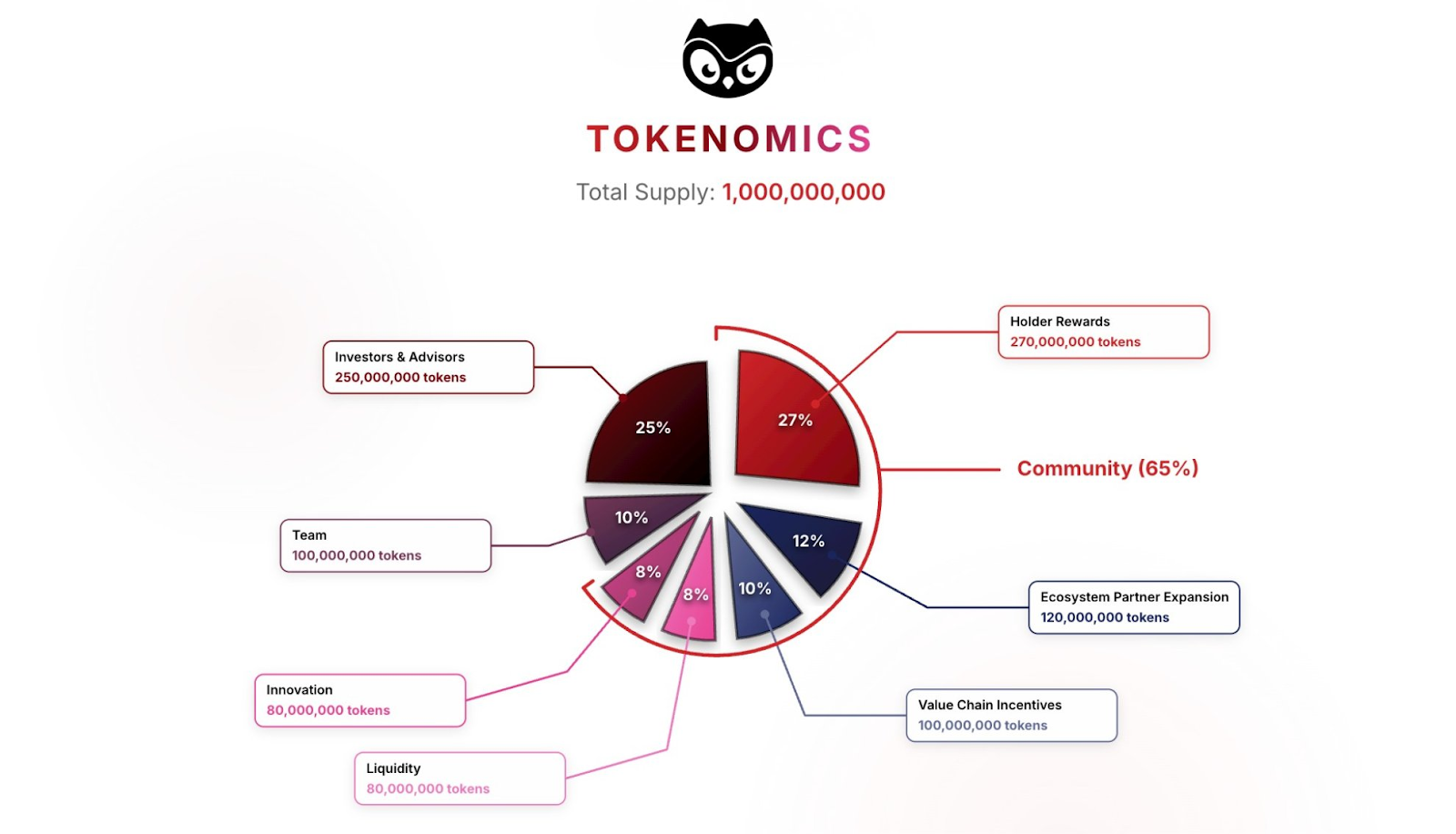
Image: https://x.com/moonbirds/status/2016173843359105031
According to official sources, the total supply of BIRB tokens is 1 billion, with the following allocation:
- Community Incentives: 65%
Rewards for ecosystem participants, serving as the primary source for token circulation and value creation. - Team Allocation: 10%
Long-term incentives, emphasizing alignment with the project lifecycle rather than short-term gains. - Investors and Advisors: 25%
Strategic resource acquisition, early support, and ecosystem expansion collaboration.
The largest share—community incentives—is further divided into several functional modules, including NFT holder rewards, ecosystem partnership support, value chain incentives, liquidity provision, and reserves for future innovation.
Strategic Significance of Allocating 65% to Community Incentives
Allocating more than 60% of tokens to the community is rare among crypto projects, making this a core highlight of BIRB’s tokenomics.
This structure demonstrates Moonbirds’ commitment to a participatory ecosystem, rather than relying solely on team or capital-driven growth:
- Strengthening community engagement: Ongoing incentives for holders encourage users to shift from speculation to long-term participation and contribution.
- Expanding the ecosystem partner network: About 12% of tokens support partner integration, creating opportunities for external applications and brands to co-develop the ecosystem.
- Value chain collaborative incentives: Roughly 10% is allocated to participants in real-world or on-chain value chains to promote multi-party collaboration.
- Liquidity and innovation reserves: Approximately 8% each is reserved for market liquidity support and future innovation projects, balancing short-term tradability with long-term growth.
Overall, this allocation structure aims to balance market circulation, ecosystem expansion, and long-term incentives.
Token Launch Timeline and Market Attention
Moonbirds has confirmed that BIRB will complete its Token Generation Event (TGE) on the Solana blockchain on January 28. While BIRB’s secondary market price awaits confirmation through actual trading, discussions on Reddit, official social channels, and within the community show a generally optimistic sentiment for the token launch, with particular focus on:
- Whether the long-term incentive mechanism can consistently deliver value
- The integration and use cases of BIRB in relation to Moonbirds NFTs
This suggests that BIRB’s initial performance will depend not only on market sentiment, but also on the effectiveness of its mechanisms.
Analysis of Investor and Team Allocations
In BIRB’s overall distribution, investors and advisors account for 25%, primarily for strategic resource acquisition and maintaining long-term support relationships. Compared to projects with larger team reserves, Moonbirds allocates more resources to the community and ecosystem.
The team allocation is only 10%, signaling the project’s aim to avoid excessive internal incentives while ensuring operational effectiveness, which also helps ease community concerns about concentrated sell pressure.
BIRB’s Impact on the Moonbirds NFT Ecosystem
With the recent upgrade to the Nesting 2.0 mechanism, Moonbirds NFT holders can lock their NFTs on-chain and continuously receive BIRB tokens. This design strengthens the economic connection between NFTs and the token:
- Increases the value and participation threshold for NFT holders
- Extends user participation cycles
- Stabilizes ecosystem activity
On a broader scale, the introduction of BIRB marks Moonbirds’ evolution from a single NFT project to an integrated digital asset system that combines NFTs, tokens, and application scenarios.
Summary and Market Outlook
Overall, Moonbirds’ BIRB tokenomics model offers a medium- to long-term approach that balances community incentives and ecosystem expansion in today’s crypto market:
- 65% community allocation strengthens participation and decentralization
- Clear functional divisions reduce the risk of “idle tokens”
- Deep integration with NFT mechanisms enhances ecosystem synergy
As BIRB goes live, its market performance, incentive efficiency, and real-world application will be critical indicators of whether Moonbirds successfully completes its ecosystem upgrade.







