In the modern hotel industry, relying solely on room sales is no longer enough to build a lasting competitive advantage. Large hotel groups are placing growing importance on membership ecosystems, aiming to improve customer retention, increase repeat purchases, and build long-term user networks that cover lodging, spending, and travel scenarios. Marriott Bonvoy has grown into one of the world’s most influential hotel loyalty programs against this backdrop.
Why Hotel Loyalty Programs Matter
The hotel industry is, by nature, a market where service use can be frequent, but purchase decisions are relatively occasional. Most consumers do not book hotels every day, yet every trip involves a choice of brand.
For hotel groups, acquiring a new customer often requires significant marketing investment, while retaining an existing customer is usually more efficient. As a result, loyalty programs have gradually become an important operating tool in the hotel industry.
The value of a loyalty program lies not only in offering discounts, but more importantly in building long-term customer relationships. Through point accumulation, tier advancement, and exclusive benefits, hotel groups can encourage users to keep choosing the same brand system, thereby increasing customer lifetime value.
For consumers, loyalty programs can provide a more consistent lodging experience and additional travel benefits. For hotel groups, they help accumulate long-term user resources and strengthen brand influence.
How Marriott Bonvoy Works
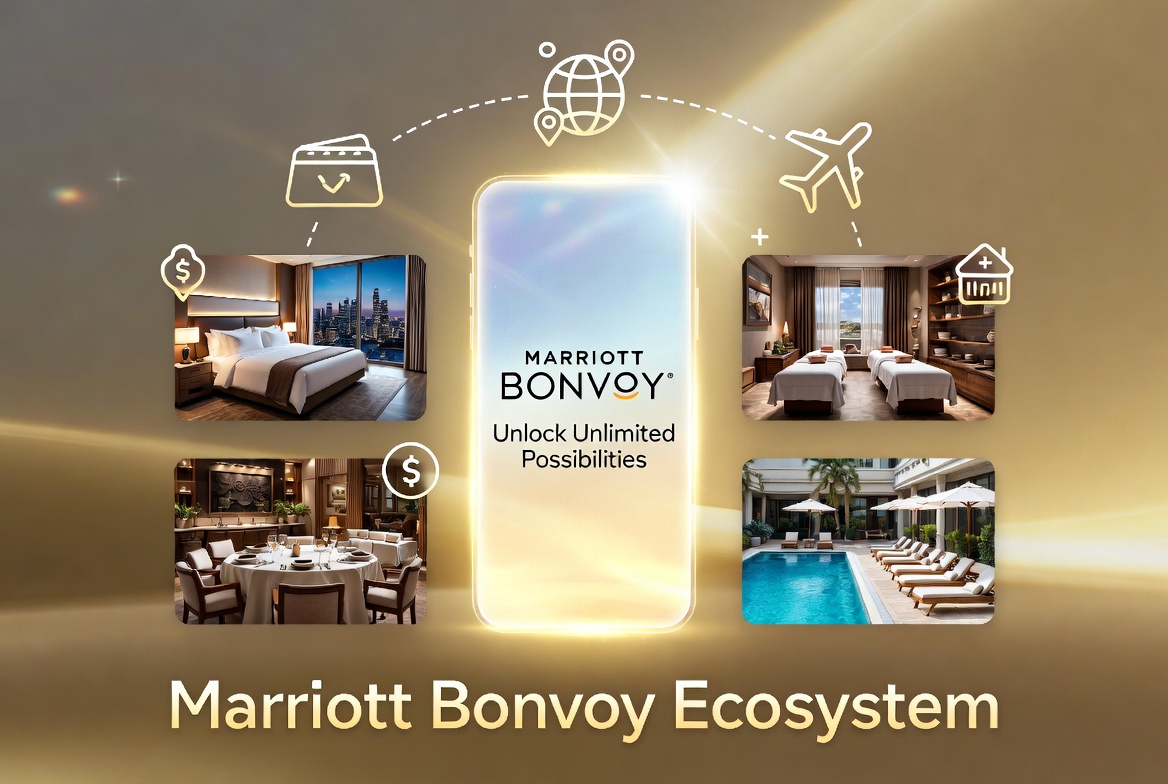
The core operating logic of Marriott Bonvoy is built around a cycle of spending, points, and benefits.
When members stay at Marriott hotels, make purchases with partners, or use related travel services, they can earn points rewards. These points are added to the member’s account and can be redeemed for free stays, room upgrades, dining experiences, and selected partner services.
In addition to points, Marriott Bonvoy (MAR) also has multiple membership tiers. After members move up in status through annual stay counts or spending levels, they can receive richer benefits, such as late checkout, executive lounge access, room upgrades, and priority service.
Because Marriott owns hotel brands across multiple price levels and market positions, members can continue using the same loyalty program in different countries and regions, making the entire ecosystem more convenient to use.
How the Points System Improves User Stickiness
The points system is one of the core components of Marriott Bonvoy.
From the user’s perspective, every stay creates future value. Accumulated points mean future free nights or additional service benefits, so consumers are often more inclined to keep choosing the same hotel group.
This mechanism creates a clear network effect. Once members have accumulated a large number of points, the opportunity cost of switching hotel brands gradually rises. Many business travelers prioritize hotels where they can continue earning points, rather than simply comparing the price of a single stay.
For Marriott, the points system not only improves customer retention, but also helps the group better understand user preferences, spending behavior, and travel habits, allowing it to optimize operating strategies and marketing campaigns.
Therefore, points are not merely a reward tool. They are an important link between users and the brand.
How Business Travelers Use Marriott Bonvoy
Business travelers are one of Marriott Bonvoy’s most important user groups.
Corporate employees often need to travel across regions, so their lodging demand is relatively frequent and stable. For these users, consistent service standards and reliable membership benefits are often more important than a one-time price discount.
Through Marriott Bonvoy, business travelers can receive a consistent membership experience in different cities around the world. Benefits such as priority check-in, late checkout, executive lounge service, and point accumulation can all improve overall travel efficiency.
At the same time, frequent business travel also helps members move up in status more quickly. Higher-tier members usually receive more exclusive services, further strengthening their reliance on the brand system.
For this reason, the business travel market has long been an important foundation for the loyalty ecosystems of global hotel groups.
What Use Cases Are There for Leisure Travelers?
In addition to business travel, leisure travel is also an important use case for Marriott Bonvoy.
Family vacations, city trips, honeymoons, and international sightseeing can all become important opportunities to use member points. Many consumers accumulate points over time and redeem them for free stays or upgraded hotel experiences during important travel plans.
Marriott owns multiple types of brands, including luxury hotels, resort hotels, urban business hotels, and extended-stay hotels, allowing it to cover different travel needs. Users may even use several brands during a single trip while still enjoying unified member benefits.
As the global travel market continues to develop, more consumers are beginning to treat loyalty points as an important part of travel planning, rather than just an added reward.
Why Membership Ecosystems Have Become a Competitive Advantage for Hotel Groups
In the modern hotel industry, a membership ecosystem has become a more important competitive resource than any single hotel brand.
Hotel properties can be replicated, and facilities can be upgraded, but a large membership network and long-term user relationships are much harder to build. For large hotel groups, a membership ecosystem can create a steady source of traffic and reduce reliance on external booking platforms.
Marriott Bonvoy connects not only hotels, but also builds broad partnerships with airlines, credit card institutions, car rental services, and travel partners. This cross-scenario ecosystem allows members to earn points and enjoy benefits across more consumption activities.
As the coverage of a membership system continues to expand, the relationship between users and the brand gradually shifts from one-time transactions to long-term interaction. This ecosystem effect is exactly why global hotel groups continue investing in loyalty program development.
How to Buy MAR (Marriott International) Stock
MAR is the ticker symbol under which Marriott International trades on the Nasdaq Stock Market in the United States.
Traditionally, investors can buy MAR stock through brokerage accounts that support U.S. stock trading, thereby participating in the development of the global hotel and travel industry. Because Marriott International’s operating performance is closely tied to business travel, global tourism activity, and hotel consumption demand, MAR is also viewed as one of the key companies for observing the global lodging industry.
As digital assets and traditional financial markets gradually become more integrated, more trading tools linked to stock price movements have also appeared in the market. For example, some platforms offer CFD products tied to stock prices, allowing users to participate in price movements without directly holding the underlying shares.
Taking Gate TradFi as an example, users can follow different markets within the same ecosystem, including digital assets, stocks, ETFs, indices, and commodities. Some markets also offer Gate CFD products, providing more options for cross-market asset allocation and price observation.
Regardless of how investors choose to participate in the market, they should fully understand the product structure, trading rules, and regulatory requirements in their region.
Conclusion
Marriott Bonvoy is an important part of Marriott International’s global hotel ecosystem. Through points rewards, membership tiers, and cross-brand benefits, Marriott Bonvoy connects tens of millions of members worldwide with hotels across the globe. For business travelers, the loyalty program can improve travel efficiency. For leisure travelers, points and benefits can enrich the travel experience. As competition in the hotel industry continues to intensify, membership ecosystems have become one of the most important long-term competitive advantages for global hotel groups.
FAQs
What is Marriott Bonvoy?
Marriott Bonvoy is the global loyalty program launched by Marriott International. Members can earn points through hotel stays and partner spending, then redeem them for stays and related benefits.
What can Marriott Bonvoy points be used for?
Points can be used to redeem free stays, room upgrades, dining services, and selected travel products and services provided by partners.
Why do business travelers often use Marriott Bonvoy?
Business travelers usually stay in hotels more frequently, allowing them to earn points and move up in membership status faster, which gives them access to more travel benefits.
Is Marriott Bonvoy suitable for leisure travelers?
Yes. Points can be redeemed for stays or used to enjoy member benefits in scenarios such as family vacations, city trips, and international travel.
Marriott Bonvoy covers multiple Marriott hotel brands, allowing members to share points and tier benefits across different brands.
Why is a membership ecosystem so important to hotel groups?
A membership ecosystem can improve customer retention, increase repeat purchase frequency, and help hotel groups build long-term, stable user relationships and brand competitiveness.