IPO (Initial Public Offering) has long been a vital corporate fundraising method, but retail investors typically need to go through specific brokerage channels to participate in popular international IPOs, often facing high entry barriers.
Gate's IPO Access service is designed to simplify this process, giving users a digital gateway to participate in IPO and Pre-IPO projects. SpaceX, launched as the first project under IPO Access, not only drew market attention but also became a key case study for understanding how Gate IPOs work.
What Is the SpaceX IPO Access Project?
The SpaceX IPO Access project is Gate's inaugural direct IPO service, allowing users to submit an expression of interest before the company's IPO launch and receive corresponding shares based on the final allocation results.
Note that submitting a subscription application does not guarantee receiving shares. IPO Access uses an intent-based subscription mechanism, and final share allocations depend on the actual IPO outcome and the allocation quota the platform receives.
Throughout the process, Gate is primarily responsible for project display, subscription management, fund lock-up, and share distribution, while the final offering price and share supply are determined by the IPO project itself.
What Conditions Are Required to Participate in SpaceX IPO Access?
Per the official announcement, users must complete the platform's identity verification process and meet the project's regional and compliance requirements.
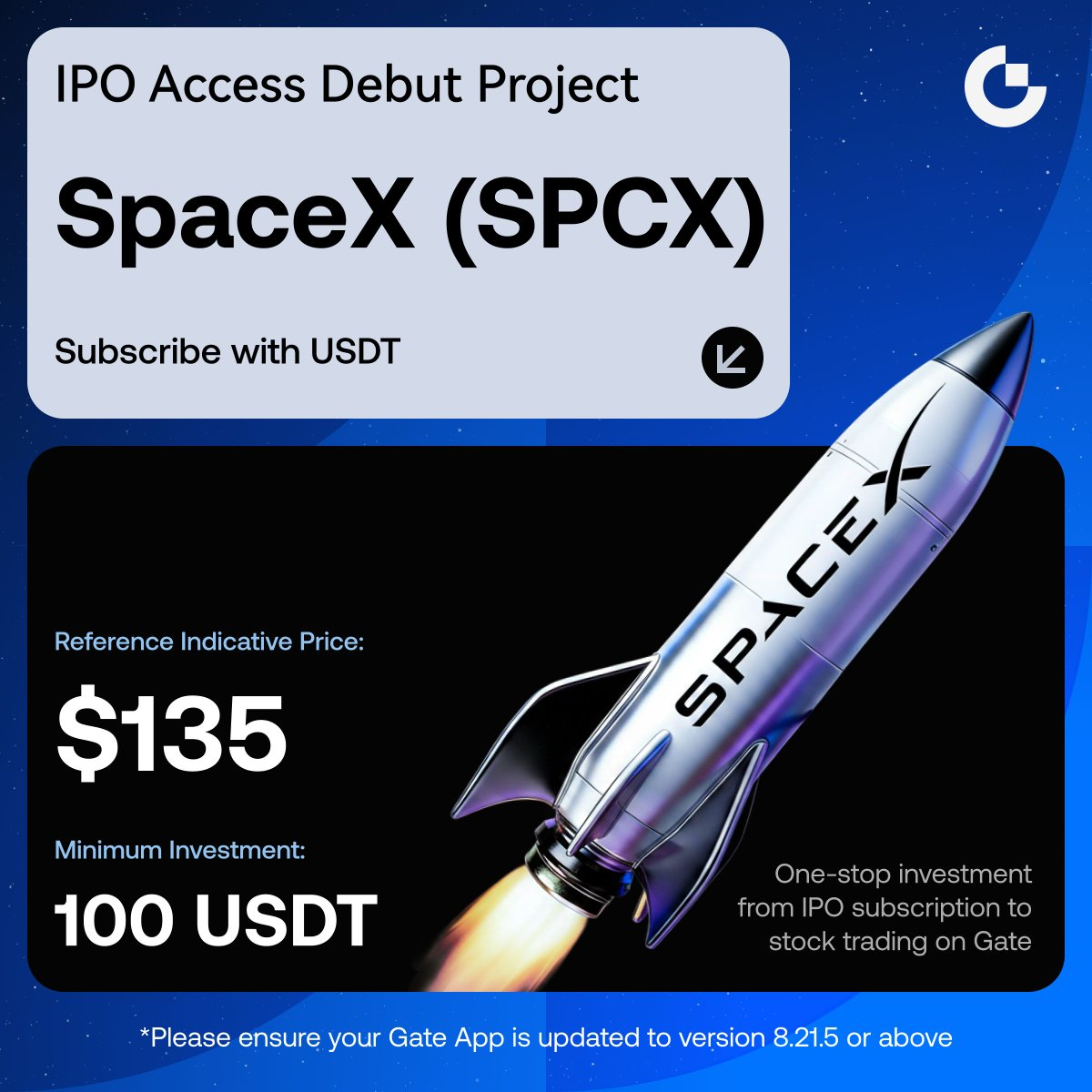
To participate, users must hold sufficient USDT as subscription funds. The SpaceX project sets a minimum subscription amount of 100 USDT and a maximum of 500,000 USDT.
Additionally, users need to understand the lock-up mechanism, allocation rules, and the market risks inherent in the IPO project itself.
Full Participation Process for SpaceX IPO Access
Step 1: Access the IPO Access Page
After logging into Gate, navigate to the IPO Access page to view currently open projects.
The project page displays key information such as company overview, reference price, subscription period, allocation rules, and risk disclaimers. Read the project details thoroughly before participating.
Step 2: Submit an Intent-to-Subscribe Application
During the subscription window, enter the amount you wish to commit and submit your application.
According to the official rules:
- Minimum subscription: 100 USDT
- Maximum subscription: 500,000 USDT
- Reference price: $135 per share
- The final IPO price is determined by the issuance result
After submission, the system moves to the fund lock-up phase.
Step 3: Complete the Fund Lock-Up
Once you confirm your subscription, the corresponding USDT is locked.
During the lock-up period:
- Funds cannot be withdrawn
- Funds cannot be traded
- Funds cannot be transferred
- Funds are used to calculate your allocation weight
Lock-up is a critical part of the IPO Access allocation mechanism and a core factor in determining your final allocation ratio.
Step 4: Wait for Allocation Weight Calculation
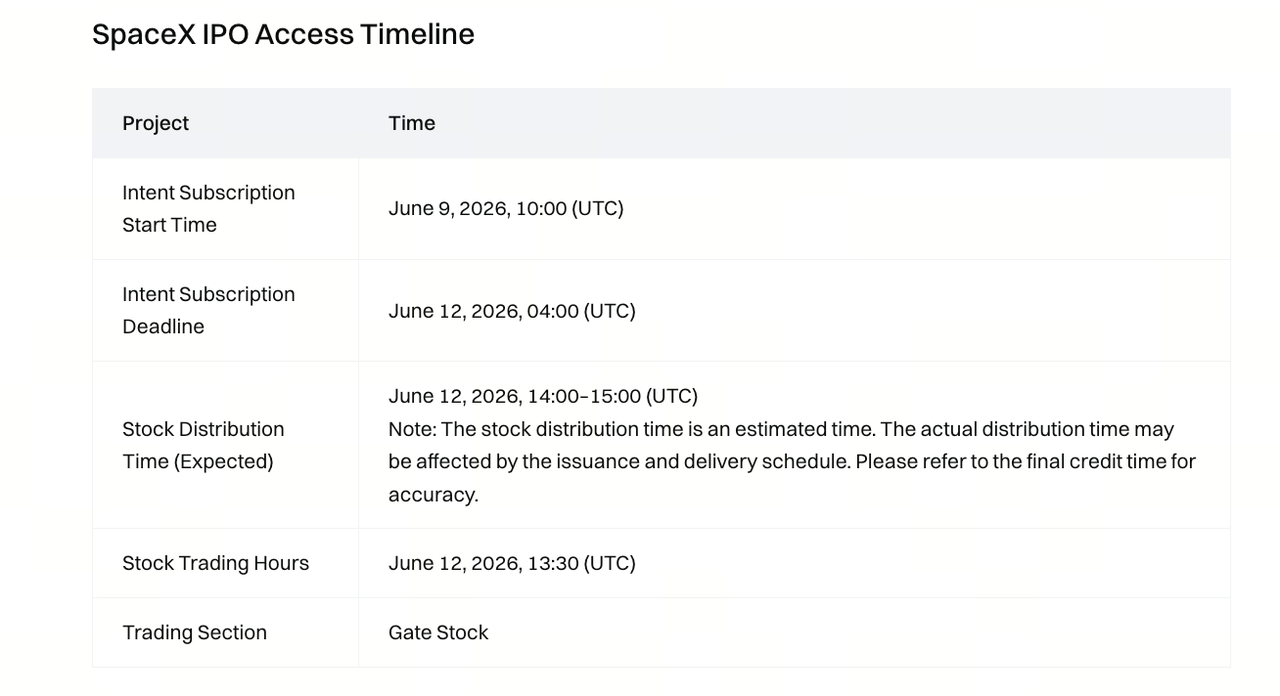
SpaceX uses an average lock-up amount mechanism.
The system calculates your average locked-up amount per hour throughout the subscription period and determines its proportion of the total average locked-up amount across all participants.
The logic: the higher your average locked-up amount, the higher your allocation weight.
The earlier you subscribe, the longer your funds are counted, resulting in a higher average locked-up amount.
This mechanism is designed to ensure a fairer distribution process and reduce the impact of last-minute concentrated subscriptions.
Step 5: Wait for the Final IPO Price
After the subscription period ends, you must wait for the official IPO offering price to be set.
The published reference price is for the intent-to-subscribe stage only.
The final offering price is determined by the actual IPO outcome.
If the final offering price deviates within 20% of the reference price, the system will automatically proceed with allocation.
If the price change exceeds 20%, the platform will trigger an additional confirmation process, allowing you to decide whether to continue.
Step 6: Complete Share Allocation
Once the platform receives its actual allocation quota, it distributes shares based on your allocation weight.
Three outcomes are possible:
- Full allocation received
- Partial allocation received
- No allocation received
This means your subscription amount does not equal the final number of shares you receive.
When market demand exceeds the platform's available shares, oversubscription may prevent some users from receiving their full requested allocation.
Step 7: Shares Credited and Trading
Users who receive an allocation will have corresponding shares credited after the IPO is completed.
According to the official description, shares are transferred to your dedicated stock account.
Once credited, you can trade these shares in the Gate stock trading section.
Any unallocated funds will be returned to your account per the platform's rules.
Why Is Allocation Weight So Important?
The average lock-up amount mechanism used for SpaceX is one of the key differences between IPO Access and traditional IPO subscriptions.
Traditional IPO allocations are typically handled by underwriters based on market rules, while IPO Access introduces a digital weight model at the platform level.
Under this model:
- Higher locked-up amount = higher weight
- Longer lock-up period = higher weight
- Higher proportion of average locked-up amount = larger final allocation
Therefore, the allocation depends not only on your subscription amount but also on the timing of your subscription and the lock-up duration.
How Does SpaceX IPO Access Differ From Traditional IPO Subscription?
| Dimension |
IPO Access |
Traditional IPO |
| Entry Point |
Gate Platform |
Securities Broker |
| Subscription Type |
Intent-to-Subscribe |
Formal Subscription |
| Fund Type |
USDT |
Fiat Currency |
| Weight Mechanism |
Average Lock-Up Amount |
Market Rules |
| Allocation Basis |
Weight + Share Quota |
Underwriter Allocation |
| Stock Account |
Gate Stock Account |
Securities Account |
| Operating Process |
Centralized Platform |
Multi-Institution Coordination |
Both models follow the logic of the IPO project, but the digital platform offers clear advantages in process integration and user experience.
What Should You Be Aware of When Participating in IPO Access?
First, an intent-to-subscribe does not guarantee you will receive shares.
Second, the final offering price may differ from the reference price.
Additionally, IPO projects themselves still face market volatility, liquidity changes, and corporate operational risks.
Summary
The SpaceX project fully demonstrates how Gate IPO Access works. From submitting an expression of interest, fund lock-up, and average lock-up amount calculation to IPO pricing, share allocation, and final crediting, the entire process is managed through a single platform.
Compared to traditional IPO subscriptions, IPO Access offers a digital upgrade in user experience and process integration, but the fundamental logic of an IPO remains unchanged. The final allocation still depends on the project's issuance, the number of shares obtained by the platform, and your own allocation weight.
As real-world assets and digital financial infrastructure continue to converge, IPO Access is becoming one of the key bridges linking the digital asset ecosystem with global capital markets.
FAQs
What Is the Minimum Subscription Amount for SpaceX IPO Access?
Per the official announcement, the minimum subscription amount for SpaceX IPO Access is 100 USDT, and the maximum is 500,000 USDT.
Can I Cancel My Subscription After Submitting It?
The specific rules are subject to what is published on the project page. Once funds are locked, the assets are generally not freely transferable or tradable, so be sure to review the project rules thoroughly before subscribing.
Is the $135 Reference Price the Same as the Final Offering Price?
No. The $135 price is the reference price for the intent-to-subscribe stage only. The final price is determined by the actual IPO result.
Why Does Subscribing Earlier Give You a Higher Allocation Weight?
SpaceX uses an average lock-up amount mechanism. The earlier you participate, the longer your funds are counted in the statistics, leading to a higher average locked-up amount and, consequently, a higher allocation weight.
Will I Definitely Receive Shares After Subscribing?
No. The final result can be full allocation, partial allocation, or no allocation. It depends on the actual IPO issuance and the number of shares the platform receives.
Where Will My Shares Be Credited After Allocation?
Successfully allocated shares will be transferred to your Gate stock account, where you can trade them in the relevant stock trading section.