1. Latest Market Trends: Oil Price Volatility Persists, but Risk Assets Lead the Recovery
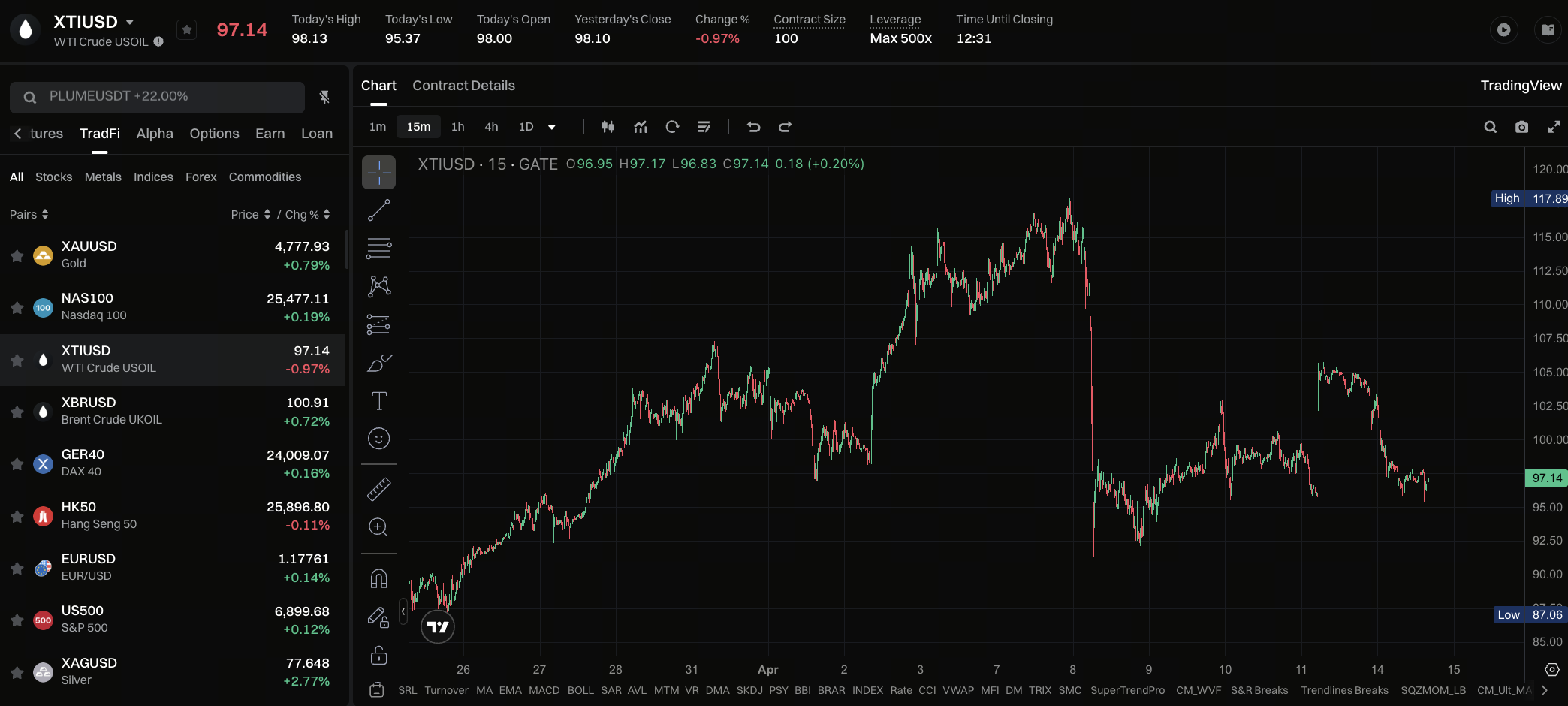
Image source: Gate Market Page
Recent market pricing suggests that while macro risks persist, expectations for the worst-case scenario are receding.
On one hand, ongoing risks in the Strait of Hormuz continue to elevate uncertainty in the energy and shipping sectors, with oil prices remaining highly sensitive following significant prior volatility. On the other hand, both the stock market and Bitcoin have shown simultaneous recoveries, reflecting capital flows trading on the premise that "conflict remains manageable" and "shocks can be digested in stages."
Clear evidence supports this view:
-
The energy market remains under pressure, but shifts in ceasefire and navigation expectations can rapidly affect risk premiums.
-
US equities have not followed a "linear decline on bad news" pattern; instead, the market is focused on earnings resilience and the duration of events.
This explains why "oil price shocks persist" and "Bitcoin rebounds" can occur simultaneously.
2. Reassessing Transmission Chains: Why There Was No One-Sided Panic
The traditional model for geopolitical events was: conflict escalation → higher oil prices → risk assets sell off.
However, this market cycle has delivered a more nuanced response, shaped by three concurrent transmission chains:
-
Shock chain: Rising oil prices fuel inflation expectations, suppressing risk asset valuations—this is the initial direct negative impact.
-
Expectation chain: When the market believes the conflict is unlikely to spiral out of control, the probability of the worst-case scenario declines, risk premiums retreat, and a rebound follows.
-
Liquidity chain: After prior deleveraging, lighter positioning means that, as events ease at the margin, short covering and new buying amplify the recovery.
Asset prices are not denying risk—they are repricing the risk distribution.
3. Four Core Drivers of Bitcoin's Recent Rally
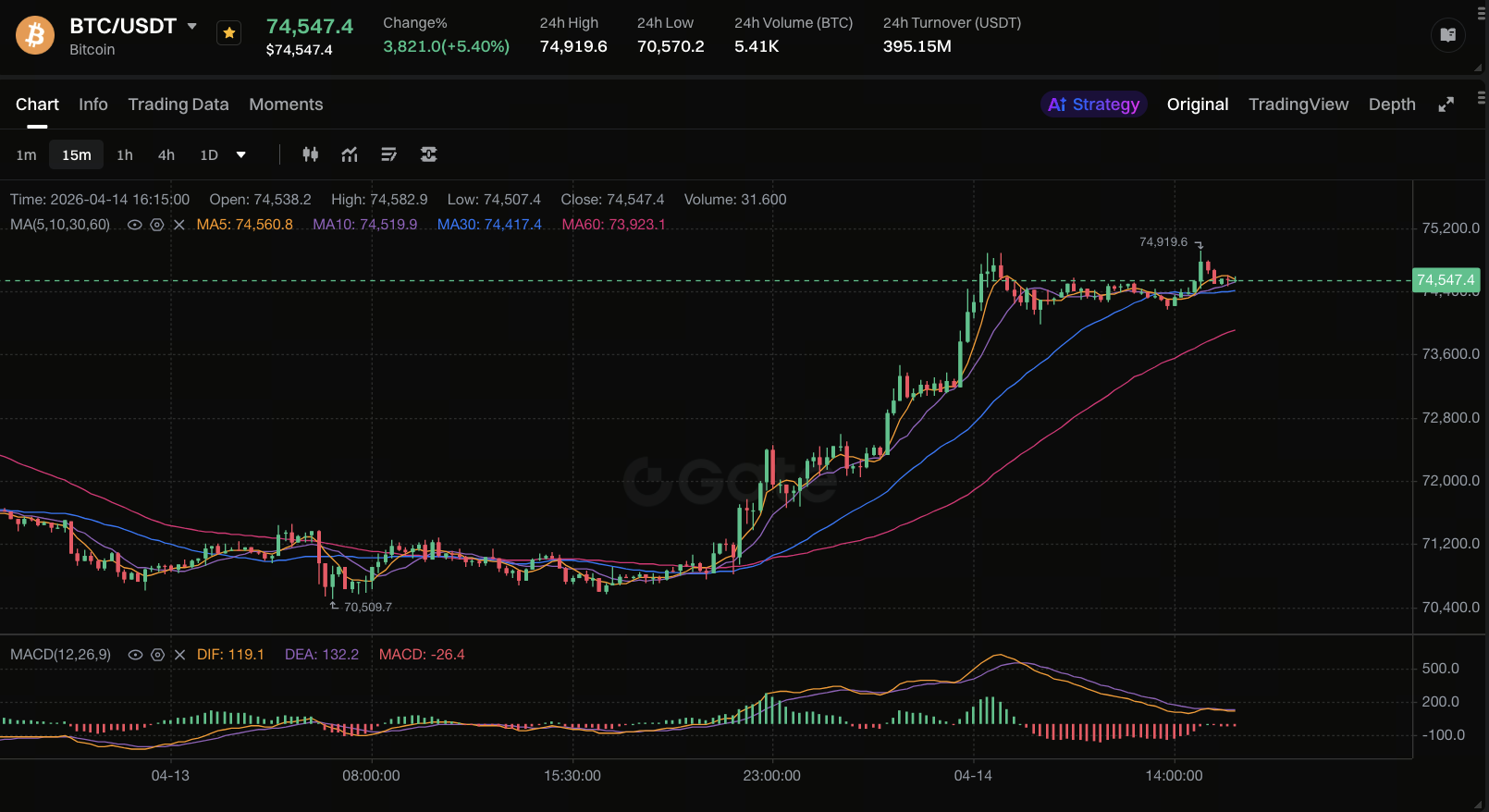
Image source: Gate Market Page
Given current market conditions and the macro environment, Bitcoin's short-term strength is primarily driven by the following factors:
-
Marginal improvement in event expectations: The market is trading on a higher probability that the conflict remains manageable, not on the elimination of risk.
-
Risk appetite recovery due to anticipated oil price pullback: As long as oil does not continue to surge, risk assets will first reflect valuation recovery.
-
Short covering from prior defensive positioning: Positions established during geopolitical shocks are being closed during the rebound, accelerating price gains.
-
Capital first returning to mainstream assets: Within crypto, Bitcoin typically recovers before capital spills over into higher-beta zones.
This also explains why the current rally is led by mainstream assets rather than a broad-based surge.
4. Layered Impact Across the Crypto Market
At this stage, it is inaccurate to label the crypto market as wholly bullish or bearish; a more precise view is that of layered repricing.
-
Bitcoin: In the short term, driven by risk appetite; in the medium term, influenced by both oil prices and interest rate trajectories. If oil prices fall and liquidity expectations improve, Bitcoin’s relative strength becomes more pronounced.
-
Ethereum and altcoins: Typically lag Bitcoin in the early stages of recovery. If trading depth is insufficient or leverage builds up again, the probability of a secondary drawdown is higher than for Bitcoin.
-
Stablecoins: Amid geopolitical friction and local currency volatility, certain regions are increasing their demand for stablecoins for value preservation and settlement. Recent reports of rising demand in emerging markets and alternative trade settlement warrant continued attention.
-
On-chain liquidity structure: If incremental stablecoins flow primarily to exchanges, it signals risk appetite recovery; if they remain in wallets and settlement channels, defensive demand still dominates.
5. Key Indicators to Watch Going Forward
To determine whether this rally marks a "trend recovery" or a temporary "event-driven rebound," focus on three sets of indicators:
A. Macro indicators
-
Are oil prices rising again and breaking previous highs?
-
Are rate cut expectations being pushed further out?
-
Are real interest rates and the US dollar index rising in tandem?
B. Market structure indicators
-
Is Bitcoin’s trading volume expanding during the rally?
-
Is open interest recovering in a healthy way, or becoming overly concentrated?
-
Are funding rates overheating rapidly?
C. On-chain and capital flow indicators
-
Are net inflows to exchanges continuing to rise?
-
Is net stablecoin issuance sustained?
-
Are ETF and spot capital flows maintaining net inflows?
If all three indicator sets improve in the same direction, the likelihood of a sustained rally increases. If only prices rise but capital structure fails to recover, the risk of a drawdown remains elevated.
6. Three Scenario Analyses
Scenario 1: Rapid risk resolution
Characteristics: Shipping resumes, oil prices decline, policy expectations stabilize.
Outcome: Bitcoin continues its recovery, altcoins catch up, and market volatility subsides.
Scenario 2: Ongoing disturbances but under control
Characteristics: High oil price volatility, recurring events, cautious policy tone.
Outcome: Bitcoin outperforms altcoins, the market remains range-bound, and structural opportunities outweigh broad-based rallies.
Scenario 3: Renewed conflict escalation
Characteristics: Increased pressure on energy corridors, oil prices surge again.
Outcome: Deleveraging followed by defensive positioning; Bitcoin remains relatively resilient but absolute returns are pressured, while altcoins face significantly greater stress.
7. Conclusion: Current Phase Is a Recovery, Not the End of Uncertainty
Based on the latest developments and market movements, the more reasonable assessment is:
The market is in a recovery phase following a risk repricing, not yet in a sustained unilateral uptrend that would mark the end of uncertainty.
Bitcoin’s recent rally is fundamentally supported by improved expectations, position covering, and capital rotation back into mainstream assets. However, whether this momentum develops into a longer-term trend still depends on three external factors: oil price trajectory, policy direction, and capital structure quality.
Accordingly, the focus of subsequent strategies should be on continually validating the quality of the rebound, rather than chasing daily price swings. As long as oil prices remain contained, liquidity does not deteriorate significantly, and capital flows stay net positive, the market is likely to maintain a "volatile recovery" as its prevailing theme. Conversely, if macro pressures rise and leverage becomes crowded again, the risk of a secondary drawdown remains high.







