Buying Lam Research (LRCX) stock with USDT on Gate Stocks usually follows “account and funding prep → search ticker → verify issuer and display name → place order → review fees and holdings.” The instrument is U.S.-listed common stock of Lam Research Corporation on Nasdaq; the page display name is typically Lam Research Corp, and the trading ticker is LRCX. Difficulty is beginner-level; time depends on account and funding readiness.
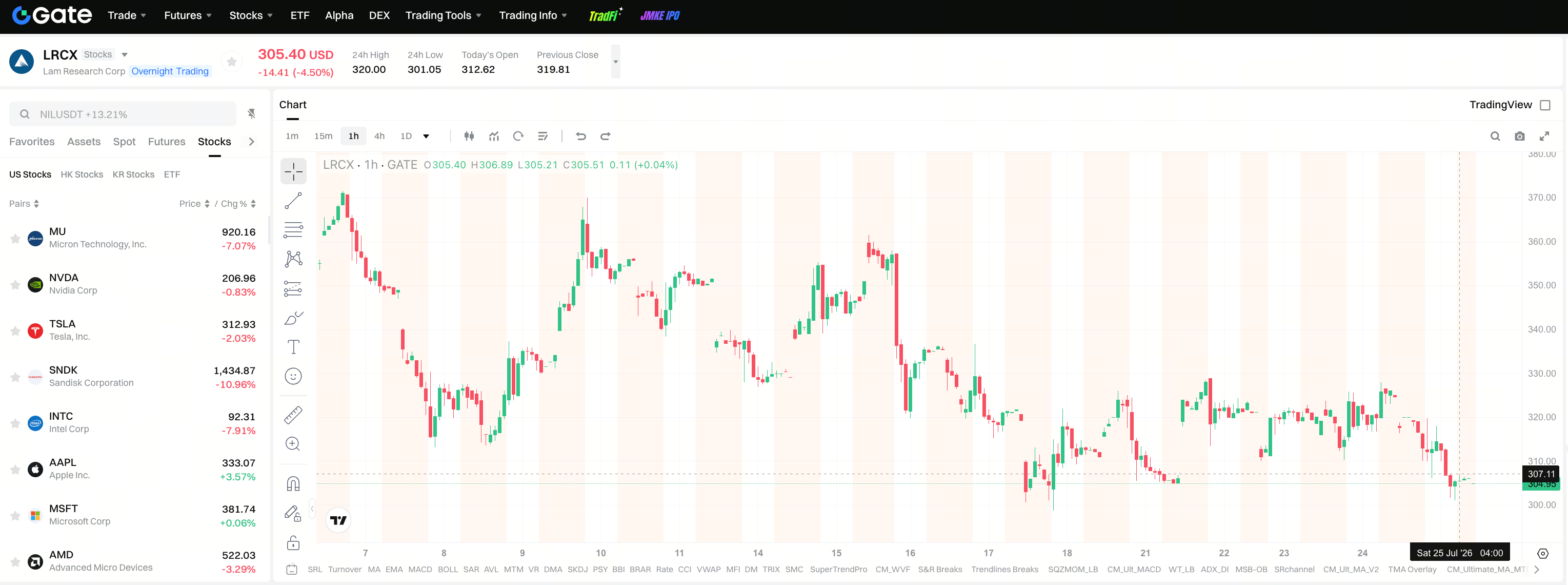
Lam Research (LRCX) explains the corporate entity, etch / deposition / clean coverage, and customer structure. Before placing an order, separate company fundamentals from Gate page execution: fundamentals answer what exposure LRCX represents; the trading workflow answers how to verify and submit an order. Peer process coverage can be checked via LRCX vs AMAT before returning to the trading page.
Mini workflow (for operational checks):
- Confirm Stocks / U.S. equity permissions and regional availability
- Prepare USDT usable for stock orders
- Search LRCX and verify Lam Research Corp
- Choose Limit or Market (or other shown types) and submit
- Re-check fees, minimum size, and session notices
- Confirm ticker and quantity in open orders, fills, or holdings
- Review capital-expenditure cycle and related fundamental risk sources separately
What Should Be Prepared Before Buying Lam Research (LRCX) on Gate?
Before buying or trading LRCX with USDT, confirm account status, identity verification, stock trading permissions, available USDT, product availability, and regional access conditions. Usable features follow what the Gate Stocks · LRCX page displays.
Preparation rules out basic blockers: unable to trade, funds unavailable, ticker mix-ups, and fee misreads. If any item is unclear, the page may show quotes while orders still cannot submit, or order size may not match available balance.
| Preparation item |
What to verify |
Typical impact |
| Account permissions |
Whether Stocks / U.S. equity trading is available |
Affects whether an order can be submitted |
| USDT funding |
Whether available USDT is in the stock-usable balance |
Affects order size and tradable quantity |
| Product availability |
Whether the LRCX page shows a tradable status |
Affects whether the order can be sent |
| Instrument ID |
Display name Lam Research Corp and ticker LRCX |
Affects whether the correct stock is selected |
| Fee and order rules |
Trading fees, minimum size, settlement display |
Affects fills and holdings records |
The preparation table separates “can open the page” from “can submit an order.” Search and order entry become actionable after account, permissions, funding, product status, and fee rules are clear.
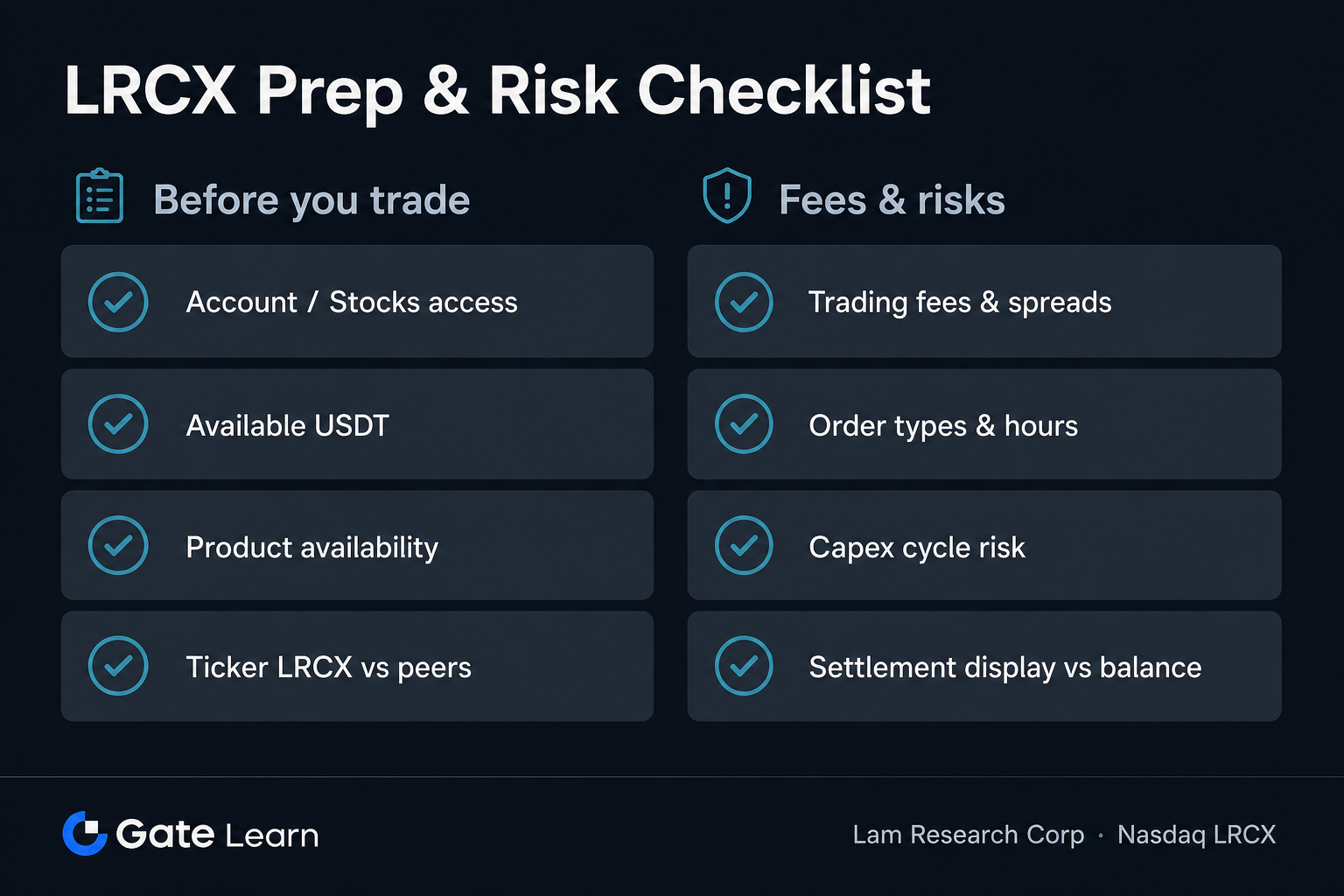
Figure 1. LRCX prep and risk checklist: account permissions, available USDT, product availability, ticker ID, fees, session hours, and capital-expenditure cycle risk.
Step 1: How to Prepare USDT and a Stock Trading Account?
U.S. stock trading on Gate Stocks usually requires account-status checks, identity verification, stock trading permission confirmation, and USDT that can fund stock orders. Available USDT for stocks and ordinary spot-wallet balances may not be displayed in the same wallet view; confirm funds are usable for stock orders before trading.
Funding prep also covers deposits, transfers, available balance, and reserved amounts. If USDT is still confirming, a transfer is incomplete, or funds are reserved by other orders, buyable quantity may be lower than total account balance. Stock and crypto spot permissions may be managed separately; confirm Stocks is enabled before opening the LRCX trading page.
Step 2: How to Search LRCX / Lam Research on Gate Stocks?
Open Gate Stocks · LRCX and enter LRCX or Lam Research in the search box. The page should show Lam Research Corp and identify the issuer as Lam Research Corporation. Matching ticker, display name, and issuer is the first check and reduces mix-ups with other semiconductor-equipment tickers.
If nearby equipment names or other U.S. equity tickers appear, prioritize ticker LRCX plus display name Lam Research Corp. Keep search verification to ticker and display-name alignment; do not apply a fundamentals comparison to the wrong instrument.
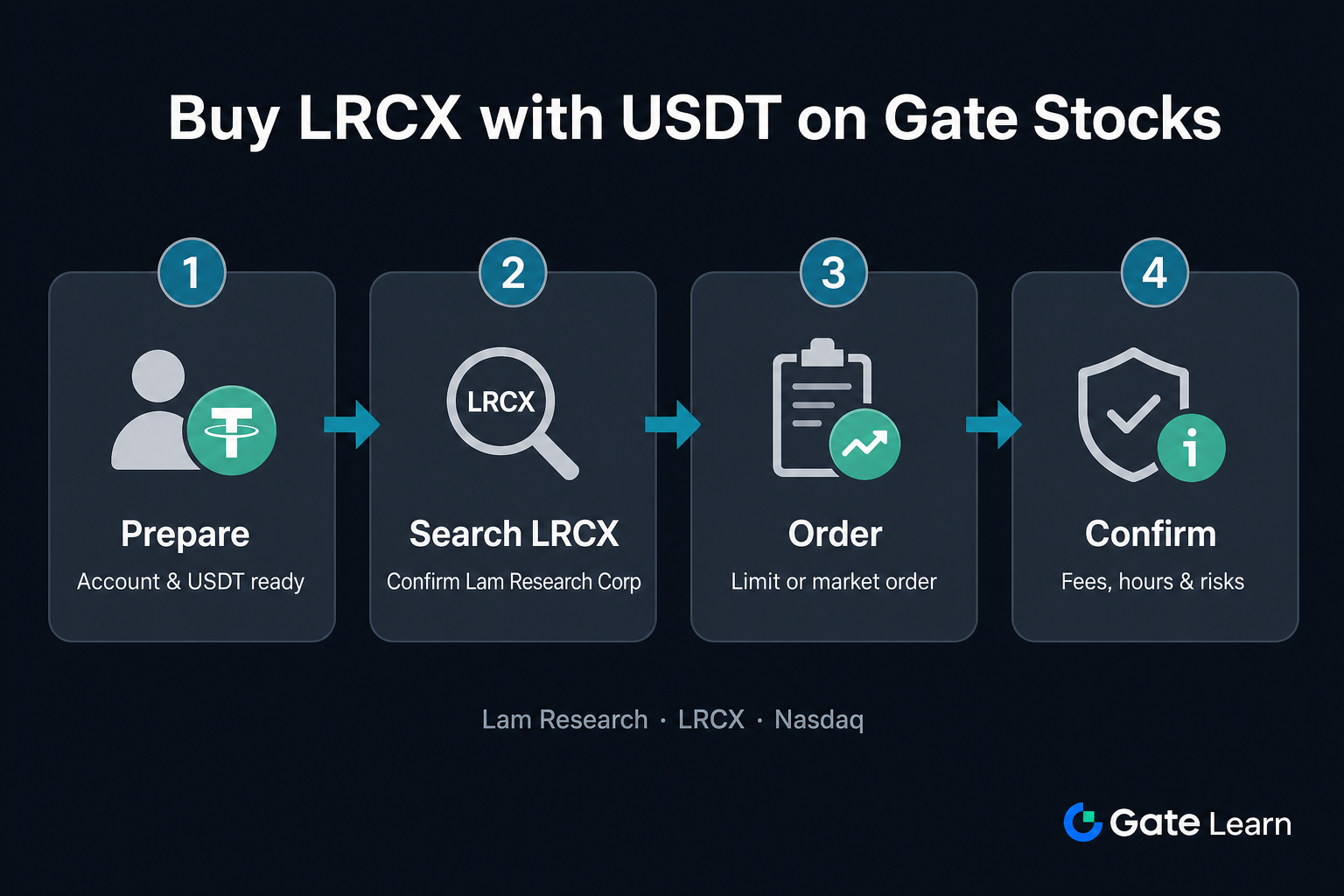
Figure 2. Buy LRCX with USDT on Gate Stocks: prepare USDT, search LRCX, place the order, confirm fees and risks.
Step 3: How to Place a Buy or Trade Order for LRCX?
On the LRCX trading page, confirm in order: side (buy/sell), order type, quantity or notional, estimated fill amount, fees, and available account balance. Before submitting, re-check display name and ticker LRCX so instrument ID errors do not enter the fill record.
Common order types include Limit and Market. Limit orders emphasize a user-set price condition; Market orders emphasize execution at available market prices. Neither type is universally better; the difference is execution logic, fill speed, and price-control method.
| Order type |
Verification focus |
Possible outcome |
| Limit |
Price, quantity, time-in-force |
May remain unfilled if price is not triggered |
| Market |
Available balance, liquidity |
Fill price may differ from the estimate |
| Partial fill |
Filled quantity, remaining size |
Holdings and available balance update together |
The table separates order-type logic from order-status updates. Before submitting, the confirmation dialog, fee notices, and order side are the last verification points.
After submission, check open orders, fill history, or holdings against average fill price, quantity, fees, and ticker LRCX. U.S. equity holdings display may differ from crypto spot assets; review ticker, quantity, and order history together.
Which Fees and Order Rules Should Be Confirmed When Trading LRCX?
Stock trading pages usually show trading fees, spreads, execution price, minimum trade size, session hours, and related notices. Product and region rules can differ, so fees and order rules follow page display.
Separate platform trading fees, bid–ask spreads, and execution costs: fees affect net fill cost, spreads and liquidity affect Market-order results, and minimum size constrains submitable quantity. Dividends or corporate actions are issuer-side disclosures and are not the same cost line as platform trading fees.
Market orders may fill away from the estimate when liquidity is thin; Limit orders may sit unfilled if price conditions are not met. Fees, spreads, minimum size, and session hours should be reviewed with the risk checklist.
What Risks Should Be Understood Before Buying or Trading LRCX?
Trading-workflow risk and company-fundamentals risk need separate framing. Workflow risks include selecting a nearby ticker by mistake, misreading order types, unclear fee rules, session limits, and liquidity changes. Fundamentals risks come from semiconductor fab capital-expenditure cycles, memory versus logic demand splits, customer concentration and regional capacity shifts, plus export controls and technology transitions that can affect equipment delivery scope. USDT funding readings versus settlement display differences are execution-layer variables.
| Check dimension |
Typical content |
Purpose of the check |
| Platform fees and spreads |
Trading fees, spreads, minimum size |
Separate execution cost from company business traits |
| Instrument ID |
LRCX / Lam Research Corp |
Avoid buying the wrong equipment stock or other U.S. equity |
| Session and liquidity |
Trading hours, available depth |
Understand sources of fill uncertainty |
| Settlement and display |
Available balance, holdings readings |
Separate total balance from order-usable amount |
| Company fundamentals |
Capex cycles, customer mix, process competition |
Understand exposure source, not order steps |
The table merges fee rules, operational risk, and company-fundamentals variables into one checklist. LRCX is Nasdaq-listed common stock of Lam Research Corporation; a “semiconductor equipment” label alone is not a complete check. Risk notes identify variable sources and are not buy or sell advice.
Summary
Buying Lam Research (LRCX) stock with USDT on Gate Stocks is standardized process execution: prepare account and USDT, search ticker LRCX, verify display name Lam Research Corp, choose an order type, confirm fee rules, then review holdings after the fill. Keep operational checks and instrument understanding separate—trading pages handle execution fields; business and capital-expenditure cycle risk lists handle exposure context.
FAQ
How to Buy LRCX Stock with USDT on Gate?
Confirm Stocks trading permissions and that USDT sits in a balance usable for stock orders, then search ticker LRCX on Gate Stocks and verify display name Lam Research Corp. Choose an order type, submit, and after the fill review ticker, quantity, and fees in holdings and order history. Path notes are not investment advice.
What Stock Ticker Is LRCX?
LRCX is the Nasdaq trading ticker for Lam Research Corporation and the symbol Gate Stocks uses to retrieve the instrument. The page display name is typically Lam Research Corp; confirm issuer full name and ticker together to avoid mix-ups with other semiconductor-equipment stocks.
What Does Lam Research Do?
Lam Research Corporation supplies wafer-fabrication equipment and related services to chipmakers worldwide; educational coverage of core processes includes etch, deposition, and clean. The company is headquartered in Fremont, California, and LRCX is its Nasdaq-listed stock ticker.
What Are the Main Risks of Semiconductor Equipment Stocks?
Main risks include fab capital-expenditure cycle swings, memory versus logic demand splits, customer concentration and regional capacity shifts, plus export controls and technology transitions that constrain competition and delivery. Trading-layer risks also include funding currency, fees, and session rules that differ by platform; risk notes are not buy or sell advice.
How Is Buying U.S. Stocks on Gate Different From a Traditional Broker?
Gate Stocks retrieves U.S. equity tickers in a unified account and completes order and holdings display with USDT funding readings; traditional brokers usually center on fiat accounts, broker settlement, and local market rules. Account systems, settlement display, fee fields, and session notices can differ; company research does not replace page-rule checks.
What Are LRCX Minimum Size, Sell Availability, and Trading Hours?
Minimum purchase size, sell availability, session hours, and order validity follow fields on the Gate Stocks LRCX page; different accounts and regions may show different usable states. Re-check minimum size, side, and session notices before submitting.