Trong bối cảnh cạnh tranh ngày càng khốc liệt giữa các blockchain Layer1 công khai, cơ chế token đã phát triển vượt ra ngoài chức năng thanh toán đơn thuần để còn ảnh hưởng đến bảo mật mạng, động lực trình xác thực và khả năng mở rộng của hệ sinh thái.
Được dẫn dắt bởi Ava Labs, Avalanche đã xây dựng một hệ thống staking PoS dựa trên AVAX, kết hợp cơ chế đốt phí giao dịch với khung mở rộng Subnet. Nhờ đó, AVAX trở thành tài sản chủ chốt cho hoạt động lâu dài của mạng Avalanche.
AVAX là gì
AVAX là token gốc của mạng Avalanche và là tài sản trung tâm trong hệ sinh thái blockchain Avalanche.
Người dùng cần trả AVAX làm phí Gas để chuyển tài sản, triển khai Hợp đồng thông minh hoặc thực hiện các thao tác trên chuỗi trong Avalanche. AVAX cũng đóng vai trò quan trọng trong staking trình xác thực, bảo mật mạng và tạo Subnet.
Khác với các token chỉ đóng vai trò thanh toán, AVAX được tích hợp sâu vào vận hành mạng, phân bổ tài nguyên và cơ chế động lực của Avalanche.
Các vai trò chính của AVAX
AVAX đảm nhận nhiều chức năng trong hệ sinh thái Avalanche.
Chức năng chính của AVAX là trả phí giao dịch. Dù chuyển tài sản, thực hiện Hợp đồng thông minh hay tương tác trên chuỗi, AVAX đều được dùng làm phí tài nguyên mạng.
AVAX cũng là nền tảng cho hệ thống Bằng chứng cổ phần. Trình xác thực cần khóa một lượng AVAX nhất định để tham gia xác thực mạng và nhận phần thưởng khi hỗ trợ vận hành mạng.
Ngoài ra, AVAX là thành phần thiết yếu trong cơ chế Subnet của Avalanche. Việc tạo Subnet mới đều cần AVAX.
Cơ chế staking của Avalanche hoạt động như thế nào
Avalanche sử dụng mô hình đồng thuận Bằng chứng cổ phần (PoS).
Trình xác thực phải stake AVAX để xác thực khối và tham gia đồng thuận mạng. Trong thời gian staking, trình xác thực phải duy trì node trực tuyến và đảm bảo hiệu suất mạng ổn định.
Mô hình staking của Avalanche khác với các hệ PoS truyền thống: phần thưởng cho trình xác thực không dựa vào cơ chế “Slash” trừng phạt trên chuỗi mà tập trung vào sự tham gia đều đặn và vận hành ổn định.
Người dùng có thể tự chạy node trình xác thực hoặc ủy quyền AVAX cho trình xác thực khác để tham gia staking.
Cách này giúp giảm rào cản kỹ thuật cho người dùng cá nhân khi xác thực mạng.
Nguồn phần thưởng staking AVAX
Phần thưởng staking trên mạng Avalanche chủ yếu đến từ phát hành giao thức.
Hệ thống phân phối phần thưởng AVAX cho trình xác thực đủ điều kiện theo quy tắc mạng. Số phần thưởng phụ thuộc vào khối lượng staking, thời gian staking và độ ổn định của trình xác thực.
Nếu trình xác thực không đáp ứng tiêu chuẩn thời gian trực tuyến hoặc hiệu suất, họ có thể mất một phần hoặc toàn bộ phần thưởng.
Khác với một số mạng PoS, Avalanche không áp dụng hình phạt thường xuyên; thay vào đó, hệ thống khuyến khích vận hành ổn định bằng cách giữ lại phần thưởng nếu không đáp ứng yêu cầu.
Cơ chế cung AVAX
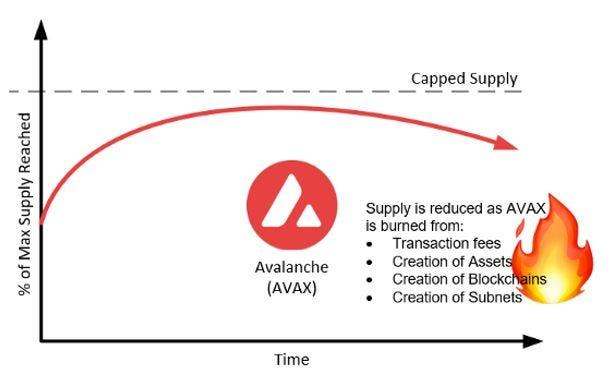
AVAX có tổng nguồn cung giới hạn. Theo công thức chính thức, tổng lượng phát hành AVAX sẽ không vượt quá 720 triệu, giúp ngăn ngừa lạm phát do đúc token không giới hạn.
Mạng lưới còn giảm lượng AVAX lưu thông thông qua cơ chế đốt phí giao dịch. Cấu trúc “phát hành giới hạn cộng với đốt” này giúp cân bằng động lực mạng với kiểm soát nguồn cung dài hạn. Tuy nhiên, giá AVAX vẫn chịu ảnh hưởng bởi tâm lý thị trường, sự phát triển hệ sinh thái và biến động chung của thị trường tiền điện tử.
Mối liên hệ giữa AVAX và Avalanche Subnet
AVAX không chỉ là tài sản gốc của mainnet Avalanche mà còn liên kết chặt chẽ với kiến trúc mở rộng Subnet.
Nhà phát triển phải sử dụng AVAX để tham gia hoạt động mạng khi tạo Subnet Avalanche. Vì Subnet là thành phần quan trọng của hệ sinh thái mở rộng Avalanche, AVAX liên quan trực tiếp đến khả năng mở rộng mạng.
Khi ngày càng nhiều chuỗi ứng dụng riêng biệt và blockchain mô-đun được triển khai trên Avalanche, tiện ích của AVAX trong hệ sinh thái tiếp tục tăng lên.
Do đó, AVAX không chỉ là phương tiện thanh toán mà còn tham gia trực tiếp vào mở rộng và xây dựng hạ tầng mạng Avalanche.
Những thách thức đối mặt với AVAX
Dù là trung tâm của mạng Avalanche, AVAX vẫn phải đối mặt với nhiều thách thức.
Khi cạnh tranh giữa giải pháp Layer1 và Layer2 ngày càng quyết liệt, các blockchain công khai tranh giành nhà phát triển, người dùng và thanh khoản.
Ngoài ra, nhu cầu đối với AVAX gắn với mức độ sôi động của hệ sinh thái Avalanche. Tốc độ phát triển ứng dụng trên chuỗi chậm có thể làm giảm tiện ích mạng của AVAX.
Tóm tắt
AVAX là token chủ chốt của mạng Avalanche, dùng để trả phí giao dịch, stake xác thực, tạo Subnet và bảo đảm an ninh mạng.
Cơ chế xác thực Bằng chứng cổ phần và đốt phí giao dịch của Avalanche giúp AVAX trở thành tài sản quan trọng cho hoạt động mạng và phát triển hệ sinh thái. Khác với các tài sản số chỉ phục vụ chức năng thanh toán, AVAX là nguồn lực nền tảng và tài sản bảo mật trong hệ sinh thái Avalanche.
Câu hỏi thường gặp
AVAX được sử dụng để làm gì?
AVAX chủ yếu dùng để trả phí Gas, stake trình xác thực, tạo Subnet và bảo mật mạng.
Cơ chế staking của Avalanche là gì?
Avalanche áp dụng mô hình PoS, yêu cầu trình xác thực stake AVAX để xác thực mạng và nhận phần thưởng.
AVAX có bị đốt không?
Có. Một phần phí giao dịch trên mạng Avalanche được đốt trực tiếp để kiểm soát tăng trưởng nguồn cung token.
AVAX có giới hạn nguồn cung không?
Có. AVAX có tổng nguồn cung cố định, và mạng còn giảm nguồn cung lưu thông qua đốt phí giao dịch.
Mối liên hệ giữa AVAX và Avalanche Subnet là gì?
AVAX là yếu tố bắt buộc để tạo Subnet Avalanche, liên kết trực tiếp với hệ sinh thái mở rộng mạng.