This article explores Qtum's unique hybrid blockchain platform, merging Bitcoin's security and Ethereum's smart contract flexibility. It addresses interoperability challenges, offers insights into technical architecture, and discusses market performance. Key topics include Qtum's decentralized operation, its historical milestones, smart contract use, and strategic ecosystem collaborations. Ideal for developers and investors, the piece highlights its significance in DeFi and IoT applications while addressing challenges and community sentiment. Learn how to participate through Gate and explore its promising roadmap for blockchain innovation.
Qtum's Positioning and Significance
In 2017, the Qtum Foundation launched Qtum (QTUM), aiming to solve the challenges of interoperability between different blockchain ecosystems.
As a hybrid blockchain combining Bitcoin's UTXO model with Ethereum's smart contract functionality, Qtum plays a crucial role in the fields of DeFi, IoT, and enterprise applications.
As of 2025, Qtum has become a significant player in the blockchain industry, with an active developer community and support for multiple industries. This article will delve into its technical architecture, market performance, and future potential.
Origin and Development History
Birth Background
Qtum was created by the Qtum Foundation in 2017, aiming to address the need for a more versatile and business-friendly blockchain platform.
It was born during the blockchain technology boom, with the goal of combining the security of Bitcoin with the flexibility of Ethereum's smart contracts to change the status quo.
Qtum's launch brought new possibilities for businesses and developers looking for a robust blockchain solution.
Important Milestones
- 2017: Mainnet launch, achieving a unique hybrid blockchain architecture.
- 2019: Major upgrade introducing Qtum 2.0 with improved performance and features.
- 2020: Adoption by various projects, pushing the price to new heights.
- 2021: Ecosystem expansion, with the number of DApps and enterprise solutions growing significantly.
With support from the Qtum Foundation and community, Qtum continues to optimize its technology, security, and real-world applications.
How Does Qtum Work?
No Central Control
Qtum operates on a decentralized network of computers (nodes) spread across the globe, free from control by banks or governments.
These nodes collaborate to validate transactions, ensuring system transparency and attack resistance, giving users greater autonomy and improving network resilience.
Blockchain Core
Qtum's blockchain is a public, immutable digital ledger that records every transaction.
Transactions are grouped into blocks and linked through cryptographic hashes to form a secure chain.
Anyone can view the records, establishing trust without intermediaries.
Qtum's unique Account Abstraction Layer (AAL) allows for seamless integration of different virtual machines, enhancing flexibility and performance.
Ensuring Fairness
Qtum adopts a Proof-of-Stake (PoS) consensus mechanism to validate transactions and prevent fraudulent activities like double-spending.
Validators maintain network security by staking QTUM tokens and running nodes, and are rewarded with QTUM tokens.
Its innovations include energy efficiency and high transaction throughput.
Secure Transactions
Qtum uses public-private key cryptography to protect transactions:
- Private keys (like secret passwords) are used to sign transactions
- Public keys (like account numbers) are used to verify ownership
This mechanism ensures fund security, keeping transactions pseudonymous.
Qtum also supports additional security features like multi-signature wallets and smart contract auditing tools.
Circulation Overview
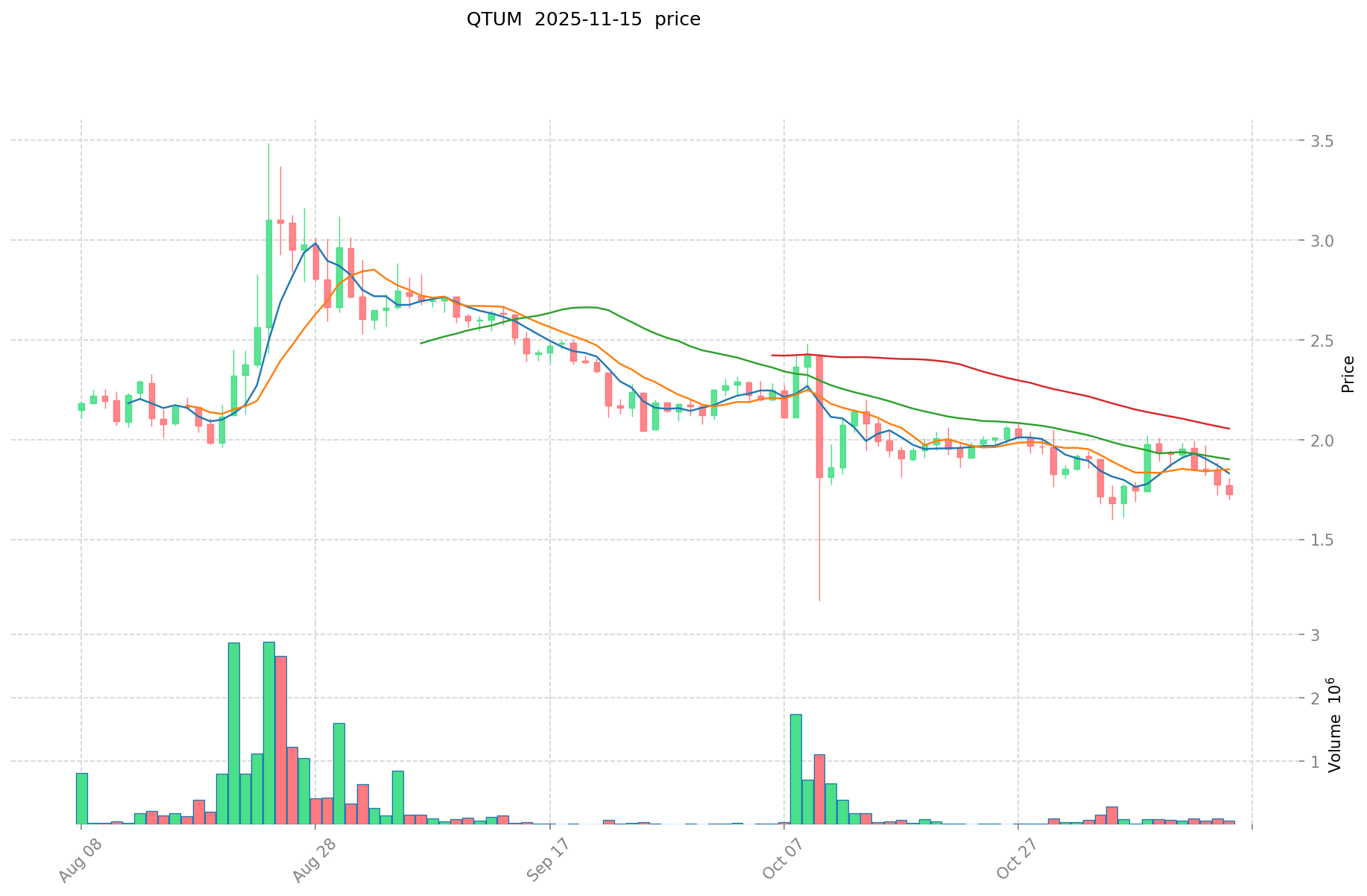
As of November 16, 2025, QTUM's circulating supply is 105,892,642 coins, with a total supply of 107,822,406.
Price Fluctuations
QTUM reached its all-time high of $100.22 on January 6, 2018.
Its lowest price was $0.783142, recorded on March 13, 2020.
These fluctuations reflect market sentiment, adoption trends, and external factors.
Click to view the current QTUM market price
Qtum Ecosystem Applications and Partnerships
Core Use Cases
Qtum's ecosystem supports various applications:
- DeFi: Decentralized finance projects leveraging Qtum's smart contract capabilities.
- IoT: Internet of Things applications utilizing Qtum's blockchain for secure data transfer.
Strategic Collaborations
Qtum has established partnerships with industry leaders to enhance its technological capabilities and market influence. These partnerships provide a solid foundation for Qtum's ecosystem expansion.
Controversies and Challenges
Qtum faces the following challenges:
- Technical Hurdles: Scalability and transaction speed improvements.
- Regulatory Risks: Navigating the evolving global regulatory landscape.
- Competitive Pressure: Standing out in a crowded blockchain market.
These issues have sparked discussions within the community and market, driving Qtum's continuous innovation.
Fan Enthusiasm
Qtum's community shows vibrancy with growing wallet addresses and active development.
On X, posts and hashtags like #Qtum gain traction, particularly during significant project milestones.
Sentiment on X shows a mix of opinions:
- Supporters praise Qtum's smart contract capabilities and its combination of Bitcoin and Ethereum features.
- Critics focus on market performance and adoption rates.
Recent trends indicate fluctuating sentiment based on market conditions and project developments.
Trending Topics
X users discuss Qtum's technological advancements, potential use cases, and its position in the broader blockchain ecosystem.
- Official Website: Visit Qtum's official website for features, use cases, and latest updates.
- Whitepaper: Qtum's whitepaper details its technical architecture, goals, and vision.
- X Updates: On X, Qtum uses @qtum, covering topics such as technical upgrades, community events, and partnership news.
Qtum's Future Roadmap
- Ecosystem Goals: Expand DApp ecosystem and increase user adoption.
- Long-term Vision: Become a leading platform for enterprise blockchain solutions and decentralized applications.
How to Participate in Qtum?
- Purchase Channels: Buy Qtum on Gate.com
- Storage Solutions: Use Qtum's official wallet for secure storage
- Participate in Governance: Engage in community decisions through Qtum's governance mechanisms
- Build on the Ecosystem: Visit Qtum's developer documentation to develop DApps or contribute code
Summary
Qtum redefines digital currency through blockchain technology, offering transparency, security, and efficient smart contract execution. Its active community, rich resources, and technological innovation make it stand out in the cryptocurrency field. Despite facing challenges such as market volatility and technological advancements, Qtum's innovative spirit and clear roadmap position it as an important player in the future of decentralized technology. Whether you're a newcomer or an experienced player, Qtum is worth watching and participating in.
FAQ
What is QTUM used for?
QTUM is used for smart contracts, decentralized applications (dApps), and digital asset management on its blockchain platform. It combines Bitcoin's security with Ethereum's flexibility.
Is QTUM a safe investment?
QTUM has shown stability and growth potential in the crypto market. Its innovative technology and strong development team make it a promising long-term investment option for 2025 and beyond.
What is QTUM crypto used for?
QTUM is used for smart contracts, decentralized applications (dApps), and as a digital currency. It combines Bitcoin's security with Ethereum's flexibility, enabling efficient blockchain solutions for businesses and developers.
Is QTUM coin a good investment?
Yes, QTUM shows promise as an investment in 2025. Its innovative hybrid blockchain and smart contract capabilities have led to increased adoption and value appreciation. With ongoing development and partnerships, QTUM is positioned for potential growth in the crypto market.
* The information is not intended to be and does not constitute financial advice or any other recommendation of any sort offered or endorsed by Gate.