Compare soluções de escalabilidade Layer 2 MTL vs IMX: analise desempenho, custos, capitalização de mercado, volume de negociação, previsões de preço até 2031 e estratégias de investimento na Gate. Qual oferece melhor relação qualidade/preço?
Introdução: Comparação de Investimento entre MTL e IMX
No mercado de criptomoedas, a comparação entre MTL e IMX tem sido consistentemente um tema de interesse para os investidores. As duas diferem notavelmente em classificação de capitalização de mercado, cenários de aplicação e desempenho de preço, representando posicionamentos distintos dentro do panorama dos ativos cripto.
Metal (MTL): Lançado em 2017, Metal posiciona-se como uma carteira de pagamento de armazenamento de ativos digitais que recompensa os utilizadores através do seu mecanismo Proof of Processed Payment (PoPP), com o objetivo de oferecer serviços financeiros a pequenas e médias empresas.
Immutable (IMX): Desde a sua criação em 2021, a Immutable estabeleceu-se como uma solução de escalabilidade Layer 2 para NFTs na Ethereum, oferecendo transações instantâneas e zero taxas de gás para criação e negociação, sem comprometer a segurança.
Este artigo irá fornecer uma análise abrangente do valor de investimento de MTL vs IMX, focando em tendências históricas de preço, mecanismos de fornecimento, adoção institucional, ecossistemas técnicos e projeções futuras, procurando responder à questão que mais preocupa os investidores:
"Qual é a melhor compra neste momento?"
Em 21 de janeiro de 2026, o MTL ocupa a 678ª posição com uma capitalização de mercado de aproximadamente 32,1 milhões de dólares e um fornecimento circulante de 89,2 milhões de tokens, enquanto o IMX ocupa a 224ª posição com uma capitalização de cerca de 198,5 milhões de dólares e um fornecimento circulante de 826,3 milhões de tokens. Ambos os ativos apresentaram volatilidade significativa, com o MTL registando uma queda de 11,52% em 7 dias e o IMX uma diminuição de 16,25% no mesmo período. Compreender estas características distintas e métricas de desempenho é essencial para tomar decisões de investimento informadas no ambiente de mercado atual.
I. Comparação Histórica de Preços e Situação Atual do Mercado
- 2018: O MTL atingiu um máximo de 17,03$ em 21 de junho, durante um período de crescente interesse por carteiras de pagamento e mecanismos de recompensa.
- 2021: O IMX registou um nível de preço notável de 9,52$ em 26 de novembro, impulsionado pelo crescimento de soluções de escalabilidade NFT e desenvolvimento Layer 2 na Ethereum.
- Análise Comparativa: O MTL sofreu uma descida desde o máximo de 17,03$ em 2018 até um mínimo de 0,117252$ em 13 de março de 2020, enquanto o IMX atingiu o mínimo de 0,215226$ em 19 de dezembro de 2025, refletindo ciclos de mercado e dinâmicas do setor distintos.
Situação Atual do Mercado (21 de janeiro de 2026)
- Preço Atual do MTL: 0,36$
- Preço Atual do IMX: 0,2402$
- Volume de Negociação em 24 Horas: MTL 18.588,40$ vs IMX 385.272,21$
- Índice de Sentimento de Mercado (Índice de Medo & Ganância): 32 (Medo)
Ver preços em tempo real:
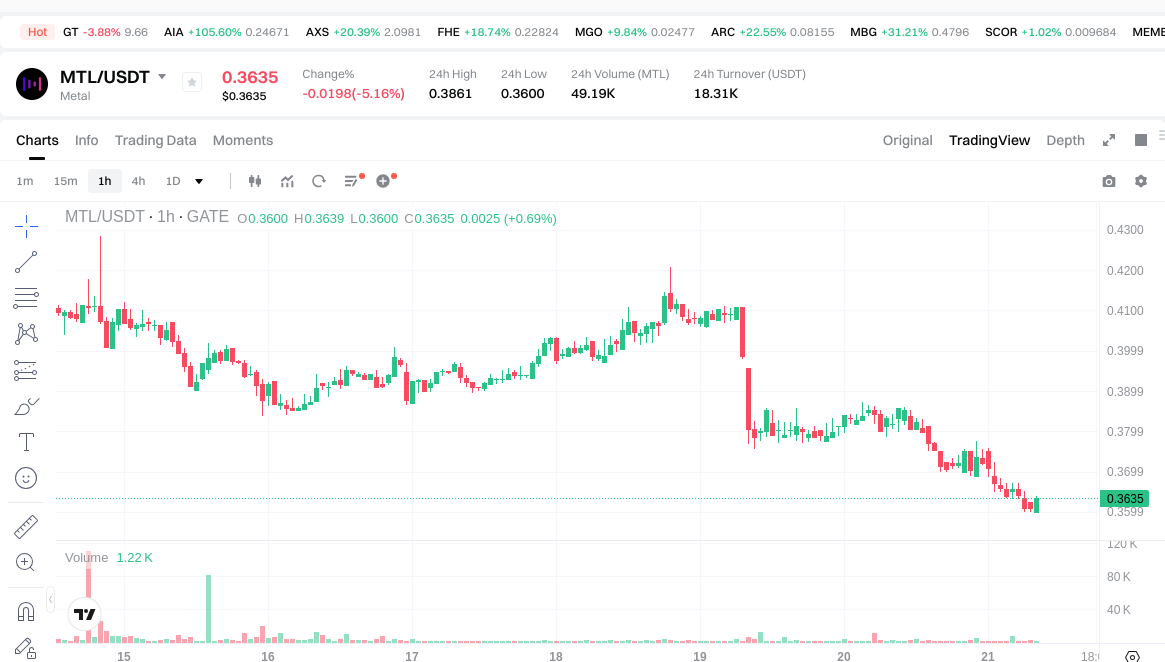
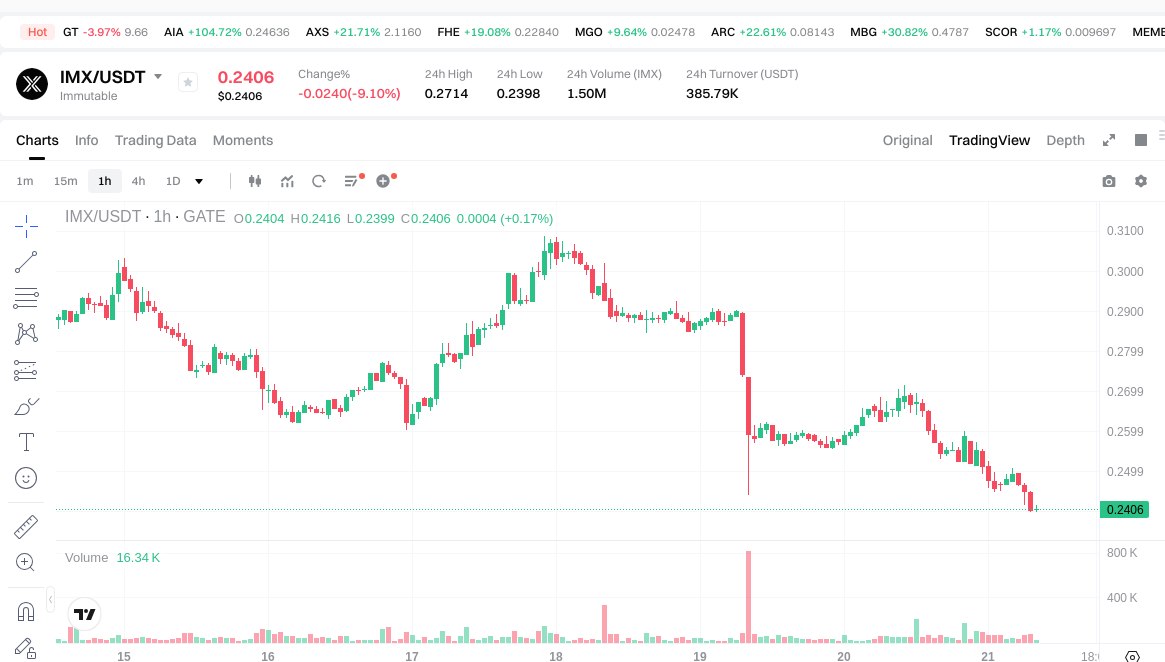
II. Factores Centrais que Influenciam o Valor de Investimento de MTL vs IMX
Comparação do Mecanismo de Fornecimento (Tokenomics)
Devido à insuficiência de materiais de referência relativos aos mecanismos específicos de fornecimento de MTL e IMX, uma análise comparativa detalhada não pode ser fornecida neste momento.
Adoção Institucional e Aplicação no Mercado
Detenções Institucionais
Com base nas informações disponíveis, não é possível estabelecer uma comparação abrangente das preferências institucionais entre MTL e IMX devido à limitação de dados sobre padrões de detenção institucional.
Adoção Empresarial
Aplicações específicas de MTL e IMX em pagamentos transfronteiriços, liquidações e carteiras de investimento requerem mais dados para uma avaliação precisa.
Políticas Nacionais
As atitudes regulatórias em relação ao MTL e IMX variam entre jurisdições, embora os quadros políticos específicos e seus impactos comparativos permaneçam pouco documentados nos materiais atuais.
Desenvolvimento Técnico e Construção de Ecossistemas
Atualizações Técnicas do MTL
Informações detalhadas sobre atualizações técnicas recentes do MTL e suas potenciais implicações de mercado são atualmente limitadas nos recursos disponíveis.
Desenvolvimento Técnico do IMX
Análise abrangente da trajetória de desenvolvimento técnico do IMX requer materiais de referência adicionais para uma reportagem precisa.
Comparação de Ecossistemas
Dados comparativos sobre integração DeFi, presença em marketplaces NFT, infraestrutura de pagamento e implementação de contratos inteligentes entre os ecossistemas do MTL e do IMX são insuficientes para uma análise detalhada.
Ambiente Macroeconómico e Ciclos de Mercado
Dados históricos de desempenho comparando o MTL e o IMX sob várias condições inflacionárias são limitados nos materiais de referência atuais.
Política Monetária Macroeconómica
Os impactos específicos das flutuações nas taxas de juro e dos movimentos do índice do dólar norte-americano sobre o MTL versus IMX requerem conjuntos de dados mais abrangentes para uma comparação significativa.
Fatores Geopolíticos
Embora a procura por transações transfronteiriças e desenvolvimentos internacionais possam influenciar ambos os ativos, os impactos comparativos específicos no MTL e no IMX permanecem pouco claros com base nas informações disponíveis.
III. Previsão de Preços de 2026 a 2031: MTL vs IMX
Previsão de Curto Prazo (2026)
- MTL: Conservador 0,2138$-0,3624$ | Otimista 0,3624$-0,4349$
- IMX: Conservador 0,2145$-0,2410$ | Otimista 0,2410$-0,3229$
Previsão de Médio Prazo (2028-2029)
- O MTL poderá entrar numa fase de crescimento, com uma faixa de preço esperada de 0,4135$-0,6471$
- O IMX poderá entrar numa fase de consolidação, com uma faixa de preço esperada de 0,2888$-0,4859$
- Fatores-chave: influxos de capital institucional, desenvolvimentos de ETF, expansão do ecossistema
Previsão de Longo Prazo (2030-2031)
- MTL: Cenário base 0,4484$-0,7540$ | Cenário otimista 0,6692$-0,9637$
- IMX: Cenário base 0,3335$-0,5255$ | Cenário otimista 0,4264$-0,4954$
Ver previsões detalhadas de preços para MTL e IMX
Aviso
MTL:
| Ano |
Preço Máximo Previsto |
Preço Médio Previsto |
Preço Mínimo Previsto |
Variação de Preço |
| 2026 |
0,43488 |
0,3624 |
0,213816 |
0 |
| 2027 |
0,5860008 |
0,39864 |
0,3069528 |
10 |
| 2028 |
0,551398848 |
0,4923204 |
0,413549136 |
36 |
| 2029 |
0,64710593376 |
0,521859624 |
0,44879927664 |
44 |
| 2030 |
0,7539827847552 |
0,58448277888 |
0,5201896732032 |
61 |
| 2031 |
0,963695205817344 |
0,6692327818176 |
0,448385963817792 |
85 |
IMX:
| Ano |
Preço Máximo Previsto |
Preço Médio Previsto |
Preço Mínimo Previsto |
Variação de Preço |
| 2026 |
0,32294 |
0,241 |
0,21449 |
0 |
| 2027 |
0,3975777 |
0,28197 |
0,1494441 |
17 |
| 2028 |
0,4858766055 |
0,33977385 |
0,2888077725 |
41 |
| 2029 |
0,4417229936925 |
0,41282522775 |
0,29723416398 |
71 |
| 2030 |
0,525547156187137 |
0,42727411072125 |
0,397364922970762 |
77 |
| 2031 |
0,495467058792361 |
0,476410633454193 |
0,333487443417935 |
98 |
IV. Comparação de Estratégias de Investimento: MTL vs IMX
Estratégias de Investimento de Longo Prazo vs Curto Prazo
-
MTL: Pode adequar-se a investidores interessados em ativos digitais focados em pagamento e inovações em mecanismos de recompensa. O modelo PoPP (Proof of Processed Payment) representa uma abordagem distinta no setor de carteiras de pagamento, embora a adoção no mercado exija observação contínua.
-
IMX: Pode atrair investidores focados na infraestrutura NFT e soluções de escalabilidade Layer 2. A ênfase da plataforma em zero taxas de gás e transações instantâneas posiciona-a dentro do ecossistema NFT em crescimento, embora o desempenho dependa do desenvolvimento sustentado do setor.
Gestão de Risco e Alocação de Ativos
-
Investidores Conservadores: 30% MTL vs 70% IMX - Esta alocação reflete o posicionamento do IMX no setor de infraestrutura NFT em expansão e uma classificação de capitalização de mercado relativamente superior (224ª vs 678ª).
-
Investidores Agressivos: 45% MTL vs 55% IMX - Uma abordagem mais equilibrada considerando a potencial volatilidade maior do MTL em conjunto com a presença consolidada do IMX no mercado.
-
Ferramentas de Hedge: Alocação em stablecoins para gestão de liquidez, estratégias de opções para proteção contra baixa e diversificação de portfólio cross-asset para mitigar risco de concentração.
V. Comparação de Riscos Potenciais
Risco de Mercado
-
MTL: Volume de negociação de 18.588,40$ indica liquidez limitada, o que pode resultar em maior volatilidade de preço e desafios na execução durante períodos de stress de mercado. A queda de 11,52% em 7 dias reflete suscetibilidade a mudanças no sentimento de mercado mais amplo.
-
IMX: Apesar do volume de negociação superior de 385.272,21$, a queda de 16,25% em 7 dias demonstra correlação com ciclos do mercado NFT e tendências do mercado cripto mais amplo. O sentimento de mercado (Índice Medo & Ganância: 32) sugere uma postura cautelosa dos investidores.
Risco Técnico
-
MTL: A estabilidade da rede e considerações de escalabilidade permanecem relevantes para plataformas focadas em pagamento, embora atualizações técnicas específicas exijam monitorização contínua.
-
IMX: Como solução Layer 2, dependências de segurança na camada base da Ethereum e vulnerabilidades potenciais de ponte representam áreas que requerem atenção. Riscos de upgrade de protocolo e segurança de contratos inteligentes continuam a ser considerações.
Risco Regulatório
Ambos os ativos enfrentam quadros regulatórios em evolução em várias jurisdições. Tokens focados em pagamento, como o MTL, podem encontrar regulamentações específicas relacionadas a serviços financeiros, enquanto plataformas de infraestrutura NFT, como o IMX, podem ser afetadas por regulações emergentes de ativos digitais e valores mobiliários. As capacidades de transação transfronteiriça podem deparar-se a requisitos de conformidade variados.
VI. Conclusão: Qual é a Melhor Compra?
📌 Resumo do Valor de Investimento:
-
Vantagens do MTL: Presença consolidada desde 2017 no setor de carteiras de pagamento com um mecanismo de recompensa distintivo. Uma posição de menor capitalização de mercado pode oferecer oportunidades de retorno mais elevado, embora acompanhada de maior risco. O preço atual de 0,36$ representa uma descida substancial em relação a máximos históricos, potencialmente oferecendo pontos de entrada para investidores com maior tolerância ao risco.
-
Vantagens do IMX: Posicionamento forte no espaço de infraestrutura NFT com capacidades de escalabilidade Layer 2. Uma capitalização de mercado mais elevada (224ª) e volume de negociação de 385.272,21$ sugerem liquidez relativamente melhor. O foco da plataforma em zero taxas de gás resolve uma dor comum nas transações NFT, alinhando-se às tendências de crescimento do setor.
✅ Recomendações de Investimento:
-
Novos Investidores: Considerar iniciar com alocações menores devido às condições atuais de mercado (Índice Medo & Ganância: 32). O IMX pode oferecer um ponto de entrada mais acessível, dada a sua função estabelecida na infraestrutura, embora seja essencial uma pesquisa aprofundada e avaliação de risco antes de qualquer decisão de investimento.
-
Investidores Experientes: Podem avaliar ambos os ativos no contexto de uma carteira diversificada, considerando o posicionamento do MTL no setor de pagamentos frente ao foco em infraestrutura NFT do IMX. A gestão de risco através de dimensionamento de posições e estratégias de stop-loss deve ser priorizada, considerando as recentes quedas de preço.
-
Investidores Institucionais: Recomenda-se uma diligência completa na infraestrutura técnica, quadros regulatórios e trajetórias de desenvolvimento do ecossistema. A consideração de requisitos de liquidez e efeitos de correlação na carteira deve informar as decisões de alocação.
⚠️ Aviso de Risco: O mercado de criptomoedas apresenta alta volatilidade. Esta análise não constitui aconselhamento de investimento. Todas as decisões de investimento devem ser baseadas na tolerância ao risco individual, circunstâncias financeiras e pesquisa independente.
VII. Perguntas Frequentes
P1: Quais são as principais diferenças entre MTL e IMX em termos de casos de uso centrais?
O MTL concentra-se em serviços de carteira de pagamento com um mecanismo de recompensa através do Proof of Processed Payment (PoPP), direcionado a serviços financeiros para pequenas e médias empresas desde 2017. O IMX, lançado em 2021, atua como uma solução Layer 2 de escalabilidade especificamente desenhada para transações NFT na Ethereum, oferecendo transações instantâneas e zero taxas de gás. A distinção fundamental reside nos seus setores: o MTL aborda infraestrutura de pagamento enquanto o IMX serve a infraestrutura de marketplaces NFT.
P2: Qual ativo apresenta melhor liquidez para fins de negociação?
O IMX demonstra uma liquidez significativamente superior com um volume de negociação de 385.272,21$ em 24 horas, comparado com os 18.588,40$ do MTL em 21 de janeiro de 2026. Esta diferença de aproximadamente 20x sugere que o IMX oferece oportunidades de entrada e saída mais fáceis, com potencial risco de slippage menor. No entanto, ambos os ativos sofreram quedas recentes notáveis (MTL: -11,52%, IMX: -16,25% em 7 dias), indicando desafios atuais de mercado para ambos.
P3: Como se comparam as capitalizações de mercado e classificações entre MTL e IMX?
O IMX está na 224ª posição global com uma capitalização de aproximadamente 198,5 milhões de dólares e 826,3 milhões de tokens em circulação, enquanto o MTL ocupa a 678ª posição com uma capitalização de cerca de 32,1 milhões de dólares e 89,2 milhões de tokens circulantes. A capitalização do IMX é cerca de 6x maior que a do MTL, indicando uma presença de mercado mais forte e maior confiança dos investidores, embora também possa refletir ganhos percentuais potencialmente menores durante ciclos de alta de ativos com menor capitalização, como o MTL.
P4: Quais são as previsões de preços para MTL e IMX até 2031?
Para 2026, o MTL está projetado entre 0,2138$ e 0,4349$ (conservador a otimista), enquanto o IMX varia de 0,2145$ a 0,3229$. Até 2031, as previsões do MTL abrangem de 0,4484$ a 0,9637$, e as do IMX de 0,3335$ a 0,4954$. O MTL apresenta potencial de ganhos percentuais mais elevados a partir dos níveis atuais, com aumentos projetados de 85% a 98% até 2031, em comparação com o trajetória de crescimento mais moderada do IMX, refletindo uma base mais baixa e um perfil de maior risco-retorno.
P5: Que estratégia de alocação diferentes investidores devem considerar para MTL vs IMX?
Investidores conservadores podem considerar 30% em MTL e 70% em IMX, favorecendo a posição mais forte do IMX na infraestrutura NFT e sua classificação de mercado estabelecida. Investidores agressivos podem adotar uma alocação mais equilibrada de 45% em MTL e 55% em IMX, para capturar a maior volatilidade potencial do MTL enquanto mantêm exposição à posição do IMX no setor. Ambas as estratégias devem incluir reservas de stablecoins para gestão de liquidez e implementar estratégias de mitigação de risco por meio de dimensionamento de posições e stop-loss, considerando as recentes quedas de preço.
P6: Quais são os principais riscos associados ao investimento em MTL versus IMX?
O MTL enfrenta risco de liquidez devido ao baixo volume de negociação (18.588,40$), o que pode resultar em slippage significativo e desafios na execução. Sua posição no setor de carteiras de pagamento também pode deparar-se a regulamentos específicos de serviços financeiros. O IMX, embora mais líquido, possui dependências técnicas como uma solução Layer 2, incluindo vulnerabilidades potenciais de ponte e riscos de contratos inteligentes. Ambos os ativos estão sujeitos à volatilidade mais ampla do criptomercado, atualmente refletida no Índice Medo & Ganância de 32, e enfrentam quadros regulatórios em evolução em várias jurisdições.
P7: Como se comportaram historicamente o MTL e o IMX em comparação com as suas máximas históricas?
O MTL atingiu uma máxima histórica de 17,03$ em junho de 2018, representando uma queda de aproximadamente 97,9% até o preço atual de 0,36$. O IMX atingiu um preço notável de 9,52$ em novembro de 2021, decaindo cerca de 97,5% até o nível atual de 0,2402$. Ambos os ativos tiveram correções substanciais desde os picos, embora a história de mercado mais curta do IMX (lançado em 2021) e a mais longa do MTL (lançado em 2017) ofereçam contextos diferentes para avaliação da recuperação e posicionamento nos ciclos de mercado.
P8: Qual ativo é mais adequado para investidores interessados no ecossistema NFT?
O IMX é especificamente projetado para o ecossistema NFT, oferecendo soluções Layer 2 de escalabilidade com zero taxas de gás e transações instantâneas para criação e negociação de NFTs. Essa posição torna o IMX a escolha clara para investidores que procuram exposição direta ao crescimento da infraestrutura NFT. O MTL, focado em carteiras de pagamento e serviços financeiros para PME, não aborda diretamente casos de uso específicos de NFTs. No entanto, investidores diversificados podem manter ambos os ativos como exposições complementares a diferentes segmentos do ecossistema de ativos digitais mais amplo.
* As informações não se destinam a ser e não constituem aconselhamento financeiro ou qualquer outra recomendação de qualquer tipo oferecido ou endossado pela Gate.