


Important Notice: The views and information presented are for reference only and do not constitute investment advice for anyone.
Strategy Recommendation: BTC Bull Call Spread Strategy
Trading details page: https://www.gate.com/options/BTC_USDT
Gate Options Underlying Asset Volume Review
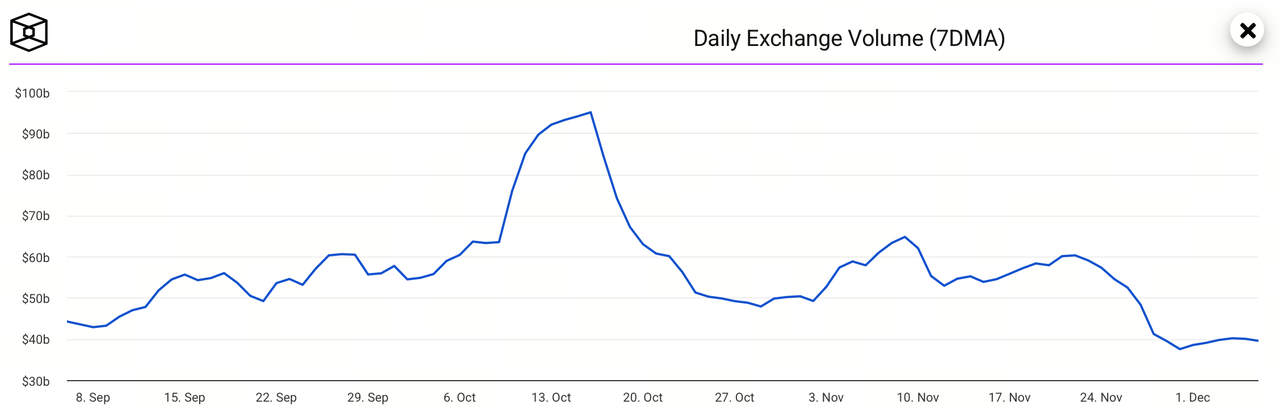
Spot market activity across the board remained steady compared to last week, with the 7-day average trading volume also unchanged.
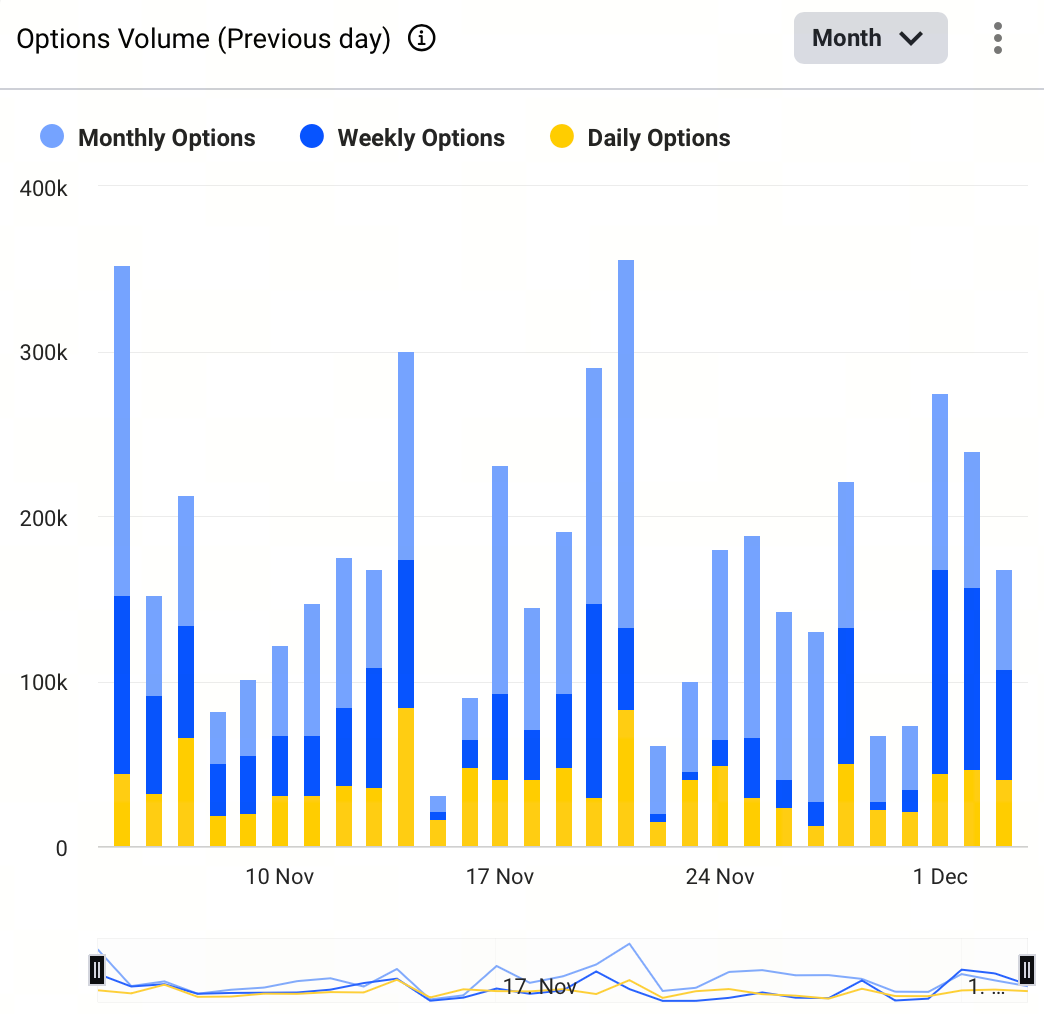
Options Volume Distribution (BTC)
Monthly options volume saw a significant decline, indicating weakening demand for medium- and long-term positions. The market is increasingly favoring short-term trades.
Weekly options volume surged sharply, reflecting a notable concentration of capital in short-term volatility plays and a faster trading pace.
Daily options volume also strengthened, suggesting rising demand for ultra-short-term event-driven trades.
|||||
|---|---|---|---| ||Monthly Options|Weekly Options|Daily Options| |Last Week|202,014.4|58,288.9|28,427.3| |This Week|125,705.1|97,962.6|39,845| |Weekly Change|\-37.77%|68.06%|40.16%| ||Long-term options down|Weekly options up sharply|Short-term options up sharply|
Options Expiry Size and OI Distribution
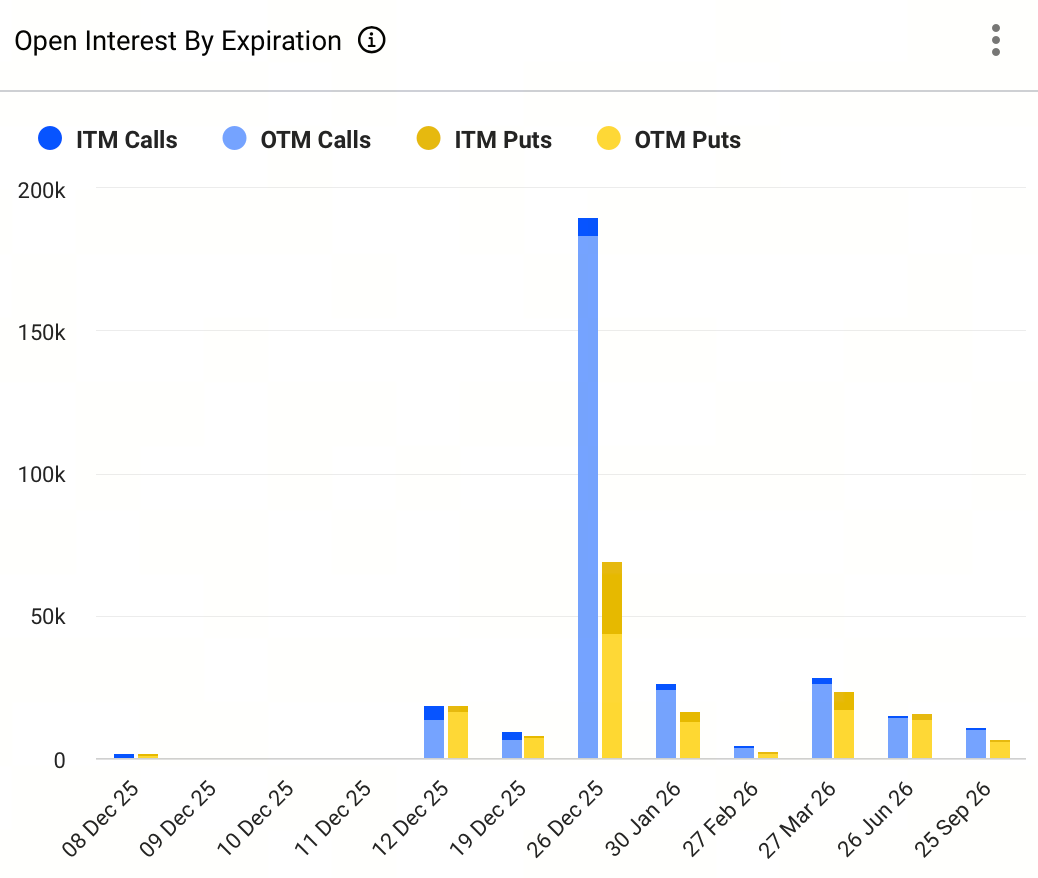
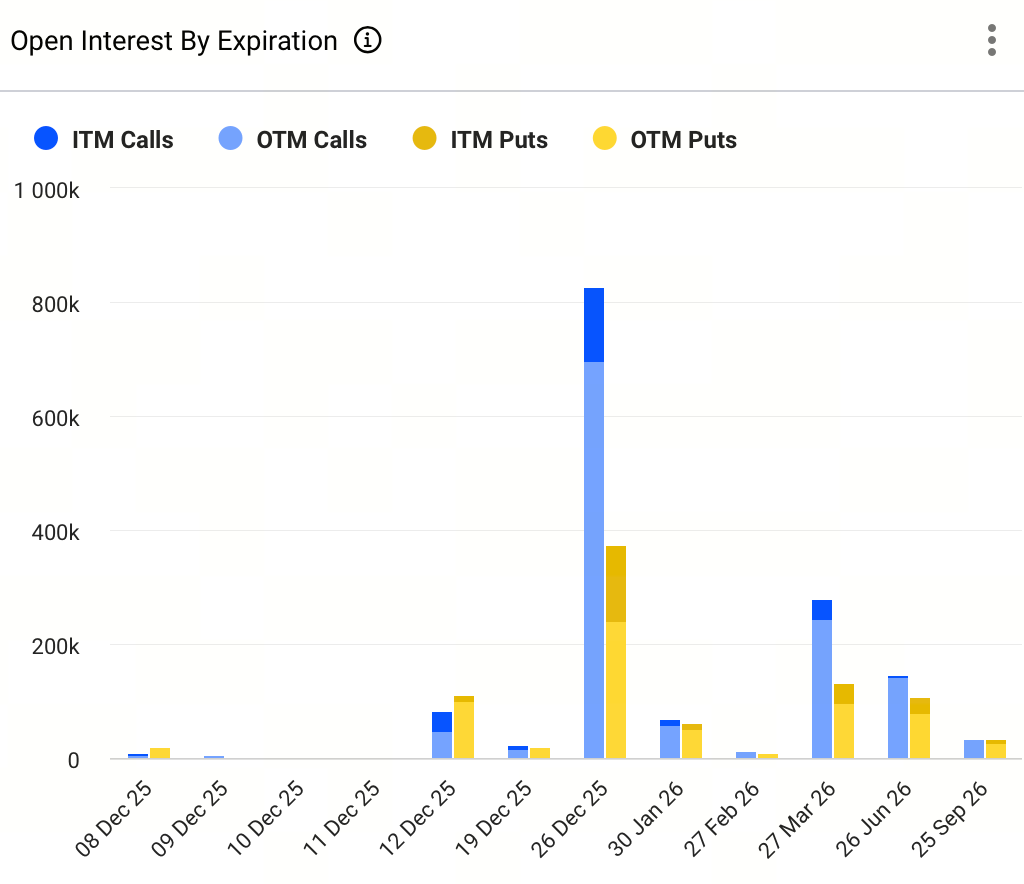
Open interest is heavily concentrated on the December 26, 2025 expiry, signaling that the market views the year-end event window as a critical period. Participants are betting on a major volatility event, with a high probability of either a trend move or a volatility breakout.
On the December 26 trading day, OTM (Out-of-the-Money) Calls account for an exceptionally high proportion, far exceeding ITM (In-the-Money) and Puts. This strong one-sided options structure indicates the market is betting on a continued upward trend and a potential breakout in volatility. Put interest is mainly concentrated in OTM contracts, suggesting these are primarily used for hedging rather than outright bearish directional bets.
Short-term options (Dec 5 / Dec 12 / Dec 19) have weak open interest, and speculative short-term capital has exited. This suggests the market does not expect strong volatility in the upcoming 2–10 day window.
Bitcoin Options Market Summary
From early December 2025 to the present, BTC has remained in a narrow consolidation range, generally trading between $88,000 and $94,000. Throughout the week, prices repeatedly tested above $93,000–$94,000, but sustained buying failed to materialize, preventing a decisive breakout. Support near $90,000 was also repeatedly tested, showing limited market absorption. Overall, trading volume has contracted periodically, and the technical structure is in a high-level consolidation phase. Investor sentiment remains neutral to cautious, with no clear short-term trend, and range-bound trading continues to dominate. If there are no new macro catalysts or capital inflows, prices are likely to keep fluctuating within the current range.
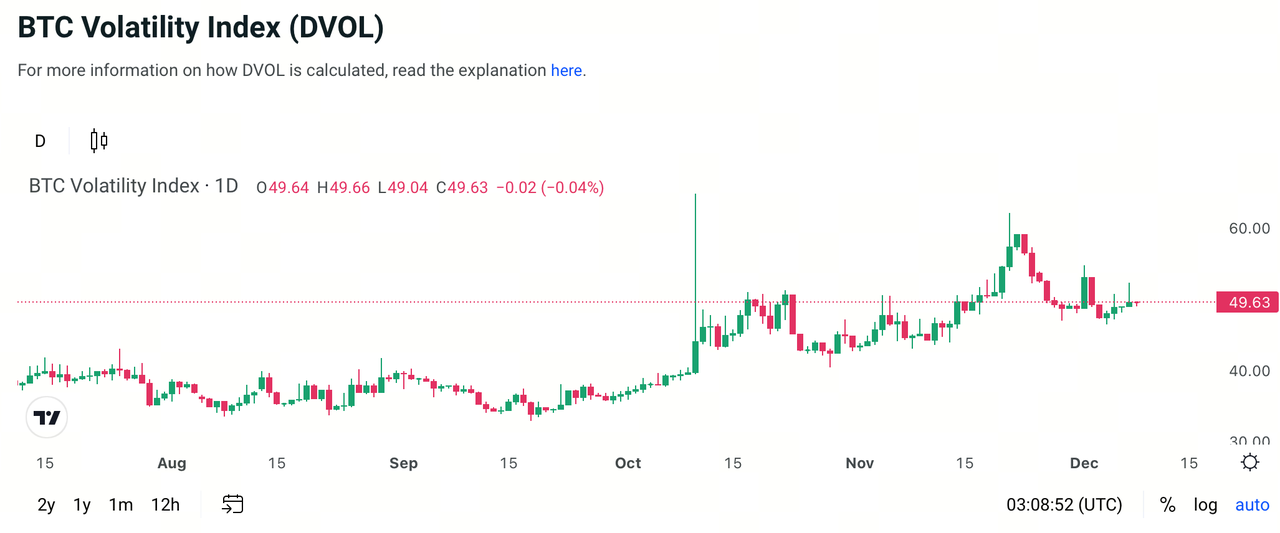
The latest public data shows BTC implied volatility (IV) is still elevated at 49%, reflecting strong market expectations for future price swings.
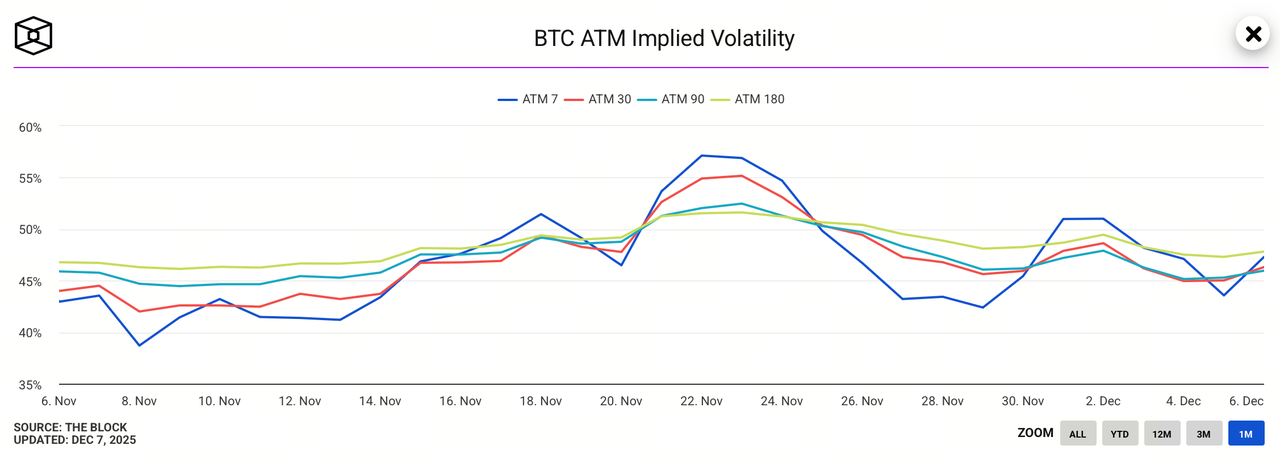
At the beginning of the week, at-the-money implied volatility across tenors briefly inverted, but after the high short-term volatility on the 23rd, it pulled back. The term structure has returned to a relatively reasonable distribution, indicating market expectations for continued volatility are stabilizing.
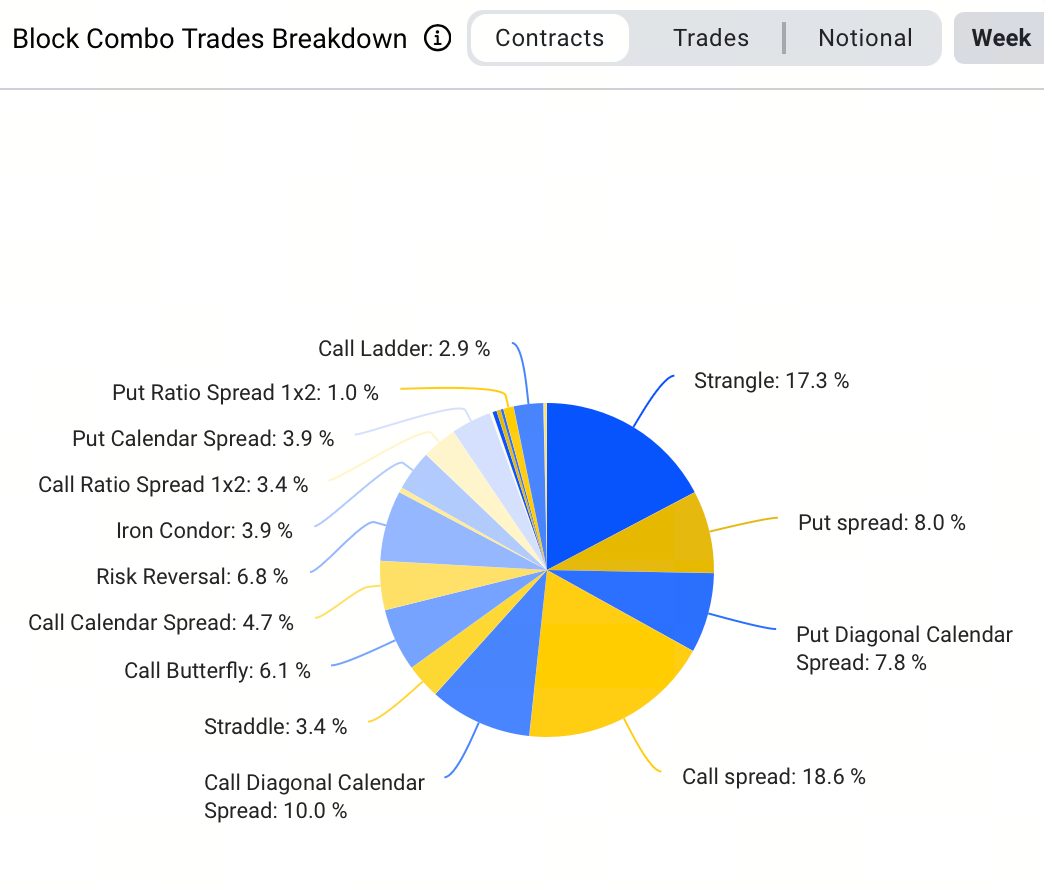
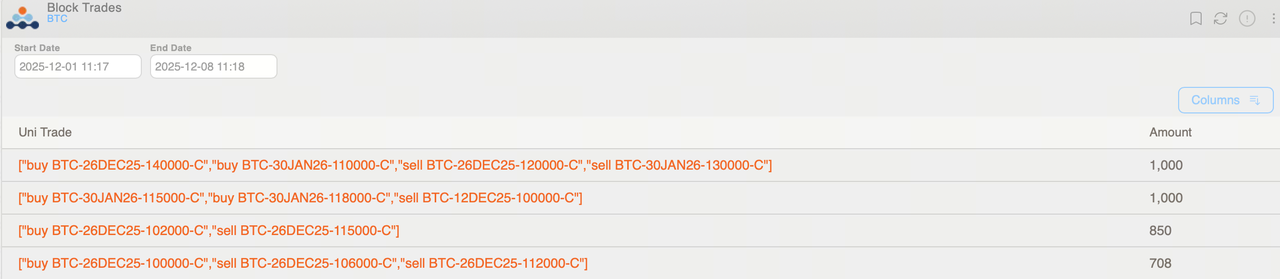
Among large BTC block trades, the most popular strategy this week was the Bull Call Spread, accounting for about 18.6%. This typically reflects market expectations for moderate price increases. The largest block trade by volume this week involved 1,000 BTC: buying BTC-300126-115000-C, buying BTC-300126-118000-C, and selling BTC-121225-100000-C—a Diagonal Long Call Spread. The total premium paid for this combination was approximately $940,000, aiming for medium- to long-term upside at a lower cost, while offsetting costs by selling short-term options.
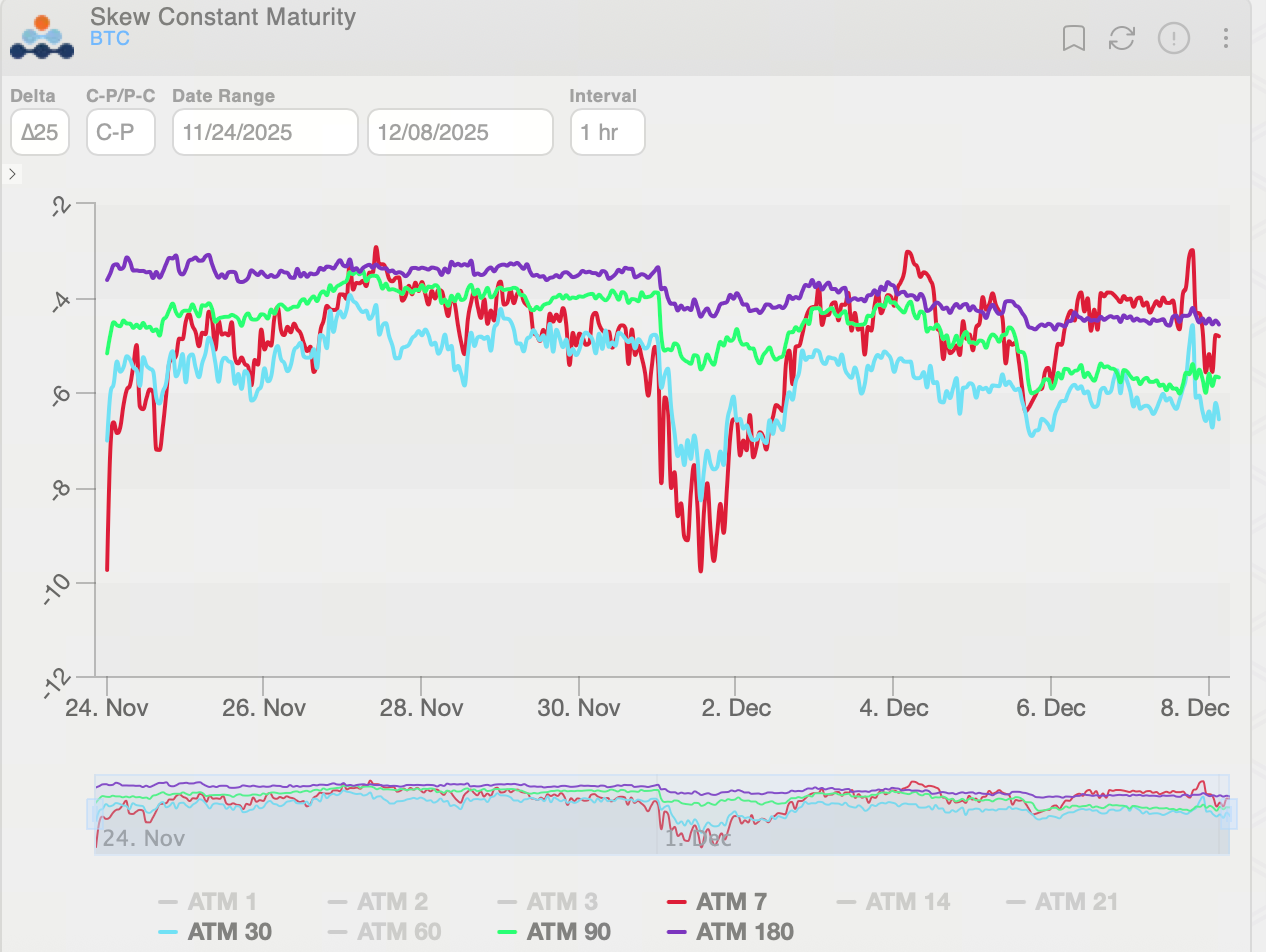
BTC options 25-Delta Skew remained in negative territory throughout the week, indicating persistent defensive sentiment against downside risk. The skew term structure steepened and then normalized around the 2nd, reflecting cooling demand for rapid downside hedges in short-term contracts. Even as the Put–Call IV spread narrowed, it remained negative overall. Demand for downside protection has only temporarily eased; the market’s overall risk aversion remains elevated.
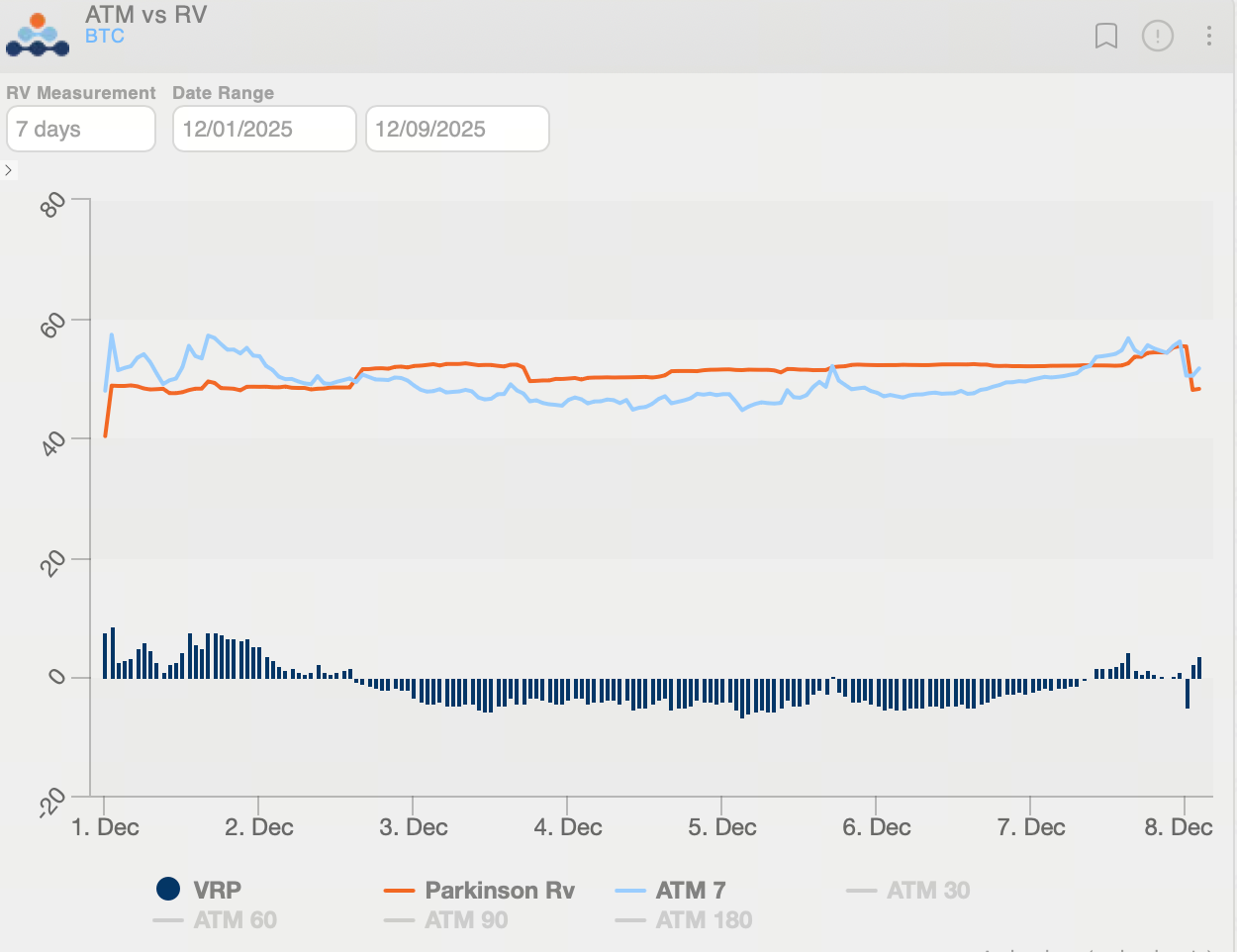
BTC realized volatility (RV) held near 48% this week, while volatility risk premium (VRP = IV − RV) was around 3.4 vol, hovering near the zero axis. This shows implied volatility (IV) and actual volatility are gradually converging, and market expectations for future volatility are returning to a more neutral range. Against this backdrop, it may be appropriate to consider neutral or moderately directional volatility strategies to capture structural opportunities as volatility converges.
Ethereum Options Market Summary
From December 1 to December 8, 2025, ETH mainly traded in a $3,000–$3,150 range. Early in the week, it rebounded from lows around $2,782–$3,032, briefly touching a local high near $3,200 midweek before pulling back and consolidating narrowly around $3,060–$3,120 over the weekend. This indicates persistent short-term selling pressure and limited follow-through from the bulls.
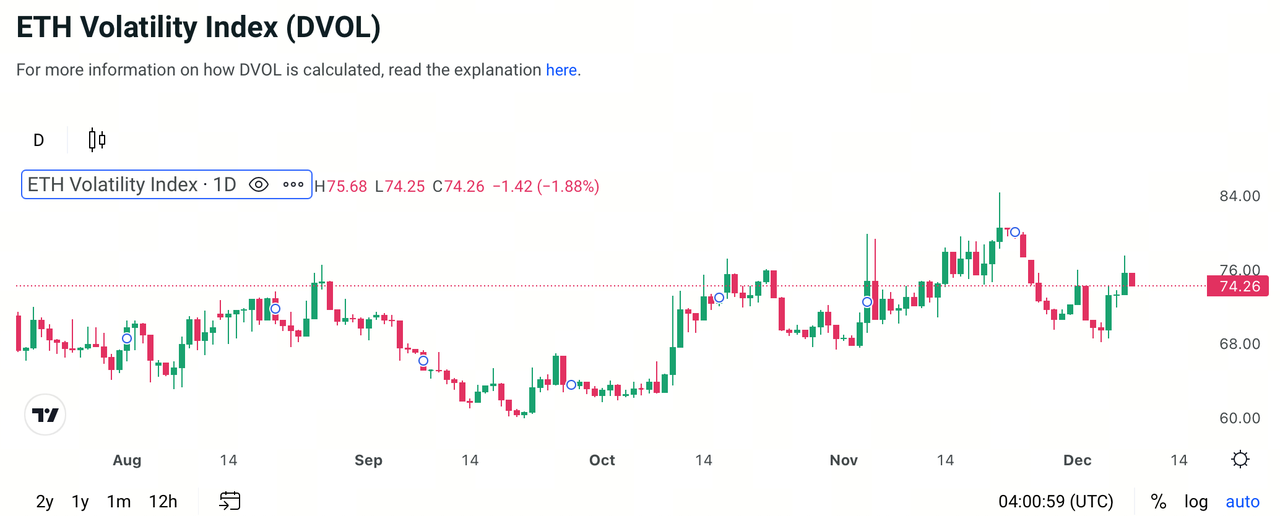
Latest data shows ETH implied volatility (IV) remains high at around 74%, with volatility levels still elevated. The market’s expectation for significant future price swings remains strong.
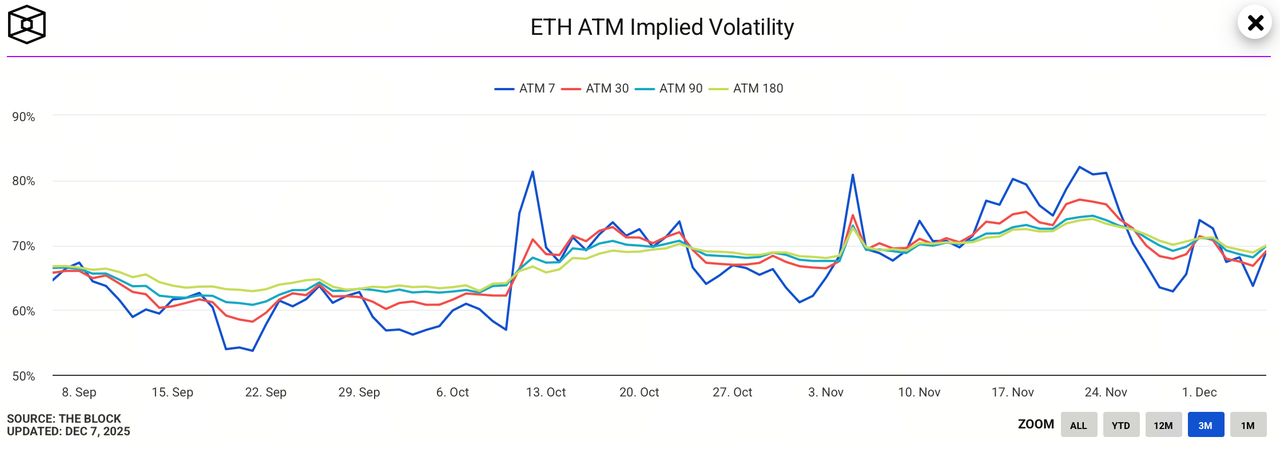
While ETH options implied volatility (IV) stayed high this week, it retreated after rising on the 1st. Both near-term and long-term IVs declined quickly, with near-term IV dropping more sharply, showing that short-term volatility expectations have cooled significantly. The term structure has returned to a relatively reasonable distribution, signaling that expectations for continued volatility are stabilizing. Overall, this structure suggests short-term volatility may gradually converge, though medium- and long-term uncertainty persists and the sustainability of the trend still requires observation.
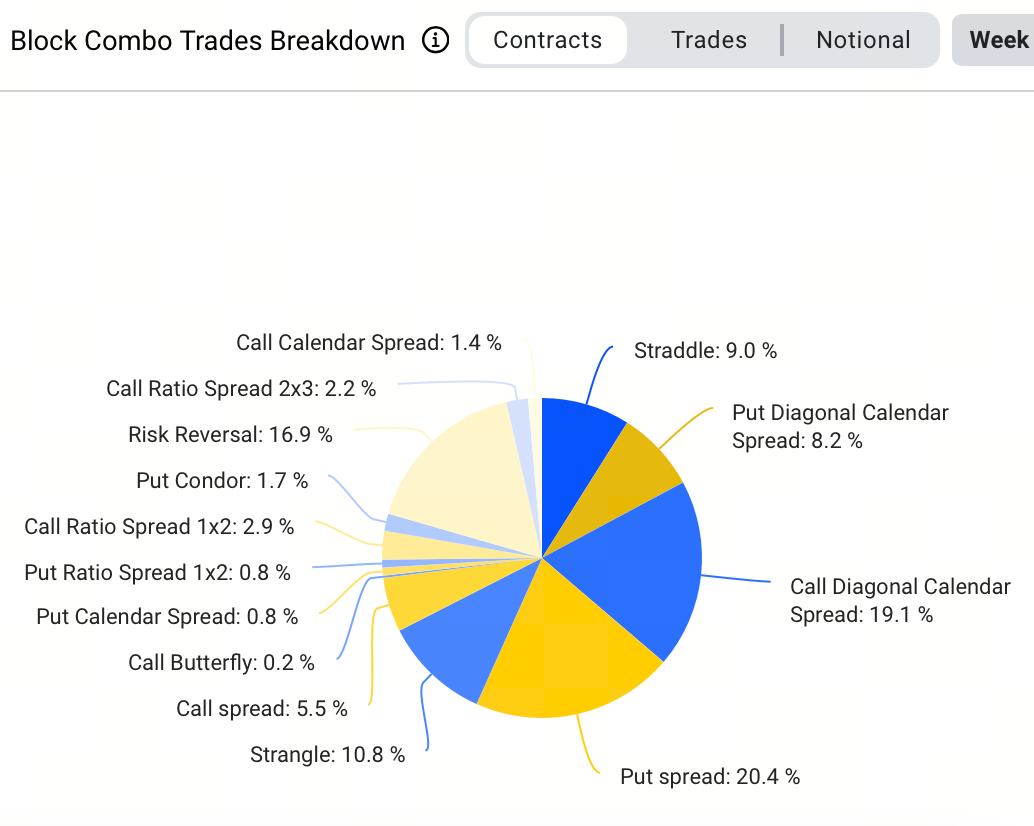
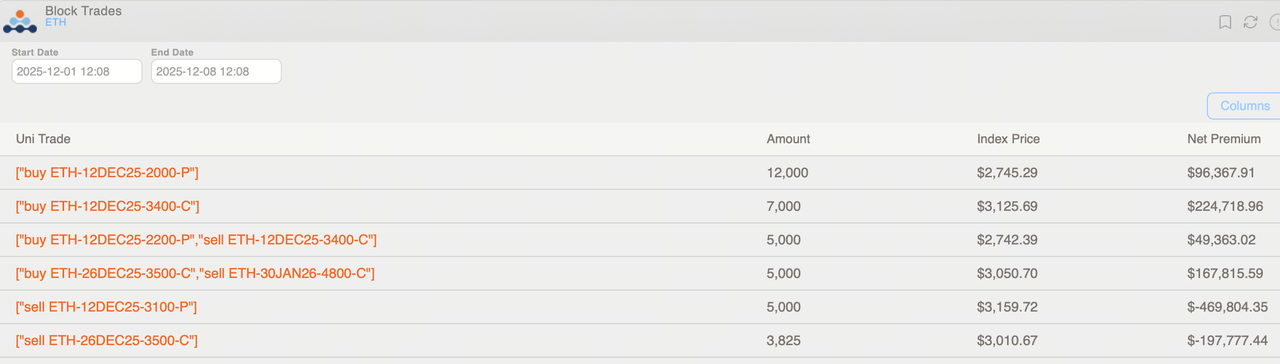
Among large ETH block trades, the most popular strategy this week was the Bear Put Spread, accounting for 20.4% of volume. This reflects investors positioning for downside at lower cost while capping both maximum loss and gain. Meanwhile, the largest block trade this week was a purchase of 12,000 ETH, buying ETH-121225-2000-P put options, with a total premium expenditure of about $96,000.
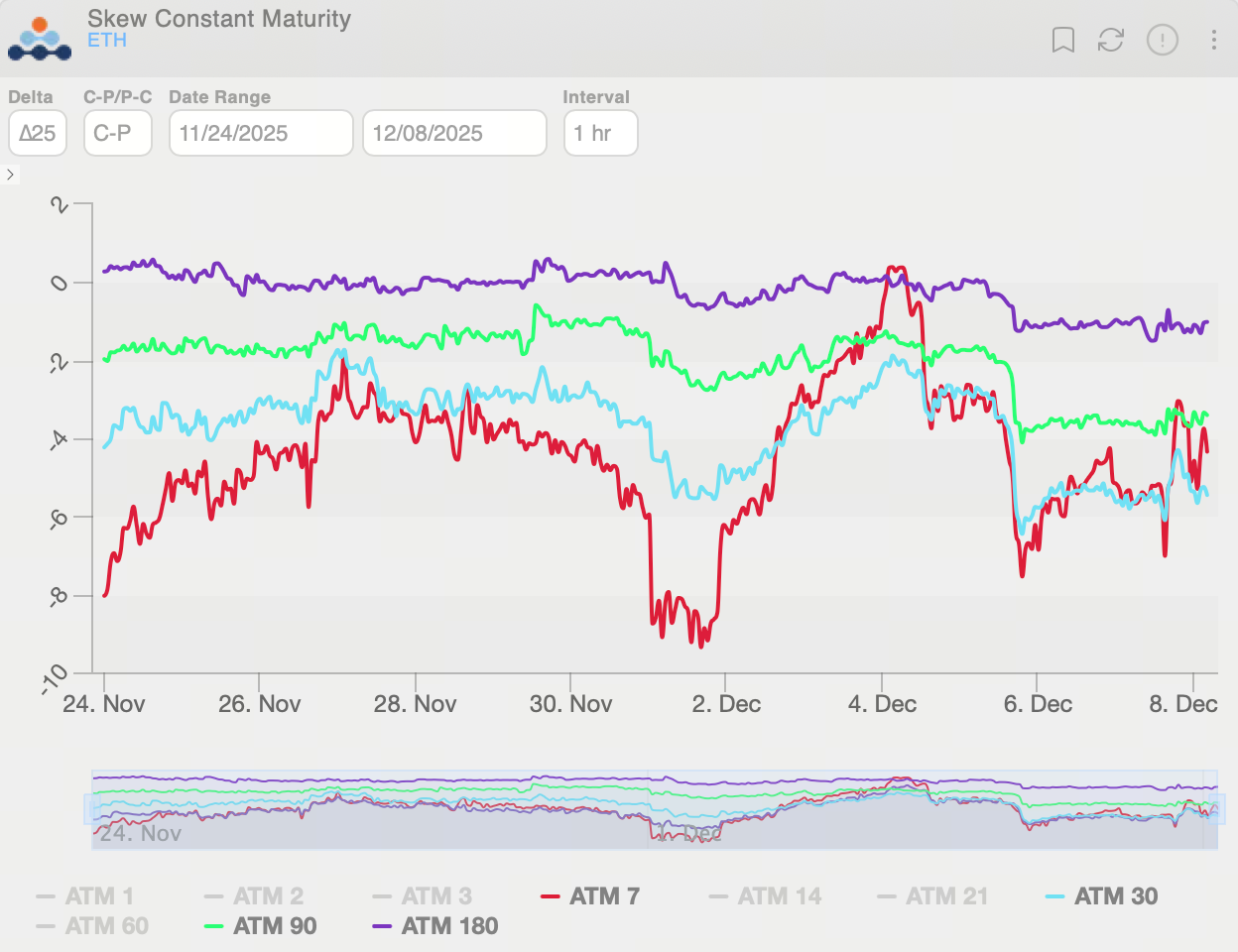
ETH options 25-Delta Skew narrowed sharply early in the week, then steepened again around the 6th, indicating renewed demand for short-term downside hedges. Across all tenors, the structure shifted downward, with bearish sentiment strengthening in longer-dated options, reflecting an overall cautious market tone. Over the weekend, Put IV was about 7.5 vol higher than Call IV, signaling persistent bearish sentiment and elevated short-term hedging demand.
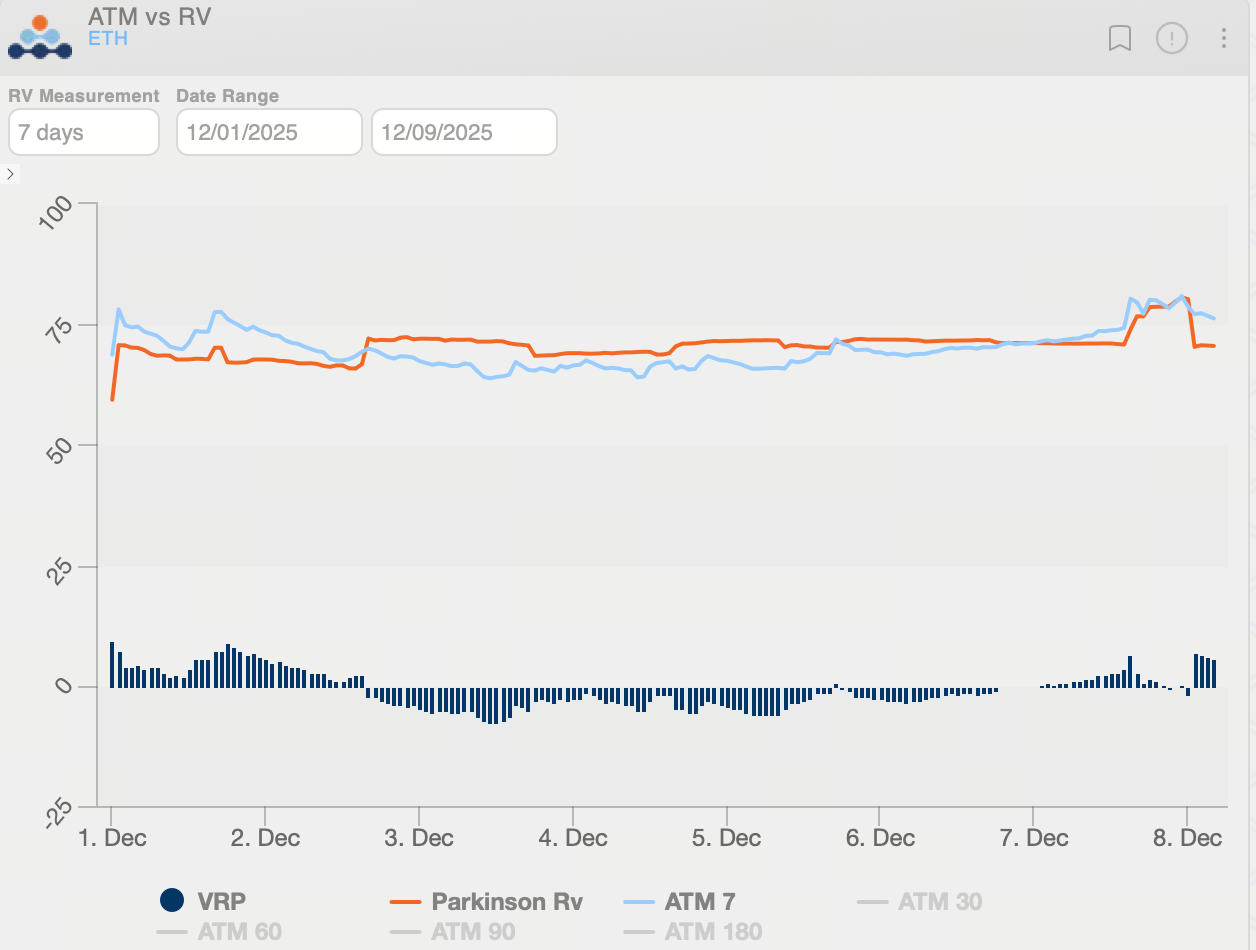
ETH realized volatility (RV) remained near 70% this week, while volatility risk premium (VRP = IV − RV) fluctuated around the zero axis, showing that implied volatility (IV) and actual volatility are gradually converging, and expectations for future volatility are moving toward neutral.
In this environment, neutral to convergent strategies focused on time decay—such as short-term calendar spreads, butterfly spreads, or light exposure short strangle structures—are more suitable, while maintaining moderate protection against sudden volatility spikes.
Policy Events Overview and Market Impact
- December 12 (Thursday): FOMC Meeting
If the Fed announces a rate cut and resumes balance sheet expansion as expected, the currently tight liquidity environment will quickly normalize. Improved liquidity typically drives synchronized strength in risk assets. Therefore, the week of December 9 is highly likely to see equities, cryptocurrencies, and precious metals rally together. If subsequent policy communications further reinforce expectations of easing, this broad-based asset rally could continue from mid-December into early January, with risk appetite likely to keep rising.
- ETF Capital Flows
This week, crypto ETFs showed continued BTC outflows and modest net inflows into some altcoin ETFs, reflecting a shift toward caution among institutions and structural rotation of capital within the crypto sector.
- Bank of Japan Recent Developments and Market Expectations
Multiple sources and media reports indicate that the Bank of Japan plans to raise its short-term policy rate from 0.50% to 0.75% at its December 2025 monetary policy meeting, as global markets face pressure from tightening liquidity.


