# BItcoin

6.7M
#CryptoMarketRecovery — Where Do We Actually Stand?
The crypto market is in the middle of a carefully watched recovery, and the signals are worth reading with a clear head — not through the lens of euphoria, nor through unchecked pessimism. The current moment is defined by structural tension: macro tailwinds are pushing prices higher, while on-chain indicators are flashing mixed signals that demand disciplined attention from anyone with capital at stake.
The Macro Context Driving the Bid
Bitcoin touched $76,000 this week for the first time since early February — a move that did not emerge in a
BTC2,16%
ETH2,91%
Dubai_Prince
#CryptoMarketRecovery — Where Do We Actually Stand?
The crypto market is in the middle of a carefully watched recovery, and the signals are worth reading with a clear head — not through the lens of euphoria, nor through unchecked pessimism. The current moment is defined by structural tension: macro tailwinds are pushing prices higher, while on-chain indicators are flashing mixed signals that demand disciplined attention from anyone with capital at stake.
The Macro Context Driving the Bid
Bitcoin touched $76,000 this week for the first time since early February — a move that did not emerge in a vacuum. Three converging factors drove the rally.
First, a temporary de-escalation in geopolitical tensions reduced the risk premium that had been suppressing broader asset prices. Second, the U.S. dollar showed renewed weakness, historically correlated with rotation into scarce assets like Bitcoin. Third, liquidity conditions improved, creating room for institutional desks to re-enter positions trimmed during the February drawdown.
Together, these forces produced a roughly 10% move from $68,000 to over $76,000 within two weeks — a compression of selling pressure followed by a sharp expansion.
At the time of writing, BTC trades near $75,000 with a tight intraday range, while Ethereum sits around $2,362, showing modest strength. The broader market is stabilizing — but not yet accelerating.
Institutional Conviction vs. Retail Hesitation
The most important structural dynamic in this recovery is the divergence between institutional behavior and retail sentiment.
On the institutional side, capital flows are clear. U.S. spot Bitcoin ETFs recorded over $400 million in net inflows in a single session after BTC crossed $75,000 — signaling sustained accumulation rather than speculative activity. Major players like BlackRock and Morgan Stanley continue increasing exposure through structured vehicles, while MicroStrategy and Tether maintain aggressive reserve strategies.
These are multi-year allocation decisions — not short-term trades.
Retail sentiment, however, tells a different story. The Crypto Fear & Greed Index remains at 23, firmly in Extreme Fear territory. Smaller holders have been net sellers during the rally, reducing exposure even as price recovers. Many interpret the move as a bull trap rather than a structural shift.
This divergence is not inherently bearish. Historically, some of the strongest recoveries begin when retail conviction is low and institutional accumulation is steady.
On-Chain Structure: A Strong Foundation
Approximately 60% of Bitcoin’s circulating supply has not moved in over a year — a strong signal of long-term holder conviction. Exchange inflows remain near historical lows, indicating limited immediate sell pressure.
At the same time, realized price levels are being tested, which explains short-term resistance around $76K. This zone is acting as resistance — not a ceiling. Whether it flips into support depends on volume confirmation.
Technically, Bitcoin has broken a six-month downtrend line that capped rallies since Q3 2025. This marks a meaningful structural shift. The pattern of lower highs has been disrupted — but confirmation still depends on sustained demand.
Ethereum’s Convergence Narrative
Ethereum is evolving under a different, but equally important, framework.
The ETH/BTC ratio has strengthened, signaling relative outperformance. A bullish MACD crossover on the weekly timeframe suggests potential continuation, historically associated with significant upside expansions.
Capital positioning supports this narrative. Long exposure in ETH derivatives is increasing, while infrastructure investments continue to build. Ecosystem growth, protocol upgrades, and security initiatives are reinforcing Ethereum’s role as the dominant programmable settlement layer.
This is not a short-term catalyst — it is a compounding structural thesis.
What the Fear Index Is Actually Telling You
A Fear & Greed reading of 23 is not a signal to exit — it is a reflection of past stress, not future probability.
When institutions are accumulating, supply is constrained, and sentiment is depressed, the environment has historically favored accumulation phases. That does not remove risk — derivatives markets still show cautious positioning — but it reframes the opportunity.
Forward-Looking: Key Levels and Catalysts
The $76,000 level in Bitcoin remains the key near-term test. A strong weekly close above this level, supported by continued ETF inflows, would confirm structural continuation. Rejection would likely extend consolidation rather than invalidate the recovery.
Macro conditions remain critical. Liquidity trends, geopolitical developments, and central bank signaling will continue to act as amplifiers.
On the Ethereum side, upcoming upgrades, ecosystem expansion, and institutional adoption pathways remain medium-term catalysts shaping momentum into Q3.
The Discipline This Market Demands
Recovery does not mean completion — it means conditions are improving for disciplined positioning.
The difference between successful and unsuccessful participants is not identifying recovery — it is managing risk within it. Position sizing, patience, and confirmation matter more than chasing momentum.
A 10% move without structural confirmation is not a signal for maximum exposure. It is a signal to build positions methodically.
The foundation is strengthening. Institutional demand is real. Supply remains constrained. Sentiment leaves room for repricing.
The recovery may not be linear — but the structure beneath it is materially stronger than it was at the lows.
Position accordingly.
#Bitcoin #Ethereum #CryptoMarket #BullishStructure
repost-content-media
  • Reward
  • Comment
  • Repost
  • Share
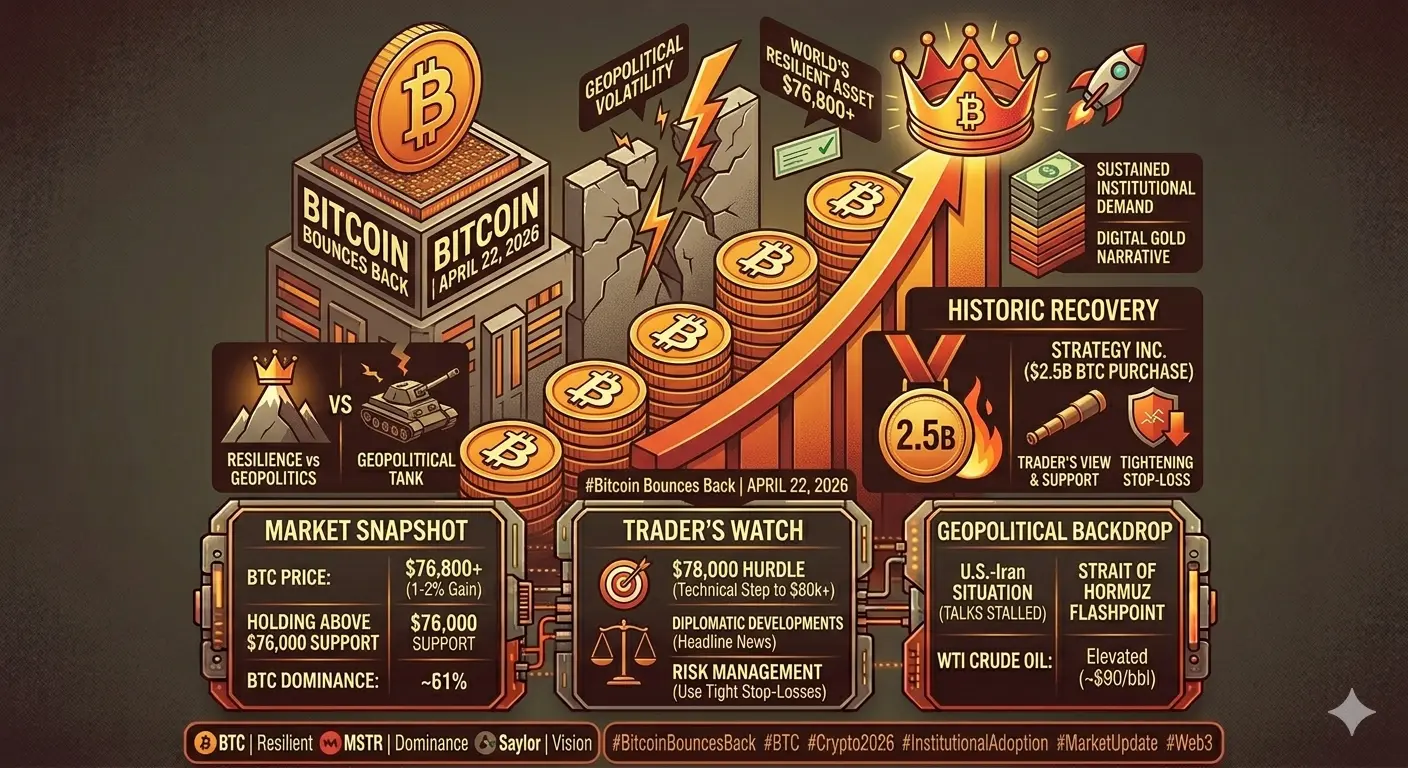
#BitcoinBouncesBack 📢 Market Update: Bitcoin Shows Resilience #BitcoinBouncesBack
As of Wednesday, April 22, 2026, Bitcoin is staging a strong recovery, holding firm despite ongoing geopolitical volatility.
📊 Market Snapshot
BTC Price: Trading near $76,800, up around 1–2% in the last 24 hours. After dipping below $74,000 earlier this week, Bitcoin has reclaimed strength and is now holding above the $76,000 support zone.
Bullish Catalyst: The key driver behind this rebound is strong institutional demand. Recent accumulation by Strategy Inc. (around $2.5B in BTC) has created a solid psychologi
BTC2,16%
post-image
  • Reward
  • 12
  • Repost
  • Share
Falcon_Official:
amazing work
View More
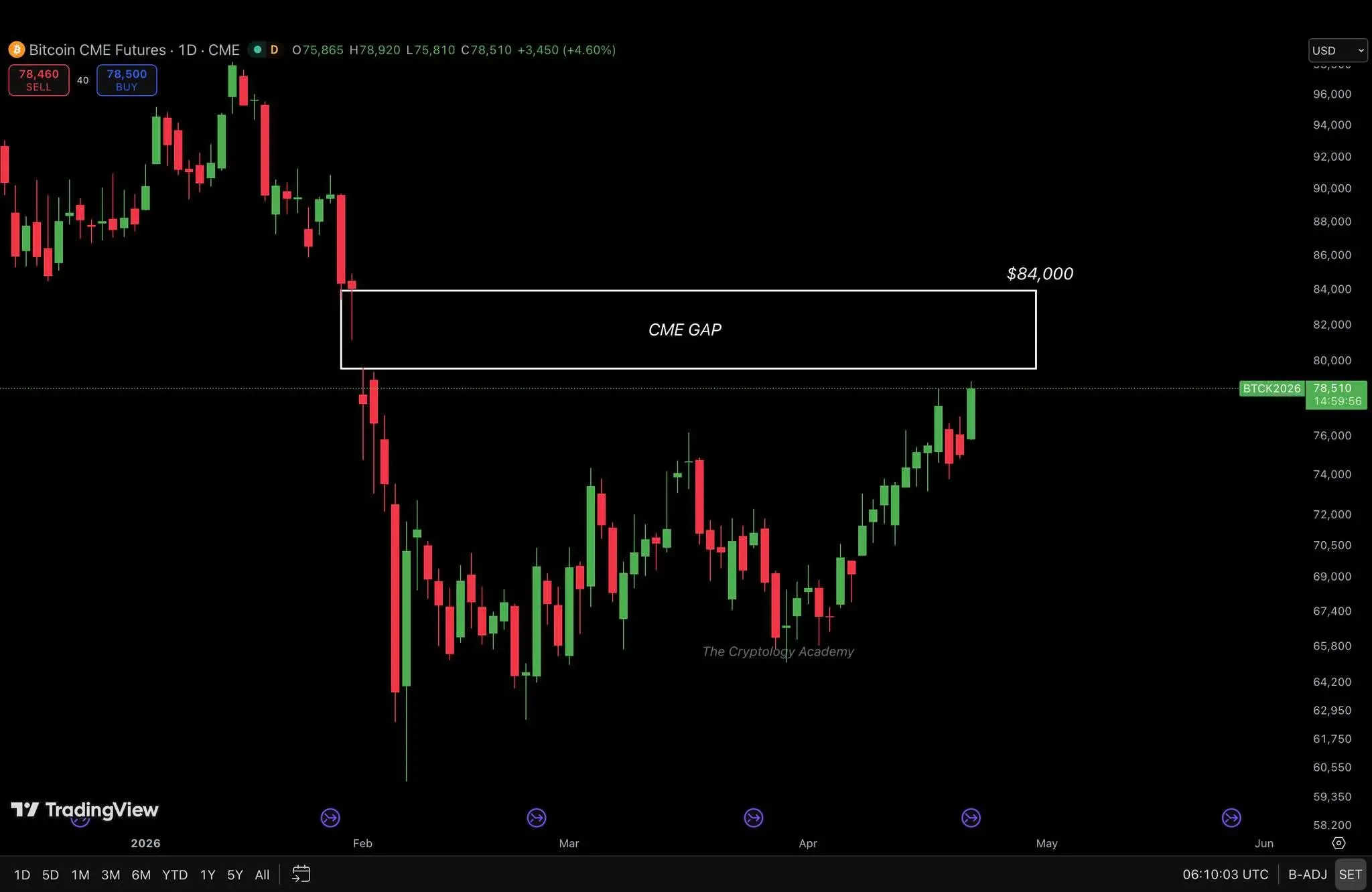
BITCOIN has reclaimed the $78,450 level, its highest in two months.
Looking at CME futures, there is still a huge open gap at $84,000 that has remained unfilled since January.
Price is now expected to potentially move higher to close this gap soon. Around $5 BILLION worth of short positions is at risk of liquidaton if the price hits this levels.
#bitcoin #crypto
BTC2,16%
post-image
  • Reward
  • Comment
  • Repost
  • Share
📊 Saylor Doubles Down: Strategy’s Massive Bitcoin Accumulation Reshapes the Market | 2026
#SaylorReleasesBitcoinTrackerUpdate
The latest update from Michael Saylor has once again sent a strong signal across global markets: institutional conviction in Bitcoin is not slowing down—it’s accelerating.
In its April 2026 filing, MicroStrategy (now widely referred to as “Strategy”) revealed a massive acquisition of 34,164 BTC worth $2.54 billion, pushing its total holdings to an astonishing 815,061 BTC.
This is not just another purchase.
This is a statement of dominance in the Bitcoin ecosystem.
---
BTC2,16%
  • Reward
  • 2
  • Repost
  • Share
BH_HELAL_44:
This is a great post.
View More
#BTCANALYSIS
#Bitcoin (BTC) Market Analysis — Structural Outlook, Liquidity Dynamics & Key Scenarios
Bitcoin is currently navigating a critical phase where market structure, liquidity conditions, and macro sentiment are interacting to define its next directional move. After a period of strong volatility cycles, BTC is showing signs of consolidation rather than clear trend continuation, suggesting that participants are waiting for a decisive catalyst before committing to larger directional exposure.
At the core of the current structure, Bitcoin is trading within a broad range where both accumu
BTC2,16%
BlackRiderCryptoLord
#BTCANALYSIS
#Bitcoin (BTC) Market Analysis — Structural Outlook, Liquidity Dynamics & Key Scenarios
Bitcoin is currently navigating a critical phase where market structure, liquidity conditions, and macro sentiment are interacting to define its next directional move. After a period of strong volatility cycles, BTC is showing signs of consolidation rather than clear trend continuation, suggesting that participants are waiting for a decisive catalyst before committing to larger directional exposure.
At the core of the current structure, Bitcoin is trading within a broad range where both accumulation and distribution behaviors are visible. On higher timeframes, the market still reflects a long-term bullish structure, supported by institutional participation, ETF-driven inflows, and expanding global adoption narratives. However, short-term price action is increasingly reactive, driven by liquidity grabs and leverage resets across derivatives markets.
Market Structure Overview BTC continues to respect major support zones established during prior accumulation phases. These regions are repeatedly tested, indicating strong buyer interest, but also revealing absorption of selling pressure rather than clean breakout momentum. Resistance zones above current price levels remain equally important, as multiple rejection events suggest profit-taking and liquidity distribution by larger participants.
The market is essentially trapped between liquidity clusters:
Lower range liquidity: stop-loss accumulation and long-term accumulation interest
Upper range liquidity: leveraged shorts and profit-taking zones
This compression often precedes expansion, but direction depends on which liquidity side is consumed first.
Derivatives & Leverage Conditions Funding rates and open interest behavior indicate a cautious environment. Excessive leverage has been periodically flushed out, reducing systemic risk but also limiting aggressive upside momentum. Each liquidation event has reset positioning, creating temporary stability but not yet establishing a strong trend continuation phase.
Options market positioning also suggests uncertainty, with traders hedging both downside risk and breakout potential. This dual hedging behavior typically reflects anticipation of volatility expansion rather than directional conviction.
On-Chain & Institutional Behavior On-chain metrics continue to show long-term holders maintaining dominant supply control, with limited distribution from high-conviction wallets. Meanwhile, exchange reserves remain relatively stable, indicating no aggressive sell-side panic.
Institutional flows remain a key variable. Periodic inflows support structural demand, but they are not yet consistent enough to trigger sustained parabolic continuation. This creates a scenario where BTC is fundamentally supported but not aggressively bid in the short term.
Macro Environment Influence Bitcoin remains highly sensitive to macro liquidity conditions, particularly interest rate expectations, dollar strength, and risk-on sentiment across equities. Any shift toward liquidity expansion environments historically benefits BTC, while tightening phases suppress breakout momentum.
Correlation with risk assets remains moderate, meaning BTC is still acting as a hybrid asset—part macro hedge, part risk-on growth instrument.
Key Scenarios Ahead
Bullish Expansion Scenario If BTC breaks above the upper liquidity band with volume confirmation, the market could enter a momentum-driven expansion phase. This would likely trigger short liquidations and attract sidelined capital, accelerating trend continuation.
Bearish Liquidity Sweep Failure to hold current support zones could result in a liquidity sweep toward lower accumulation regions. This would not necessarily invalidate the broader bullish structure but would reset positioning and delay upside continuation.
Extended Range Formation The most likely short-term scenario remains continued range-bound behavior, where BTC oscillates between defined liquidity zones while building energy for a larger directional move.
Conclusion Bitcoin is currently in a compression phase within a larger macro bullish structure. The market is not broken, but it is also not trending aggressively. Instead, it is transitioning between liquidity cycles where leverage is being cleaned and positioning is being rebuilt.
The next major move will likely be driven not by gradual momentum, but by a liquidity event that forces directional conviction into the market.
#BTC #Bitcoin
repost-content-media
  • Reward
  • Comment
  • Repost
  • Share
#CryptoMarketsDipSlightly
The cryptocurrency market is currently experiencing a controlled and relatively modest pullback, reflecting a natural phase within a broader structural cycle rather than a breakdown in trend. This dip is not being driven by a single dominant catalyst; instead, it is the result of a convergence of short-term profit-taking, localized liquidity shifts, macro uncertainty, and cautious positioning by both retail and institutional participants.
At the surface level, the decline appears minor, but beneath that surface lies a more complex interaction of capital rotation, der
BTC2,16%
BlackRiderCryptoLord
#CryptoMarketsDipSlightly
The cryptocurrency market is currently experiencing a controlled and relatively modest pullback, reflecting a natural phase within a broader structural cycle rather than a breakdown in trend. This dip is not being driven by a single dominant catalyst; instead, it is the result of a convergence of short-term profit-taking, localized liquidity shifts, macro uncertainty, and cautious positioning by both retail and institutional participants.
At the surface level, the decline appears minor, but beneath that surface lies a more complex interaction of capital rotation, derivatives positioning, and sentiment recalibration. Markets do not move in straight lines, and periods of slight downside pressure are often necessary to reset leverage, rebuild demand zones, and establish stronger foundations for future continuation.
From a structural perspective, the current dip aligns with a typical post-expansion cooldown phase. After periods of upward momentum, especially in high-beta environments like crypto, traders begin to secure profits while new participants hesitate to enter at elevated levels. This creates temporary imbalance where selling pressure slightly outweighs immediate demand, leading to controlled downside movement rather than aggressive liquidation.
Liquidity dynamics remain central to understanding this behavior. Capital has not exited the market in a meaningful way; rather, it is rotating. Funds are moving between major assets, altcoins, and stable positions as participants reassess risk exposure. Bitcoin continues to act as the primary liquidity anchor, while altcoins show more sensitivity to these rotations, often amplifying minor dips into more visible corrections.
Derivatives data further supports the idea of a healthy reset rather than a bearish shift. Funding rates have begun to normalize after periods of elevated long positioning, and open interest shows signs of stabilization. This indicates that excessive leverage is being flushed out gradually instead of triggering cascading liquidations. Such conditions are typically constructive for market sustainability, as they reduce fragility and create a more balanced environment for future moves.
Macro conditions also play a subtle but important role. Global financial markets are currently navigating uncertainty related to inflation expectations, interest rate outlooks, and geopolitical developments. While these factors have not caused panic, they contribute to a cautious tone across risk assets. Crypto, being a liquidity-sensitive market, reflects this caution through reduced momentum and slight retracements rather than extreme volatility.
Another key factor is psychological positioning. After extended bullish phases, market participants become increasingly sensitive to downside movement, even when it is minor. This heightened awareness can amplify perceived risk, leading to defensive behavior such as partial exits or reduced position sizes. However, this does not necessarily indicate a loss of confidence in the broader trend—it often signals a transition from aggressive accumulation to more strategic positioning.
On-chain metrics continue to show relative stability. Network activity, wallet growth, and overall participation levels do not suggest a major contraction. Instead, they reflect steady engagement, reinforcing the idea that the current dip is more technical than fundamental. Exchange flows also indicate a balance between inflows and outflows, with no significant signs of panic-driven selling.
Institutional behavior remains particularly important in this phase. Large-scale participants typically use dips as opportunities to accumulate rather than exit. Their presence in the market contributes to downside absorption, preventing sharp declines and maintaining structural integrity. This creates an environment where price may drift lower temporarily but finds support before entering deeper correction territory.
From a market structure standpoint, key support levels are being tested rather than broken. This distinction is critical. Testing support allows markets to validate demand and establish stronger bases, whereas breaking support would signal a shift in trend. So far, the behavior leans toward validation rather than failure, suggesting that the broader market framework remains intact.
It is also important to recognize that not all segments of the crypto market are reacting equally. Major assets tend to show resilience due to deeper liquidity and institutional backing, while smaller-cap assets may experience sharper fluctuations due to thinner order books and higher speculative exposure. This divergence highlights the importance of selective positioning and risk management during periods of mild downturn.
Looking ahead, the continuation or reversal of this dip will largely depend on liquidity conditions and macro clarity. If capital remains active and confidence stabilizes, the market is likely to transition from this cooldown phase into another period of consolidation or gradual recovery. However, if uncertainty increases or liquidity tightens, the dip could extend into a more pronounced correction.
The key takeaway is that slight dips are an inherent and necessary component of healthy market cycles. They provide opportunities for rebalancing, reduce excessive leverage, and allow stronger hands to accumulate positions. Interpreting them as immediate signs of weakness can lead to misjudgment, while understanding their role within the broader structure enables more informed decision-making.
In conclusion, the current market dip reflects a phase of recalibration rather than deterioration. Liquidity remains present, institutional support continues to underpin price action, and structural levels are holding. While short-term sentiment may appear cautious, the underlying framework suggests stability rather than instability. The market is not retreating—it is adjusting, preparing, and positioning for its next phase of movement.
#CryptoMarketsDipSlightly #Bitcoin
repost-content-media
  • Reward
  • Comment
  • Repost
  • Share
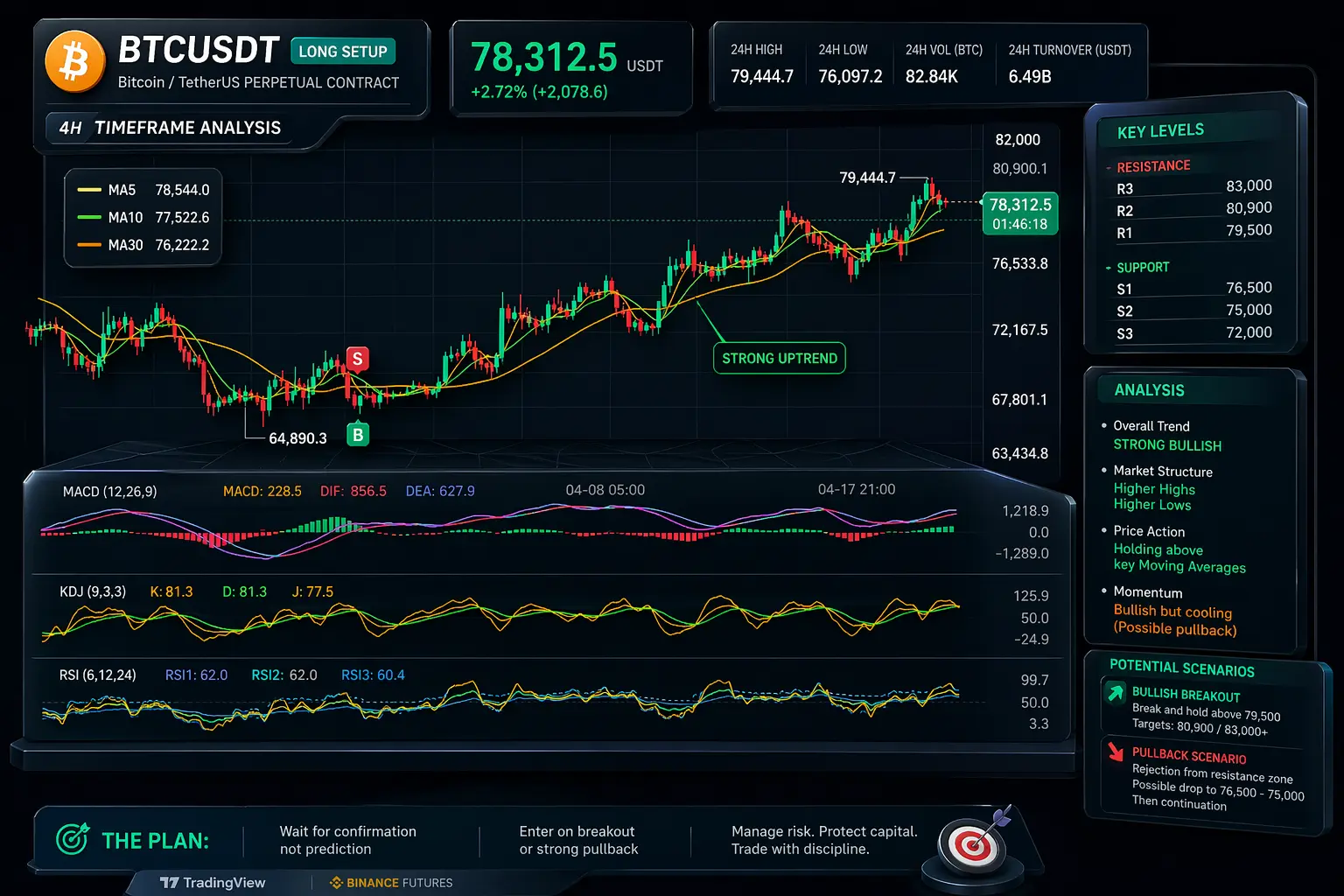
BREAKING: Bitcoin surges past $77,000, clearing a key round-number level; if the move holds, it could signal renewed short-term upside pressure and draw fresh buyers for $BTC ‌ as traders reassess risk #Bitcoin #Gate13thAnniversaryLive
BTC2,16%
post-image
post-image
  • Reward
  • Comment
  • Repost
  • Share
Oil spikes as Iran stays silent on talks, fueling geopolitical tension and pushing markets into risk-off mode. With uncertainty rising, crypto could face short-term pressure as liquidity tightens and traders rotate out of risk assets. Volatility ahead ⚠️
#Crypto #Bitcoin #OilPrices #Macro #RiskOff
BTC2,16%
  • Reward
  • Comment
  • Repost
  • Share
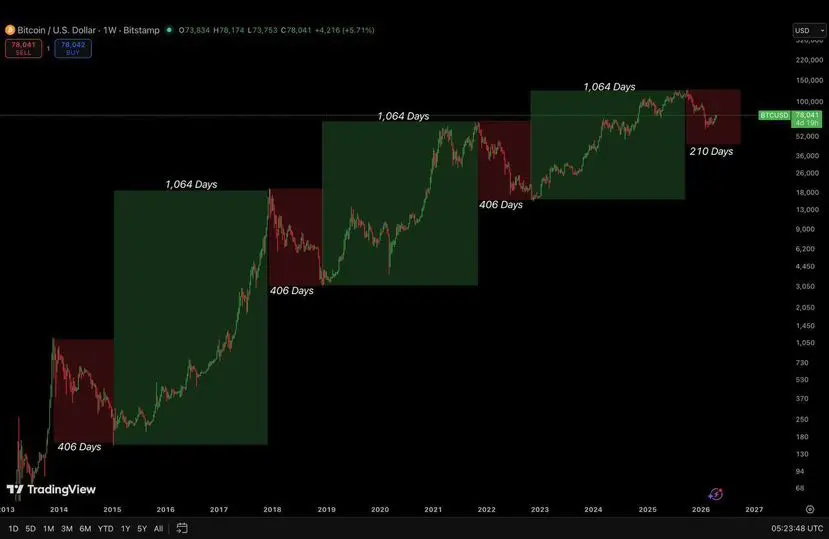
🚨 BITCOIN DEFIES THE NOISE 🚨
#BitcoinBouncesBack
While global headlines remain tense, the market is telling a very different story…
Bitcoin just reclaimed $76K+ — and this doesn’t look like a simple bounce.
It looks like positioning.
🌍 Controlled Chaos = Opportunity?
US–Iran tensions haven’t escalated into crisis… but they haven’t eased either.
This “in-between zone” is where smart money usually moves — and right now, it’s flowing into BTC.
📊 What’s really happening under the surface?
• Dollar & bond volatility → capital rotation into crypto
• ETF inflows quietly building momentum
• BTC ac
BTC2,16%
post-image
  • Reward
  • 1
  • Repost
  • Share
ybaser:
2026 GOGOGO 👊
Uploaded image
Explain the topic deeply with explanation
The statement is pointing to a very important dynamic in the crypto market: institutional accumulation, and why it often signals a potential market bottom—but not always immediately.
Let’s break it down in a deeper, more realistic way.
🏦 What it means when institutions are “still buying”
When firms like Morgan Stanley and BlackRock accumulate Bitcoin, they are not trading like retail investors. They operate with:
Long-term time horizons (years, not weeks)
Deep research teams
Access to macroeconomic data and liquidity flows
So when they
BTC2,16%
post-image
  • Reward
  • 4
  • Repost
  • Share
ShainingMoon:
To The Moon 🌕
View More
Load More