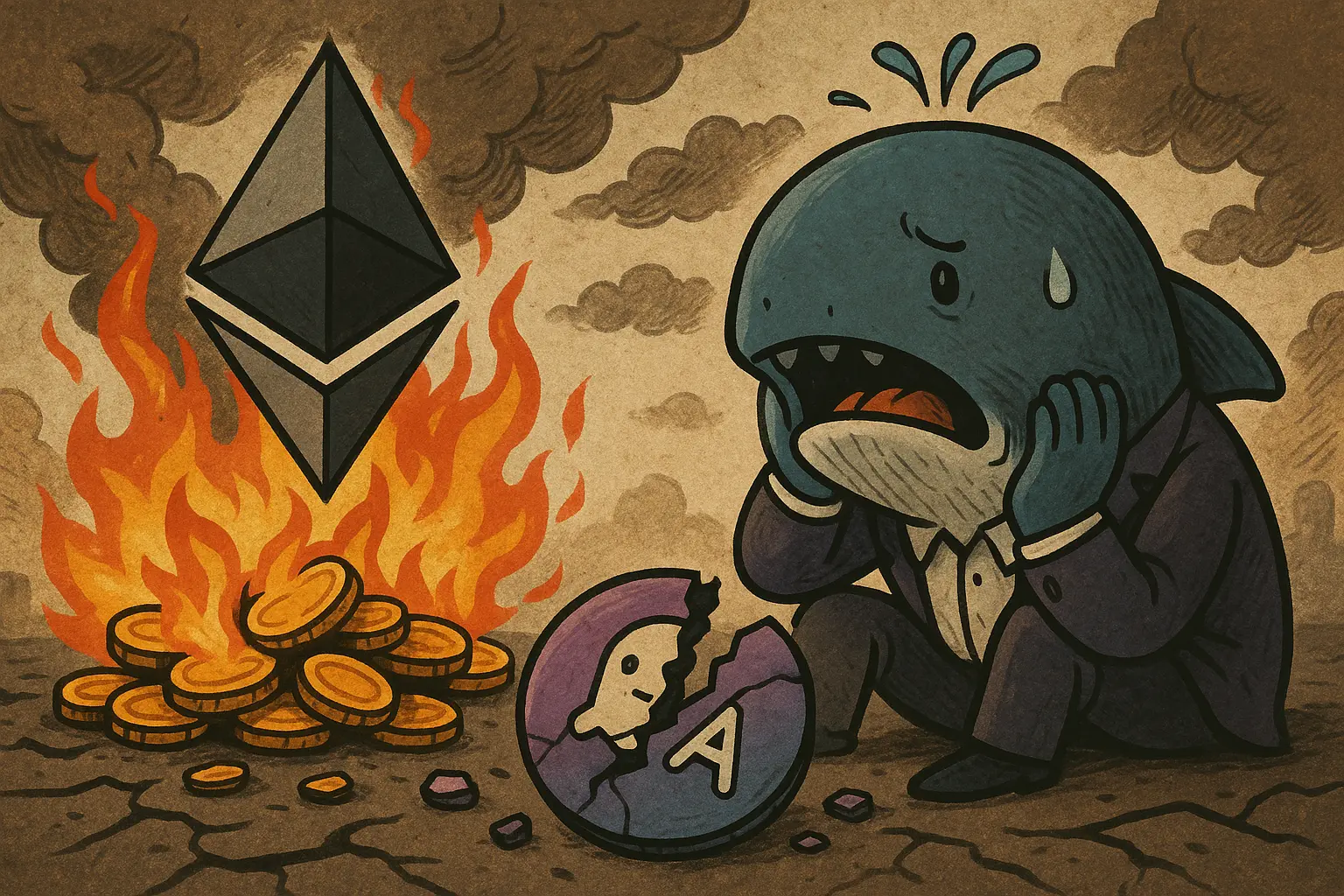
A whale trader executed one of the most catastrophic on-chain token swaps in recent memory, converting approximately 50 million USD worth of assets into only 327 AAVE tokens, which at market price is about 36,000 USD. The transaction involved first borrowing USDT from the Aave lending protocol, then swapping it via the decentralized liquidity aggregation platform CoW Protocol, resulting in a loss of over 99.9% of the funds.
Event Reconstruction: From aEthUSDT Redemption to CoW Protocol Routing in a Two-Step Tragedy
According to on-chain data, this disastrous transaction can be broken down into two critical steps:
Step 1: Properly executed redemption. The whale wallet first burned about 50.43 million aEthUSDT — the interest-bearing version of USDT within the Aave protocol. After depositing USDT, it receives the corresponding aToken as a deposit receipt. Burning aEthUSDT allows the user to redeem an equivalent amount of regular USDT. This step was executed normally, successfully retrieving the USDT.
Step 2: The problem arose during the CoW Protocol routing. The redeemed USDT was then directed into CoW Protocol for swapping. CoW Protocol is designed to aggregate liquidity across decentralized exchanges (DEXs) and find the optimal trading routes for users. However, after execution, the wallet only received 327 AAVE tokens, worth about 36,000 USD at market price, a staggering discrepancy compared to the input of 50 million USD in USDT.
Possible Technical Causes: Liquidity Traps or Operational Errors?
The exact cause remains unclear, but analysts have proposed several possible explanations:
Insufficient or Manipulated Liquidity Pools: The trader may have executed the swap in a liquidity pool with very low or manipulated liquidity, leading to extremely unfavorable pricing — large trades in shallow pools can be executed at prices far below market value, a known issue in DeFi called “price impact.”
Incorrect Transaction Routing or Configuration Errors: In complex DeFi operations involving multiple smart contracts, routing errors can occur. If slippage tolerance or routing parameters are misconfigured, the system might forcibly execute trades under highly unfavorable conditions.
Inherent Risks of Multi-Step Transactions: This transaction involved multiple stages—from redeeming from Aave to swapping via a DEX aggregator. The higher the complexity, the greater the risk that parameter errors at each stage could amplify losses.
Impact on the AAVE Market: 327 Tokens Are Insufficient to Shake the Market
Although the amount involved is notable, market observers suggest that this event is unlikely to significantly impact the AAVE token’s market trend. The entire transaction involved only 327 AAVE tokens, which is negligible relative to AAVE’s overall liquidity and market capitalization. It is insufficient to cause observable changes in market pricing or liquidity structure.
This incident mainly serves as a warning to large-scale DeFi traders: when executing substantial on-chain swaps, parameters such as routing choices, liquidity pool depth assessment, and slippage tolerance are critical to safeguarding funds.
Frequently Asked Questions
What is aEthUSDT, and how does it differ from regular USDT?
aEthUSDT is the interest-bearing version (aToken) of USDT within the Aave protocol. When users deposit USDT into Aave, they receive an equivalent amount of aEthUSDT as a deposit receipt, which accrues interest over time. Redeeming involves burning the aToken to get back the original USDT. The first step (redemption) in this event was executed normally.
What is CoW Protocol, and why is it considered a potential root cause?
CoW Protocol is a decentralized liquidity aggregation protocol that aims to provide optimal swap conditions by batching trades and routing across multiple DEXs. In this incident, the USDT to AAVE swap executed via CoW Protocol only returned 327 AAVE tokens. Possible reasons include routing through liquidity pools with very low liquidity or misconfiguration of routing parameters.
What impact does this catastrophic transaction have on the AAVE market?
The impact is minimal. The entire transaction involved only 327 AAVE tokens, a tiny fraction relative to AAVE’s total market cap and liquidity, insufficient to cause noticeable price movements. The main significance lies in highlighting the importance of routing choices and liquidity management in large DeFi transactions.
Disclaimer: The information on this page may come from third parties and does not represent the views or opinions of Gate. The content displayed on this page is for reference only and does not constitute any financial, investment, or legal advice. Gate does not guarantee the accuracy or completeness of the information and shall not be liable for any losses arising from the use of this information. Virtual asset investments carry high risks and are subject to significant price volatility. You may lose all of your invested principal. Please fully understand the relevant risks and make prudent decisions based on your own financial situation and risk tolerance. For details, please refer to
Disclaimer.


