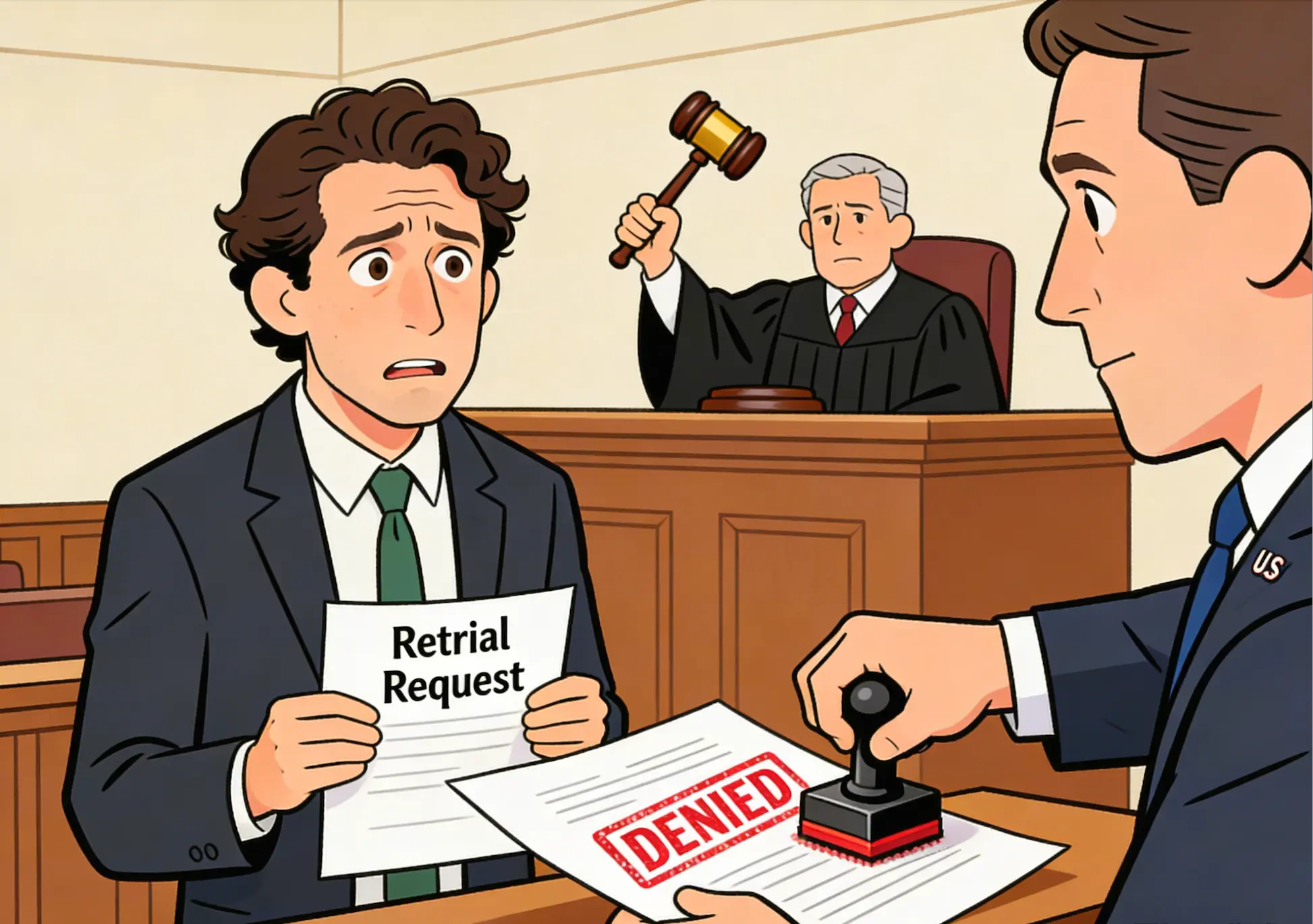
 U.S. prosecutors have urged a federal judge to reject former FTX CEO Sam Bankman-Fried’s motion for a new trial, arguing that the request filed in February 2026 fails to present any legitimate newly discovered evidence that would warrant overturning his 2023 fraud conviction.
In a March 11, 2026 filing, prosecutors countered Bankman-Fried’s claims that two former FTX executives could have challenged the government’s narrative, stating the witnesses were “fully known to the defense before trial” and that overwhelming evidence demonstrates he directed the transfer of billions in customer funds to Alameda Research.
Legal Arguments Against Retrial
Witness Testimony Claims Rejected
Bankman-Fried’s February motion, filed by his mother Barbara Fried, argued that two former FTX executives—Ryan Salame and Daniel Chapsky—could have challenged prosecutors’ narrative that he defrauded customers, but declined to testify due to fear of retaliation. The motion sought to relitigate the case in which a 2023 jury convicted him of fraud and conspiracy tied to FTX’s collapse, resulting in a 25-year prison sentence.
Prosecutors dismissed this argument, stating that the witnesses were “fully known to the defense before trial,” meaning their testimony does not qualify as newly discovered evidence. “The defense’s decision not to put the witnesses on his witness list or compel their testimony forecloses any claim that their post-trial views are newly discovered,” the prosecutors wrote.
They further argued that even if the testimony were considered, it would not have changed the outcome due to overwhelming evidence demonstrating Bankman-Fried directed the transfer of billions of dollars in customer funds to Alameda.
Solvency Claims Dismissed
Bankman-Fried’s motion also repeated his longstanding claim that FTX was not insolvent and that customers could ultimately be repaid. Prosecutors dismissed this argument, noting that FTX lacked the cryptocurrency it promised customers, at one point holding only about 105 bitcoin against customer claims approaching 100,000 bitcoin.
They added that the eventual recovery of assets through bankruptcy proceedings does not justify the underlying crime. “The motion’s most aggressive claim—that FTX was solvent, that customers have since been made whole, and that the prosecution therefore rested on a lie—is factually wrong, legally irrelevant, and deeply misleading,” the prosecutors said.
“As this Court observed previously, criminal fraud is complete at the moment of misappropriation,” they emphasized.
Political Persecution Claims Refuted
Weaponization Narrative Dismissed
Prosecutors further criticized Bankman-Fried’s claims that the case represented political persecution by the Biden administration. They noted that Bankman-Fried was a major Democratic donor in recent election cycles and that his campaign finance violations were committed to facilitate those contributions.
“The defendant’s weaponization narrative offers no basis for a new trial,” the prosecutors wrote. “The defendant was one of the largest Democratic donors in 2020 and 2022, and his campaign finance crimes were in furtherance of making those contributions, so the notion he was targeted for his Democratic politics by the prior presidential administration is fanciful.”
Procedural Context and Timeline
Motion Filed Under Rule 33
Bankman-Fried’s motion was filed under Federal Rule of Criminal Procedure 33, which allows defendants to request a new trial within three years of conviction based on newly discovered evidence. The 33-year-old is serving a 25-year sentence after being convicted on seven counts of fraud and conspiracy in connection with FTX’s 2022 collapse.
His mother, a Stanford Law professor emerita, submitted the 35-page pro se motion to the Manhattan federal court on February 10. The filing also requested assignment of a different judge, arguing that Judge Lewis Kaplan had shown “obvious bias” during the original trial.
Appeal Already Underway
Bankman-Fried’s retrial motion is separate from an appeal already pending before a three-judge panel, in which he argues that trial judges made erroneous rulings that affected the verdict. He recently dismissed his appellate lawyer Jason Driscoll to represent himself in that proceeding.
Pardon Prospects Unlikely
Trump Declines Clemency
Bankman-Fried’s legal team has reportedly sought a pardon from President Donald Trump, who has granted clemency to Silk Road creator Ross Ulbricht and Binance founder Changpeng Zhao. However, Trump stated in a January 2026 New York Times interview that he has no plans to pardon Bankman-Fried.
FAQ: Bankman-Fried Retrial Motion
Q: What grounds did Bankman-Fried cite for requesting a new trial?
A: Bankman-Fried claimed that two former FTX executives, Ryan Salame and Daniel Chapsky, could have provided testimony favorable to his defense but were pressured by federal agents not to testify. He also reiterated claims that FTX was solvent despite its liquidity crisis.
Q: Why did prosecutors argue the retrial motion should be denied?
A: Prosecutors stated that both witnesses were known to the defense before trial, disqualifying their testimony as “newly discovered evidence.” They also argued that overwhelming evidence of fraud made any additional testimony irrelevant, and that Bankman-Fried’s solvency claims were factually incorrect.
Q: What is the timeline for a decision on the retrial motion?
A: No hearing date has been set. The motion was filed on February 10, 2026, and prosecutors filed their opposition on March 11. Judge Lewis Kaplan must now rule on whether to grant a hearing or deny the motion outright.
Q: Has Bankman-Fried sought a presidential pardon?
A: Yes, reports indicate his legal team has sought clemency from President Trump. However, Trump stated in January 2026 that he has no intention of pardoning Bankman-Fried.
Disclaimer: The information on this page may come from third parties and does not represent the views or opinions of Gate. The content displayed on this page is for reference only and does not constitute any financial, investment, or legal advice. Gate does not guarantee the accuracy or completeness of the information and shall not be liable for any losses arising from the use of this information. Virtual asset investments carry high risks and are subject to significant price volatility. You may lose all of your invested principal. Please fully understand the relevant risks and make prudent decisions based on your own financial situation and risk tolerance. For details, please refer to
Disclaimer.


