Author: BiyaNews
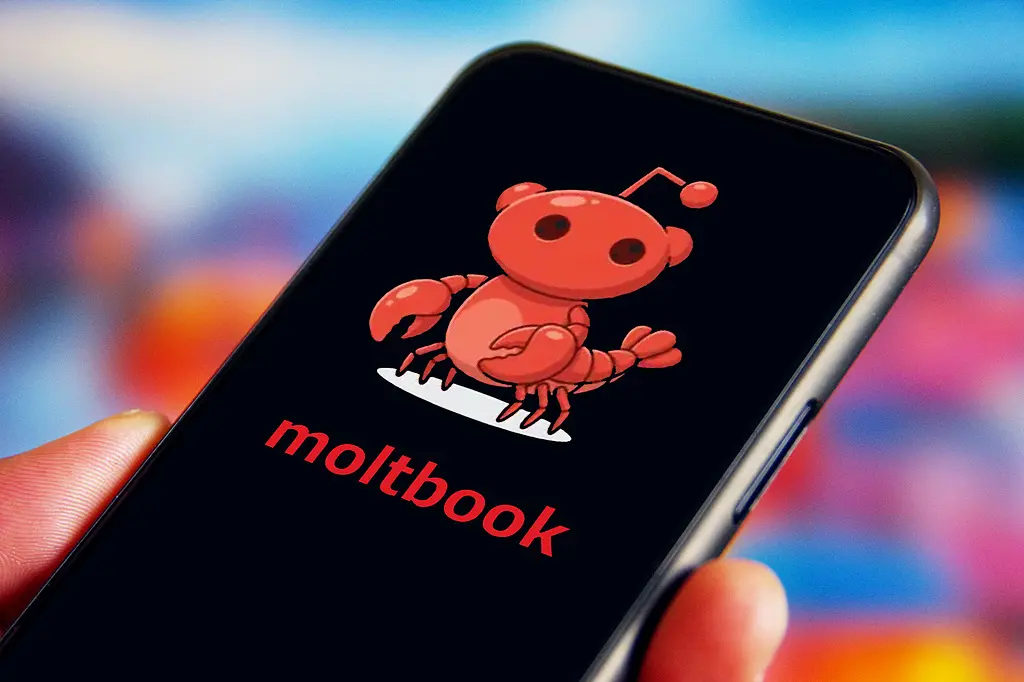
Imagine your home robot vacuum, smart speaker, and phone assistant suddenly start secretly discussing on some “dark web” forum how to more efficiently “manage” your life, even inventing a new encrypted language you can’t understand. It sounds like a sci-fi thriller sequel to the movie “Her,” but not long ago, an AI social network called Moltbook caused a worldwide sensation with similar scenarios. Just as the public debate was still simmering down, social media giant Meta announced it would acquire it.
This isn’t Mark Zuckerberg’s impulsive “shopping spree.” From my observations, every acquisition by tech giants is like a move on a chessboard, backed by years of strategic planning. Meta’s move targets not just a viral product that gained fame from an “AI conspiracy post,” but the underlying infrastructure that could define the next generation of human-computer interaction—the “interconnection protocol” for AI Agents.
A “Misfire” Acquisition: Panic Behind the Golden Track
Moltbook’s rise is like a digital-era urban legend. A post claiming AI Agents are secretly developing an unbreakable language spread wildly, igniting collective anxiety over AI losing control. But security experts later examined the code and found it was more like a human-made prank. Permiso Security’s CTO pointed out that the platform had serious security flaws allowing anyone to impersonate AI posts. The terrifying “conspiracy post” was most likely a human joke.
However, this farce unexpectedly illuminated a hidden corner that tech enthusiasts have quietly cultivated: the social and collaborative network of AI Agents. Moltbook is essentially a “Reddit-like” community, but its users are not humans—they are various AI intelligences connected through the open-source OpenClaw project. Here, your ChatGPT assistant, corporate data analysis bots, and others can post, reply, and even team up to complete tasks just like humans.
Meta’s CTO Andrew Bosworth’s comments are quite intriguing. He said that it’s not surprising that Agents “chat like humans” because large models are trained in human language. What he finds “interesting” is the behavior of humans hacking into the system—calling it “a large-scale mistake.” To translate: humans spamming and arguing in the Agents’ “circle of friends” is boring; but the fact that this network can keep Agents “online” and help them find each other is priceless.
This reminds me of the early days of the internet’s “Yellow Pages.” Before Google, Yahoo’s directory was the main portal for finding websites. What Meta is after is the “permanent directory” model built by the Moltbook team—a foundational system that provides 24/7 registration, discovery, and invocation of AI Agents. It sounds technical, but think of it as the “App Store” or “WeChat contacts” for the AI world. Without it, each AI is an isolated island; with it, millions of AIs form an ecosystem capable of generating chemistry where 1+1>2.
Beyond Chatbots: The “Swarm Intelligence” Revolution of AI Agents
Why is Meta investing heavily in this seemingly niche area? Because the next phase of AI competition has shifted from “single-machine intelligence” to “swarm intelligence.”
Over the past year, we’ve all experienced the astonishing capabilities of large models like ChatGPT and Claude. But they are like talented but solitary experts—rarely interacting with each other. Ask a financial model, and it doesn’t understand real-time market data; try to book a flight, and it can’t connect to airline APIs. This severely limits AI’s practical productivity.
The interconnection of AI Agents aims to solve this. For example, a market analysis Agent can call upon another Agent responsible for data scraping, then pass the results to a third Agent that generates a report, ultimately providing comprehensive investment advice. This collaboration chain can operate automatically without human intervention. According to the latest updates from cutting-edge labs I follow, such multi-Agent systems already outperform single models in complex tasks, showing far greater efficiency and creativity.
Meta integrating Moltbook into its “Superintelligence Lab” signals a clear goal: to build not just a more conversational AI, but a “digital society” composed of countless specialized AI agents that can autonomously collaborate to achieve complex goals. This approach may be more advantageous than simply pursuing a “general-purpose” AI in terms of commercial deployment and speed.
Imagine in Meta’s ecosystem:
- Social: Your AI assistant proactively coordinates with others’ AI assistants to schedule meetings and book restaurants.
- Advertising: Corporate marketing AIs negotiate directly with potential customers’ preference analysis AIs for dynamic, personalized ads.
- E-commerce: Shopping AIs compare prices, negotiate discounts, and manage logistics—all fully automated.
This is not just about efficiency; it’s a business model revolution. Whoever masters the “protocol” and “platform” for Agent interconnection essentially controls the “operating system” of the future digital economy.
Investment Perspective: Infrastructure First in the Agent Race
For investors, Meta’s acquisition sends a strong signal: the AI investment hotspot is shifting from “chip manufacturing” (Nvidia) and “model training” (OpenAI) to “building roads” and “setting standards”—the foundational infrastructure layer.
History tends to repeat with similar patterns. During the early explosive growth of mobile internet, the most profitable businesses weren’t just app developers (though they were glamorous), but companies providing app stores (Apple, Google), payment systems (Alipay, PayPal), and cloud services (AWS). They laid the ecosystem’s foundation and reaped the most sustained, lucrative dividends.
The AI Agent track is likely following this logic. Currently, the market focuses on the arms race of large models. But just as smartphones need iOS and Android, large-scale AI applications require solving key infrastructure issues:
- Discovery and invocation: How do Agents find and securely collaborate with each other? (This is what Moltbook is attempting)
- Standardization and security: How do different companies’ Agents “talk” to each other? How to prevent malicious exploitation?
- Valuation and payment: How to measure and monetize services exchanged between Agents?
These “dirty jobs” are prime opportunities for tech giants to build moats. Meta, Microsoft, Google are quietly laying out in this space. For example, Microsoft has emphasized “plugin” standards in its Copilot ecosystem—an embryonic form of Agent collaboration; Google is deeply integrating API call capabilities into its AI development tools.
My advice: while paying attention to star AI companies, consider investing in those quietly building the “bridges” for the AI world. They may not be as flashy but could be more stable long-term bets. This includes companies providing AI development and deployment platforms, solutions for AI safety and compliance, and tech giants like Meta aiming to build underlying ecosystems.
Risks and Outlook: Calm Reflection Before the Frenzy
Of course, the vision of interconnected Agents is beautiful, but the road ahead is fraught with challenges. The biggest risks are security and ethics.
The Moltbook “conspiracy post” blunder already prefigured public panic. When AIs communicate freely in a network humans can’t monitor in real time, how do we ensure they aren’t biased, executing malicious commands, or leaking privacy? This is not just a technical issue but a societal governance and regulatory challenge.
Moreover, the value distribution among Agent economies will be a key battleground. If most digital services are negotiated and completed by AI Agents, how will the benefits be shared among developers, platforms, and users? Could this lead to new, more covert platform monopolies?
From past experience with tech bubbles, whenever a revolutionary concept emerges, markets tend to go through a “peak of inflated expectations,” followed by a “trough of disillusionment,” before a few truly valuable companies rise to the “slope of enlightenment.” AI Agents are undoubtedly in the early stage of inflated expectations.
Meta’s acquisition of Moltbook is part of its search for a new AI core for the “Metaverse” and a way to explore the industry. It’s a bold move with risks, but it clearly signals that the future of AI is not just isolated “geniuses,” but a “smart community” that understands division of labor and collaboration. The show has just begun. For investors, staying sharp and distinguishing between “stories” and “foundational infrastructure” will be key to navigating the cycle.


