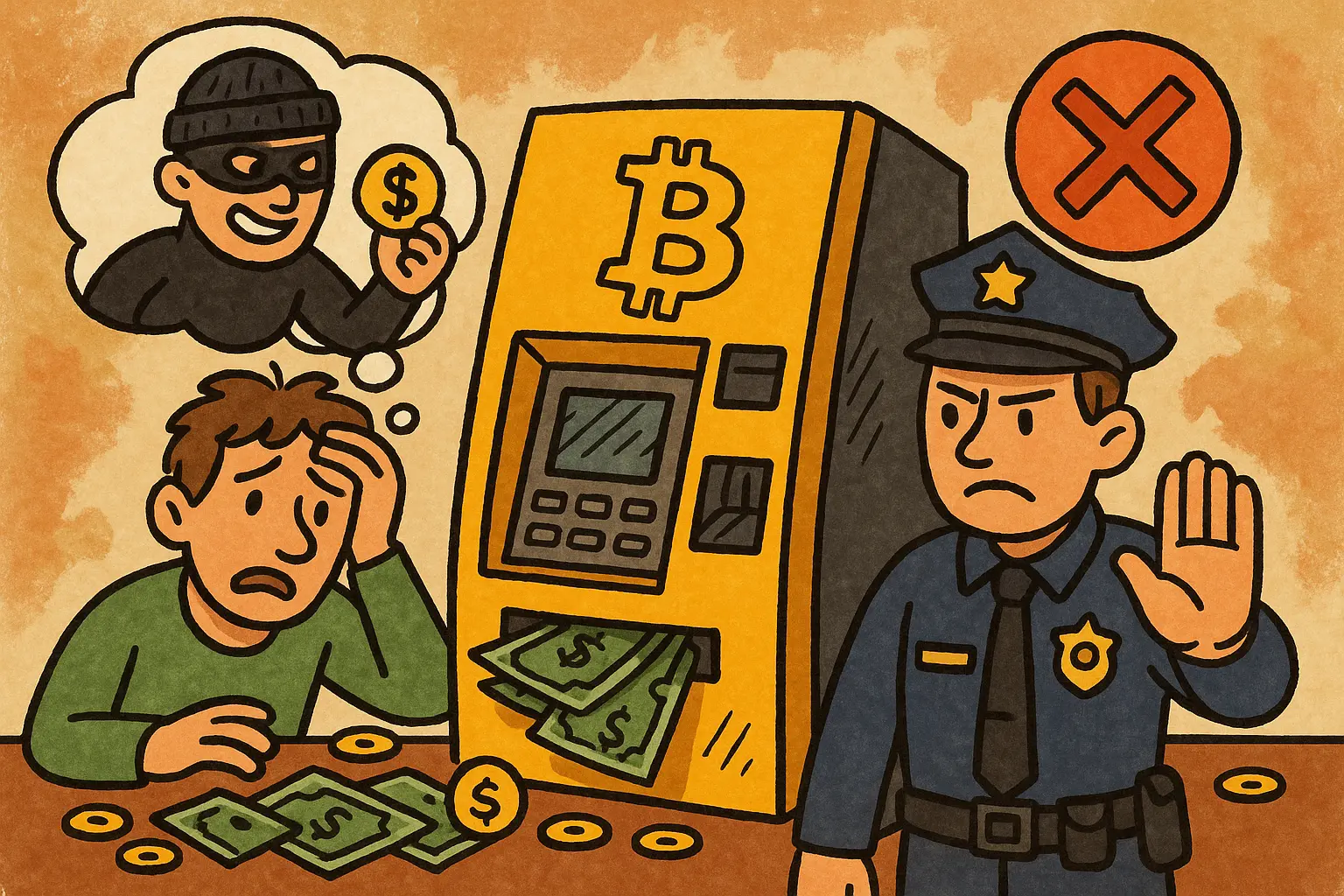
Minnesota lawmakers are considering a statewide ban on Bitcoin ATMs due to the rising number of scams and limited law enforcement effectiveness. According to FBI data, reported losses from cryptocurrency ATM scams in the U.S. exceeded $333 million last year. A legislative hearing is scheduled this week to discuss a bill that would prohibit virtual currency transactions at electronic self-service terminals, which has bipartisan support.
Current State and Regulatory Challenges of Crypto ATMs in Minnesota
Currently, Minnesota has about 350 licensed cryptocurrency ATMs located at gas stations and other retail stores. Nearly 20 states across the U.S. have established regulations for such devices. Minnesota introduced stricter rules in 2024, but law enforcement and consumer advocacy groups say scammers continue to find ways to bypass these laws.
Sartell Police Chief Brenden Silgjord stated that since installing Bitcoin ATMs, scammers have quickly used them to trick residents into giving up their savings. He admitted efforts to track these scams are nearly futile: “We can’t recover the funds in any way, nor can we identify a reasonable suspect to track.” He further noted that even when they trace the flow of funds, they are often transferred multiple times to overseas digital wallets.
Scam Tactics and Victim Cases: Typical Patterns Recorded by AARP
Thomas Ernes, Advocacy Manager for AARP Minnesota, pointed out that scammers often use urgent verbal threats to force victims—especially seniors—to quickly deposit large sums into Bitcoin ATMs:
- Family Emergency Scam: “Your grandson was in a car accident and needs money urgently.”
- Utility Threats: “The city department says if you don’t pay within an hour, your water and electricity will be shut off.”
- Government Impersonation: Fake tax or law enforcement agencies threaten serious legal consequences if payments are not made immediately.
AARP reports that a grandfather in St. Paul recently lost nearly $9,000 to such scams. Ernes emphasized that AARP is not opposed to cryptocurrency itself but aims to promote common-sense protections and supports the latest ban proposal.
Industry Opposition: Can a Ban Truly Solve the Scam Problem?
An executive from a major crypto ATM operator testified against the ban at the hearing, arguing that a complete prohibition won’t fundamentally eliminate scams, as scammers will shift to other tools and channels.
Some legislators are also cautious, preferring to hear more about prevention measures and technical solutions from the industry before passing a ban. This disagreement reflects a broader policy debate: should the problem of tool misuse be addressed through outright bans or through stricter regulation, transaction limits, and real-time alert systems to reduce risks?
Frequently Asked Questions
Why is Minnesota considering a total ban on Bitcoin ATMs?
Minnesota has about 350 licensed crypto ATMs, but scammers continue to exploit these machines to carry out high-pressure verbal scams, especially targeting seniors. Despite stricter regulations introduced in 2024, scam cases have not significantly decreased, prompting lawmakers to consider a full ban.
Why is law enforcement struggling to track crypto ATM scam cases?
Funds deposited into Bitcoin ATMs are often quickly transferred to multiple overseas digital wallets, making the flow nearly impossible to trace. FBI data shows that last year, scams involving crypto ATMs caused over $333 million in reported losses, with very low recovery rates.
What is the industry’s stance on Minnesota’s Bitcoin ATM ban?
At least one major crypto ATM operator opposes the ban, believing it cannot fundamentally eliminate scams, as scammers will turn to other methods. Some legislators also advocate evaluating more targeted technical safeguards, such as enhanced transaction monitoring and mandatory warning systems, before implementing a ban.
Disclaimer: The information on this page may come from third parties and does not represent the views or opinions of Gate. The content displayed on this page is for reference only and does not constitute any financial, investment, or legal advice. Gate does not guarantee the accuracy or completeness of the information and shall not be liable for any losses arising from the use of this information. Virtual asset investments carry high risks and are subject to significant price volatility. You may lose all of your invested principal. Please fully understand the relevant risks and make prudent decisions based on your own financial situation and risk tolerance. For details, please refer to
Disclaimer.


