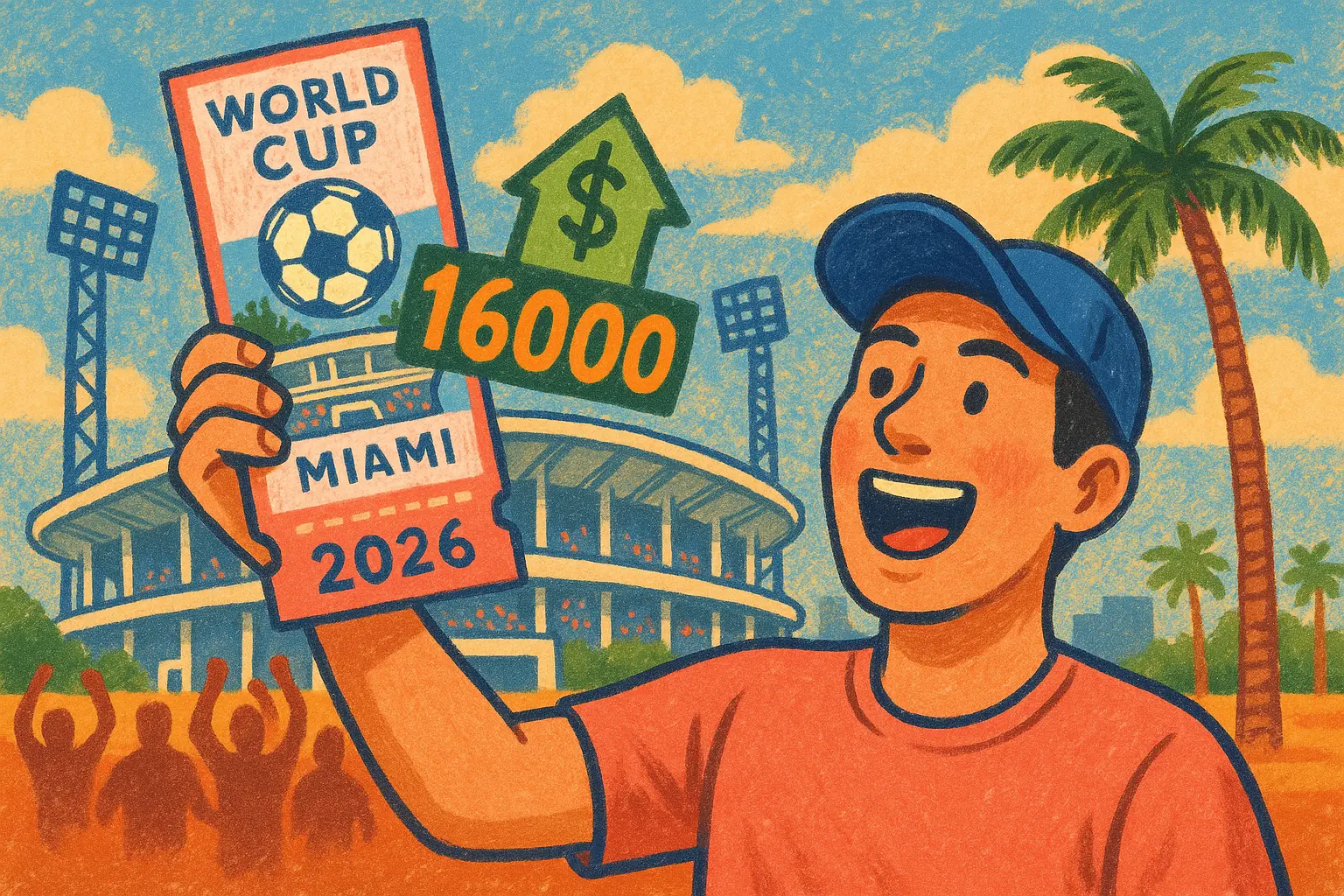
The 2026 FIFA World Cup is scheduled to take place from June to July 2026, across North America, with Miami being one of the key host cities. FIFA estimates that over 500 million people worldwide are interested in attending in person, but the actual ticket supply is far insufficient to meet this demand. Currently, second-hand market ticket prices for the first match at Miami’s Hard Rock Stadium range from about $600 to $16,000.
Miami World Cup Ticket Status: Official April Re-Release and Second-Hand Market Heating Up
Some official tickets have been sold in early sales, but demand continues to outstrip supply. FIFA has confirmed that tickets will be available again in April on a first-come, first-served basis. Ben Kruger, Chief Marketing Officer of the online resale platform Event Tickets Center, states that after each official ticket sale, the secondary market usually experiences rapid explosive growth: “Those who didn’t buy tickets start looking for all kinds of ways to get them.”
Fans purchasing directly from FIFA typically pay only face value, which is much lower than second-hand prices. However, each official sale often sells out quickly, making the resale market the only option for many fans.
Safety Tips for Buying Tickets on the Secondary Market: Recognizing Red Flags and Payment Methods
Ben Kruger offers practical safety advice for consumers considering buying tickets through resale platforms:
Kruger especially warns about payment methods: “If someone asks you to pay via Zelle, Venmo, or cryptocurrency, that’s a clear red flag.” It’s recommended to prioritize credit card payments, as they usually offer dispute protection. Peer-to-peer transfers (P2P) or cryptocurrency payments, if scammed, are almost impossible to recover.
FIFA Official App: Transfer Mechanism and Ticket Arrival Timeline
FIFA has implemented a counterfeit-proof transfer system. All tickets not purchased directly through the FIFA official app must be transferred to the app before fans enter the stadium. This means tickets bought from legitimate resale platforms will ultimately be delivered through FIFA’s built-in transfer system within the official app.
Regarding the timeline, FIFA states that seat assignments will be finalized by May 2026. Some fans may see seat numbers and barcodes earlier within the app, but full tickets are usually only available 24 to 48 hours before kickoff. Kruger reminds buyers: “If you bought your ticket today, you might want to know where it is—that’s part of the process.”
Frequently Asked Questions
How can I obtain official tickets for the 2026 Miami World Cup?
FIFA plans to reopen ticket sales in April 2026 on a first-come, first-served basis, providing a main opportunity for fans who missed earlier sales. Official tickets are typically priced much lower than second-hand market prices. It’s recommended to purchase through FIFA’s official app or website.
Why shouldn’t I pay with cryptocurrency when buying resale tickets for the 2026 World Cup?
Ben Kruger clearly states that requests to pay via Zelle, Venmo, or cryptocurrencies are common red flags for scams. These payment methods offer little recourse in case of disputes and lack dispute protection mechanisms. It’s safer to use a credit card to retain the ability to dispute charges if needed.
How do tickets purchased through legitimate resale platforms reach me?
FIFA requires all tickets bought through unofficial channels to be transferred to the FIFA official app before entry. Tickets purchased on authorized resale platforms will be delivered via FIFA’s built-in transfer system within the app, usually 24 to 48 hours before kickoff, and full details may not be immediately visible.
Disclaimer: The information on this page may come from third parties and does not represent the views or opinions of Gate. The content displayed on this page is for reference only and does not constitute any financial, investment, or legal advice. Gate does not guarantee the accuracy or completeness of the information and shall not be liable for any losses arising from the use of this information. Virtual asset investments carry high risks and are subject to significant price volatility. You may lose all of your invested principal. Please fully understand the relevant risks and make prudent decisions based on your own financial situation and risk tolerance. For details, please refer to
Disclaimer.


