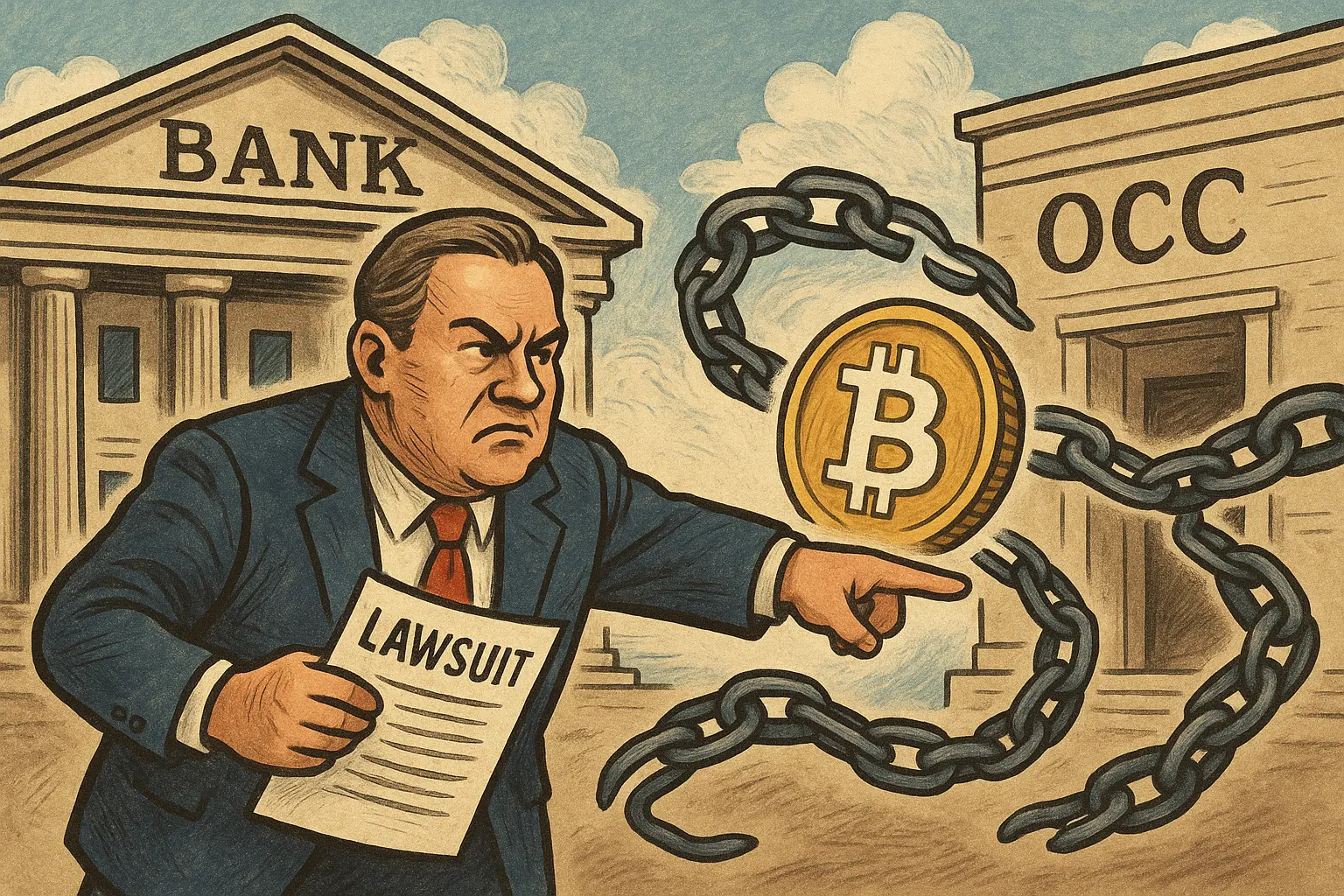
The Banking Policy Institute (BPI) is evaluating whether to file a lawsuit against the Office of the Comptroller of the Currency (OCC), arguing that OCC’s granting of national trust bank charters to cryptocurrency and fintech companies constitutes an overreach—“reinterpreting federal licensing rules” and “failing to heed multiple warnings.” BPI’s board members include JPMorgan Chase CEO Jamie Dimon, Goldman Sachs CEO David Solomon, and others.
Legal Arguments in the Banking Industry: Are Charters Equivalent to Regulatory Exemptions?
At the core of BPI and its allies’ argument is a question of regulatory fairness: granting nationwide trust charters to crypto companies is tantamount to official recognition by the federal government, yet these companies are not required to comply with the strict capital adequacy and compliance standards that traditional banks must follow.
In February of this year, the American Bankers Association (ABA) issued a public comment letter urging the OCC to suspend approval of crypto companies’ charters lacking deposit insurance until the OCC confirms that its resolution and receivership tools are sufficient to handle uninsured national banks. Opposition also comes from:
State banking regulators: representing all 50 states, arguing that federal charters could bypass state-level regulatory frameworks.
The Independent Community Bankers of America: representing over 5,000 small lending institutions, concerned about unfair competition and systemic risk accumulation.
Early warnings from BPI: in October last year, BPI urged the OCC to reject applications from Circle and Ripple, warning that such actions could “blur the legal boundaries of banking.”
OCC’s Approval Process: Which Crypto Companies Have Been Licensed?
Despite ongoing opposition, on December 12, 2025, the OCC conditionally approved five companies in a single batch—marking the first time multiple crypto-native firms were granted conditional charters simultaneously:
Ripple: Cross-border payments and digital asset company
Circle: Issuer of USDC stablecoin
BitGo: Institutional digital asset custody platform
Fidelity Digital Assets: Fidelity’s digital asset division
Paxos: Stablecoin and tokenized asset service provider
Further developments continued: Crypto.com received conditional approval on February 23 to offer custody and staking services; Revolut changed its strategy on March 5, abandoning plans to acquire a US lending institution and instead applying directly to the OCC and the Federal Deposit Insurance Corporation (FDIC) for a new banking license.
WLFI Controversy: Trump Family-Linked Company Sparks Congressional Inquiry
Beyond individual applications, the trust license application from World Liberty Financial (WLFI) has become particularly sensitive. This company, associated with the Trump family, announced in January that its subsidiary WLTC Holdings LLC had submitted an application for a national trust bank charter, planning to issue and custody a stablecoin with a circulating supply exceeding $3.3 billion USD.
Democratic Congressman Gregory Meeks and others immediately questioned the OCC’s review process, pressuring Treasury Secretary Scott Bessent to clarify what safeguards are in place to ensure that OCC’s licensing procedures are not subject to political interference or foreign influence. They cited reports that WLFI has received foreign investments.
Frequently Asked Questions
Q: Why does BPI believe OCC’s crypto trust charters are illegal?
A: BPI argues that OCC’s granting of national trust charters to crypto companies effectively reinterprets federal banking licensing rules without authorization, allowing these companies to enjoy federal recognition without meeting the same capital and compliance requirements as traditional banks, creating regulatory arbitrage and unfair competition.
Q: What is the difference between OCC’s trust charters and full-service bank charters?
A: Trust bank charters permit licensees to engage in custody and asset management services but generally do not allow accepting public deposits, and thus do not require FDIC deposit insurance. The core criticism from the banking industry is that, without deposit insurance but with legal authority to operate at the federal level, these companies gain a low-cost entry into the financial regulatory system—seen as providing crypto firms with an unfair advantage.
Q: What could be the impact if BPI sues the OCC?
A: If BPI files a lawsuit, courts may review whether OCC exceeded its statutory authority in broadening the definition of trust charters, potentially halting new license issuances and creating uncertainty for companies like Ripple and Circle that have already received conditional approvals. It could also accelerate Congress’s efforts to establish clearer legislative frameworks to replace the current administrative interpretation-led regulatory approach.
Disclaimer: The information on this page may come from third parties and does not represent the views or opinions of Gate. The content displayed on this page is for reference only and does not constitute any financial, investment, or legal advice. Gate does not guarantee the accuracy or completeness of the information and shall not be liable for any losses arising from the use of this information. Virtual asset investments carry high risks and are subject to significant price volatility. You may lose all of your invested principal. Please fully understand the relevant risks and make prudent decisions based on your own financial situation and risk tolerance. For details, please refer to
Disclaimer.


