Recently, DeFi revenue trends have shown an increasing divergence between speculative sectors and credit-based protocols.
Total fees collected across the entire ecosystem have risen to $56 million in just 24 hours. However, this aggregate figure masks significant volatility among different sectors such as decentralized exchanges (DEX), NFTs, and GameFi.
In contrast, lending protocols maintain stable revenue due to sustainable borrowing demand. Aave (AAVE) recorded $1.62 million in daily revenue and reached $82.14 million over the past 30 days. At the same time, Aave’s total value locked (TVL) hit $32.4 billion, playing a key role in maintaining liquidity for major lending markets.
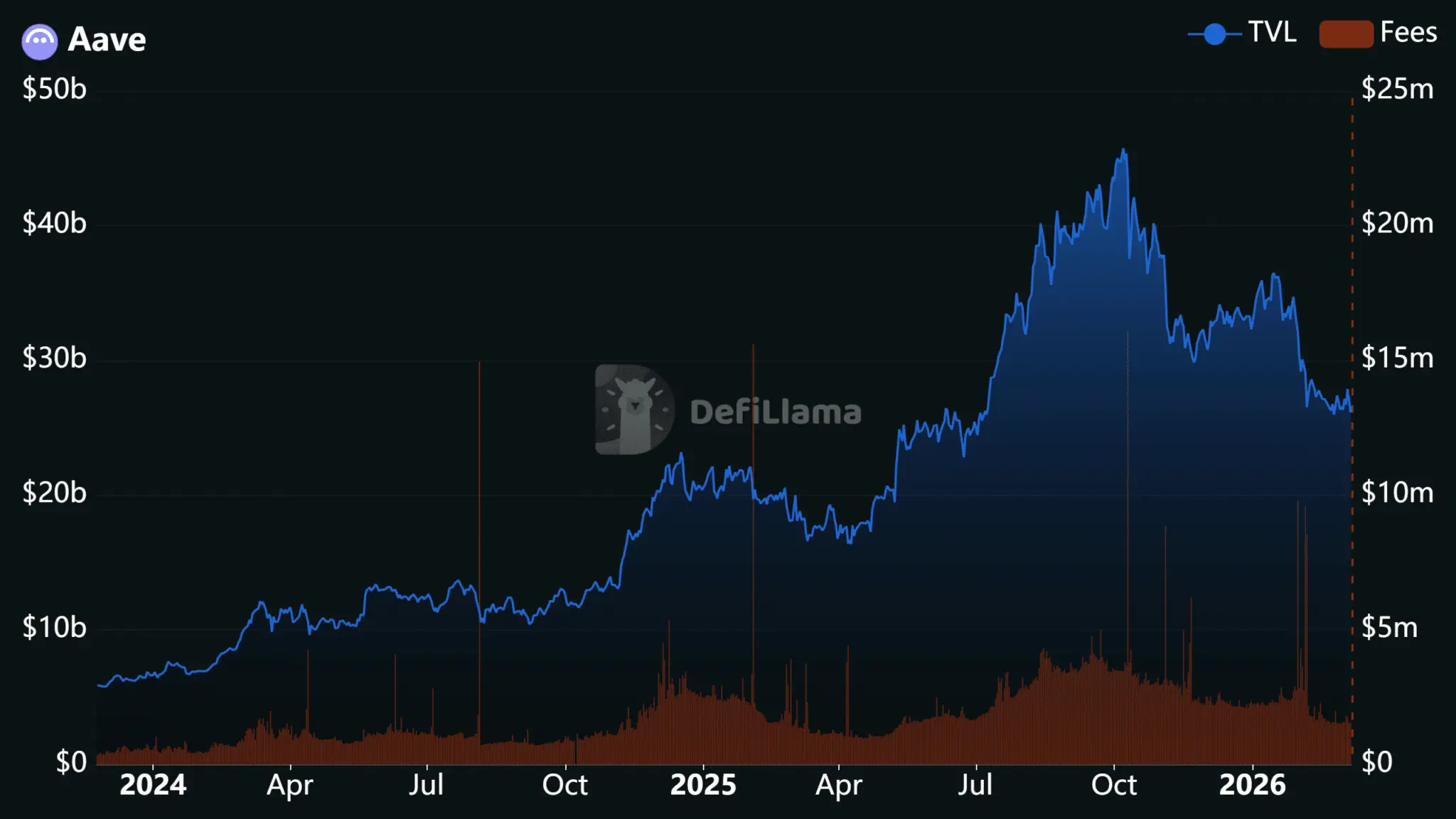 Source: DeFiLlamaMorpho continues to expand, with weekly revenue around $2.3 million and TVL reaching $7 billion. Meanwhile, Maple Finance has strengthened its position in the institutional lending space through real-world asset lending activities. These models focus primarily on capital efficiency rather than speculative trading volume.
High capital utilization rates help reinforce the stability of these credit protocols. Currently, Aave’s stablecoin markets maintain about 60% utilization, while Morpho’s vaults often exceed 85%. Amid ongoing volatility in speculative sectors, on-chain credit increasingly affirms its position as DeFi’s most sustainable revenue driver.
Aave’s Lending Model: A Stable Revenue Foundation Across Market Cycles
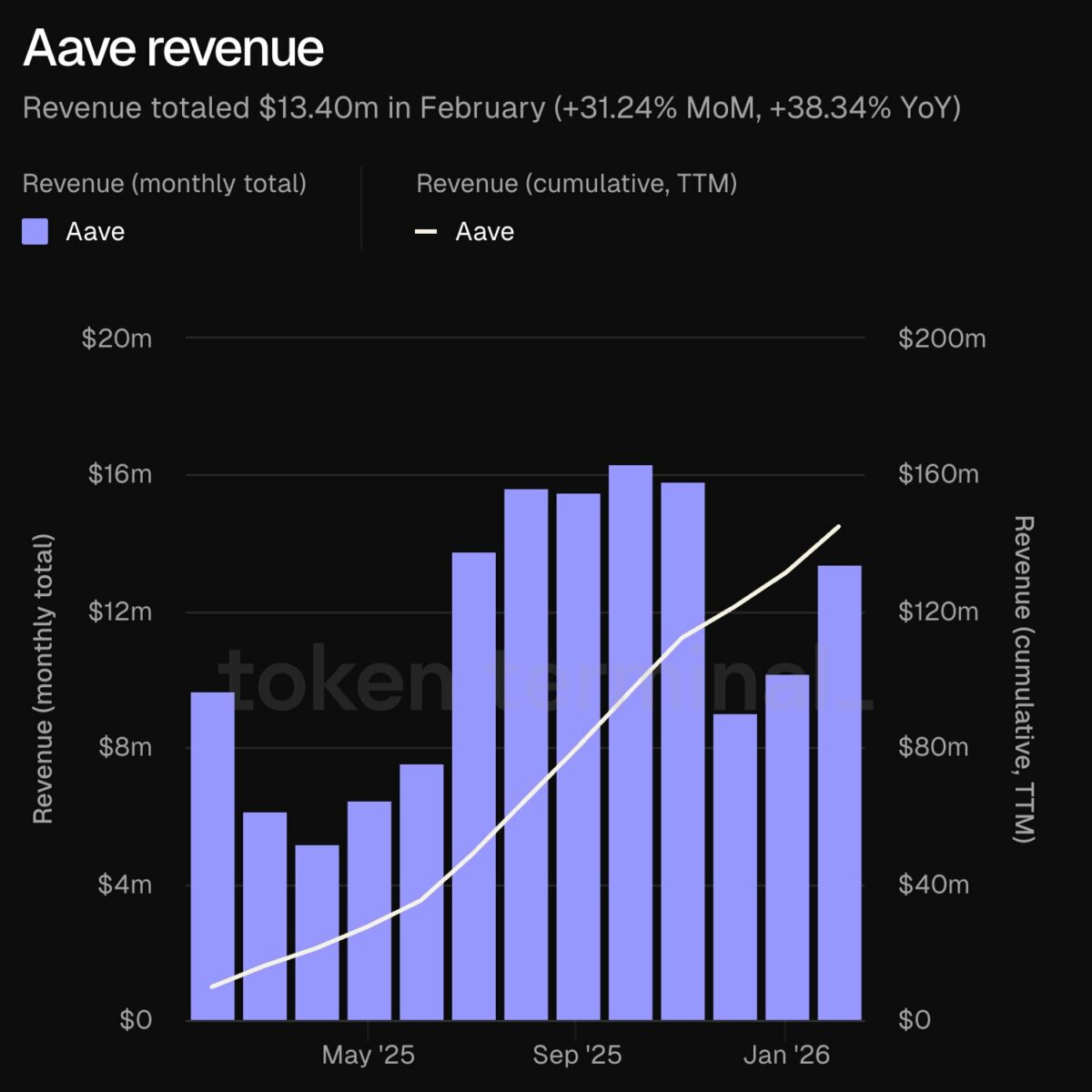
Aave has demonstrated the ability to generate stable and sustainable revenue through market cycles. In February, Aave’s monthly revenue reached $13.4 million, marking an impressive 31% growth compared to the previous month. Year-over-year, the growth rate is approximately 38%.
In previous months, Aave’s revenue fluctuated slightly, dropping to nearly $5 million before steadily rising above $15 million by late 2025. The protocol’s cumulative revenue curve continues to grow steadily, indicating its capacity to generate sustainable fee income.
Over the past 12 months, Aave’s total revenue has approached $145 million, reflecting steady borrowing demand rather than reliance on speculative trading activities. Aave’s stablecoin pools maintain utilization rates around 60%–70%, indicating stable and sustainable interest accrual.
 Source: XEthereum [ETH] remains the leading credit hub, contributing about 89% of the protocol’s revenue. As borrowing demand increases in trading, arbitrage, and treasury management activities, Aave increasingly mirrors traditional credit markets but operates entirely on blockchain technology.
Governance Tensions, but Aave’s Economic Engine Continues to Grow
Despite facing significant governance tensions, Aave continues to scale its economic activity. However, these challenges have raised concerns about long-term stability and decision-making efficiency within the platform.
In early March, the Aave Chan initiative announced its withdrawal after the controversial proposal “Aave Will Win” was narrowly approved with a 52.58% vote. Previously, BGD Labs also announced its departure, highlighting growing internal divisions.
Nevertheless, Aave’s economic scale continues to expand rapidly. Recently, the protocol surpassed $1 trillion in total borrowed volume across markets. Borrowing activity remains a dominant force in the DeFi space.
As borrowing demand continues to rise through trading strategies and liquidity optimization, Aave affirms its role as a core DeFi credit infrastructure. The protocol relentlessly promotes lending and borrowing activities, contributing significantly to the sustainable development of decentralized finance.
Disclaimer: The information on this page may come from third parties and does not represent the views or opinions of Gate. The content displayed on this page is for reference only and does not constitute any financial, investment, or legal advice. Gate does not guarantee the accuracy or completeness of the information and shall not be liable for any losses arising from the use of this information. Virtual asset investments carry high risks and are subject to significant price volatility. You may lose all of your invested principal. Please fully understand the relevant risks and make prudent decisions based on your own financial situation and risk tolerance. For details, please refer to
Disclaimer.


