XRP Burn: How Ripple’s Deflationary Mechanism Influences XRP Price Trends

Beginner
Quick Reads
Last Updated 2026-03-29 05:07:00
Reading Time: 1m
Explore how XRP's deflationary mechanism—driven by transaction fee burning and potential Ripple's XRP burn initiatives—impacts XRP supply and price movements.

What Is XRP Burn?

XRP Burn refers to intentionally destroying a portion of XRP tokens to reduce the circulating supply, which can potentially influence the asset's market price. Ripple’s XRP Ledger (XRPL) features a built-in deflationary mechanism—each transaction permanently removes a small amount of XRP (typically 0.00001 XRP)—serving to prevent spam attacks and improve network efficiency.

XRP’s Deflationary Mechanism: Transaction Fee Burn
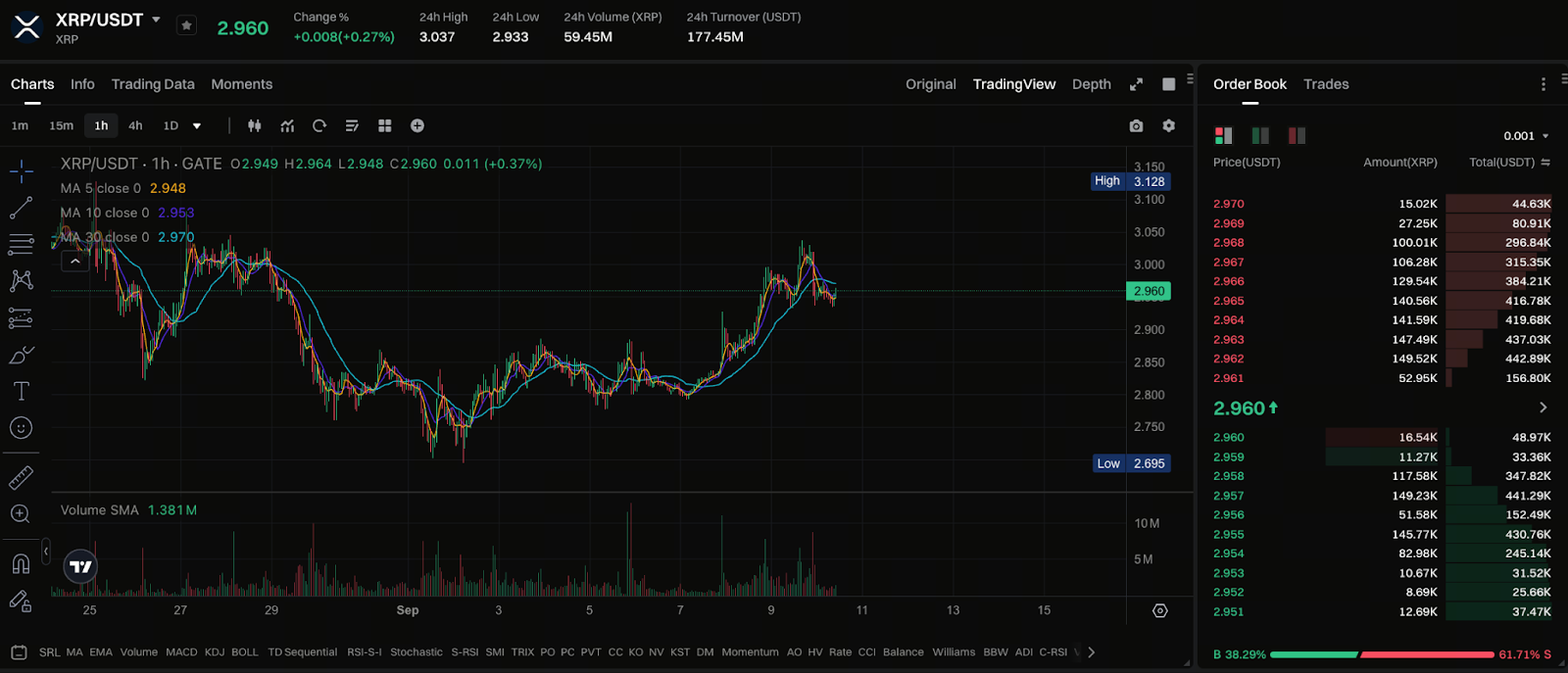

Image source: https://www.gate.com/trade/XRP_USDT

By mid-2025, the XRPL is projected to burn roughly 985,500 XRP annually, equating to a daily average of 3,000–4,000 tokens. With Automated Market Makers (AMMs) now part of the ecosystem, each new liquidity pool requires a 2 XRP fee, further accelerating supply reduction.

Potential Impact of Ripple’s Burn Initiative

There have been recent rumors that Ripple is considering burning 10% of the total XRP supply—approximately 1 billion tokens. While this initiative has not been officially confirmed, its implementation could substantially shrink circulating supply and potentially drive price movements.

Long-Term Price Effects of XRP Burn

Analysis indicates that if XRP supply decreases and demand remains constant, prices may rise. For example, Gemini forecasts that halving the circulating supply could push XRP's price to approximately $6.12, with more optimistic scenarios projecting up to $15.30.

Conclusion: Looking Ahead to XRP Burn

XRP’s deflationary mechanisms and potential burn proposals could impact its market price. However, long-term trends will be shaped by a confluence of factors, including market demand, technological advancements, and regulatory frameworks. Investors should closely monitor these dynamics to make well-informed decisions.

Author: Max
Disclaimer
* The information is not intended to be and does not constitute financial advice or any other recommendation of any sort offered or endorsed by Gate.
* This article may not be reproduced, transmitted or copied without referencing Gate. Contravention is an infringement of Copyright Act and may be subject to legal action.

Related Articles

Gold Price Forecast for the Next Five Years: 2026–2030 Trend Outlook and Investment Implications, Could It Reach $6,000?
Beginner

Gold Price Forecast for the Next Five Years: 2026–2030 Trend Outlook and Investment Implications, Could It Reach $6,000?

Analyze current gold price trends alongside authoritative five-year forecasts, integrating an evaluation of market risks and opportunities. This gives investors insight into the potential trajectory of gold prices and the main drivers expected to shape the market over the next five years.
2026-03-25 18:13:30
AI-Native Settlement Layers: How United Stables Is Building the Next Financial Rail
Beginner

AI-Native Settlement Layers: How United Stables Is Building the Next Financial Rail

Stablecoins were originally designed as dollar substitutes within exchanges, primarily used for asset pricing and trade settlement. As on-chain financial ecosystems have matured, their role has expanded beyond simple payments to include collateral assets, cross-chain liquidity mediums, and unified settlement units. In particular, as AI systems and automated agents begin to participate directly in economic activity, demand has risen sharply for programmable value units capable of instant settlement. This shift is pushing stablecoins toward the role of foundational financial infrastructure.
2026-03-25 03:16:17
Aster vs Hyperliquid: Which Perp DEX Will Prevail?
Beginner

Aster vs Hyperliquid: Which Perp DEX Will Prevail?

Aster and Hyperliquid are the two representative protocols of the "purpose-built L1 path" within the current decentralized perpetual exchange (Perp DEX) sector. As a pioneer in the field, Hyperliquid has built a deep liquidity moat through its highly mature order book architecture and strong community consensus. Conversely, Aster, as a rising challenger, seeks to leapfrog the competition in high-performance trading through more aggressive multi-chain aggregation logic, private transaction modules, and an underlying execution environment optimized for 2026 market demands.
2026-03-24 11:58:33
DePIN Identity Network and Real World Applications: How Humanity Protocol Brings on-chain Identity Into the Physical World
Beginner

DePIN Identity Network and Real World Applications: How Humanity Protocol Brings on-chain Identity Into the Physical World

Most Web3 identity systems remain confined to on-chain environments and struggle to achieve meaningful adoption in real world settings. Through a DePIN architecture and physical verification hardware, Humanity Protocol aims to bring decentralized identity into access control systems, hospitality, public services, and offline events, allowing on-chain identity to function not just as a digital credential, but as foundational infrastructure for real world access.
2026-03-25 07:40:53
Aerodrome Tokenomics: How ve(3,3) Powers Base's Most Profitable DEX
Beginner

Aerodrome Tokenomics: How ve(3,3) Powers Base's Most Profitable DEX

AERO is the native token of Aerodrome Finance, a core decentralized exchange and liquidity protocol in the Base ecosystem. It is primarily used for liquidity incentives and ecosystem operations. veAERO is a governance NFT that users receive by locking AERO, representing both voting power and the right to share protocol revenue. Through a dual track structure of AERO as a utility token and veAERO as a governance credential, Aerodrome separates liquidity usage value from long term governance power, allowing participants to act as liquidity providers, governance decision makers, and revenue sharers within the same system.
2026-03-25 06:40:31
How Does Kite Work? An In-Depth Look at Kite's Identity and Programmable Permission Architecture
Beginner

How Does Kite Work? An In-Depth Look at Kite's Identity and Programmable Permission Architecture

Kite is an EVM compatible Layer 1 blockchain network that runs on proof of stake. It is designed to give AI agents verifiable identity, programmable permissions, and real time settlement in an on-chain execution environment. In Kite's design, AI is no longer only a tool that follows instructions. It becomes an economic participant with independent on-chain identity and direct control over assets. Within secure and auditable infrastructure, an AI agent can complete payments, call services, and coordinate tasks autonomously, making Kite a foundational layer for the emerging agent economy.
2026-03-25 06:02:34