## Prediction Market Industry Sparks Another Capital Boom
At the start of 2026, prediction markets have once again captured significant attention from investors. Both Kalshi and Polymarket, leading platforms in this space, are in discussions with investors for a new funding round, each targeting a valuation of approximately **$20 billion**.
Should these funding rounds close, they would mark a milestone upgrade for the prediction market industry. Compared to their valuations at the end of 2025—Kalshi at about $11 billion and Polymarket at around $9 billion—these new targets represent a **near doubling** in value.
The prevailing market view is that this funding surge not only demonstrates institutional confidence in the prediction market business model, but also signals the sector’s transition from a Web3 experiment to a mature fintech arena.
## Kalshi and Polymarket: Funding Backdrop and Valuation Leap
Kalshi and Polymarket stand as the world’s most influential prediction market platforms.
**Kalshi** was founded in 2018 as the first U.S.-regulated prediction market trading platform. It secured approval from the Commodity Futures Trading Commission (CFTC), allowing users to trade contracts based on real-world events—ranging from economic data and weather to political developments.
**Polymarket**, launched in 2020, is a decentralized prediction market built on blockchain. Users can place bets on all types of event outcomes, including elections, economic indicators, tech events, and even entertainment awards.
Both companies have already completed several funding rounds:
- In 2025, Kalshi raised approximately **$1 billion, pushing its valuation to $11 billion**.
- In 2025, Polymarket secured major investment, reaching a **valuation of about $9 billion**.
The current push for a **$20 billion valuation** highlights the extraordinary capital premium in the prediction market sector over a short period.
## Comparing Business Models and Tech Stacks
While both are in the prediction market sector, Kalshi and Polymarket take distinctly different technology approaches.
### 1. Kalshi: Regulated and Compliant Prediction Markets
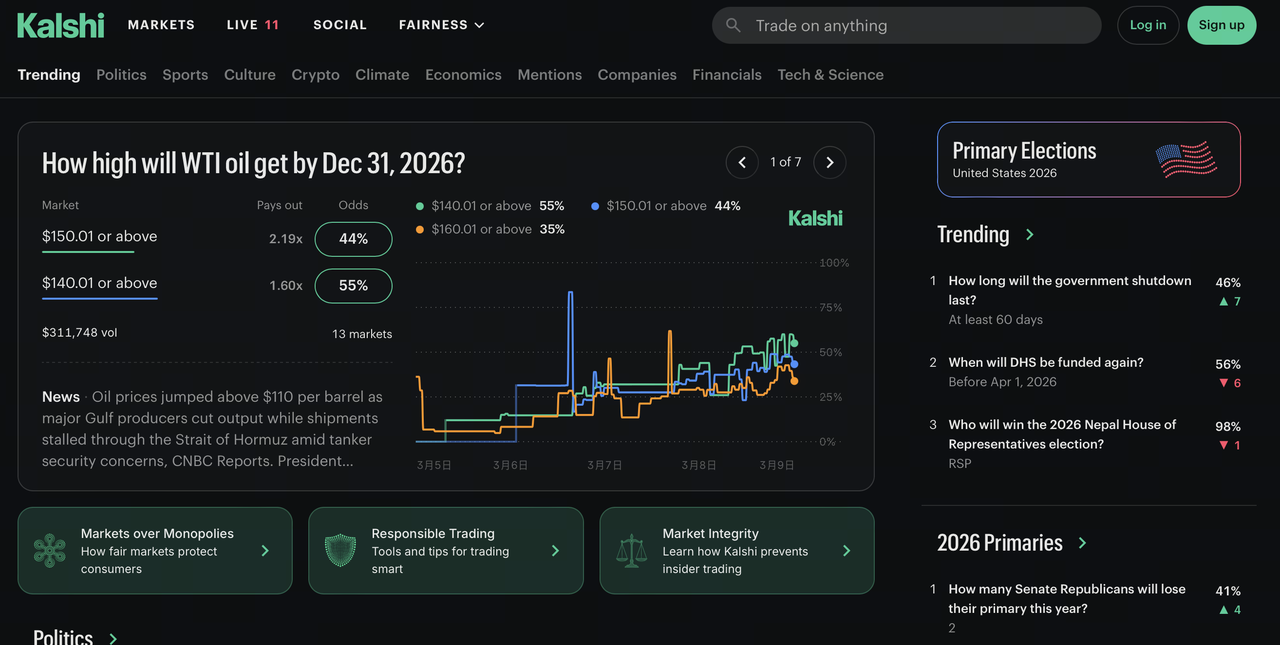
Image Source: Kalshi Official Website
Kalshi’s core strength is **regulatory compliance**.
Operating as a CFTC-regulated exchange, Kalshi offers event contracts similar to financial derivatives, such as:
- Will the U.S. CPI exceed a specific threshold?
- Will a particular city experience extreme weather?
- Will a certain political event occur?
This model closely resembles traditional finance, making it more attractive to institutional capital.
Kalshi’s annualized revenue has already reached an **operational run-rate of roughly $1.5 billion**, demonstrating robust commercialization.
### 2. Polymarket: On-Chain Prediction Markets
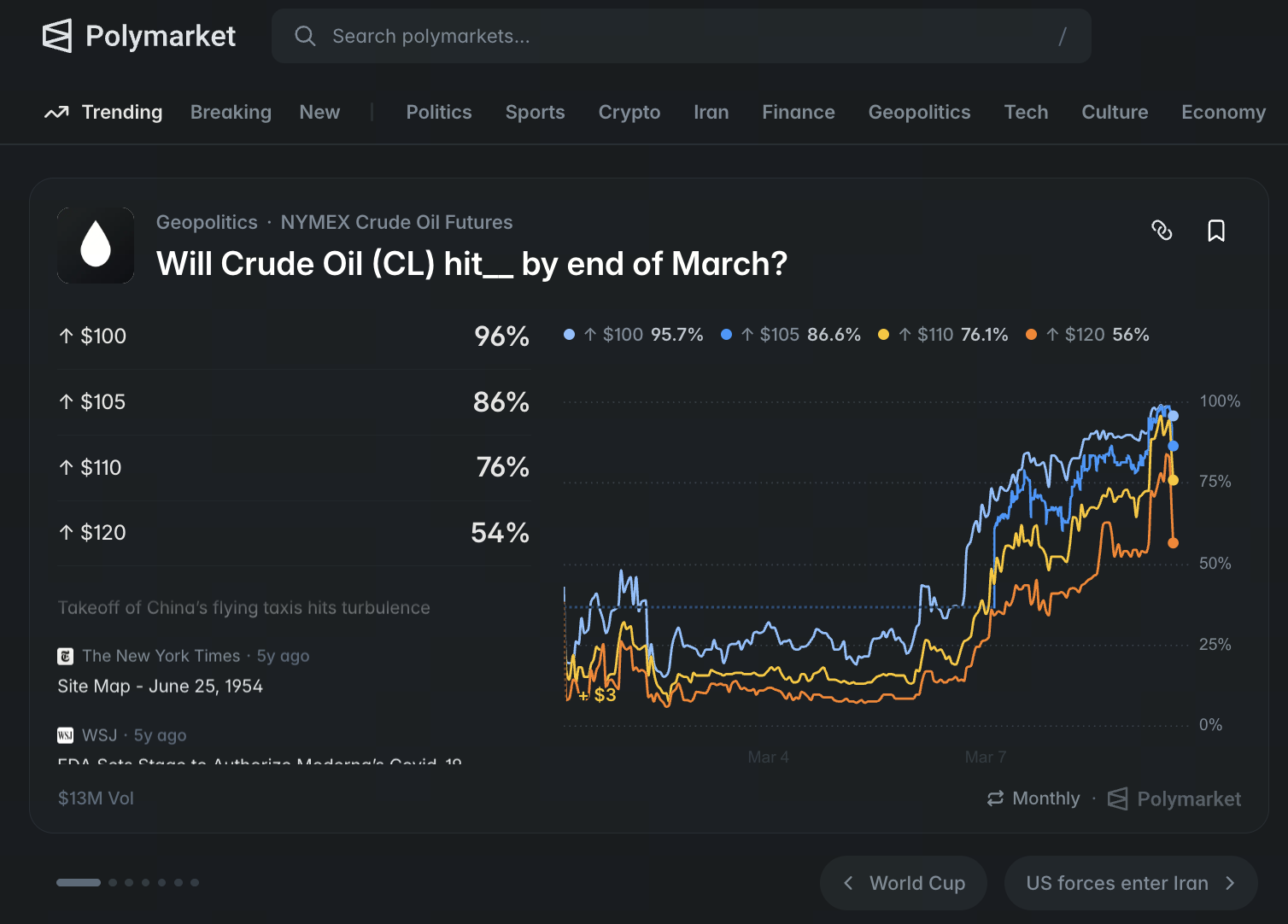
Image Source: Polymarket Official Website
By contrast, Polymarket is a true Web3-native platform.
Key features include:
- Crypto-asset trading
- Open participation—no identity verification required
- Settlement via on-chain smart contracts
This structure gives Polymarket a broad, global user base, but it also faces significant regulatory headwinds.
For example, some countries have restricted access to Polymarket, citing “illegal gambling” concerns.
## Why Prediction Markets Are Suddenly in the Capital Spotlight
Although prediction markets are not a new concept, several powerful forces have made them a hotbed for investment in recent years.
### 1. Information Aggregation
Prediction markets excel at **aggregating collective intelligence (the Wisdom of the Crowd)**.
Market prices directly reflect the probability of future events, such as:
- “Probability a given candidate will win”
- “Likelihood of rising inflation”
These probability signals are often more immediate and dynamic than traditional polling.
Research confirms that large-scale prediction market data can effectively track real probability trends, making these markets valuable tools for decision-making.
### 2. AI and the Data Economy
As demand surges for AI models and real-time data, prediction markets are increasingly viewed as **the next data infrastructure**.
For example:
- AI can use prediction market prices as probabilistic input
- Enterprises can leverage prediction markets for business decision-making
Prediction markets are evolving beyond simple wagering tools into full-fledged information markets.
### 3. Global Events Cycle
The 2026 period is packed with major global events:
- Multiple national elections
- Global sporting events like the World Cup
- Geopolitical risks
These events create abundant trading opportunities for prediction markets.
## Regulation and Compliance: The Sector’s Pivotal Challenge
Despite a promising outlook, prediction markets face mounting regulatory scrutiny. For example, U.S. regulators and Congress are debating restrictions on certain types of prediction contracts, such as:
- War-related events
- Sports results
- Political elections
Regulators worry these markets could spark ethical controversies or manipulation risks.
Moreover, prediction markets must navigate complex regulatory regimes—including gambling, financial derivatives, and data usage—making the policy environment highly unpredictable.
## Competitive Landscape and Ecosystem Expansion
Today, the main players in the prediction market space include:
td {white-space:nowrap;border:0.5pt solid #dee0e3;font-size:10pt;font-style:normal;font-weight:normal;vertical-align:middle;word-break:normal;word-wrap:normal;}
| Platform | Type | Core Features |
| Kalshi | Regulated Prediction Market | CFTC-licensed; offers event contracts akin to financial derivatives |
| Polymarket | Web3 Prediction Market | On-chain trading; users predict global events using crypto assets |
| Opinion | Social Prediction Platform | Focuses on community insights and market sentiment |
| Predict.fun | Meme Prediction Market | Blends meme culture with on-chain speculation mechanisms |
The fiercest rivalry is between Kalshi and Polymarket.
Both are not only competing for users but also for **data pricing power**. Should prediction market prices become a key input for financial institutions or AI models, these platforms would become critical digital infrastructure.
## Is a $20 Billion Valuation Justified? Dissecting the Capital Thesis
From a traditional finance perspective, a $20 billion valuation may appear inflated. But from a venture capital standpoint, the logic is clear.
Key factors include:
**1. Massive Market Size**
Prediction markets can cover virtually every future event, spanning:
- Financial markets
- Political elections
- Sports events
- Corporate decision-making
Theoretical market size rivals the combined scope of gambling and financial derivatives sectors.
**2. Data Value**
Prediction market prices serve as **real-time probability data**.
If widely adopted by institutions, this data could become as valuable as:
- Financial indices
- Market expectation benchmarks
**3. Network Effects**
Prediction markets benefit from network effects: more users drive higher liquidity, which produces more accurate forecasts, attracting even more users—a pattern reminiscent of trading exchanges.
## Outlook: Could Prediction Markets Become Core Financial Infrastructure?
Current trends indicate prediction markets are entering a phase akin to the early expansion of crypto exchanges.
In the coming years, the industry could see:
**Faster Compliance:** More platforms seeking regulatory licenses.
**Institutional Influx:** Hedge funds and data providers actively trading.
**AI Integration:** AI models directly leveraging prediction market probabilities.
**Data Financialization:** Market prices emerging as new financial indicators.
Should these trends continue, prediction markets may evolve from niche innovation into **critical infrastructure for global information pricing**.
## **Conclusion**
The news that Kalshi and Polymarket are pursuing **$20 billion valuations** marks a new era for the prediction market space. Despite lingering regulatory and business model uncertainties, capital is already betting on the sector’s immense potential.
As AI, the data economy, and financial innovation converge, prediction markets are poised to become a standout intersection of Web3 and fintech.