As the Bitcoin ecosystem evolves to support asset issuance, users are focused not only on the assets themselves but also on how these assets are used and circulated. A single transfer function is insufficient for complex interactions, making application-layer projects essential for structuring asset usage pathways and participation methods.
This issue typically encompasses three layers: operational structure, asset transfer pathways, and execution capabilities. The collaboration among these layers determines the usability and efficiency of assets in real-world scenarios.
CRYPTOBURG’s Operational Structure in the Bitcoin Ecosystem
CRYPTOBURG is built on a layered architecture. Its core logic leverages Bitcoin as the settlement foundation, uses Runes for asset representation, and organizes user interactions through the application layer.
Mechanically, the Bitcoin network handles transaction confirmation and security, the Runes protocol records assets within the UTXO structure, and CRYPTOBURG, at the application layer, organizes these assets into a user-accessible system. This separation of layers avoids introducing complex logic at the protocol level, thereby maintaining network stability.
From a design standpoint, the system comprises a “Settlement Layer—Asset Layer—Application Layer” structure. The settlement layer ensures immutability, the asset layer enables transferability, and the application layer determines how assets are used. This architecture allows CRYPTOBURG to create new functional pathways without altering the Bitcoin protocol.
This structure’s significance lies in shifting complex logic from the protocol level to the application layer, which boosts system flexibility while preserving Bitcoin’s original security model.
Asset Flow Pathways for Runes in Practical Applications
Understanding the flow of Runes assets is key to grasping how CRYPTOBURG operates. Assets are created in Bitcoin transactions under specific rules and exist as UTXOs.
In practical use, asset flows are more than simple transfers—they are orchestrated through application scenarios. For example, when users trade, swap, or participate in community activities, assets move between addresses, creating a continuous chain of usage.
Mechanically, this process relies on Bitcoin’s native transaction structure and requires no additional smart contracts. CRYPTOBURG’s role is to provide the scenarios in which these flows occur, transforming assets from “held” to “utilized.”
A well-designed flow pathway increases asset activity. The clearer the pathway, the easier user participation becomes—boosting overall system engagement.
User Participation in CRYPTOBURG Asset Utilization
User participation is central to system operation. In CRYPTOBURG, users typically acquire, hold, and utilize assets across different scenarios.
Structurally, users interact with the Bitcoin network via wallets, managing asset inputs and outputs. CRYPTOBURG does not custody assets directly; instead, it organizes user actions through application-layer interfaces and logic.
Mechanically, every user operation generates an on-chain transaction, forming the foundation of asset movement. Continuous interaction converts user behavior into network activity, driving the entire system.
This design ensures users retain full control over asset usage and simplifies participation through the application layer, making engagement more intuitive.
What Happens During Transactions and Interactions
In a typical interaction, after the user initiates an action, the system translates it into a Bitcoin-compliant transaction structure. This transaction contains inputs (existing assets) and outputs (destination addresses) and is broadcast across the network.
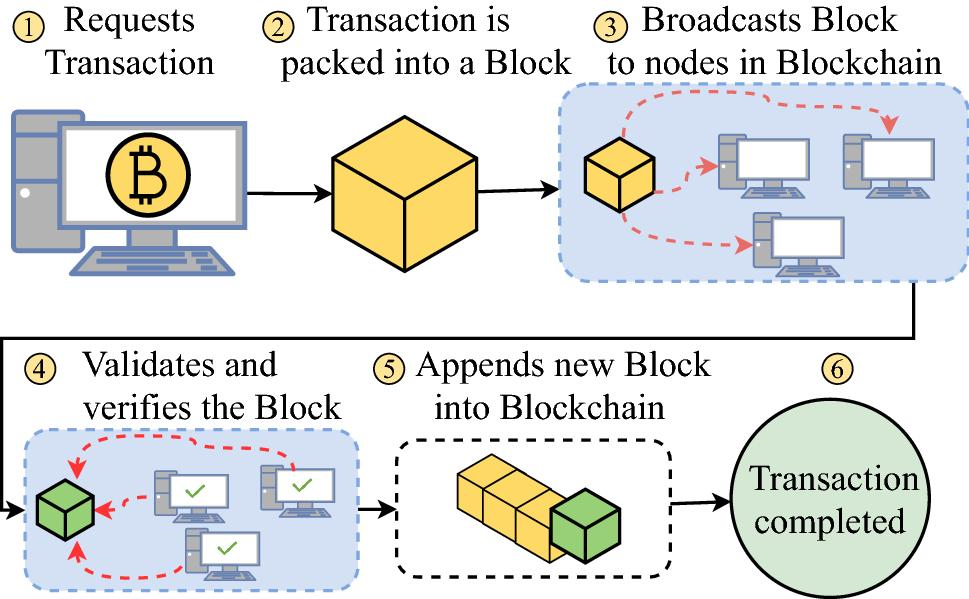
Nodes verify the transaction’s legitimacy by checking input existence, signature validity, and asset matching. Once validated, the transaction is included in a block and confirmed.
CRYPTOBURG does not alter this process but provides auxiliary logic before and after transaction generation, such as pathway guidance or scenario organization. This approach preserves decentralization while enhancing the user experience.
This process highlights the synergy between the application layer and the underlying network—all operations ultimately settle within Bitcoin’s transaction system.
How the Execution Layer Supports Asset Utilization
The execution layer addresses Bitcoin’s limitations with complex operations. While Bitcoin offers secure settlement, it is constrained in high-frequency or complex interactions.
The execution layer typically manages task scheduling, data processing, and interaction orchestration—often off-chain—before mapping results back on-chain, reducing network load.
Structurally, the execution and settlement layers divide responsibilities: the execution layer addresses “how” tasks are performed, while the settlement layer ensures their validity. This division maintains both flexibility and security.
With the execution layer, assets can be used in more complex scenarios beyond simple transfers, greatly enhancing overall usability.
CRYPTOBURG: Boundaries and Limitations
While this system broadens how Bitcoin assets can be used, limitations remain. All asset flows ultimately depend on the Bitcoin network, so transaction speed and fees impact the user experience.
Runes assets are also limited in expressiveness and not suited for complex logic, so some use cases still require external systems.
Additionally, introducing the execution layer increases flexibility but also system complexity, necessitating a balance between efficiency and security.
These boundaries clarify that CRYPTOBURG’s role is to expand usage pathways—not to replace the underlying protocol. Understanding this distinction is key to positioning its role within the broader ecosystem.
Conclusion
By integrating Bitcoin’s settlement functionality, the Runes asset mechanism, and application-layer execution logic, CRYPTOBURG builds a system for asset transfer and utilization, turning static holdings into dynamic use cases.
FAQ
Does CRYPTOBURG change how Bitcoin operates?
No, it relies entirely on Bitcoin’s existing transaction structure.
How do Runes assets flow within the system?
They move between addresses via Bitcoin transactions and are organized through application scenarios.
What does the execution layer do?
It processes complex logic and interactions, enhancing asset usability.
Do users need extra tools to participate?
Generally, interaction is possible through wallets and application interfaces.
Is CRYPTOBURG infrastructure?
It is best described as an application-layer project that organizes asset usage pathways.