With the further development of the Gate ecosystem, GT)‘s burn logic has evolved from simple “platform buybacks” into a dual engine of “buybacks + on-chain burning”: the platform allocates a portion of its quarterly profits for public buybacks, while the prosperity of the on-chain ecosystem is accompanied by the burning of a corresponding amount of Gas tokens. This powerful compression of the supply side establishes a highly resilient value spiral.
In the long run, GT balances “stepped buybacks” with “ecological incentive programs” to address the pain point of selling pressure for native public chain assets during long-term development, utilizing an extreme scarcity narrative to attract institutional-grade asset allocation.
Introduction to GateToken
GateToken (GT) was launched in 2019 as a utility token connecting a centralized exchange with a decentralized public chain. It supports trading fee payments, governance voting, and network gas consumption.
GT’s economic model centers on deflation. Through an ongoing burn mechanism, it offsets mining emissions, prevents unchecked inflation, and encourages long term participation in ecosystem development.
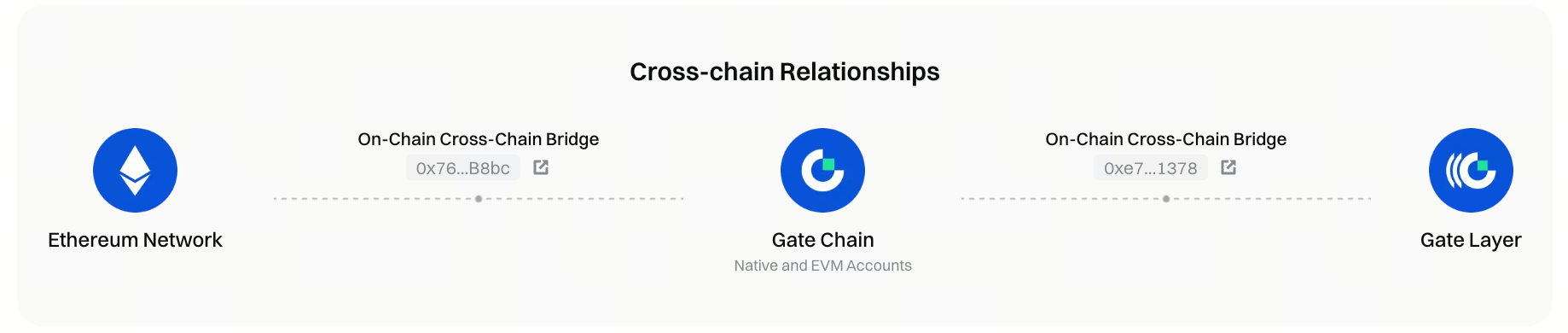
Currently, GT exists in four forms: Ethereum based GT, GateChain mainnet GT, GateChain EVM version GT, and GT on Gate Layer. Conversions and cross chain transfers among these four versions are executed entirely on chain. The entire process is transparent, traceable, and verifiable, ensuring full visibility across the multi-chain ecosystem.
Total Supply and Initial Allocation
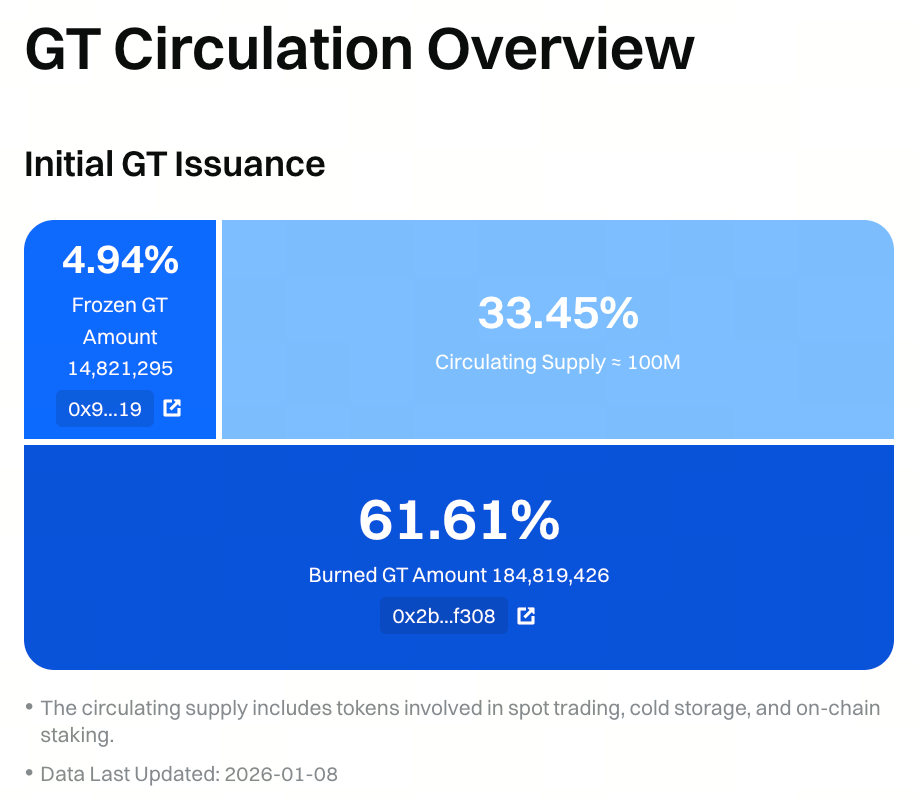
GT has a fixed total supply of 300 million tokens. Its allocation model emphasizes gradual release through long term ecosystem activities and technical contributions rather than a one time market distribution.
The supply structure consists of circulating tokens, frozen tokens, and burned tokens. Approximately 100 million GT are in circulation, representing 33.45% of the total supply. Around 14 million tokens are frozen, accounting for 4.94%. Burned tokens make up a substantial portion, with roughly 185 million GT permanently removed from circulation, or 61.61% of the total supply. This structure clearly reflects a deflation oriented design.
In addition, the GateChain mainnet generates PoS mining rewards to maintain network security. Over a period of five and a half years, approximately 8.55 million GT were issued as staking rewards through consensus nodes. The current annualized yield stands at about 0.99%.
How the Burn Mechanism Works
The burn mechanism is central to GT’s economic model. Its purpose is to reduce circulating supply and counterbalance inflationary pressures within the ecosystem.
The burn process generally follows three standardized steps:
- Profit extraction: A fixed percentage of platform revenue, primarily from trading fees, is allocated for buybacks. Historically, this ratio has been around 20%.
- Secondary market buyback: The allocated funds are used to repurchase GT from the open market.
- On chain burn: The repurchased tokens are sent to a designated burn address under legal and technical safeguards, such as 0x2b8F…f308. All steps are executed on chain and fully transparent, allowing users to verify them through a blockchain explorer.
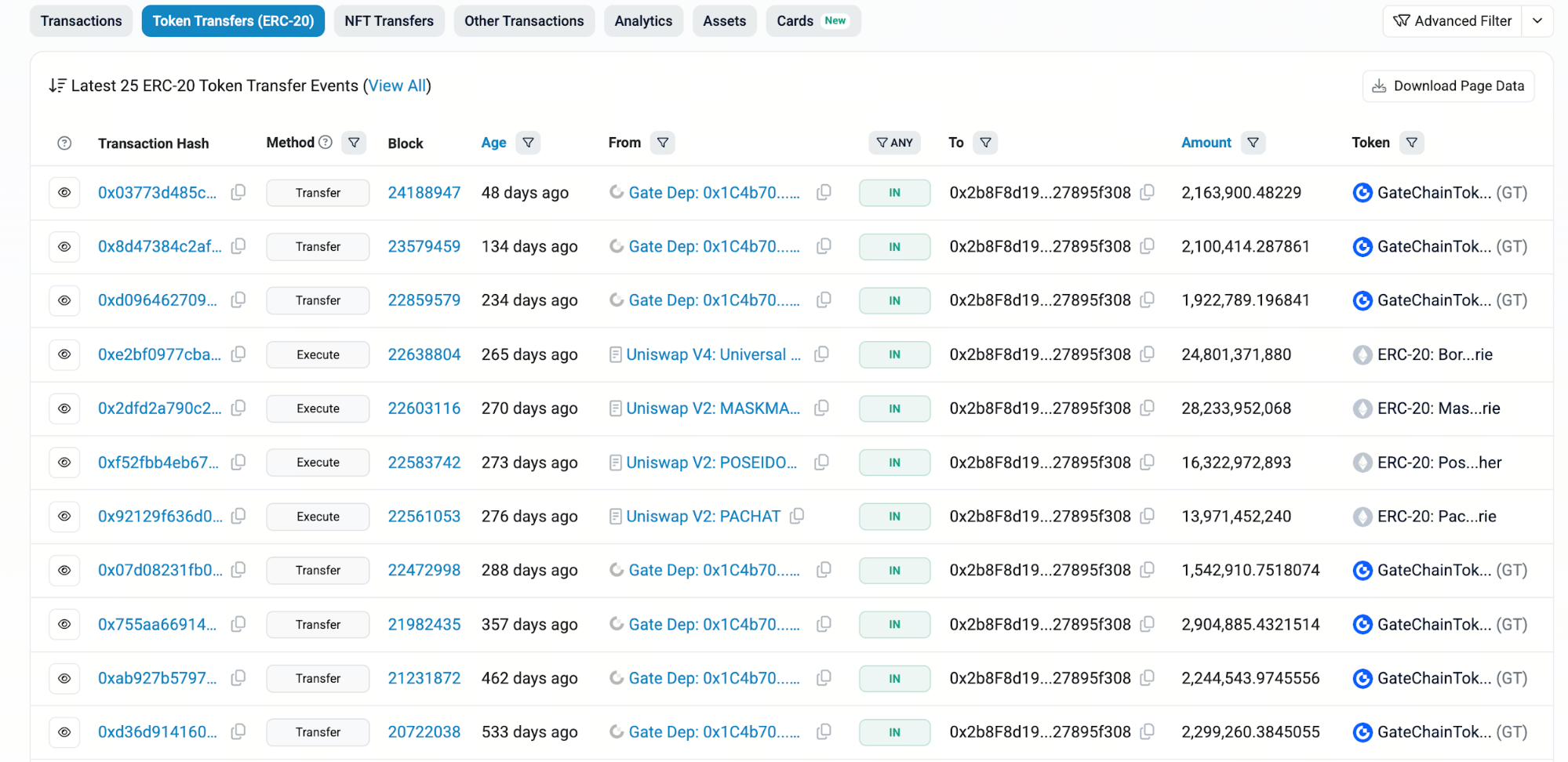
According to official announcements, by the fourth quarter of 2025, approximately 184.8 million GT had been cumulatively burned, representing about 61.61% of the total supply. This ongoing mechanism reinforces GT’s scarcity.
Incentive Distribution Rules
To foster ecosystem activity, GT has established a multi dimensional incentive framework. These incentives are not simple token inflation, but are closely tied to meaningful ecosystem contributions.
| Incentive Type |
Core Rule Description |
How to Participate |
| PoS Mining |
Stake GT to participate in block consensus and earn network-generated security rewards. |
Become a validator or delegate to a validator node |
| Liquidity Incentives |
Provide GT liquidity within decentralized protocols to earn a share of transaction fees. |
Deposit into an LP (Liquidity Provider) pool |
| Ecosystem Privilege Programs |
Lock or hold GT to receive new project distributions or airdrop rewards. |
Participate in Launchpad or Startup programs |
Notably, GateChain has fundamentally redesigned traditional staking mechanics. Any account can become a consensus account and participate in block validation simply by paying standard transaction fees, thereby earning rewards. GT delegation features include:
- No minimum delegation amount
- All account types are eligible
- Immediate effectiveness
- Zero day lockup for redelegation or undelegation
- Insurance accounts are recommended
GT Token Use Cases Explained
GT serves multiple functional roles across both the Gate platform and the GateChain ecosystem, covering trading, governance, and development scenarios.
At the platform level, GT’s primary use case is trading fee discounts. Users holding GT receive tiered fee reductions based on their holdings, with discounts of up to 28%. In addition, GT holders gain access to Launchpad, Launchpool, HODLer Airdrop, and CandyDrop programs. Holding GT can also elevate VIP status, increasing withdrawal limits and granting access to exclusive events. Additional financial benefits and yield enhancing products are also available to GT holders.
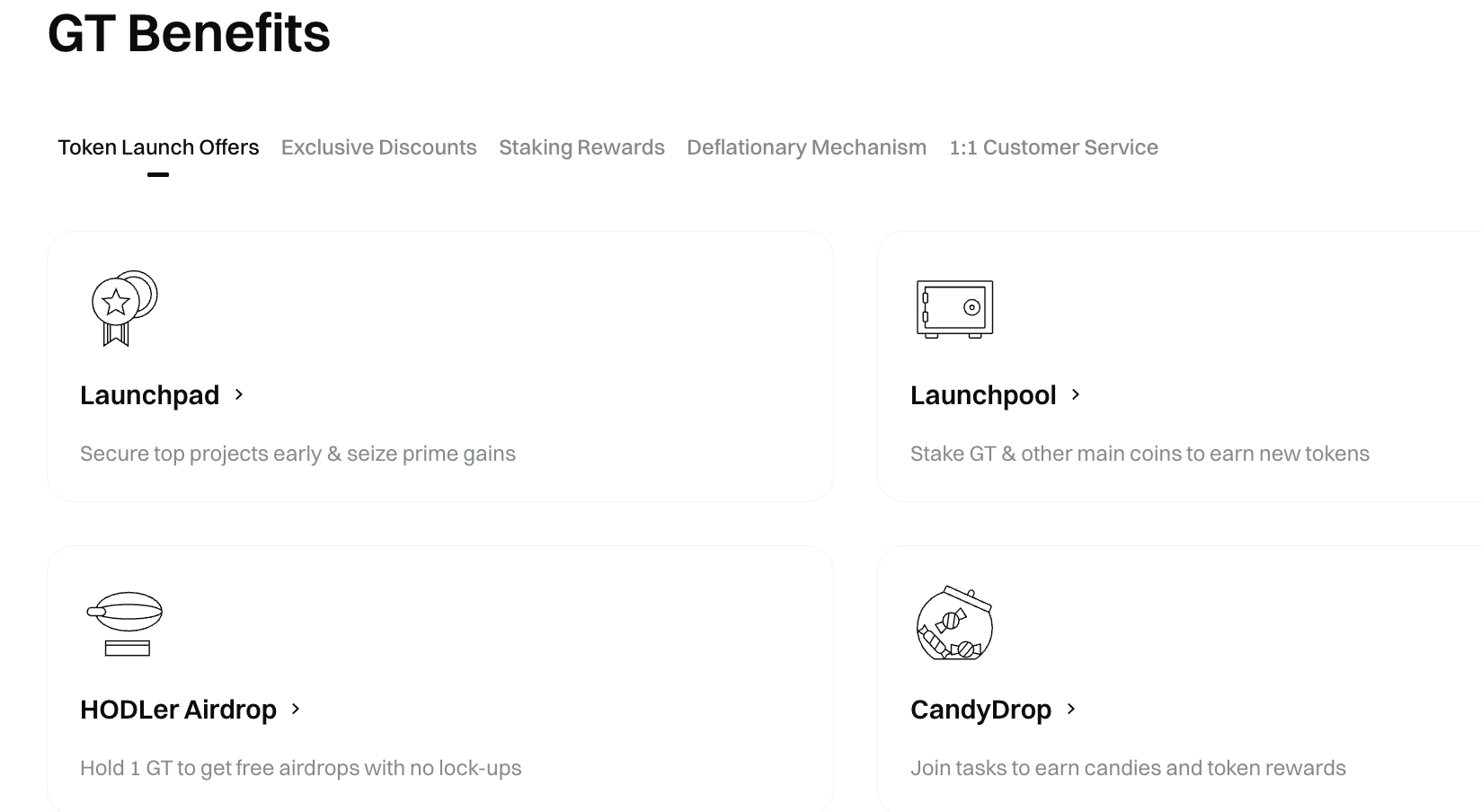
On the public chain side, GT is used to pay Gas fees, participate in PoS staking, and issue assets. Users can stake GT to become validators or delegate tokens to earn rewards, helping maintain network stability and security.
The team continues to improve multi asset trading infrastructure and expand application scenarios within a compliant regulatory framework, further strengthening GT’s utility and value foundation.
Interpreting Historical Burn Data
Since the launch of the GateChain mainnet, GT has implemented a continuous burn policy.
Data shows that since 2021, the scale of GT buybacks and burns has steadily increased. To date, the cumulative value of burned GT exceeds 1.901 billion US dollars. The total supply has declined significantly from the original 300 million tokens, with approximately 61.61% permanently removed. In Q4 2025 alone, more than 2.1 million GT were burned, valued at over 26.92 million US dollars.
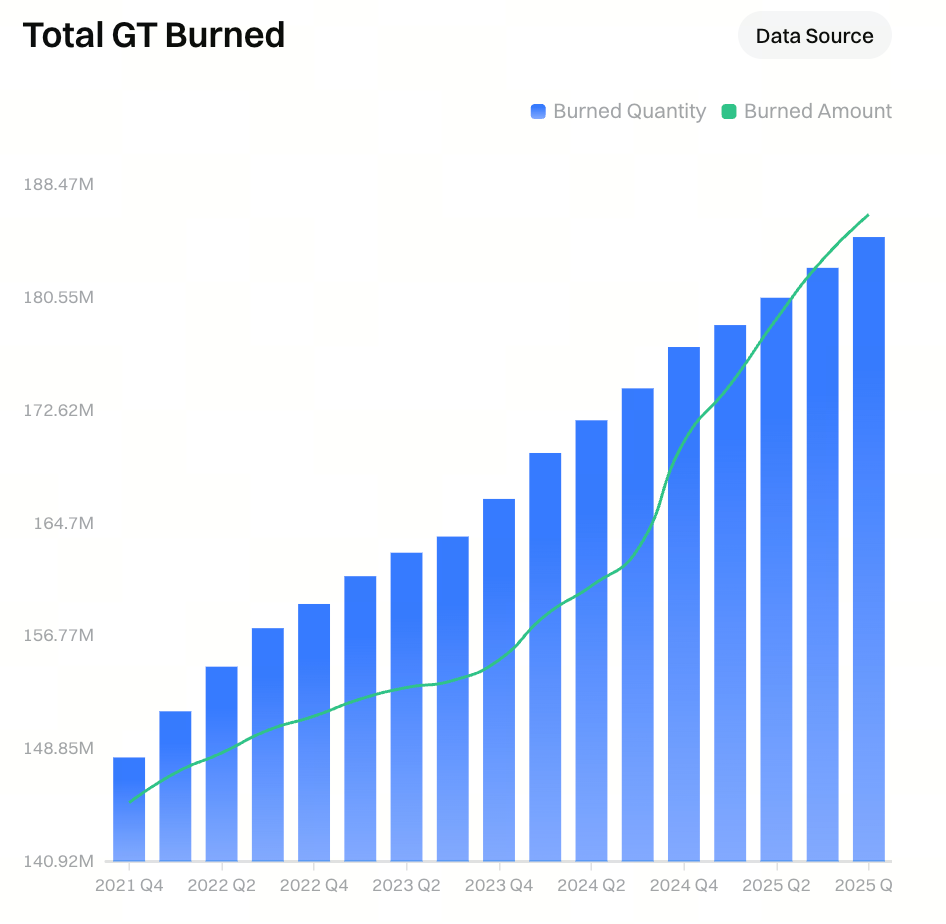
The intensity of token burns for exchange platform tokens generally correlates with platform activity. During periods of high trading volume and increased revenue, the scale of buybacks and burns tends to expand accordingly. This structure demonstrates economic resilience. Even across varying market cycles, the burn mechanism continues to operate in a stable and predictable manner.
Investment Value Analysis of GateToken
GT’s economic value is driven by its practical utility and deflationary design.
As the platform’s native asset, GT’s value tends to correlate with user growth and revenue stability within the Gate ecosystem. Expanded use cases, including deeper DeFi integration, can further strengthen demand support.
Although the deflationary model and diversified utility provide structural support for GT, participants should objectively assess associated risks. These include general cryptocurrency market volatility, intensified industry competition that may affect market share, technological evolution risks at the underlying public chain level, and evolving regulatory policies toward exchange platform tokens across different jurisdictions.
Conclusion
GateToken (GT) has built a closed loop economic system through supply control, transparent burns, and PoS incentives.
Overall, GT serves not only as a carrier of platform privileges but also as a foundational resource for the underlying public chain. As the ecosystem continues to evolve, the dynamic balance between token burns and incentive distribution will remain central to its long term sustainability.
FAQs
Why does GT exist in four different technical forms?
This structure reflects the growing trend toward multi chain interoperability. GT exists as a native token on GateChain Mainnet, as an ERC 20 token on Ethereum, as an EVM compatible token, and as an asset on a Layer 2 network. This multi form design enables seamless circulation across different ecosystems such as DeFi environments, DApp deployments, and high performance trading scenarios. Users can perform 1:1 transparent conversions through the official cross chain gateway.
What does the burn address 0x2b8F…f308 represent?
This address is a so called black hole address. Technically, no one holds its private key. Sending GT to this address permanently removes those tokens from circulation. The burn process is executed on chain and is irreversible. Users can verify the address balance at any time through a blockchain explorer to confirm the authenticity of burn data.
How often are exchange platform token buybacks and burns conducted, and what determines their scale?
Exchange platform token buybacks and burns are typically carried out on a regular schedule, such as quarterly. The scale of GT burns is directly linked to Gate platform revenue, primarily net trading fee income. This mechanism dynamically ties the platform’s operating performance to the token’s total supply, enhancing transparency within the economic model.