As global growth momentum remains uncertain, market sentiment continues to swing between defensive strategies and positioning for recovery. In this context, metals have naturally become a central focus for capital reassessment.
For instance, gold has long served as a hedge against risk, while silver offers both safe-haven and industrial value. When uncertainty escalates, trading activity in these assets typically rises. In contrast, industrial metals like copper and aluminum are more directly tied to the prospects for infrastructure and manufacturing. If the market anticipates stronger demand, prices may begin to reflect that growth outlook ahead of time. This dual structure—balancing defense and growth—gives the metals sector strategic allocation relevance under a variety of macroeconomic scenarios.
Drivers of Sharp Price Swings
The recent rapid shifts in metal prices are generally the result of multiple, intertwined factors rather than a single event.
-
Ongoing revisions to global economic data are forcing markets to continually reassess future demand. Regional differences in economic recovery directly affect consumption and manufacturing expectations.
-
Fluctuations in energy prices and transportation costs have a direct impact on mining and smelting operations. When supply-side costs change, market pricing models are re-evaluated.
The rise of institutional capital and algorithmic trading systems has also made prices react even faster to new data. Significant policy statements or economic indicators can trigger notable price swings in a short period.
Market Dynamics Amplified by Volatility
When volatility increases, trading dynamics in the metals market evolve:
-
Price ranges form in shorter timeframes
-
Sector rotation accelerates
-
Entry and exit decisions face greater time sensitivity
Capital can shift quickly between precious and industrial metals, causing the market’s focus to pivot frequently. In this fast-paced environment, access to timely information and efficient execution are critical.
The Structural Edge of Digital Trading
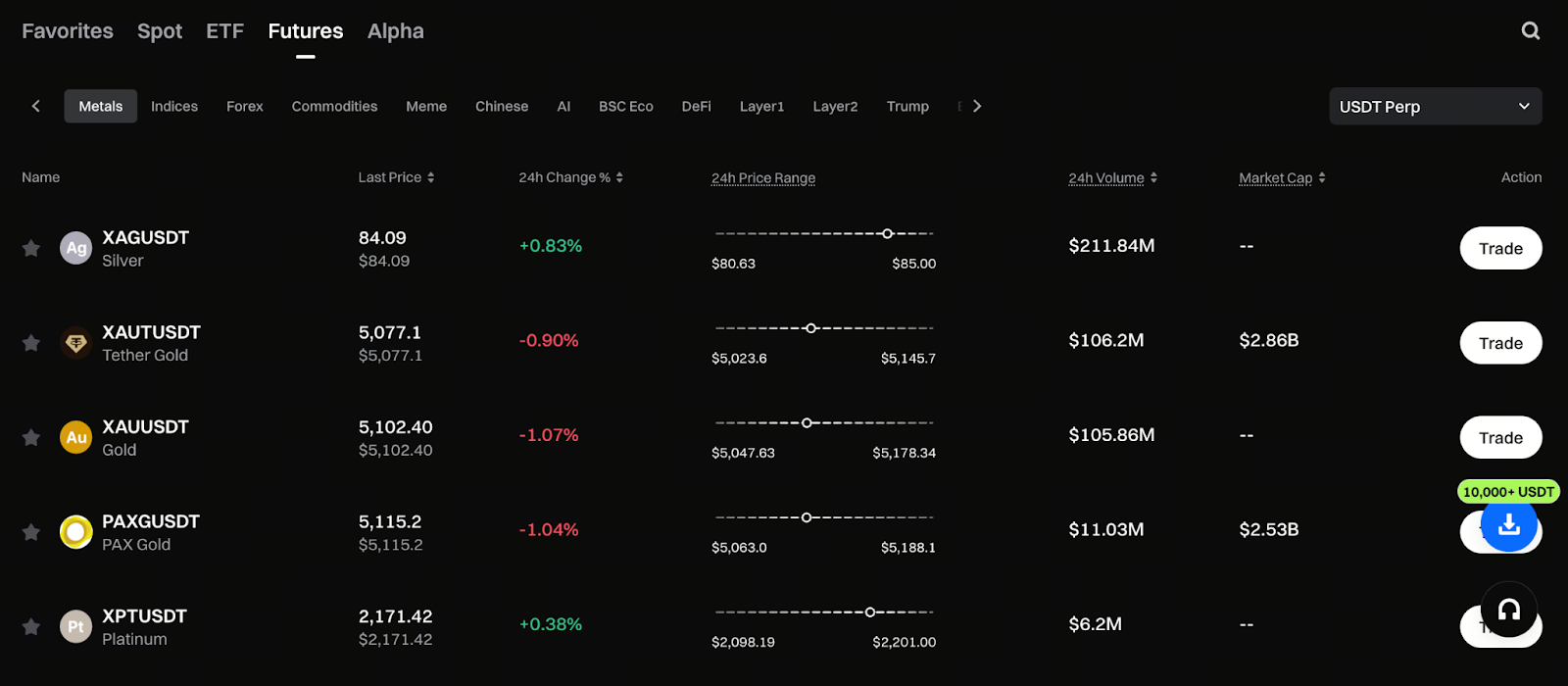
As commodity markets go digital, participation is fundamentally different from traditional physical or floor-based trading. For example, Gate’s dedicated Metals Zone consolidates a range of metal products, allowing users to monitor prices and execute trades on a single platform. This integrated setup reduces the friction of switching between platforms and improves decision-making speed.
During periods of rapid market movement, a stable matching engine and transparent data structure help maintain smooth operations and minimize risks from latency or information gaps.
Get started in Gate’s Metals Zone: https://www.gate.com/price/futures/category-metals/usdt
24/7 Market Flexibility
Traditional commodity markets are bound by limited trading hours, but digital platforms offer nearly round-the-clock access. When significant policy decisions are announced outside standard sessions or global events cause sudden shifts, traders can adjust their strategies instantly—no need to wait for the market to open. This time flexibility enables capital to react to external shocks in real time, making it a major advantage for today’s market participants.
Over the long term, metals continue to play an important role in global portfolios. Their key purposes include:
Even as market conditions change rapidly, these core attributes remain. What’s different is the growing variety of participation options and the real-time, digital nature of trading tools.
Conclusion
As global capital reallocates, metals are once again at the center of strategic focus. The interplay between safe-haven demand and growth expectations is intensifying price volatility and capital rotation. In this environment, understanding how metal prices are formed—and leveraging digital trading solutions—can improve market participation and decision quality. Whether for defensive positioning or tactical trading, metals remain a key element in a diversified investment portfolio.