As Multichain Matures, Focus Shifts to User Experience Details
Web3 has reached a stage where cross-chain activity is routine. Users regularly transfer assets between public chains, engage in DeFi, mint NFTs, and interact with various DApps—these are now standard operations. Technical advancements continue to improve bridge efficiency, on-chain speed, and fee optimization.
In real-world use, the main reason transactions fail is often not the cross-chain technology itself, but a basic requirement—insufficient native tokens to cover gas fees.
When every step is ready but a transaction fails because the wallet lacks just a few dollars’ worth of on-chain tokens, the resulting frustration is far more draining than a technical error, breaking the flow of the user experience.
Elevating Gas Management to a Platform-Level Capability
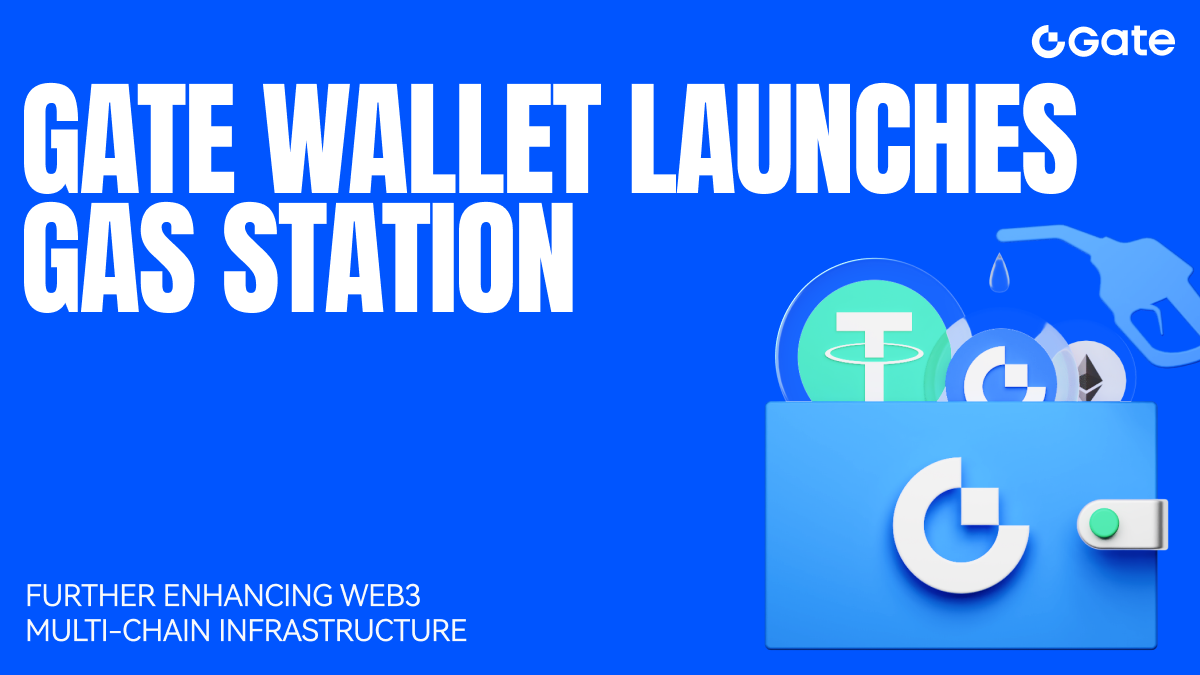
The Gate Gas Station is designed not simply as a gas top-up tool, but as a way to transform gas from a resource users must manage individually into a core platform service.
The system creates a dedicated gas account for each EVM wallet. When users operate on supported networks and their native token balance is insufficient, the platform automatically pays the required fees. There’s no need for extra steps or advance asset switching.
This approach allows users to focus on their actions, not their deficiencies. Technical details are handled in the backend, leaving only a seamless experience on the frontend.
Unified Payment Pool Connecting the Entire EVM Ecosystem
This mechanism now covers multiple leading EVM networks, including Ethereum, BNB Chain, Arbitrum, Optimism, Base, Polygon, Avalanche, Linea, and Gate Chain. Its flexible funding model is especially innovative: users no longer need to prepare native tokens for each chain separately, but can fund their accounts with a variety of crypto assets—GT, USDT, USDC, ETH, BNB—creating a shared payment pool.
Resources are no longer scattered across chains, but are centrally managed and coordinated. For the first time, multichain operations truly approach a single-account, unified experience.
Reducing Friction Is More Important Than Adding Features
From a product design perspective, gas issues reveal a deeper truth: Web3’s real barrier isn’t a lack of features, but the absence of smooth processes.
Most users don’t care which chain is used behind the scenes—they just want their transactions to complete smoothly. If a transaction fails due to insufficient gas, even the most advanced technology can discourage users. Gate Gas Station eliminates this last-mile friction, absorbing complexity at the platform level so users don’t need to understand every technical detail.
Queryable and Traceable, Without Touching Asset Control
For security and transparency, gas payment does not mean surrendering asset sovereignty. All gas expenditure records and balance changes are instantly queryable, with clear fund flows.
The platform only supports transaction fees and does not intervene in asset operation authorization. It helps pay transaction costs, but does not control assets. This clear separation allows convenience and sovereignty to coexist without compromise.
Shifting Mindset from Resource Preparation to Focused Action
Once gas management is integrated into the system, users’ operational logic naturally shifts. Previously, multichain activity required remembering different chains, checking balances, preparing native tokens, and avoiding insufficient fees. Now, the process is simplified to a single question: What do I want to do?
This shift saves time and reduces psychological burden. Lowering entry barriers enables Web3 to expand into broader use cases, rather than remaining accessible only to technical experts.
Conclusion
In an era where multichain operations are standard, platform competition is about who can deliver the smoothest and most stable experience—not just the number of supported networks. Gate Gas Station’s core value lies in upgrading fragmented and error-prone gas management into a platform-level foundational service. Through automated payments and a unified payment pool, technical complexity is hidden and user operations become natural. When users are no longer interrupted by fee issues, Web3 can truly achieve mainstream and scalable growth.