As artificial intelligence continues to evolve at a rapid pace, computing power, data, and models have increasingly become concentrated in the hands of a few major technology platforms. This has led to what is often described as centralized AI. While this model improves efficiency, it also introduces issues such as data monopolies, limited innovation, and uneven value distribution.
Against this backdrop, Bittensor emerges as a key piece of infrastructure for decentralized AI. By introducing the concept of subnets, it breaks AI tasks into multiple independent markets, enabling open collaboration between model providers and evaluators. Subnets are not only a core structural element of the Bittensor network, but also a critical component driving the convergence of AI and Web3.
What Is a Bittensor Subnet?
Within the Bittensor network, a subnet operates as an incentive-driven marketplace focused on producing specific AI commodities, such as text embeddings or image detection.
Each subnet is built on three key components:
-
Dedicated AI tasks, such as NLP or recommendation systems
-
A collaborative network of miners and validators
-
An AMM-based liquidity pool for TAO and subnet-specific Alpha tokens
Subnets are connected to the root network, Subnet 0, where TAO emissions are dynamically allocated based on overall subnet performance. High-performing subnets receive more resources, while underperforming ones risk being phased out, creating a system that closely resembles market competition.
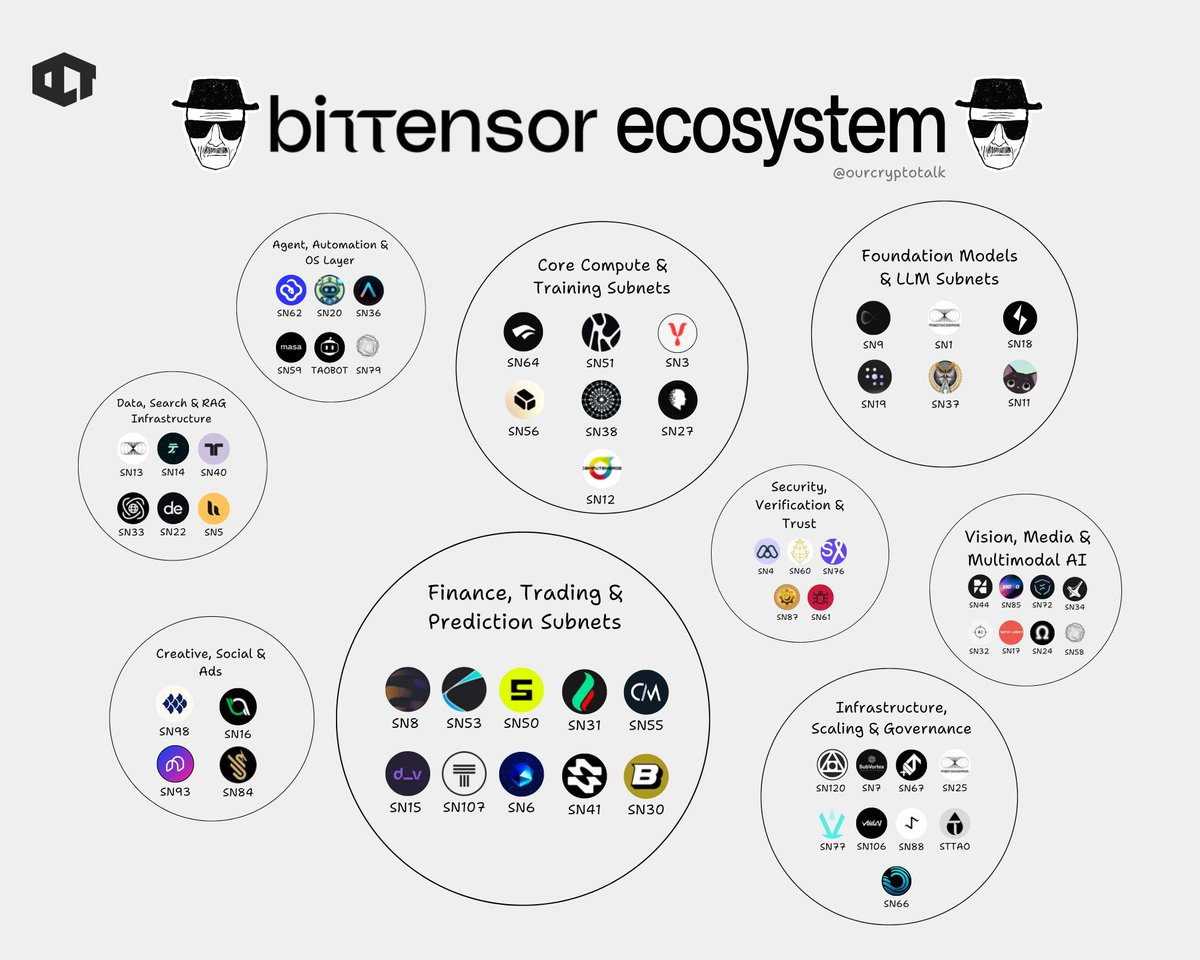 Source: xtaohq, X
Core Roles and Interaction Logic in a Subnet
Within a Bittensor subnet, three primary roles define how the system operates:
-
Miner (Model Provider)
Miners are responsible for supplying AI models or inference services, such as language models, recommendation engines, or data processing systems. They compete by submitting model outputs and earn rewards based on performance.
-
Validator
Validators evaluate the outputs produced by miners and assign scores based on quality. These scores directly determine how rewards are distributed, making validators central to the subnet’s operation.
-
Subnet Owner
The subnet owner designs and maintains the rules of the subnet, including:
Together, miners, validators, and subnet owners form a feedback loop:
-
Miners submit model outputs
-
Validators score the results
-
The system distributes TAO based on those scores
-
Subnet owners continuously refine the mechanism
At its core, this creates a decentralized market for AI evaluation.
Lifecycle of a Bittensor Subnet
From creation to maturity, a subnet typically goes through several stages:
-
Creation: A developer launches a new subnet and defines its tasks and rules.
-
Cold start: Early participation is limited, and both model quality and evaluation mechanisms are still being refined.
-
Growth: More miners and validators join, and network effects begin to emerge.
-
Maturity: The subnet develops stable incentives and consistently produces high-quality outputs, becoming a key part of the ecosystem.
Incentive Mechanism: TAO Circulation and Value Flow
Bittensor’s economic model revolves around the TAO token, with subnets serving as the primary layer where value circulates.
Within a subnet, TAO flows through the following cycle:
-
The network releases TAO through block rewards
-
TAO is allocated across different subnets
-
Within each subnet, validators determine how rewards are distributed to miners
-
Higher-quality models receive more TAO
This mechanism leads to several important outcomes. Model quality becomes directly tied to earnings, high-performing AI services attract more resources, and a continuous positive feedback loop drives ongoing improvement. In essence, subnets function as a price discovery mechanism for AI models.
Subnet Growth and Ecosystem Expansion
As the Bittensor network evolves, the number of subnets continues to grow. These subnets now span a wide range of AI domains, including natural language processing, image generation, data indexing and retrieval, and recommendation systems.
This diversity brings two key benefits. First, it enables specialization, with each subnet focusing on a specific niche. Second, it accelerates innovation, allowing new models to quickly enter the market, be evaluated, and earn rewards.
How to Create a Bittensor Subnet
Creating a subnet typically involves the following steps:
-
Define the task Clearly identify the AI problem the subnet aims to solve, such as text generation or predictive modeling.
-
Design the evaluation mechanism Establish how validators will score outputs, as this is the foundation of reward distribution.
-
Deploy the subnet Register the subnet on the Bittensor network and configure its parameters.
-
Attract participants Use incentive mechanisms to bring in miners and validators.
-
Continuously refine the system Adjust weights and scoring logic based on real-world performance.
Ultimately, the success of a subnet depends on designing a fair and effective evaluation system, along with a sustainable incentive model.
The Expanding Role of Subnets in AI Agents and Web3 Applications
Subnets are more than just AI production markets. They are increasingly becoming foundational infrastructure for AI agents. For example, AI agents can directly access model capabilities through subnets, while multiple subnets can be combined to form complex AI workflows.
At the same time, Web3 applications can integrate AI services on demand without needing to build their own models.
As the Bittensor ecosystem continues to expand, subnets are likely to evolve into both a marketplace for computing power and models in decentralized AI, and a foundational interface layer for Web3 AI applications.
Conclusion
As a core mechanism within decentralized AI networks, Bittensor subnets break AI tasks into independent markets and establish an incentive system jointly maintained by miners, validators, and subnet owners.
Through TAO-driven reward distribution, subnets directly link model quality with economic value, enabling AI capabilities to be priced, traded, and optimized like commodities.
As the number of subnets continues to grow, they are gradually shaping an open, competitive, and efficient AI ecosystem, providing essential infrastructure for the convergence of Web3 and artificial intelligence.
FAQs
What does a Bittensor Subnet do?
A subnet acts as an AI task marketplace within the Bittensor network, responsible for producing, evaluating, and incentivizing AI model outputs.
Subnets operate in a decentralized manner with no single controlling authority. Model quality is determined by the market, through validators, rather than by a centralized platform.
What role does TAO play in a subnet?
TAO is the incentive token used to reward miners who produce high-quality model outputs and to power the entire economic system.
Can ordinary users participate in subnets?
Yes. Users can participate as miners by providing models, or as validators by evaluating outputs, and earn rewards in return.
Can a subnet be eliminated?
Yes. If a subnet consistently underperforms or fails to attract participants, it may be replaced through competitive pressure.







