Bitcoin 2025 Year-End Performance Review: Has the Halving Myth Finally Been Broken?
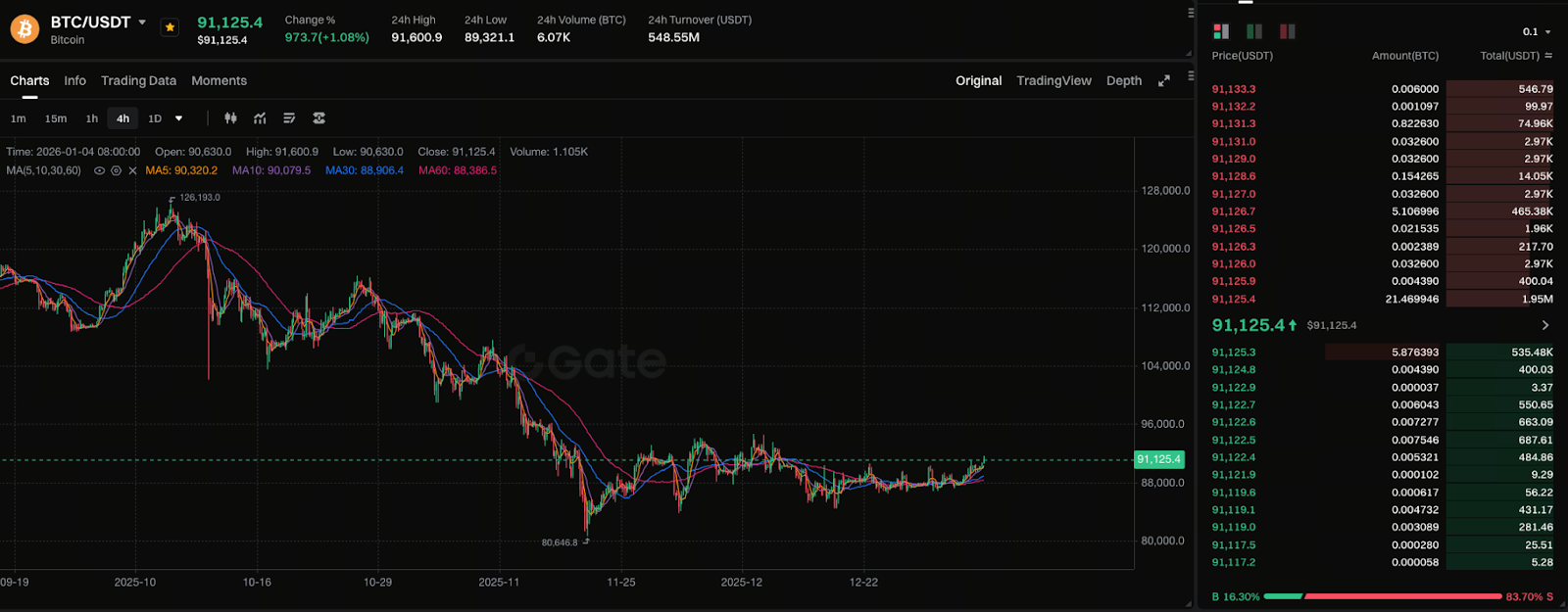
Chart: https://www.gate.com/trade/BTC_USDT
In 2025, the global cryptocurrency market experienced heightened volatility and pronounced divergence. Bitcoin (BTC) briefly soared to a record high of around $126,000 in October before quickly entering a steep correction. By year-end, BTC had dropped back to the $87,000–$90,000 range, closing the year with an approximate -6% return from its starting point.
This result is significant—it marks the first time in Bitcoin’s history that a post-halving year ended in the red, shattering the long-held belief that “the year after a halving always sets a new high.”
This shift caught many investors off guard and ignited widespread debate over whether the “Bitcoin cycle theory” is now obsolete.
First Post-Halving Loss: The Cycle Model Is Losing Ground
For years, Bitcoin halvings were viewed as the most critical price driver. By reducing new supply, each halving historically led to significant price gains in the following year. However, 2025 broke this pattern entirely:
- The traditional halving cycle was disrupted: After the 2012, 2016, and 2020 halvings, Bitcoin posted strong gains in the subsequent years. In contrast, 2025 saw a negative annual return, putting the “fixed cycle model” under systemic challenge for the first time.
- The market structure matured dramatically: With the introduction of Bitcoin ETFs and large-scale institutional capital inflows, BTC’s price dynamics shifted from a simple “supply shock” model to one increasingly driven by macro liquidity and risk appetite, much like traditional assets.
As a result, Bitcoin’s price is no longer dictated solely by halving events but is now deeply interwoven into the broader financial system.
Macro Environment: The Key Factors Undermining the Halving Effect
The macro landscape in 2025 exerted sustained pressure on risk assets, including Bitcoin:
- Rising correlation with risk assets: During several market pullbacks, Bitcoin’s price moved more in tandem with U.S. equities and other traditional risk assets, eroding its independent “digital gold” appeal.
- Limited upside from regulatory progress: While the U.S. and other major markets signaled some regulatory improvements, these had a far weaker short-term impact on prices than shifts in macro liquidity.
- Safe-haven capital preferences shifted: During episodes of localized financial stress, capital flowed toward U.S. Treasuries and gold—traditional safe havens—rather than into crypto markets.
These overlapping macro factors significantly diluted the supply-contraction advantage typically delivered by halving events.
Trading Patterns and Institutional Capital: Caution Takes Center Stage
As 2025 drew to a close, the Bitcoin market entered a clear wait-and-see phase:
- Price volatility narrowed: BTC traded in a tight $84,000–$94,000 range for an extended period, highlighting a lack of conviction from both bulls and bears.
- Intermittent institutional outflows: Some Bitcoin ETFs saw net outflows at year-end, amplifying short-term selling pressure and weighing on prices.
This signals a market undergoing a thorough structural adjustment after price discovery at elevated levels.
Is the Four-Year Cycle Over, or Has It Evolved?
The question of whether the “Bitcoin four-year cycle” has ended became a central topic as 2025 closed:
- End-of-cycle proponents: Some analysts argue that with supply factors now fully anticipated by the market, halvings no longer drive price, and the traditional cycle model is breaking down.
- Cycle-evolution advocates: Others believe the cycle persists, but has evolved into a “composite cycle” shaped by macro policy, institutional allocation, and global liquidity.
Regardless of stance, the market agrees: Bitcoin is shifting from a narrative-driven early asset to a highly systematized financial instrument.
2026 Outlook: Three Critical Focus Areas
Heading into 2026, market attention is concentrated on three main areas:
- Global liquidity and interest rate trends: Policy shifts by major central banks remain the primary variable for risk asset pricing;
- Institutional capital allocation: Renewed net inflows into ETFs and long-term capital could reshape market direction;
- Technical structure and market sentiment: Key support and resistance levels will determine the medium-term trajectory.
Currently, BTC is fluctuating near $88,000, with the market as a whole awaiting a clear trend signal.
Conclusion: Bitcoin Enters a “Demystification” Phase
In 2025, Bitcoin ended a post-halving year with a negative return for the first time, marking a pivotal turning point in its market logic. For investors, this shift delivers three critical messages:
- Historical cycles are no longer a singular decision-making guide;
- The importance of macro liquidity and risk sentiment continues to rise;
- While long-term value logic remains, short-term volatility will increasingly resemble that of traditional financial assets.
Bitcoin is entering a phase of price discovery that is more mature—and more complex—than ever before.