War Only Reveals the Truth—Four “Rules” to Seize Opportunity, Especially the Fourth
The war in the Middle East continues, and no one dares predict when a ceasefire will come. Yet the market has already given its answer—not to the war itself, but to the question: which asset truly acts as “insurance”?
During this latest escalation in geopolitical conflict, gold has risen on safe-haven demand, while Bitcoin first dipped below $64,000 in risk-off sentiment before rebounding to around $66,400. This is no mere “normal volatility”—it’s a cold, hard verdict:
In the world’s most stressful moments, gold acts more like “insurance”; Bitcoin still acts more like a “high-volatility risk asset.”
If you see this as simply the “digital gold narrative collapsing,” you’ll miss the real opportunity this article aims to offer.
Right now, the market isn’t debating whether “Bitcoin deserves to be gold.” Instead, it’s pricing Bitcoin based on risk budgeting: since it behaves more like a risk asset, it gets discounted. The best proof of this “discount” isn’t forum sentiment, but the footsteps of regulated capital: MarketWatch reports that since early 2026, US spot Bitcoin ETFs have seen net outflows of about $2.6 billion, in stark contrast to net inflows over the same period in 2025.
Meanwhile, the World Gold Council (WGC) is equally direct: gold ETFs continued to attract inflows in 2026, pushing global gold ETF total AUM and holdings to all-time highs. (World Gold Council)
Same world map, same macro anxiety, same global capital flows:
Gold acts as a safe harbor, Bitcoin as a “more volatile exposure.”
But note: this is not the conclusion of this article—it’s the starting point.
The true core message here is: Bitcoin is not yet gold—but that’s not bad news. It’s a “maturity discount” that can be priced, tracked, and even leveraged.
Put another way: you’re not betting on a slogan, but on a process. As Bitcoin gradually crosses the threshold to become a reserve asset, the market will gradually retract the discount. That convergence of the discount is often the source of long-term opportunity.
Here’s the suspense: where does that discount come from? What thresholds must Bitcoin cross so that, when the next war alarm sounds, it behaves more like gold and less like a risk asset?
More importantly: if you’re not an institution and don’t want to gamble, what rules can you use to position yourself on the “discount convergence” side?
Next, I’ll break this down with data: first, I’ll explain why gold acts as insurance during wartime shocks (its scale, demand structure, and financial infrastructure), then measure Bitcoin with the same yardstick. You’ll see it’s not about “lacking scarcity,” but about lacking the mechanisms to turn scarcity into “in-system insurance.” That missing mechanism is precisely the source of the discount.
1. Why Is Gold the Best Safe-Haven Asset Right Now?
Many discussions about gold focus on its “ancient” status, “consensus,” and “scarcity.” These points aren’t wrong, but they don’t explain gold’s true power in the financial system.
Gold’s real strength comes from three things:
- It’s big enough to absorb global safe-haven capital;
- Its demand structure is stable, so even if financial demand fades, it doesn’t collapse;
- Its infrastructure is deep enough for clearing, collateralization, financing, and market-making within institutional systems.
These are not adjectives—they’re numbers.
1.1 Layer One: Gold Is “Big Enough”
The World Gold Council (WGC) estimates that as of the end of 2025, the global above-ground gold stock was about 219,891 metric tons. (World Gold Council)
That’s not annual production, but the cumulative “stock base” humanity has built up. In trading terms, this means market capacity.
When risks suddenly escalate (war, energy supply threats, rising inflation expectations), global capital shifts into “safe-haven rebalancing.” If an asset’s market capacity is too small, inflows quickly drive prices up; outflows crash them. The more volatile the price, the more it acts like a “spring”—and the less it can serve as “insurance.”
Gold’s stock makes it a massive reservoir: water levels rise and fall, but a downpour won’t flood the banks.
That’s why, in times of war, gold is one of the first choices for capital—not because it doesn’t fluctuate, but because it doesn’t require extreme volatility to ensure transactions and exits. (Reuters)
1.2 Layer Two: Gold Is “Stable Enough”
The WGC’s “above-ground stock structure” data clearly illustrates gold’s stability: (World Gold Council)
- Jewelry: about 97,645 tons (44%)
- Bars, coins (including gold ETFs): about 50,978 tons (23%)
- Central banks: about 38,666 tons (18%)
- Other: about 32,602 tons (15%)
Think of this as gold’s “tripod”:
Leg one: Jewelry and cultural consumption (slow demand)
It doesn’t chase rallies or sell-offs, reacts slowly, but covers a broad base. When financial demand ebbs, it provides a “non-zeroing” foundation. (World Gold Council)
Leg two: Investment demand (fast demand)
When war, debt, currency, or interest rate expectations shift, investment demand quickly puts gold in the spotlight. WGC’s “Gold Demand Trends” notes that in 2025, total gold demand including OTC exceeded 5,000 tons for the first time, emphasizing investment activity as the key driver. (World Gold Council)
Leg three: Official sector (hard demand)
Central bank holdings make gold’s “reserve asset” status more than a slogan—it’s a long-term balance sheet allocation. WGC’s central bank section shows net central bank purchases of about 863.3 tons in 2025, slightly lower than the over 1,000 tons of previous years, but still described as “resilient.” (World Gold Council)
Media like the Financial Times, also citing WGC data, have discussed this: central bank buying slowed, but investment demand surged, keeping overall demand high. (Financial Times)
The combined effect of this tripod:
Gold demand isn’t just “one line of financial speculation.”
When war slashes risk appetite, gold buying isn’t random—it’s backed by structure, institutional inertia, and long-term holders.
1.3 Layer Three: Gold Is “Deep Enough”
In wartime, the most valuable thing isn’t yield—it’s certainty:
You need to know you can buy in, sell out, settle, and that the settlement system won’t freeze.
Data from the London Bullion Market Association (LBMA) makes gold’s “market depth” tangible:
- LBMA’s trading report shows that as of February 20, 2026, the 12-week moving average of weekly nominal turnover in the London gold market was about $1.02 trillion. (LBMA)
- LBMA’s clearing data is even more straightforward: the London market clears over 20 million ounces of gold per day on average. (LBMA)
In plain terms:
Gold isn’t just a “buy-sell curve”—it’s a toolchain that circulates within the institutional world:
Market makers provide continuous quotes, clearinghouses ensure delivery and book transfers, and custody and account systems handle large reallocations. You may not see it every day, but when war suddenly raises risk, this system becomes a massive advantage:
Capital knows it can enter and exit. (LBMA)
1.4 Summary: Gold’s “Gold-ness” Is a System Capability Repeatedly Proven by War
When war pushes markets into risk-off mode, gold is bought not because it can’t fall, but because it has three systemic capabilities:
- Capacity: large enough to absorb safe-haven flows; (World Gold Council)
- Structure: multi-legged demand—investment (fast), jewelry (slow), and central bank (hard); (World Gold Council)
- Infrastructure: deep trading and clearing networks, providing certainty to enter and exit under stress. (LBMA)
Here, a crucial turning point naturally emerges:
For Bitcoin to become gold, it’s not about shouting slogans louder—it’s about gradually developing these systemic capabilities.
Let’s now measure Bitcoin with the same standards.
2. Why Isn’t Bitcoin Gold Yet?
War is a “stress test.” It doesn’t give you time for speeches; it throws assets into an extreme environment to see what they act like: insurance or risk exposure. (Reuters)
After the 2026 Middle East escalation, gold and Bitcoin behaved very differently:
Gold is gold because it has achieved “reserve asset status” in the financial system; Bitcoin is still on the path.
I break down this path into four thresholds. Each can be quantified, and each corresponds to a “maturity discount”—the opportunity lies in the convergence of these discounts.
2.1 Threshold One: Capacity and Market Depth
First, gold’s “depth.” You don’t need to look at price charts—just its “traffic system.”
The LBMA reports that as of February 20, 2026, the 12-week moving average of weekly nominal turnover in the London gold market was about $1.02 trillion. (LBMA)
This means gold is a “continuously callable” asset in the institutional world: market-making, clearing, allocation, hedging—all backed by a deep trading and counterparty network. (LBMA)
Now, Bitcoin’s “depth.” CoinGecko shows Bitcoin’s market cap at about $1.32 trillion, with a 24-hour trading volume of about $42.109 billion. (CoinGecko)
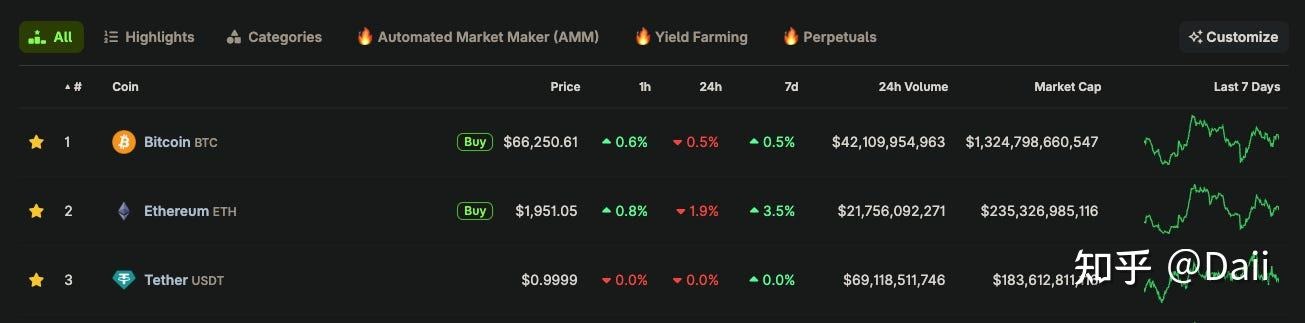
You’ll notice a clear scale difference: gold’s core institutional trading pool sees weekly turnover in the trillions, while Bitcoin’s global 24-hour volume is in the tens of billions. (LBMA)
Of course, there are differences in metrics (OTC vs. aggregated exchange, weekly vs. daily), but the scale gap speaks for itself:
When panic strikes, a true “safe-haven asset” must absorb large inflows without distortion and allow large outflows without a stampede. This requires both capacity and depth.
So, in wartime risk spikes, gold is like a “highway,” while Bitcoin is a “busy road still under construction, prone to congestion and jolts.” (LBMA)
2.2 Threshold Two: Crisis Window Performance
The biggest test for “acting like gold” is this: what do you offer when equities plunge?
MSCI (Morgan Stanley Capital International) in its 2021 report “Bitcoin: Good as Gold?” did a direct test: when equities had significant drawdowns (monthly return < -3%), Bitcoin fell in 8 out of 12 such months—often more than stocks—while gold posted positive returns 8 times. (msci.com)
In short: low correlation doesn’t equal safe haven. What matters is whether you really hedge when it’s needed most. (msci.com)
MSCI’s 2025 research “Balancing Risk and Return: Gold and Digital Assets in a 60/40 Portfolio” frames this in portfolio language:
They note that under market stress, gold typically cushions drawdowns; digital assets (by their index) often fall more than stocks; digital assets are “recovery assets,” contributing excess returns when volatility subsides and sentiment improves. (msci.com)
Their crisis window analysis (2008 financial crisis, 2020 pandemic, 2022 Fed pivot, 2025 tariff shocks) shows: gold is a buffer, digital assets amplify stress. (msci.com)
Overlaying these MSCI findings with today’s wartime window, you’ll better understand the market’s “instinctive response”:
When risk rises, gold is bought as insurance; Bitcoin is cut first, then finds support. (Reuters)
This is also an important “opportunity signal”:
For Bitcoin to act more like gold, it must become “less bad” during stress.
Only when its crisis window behavior changes will the market ease its “risk asset discount.”
2.3 Threshold Three: Institutional Demand Anchors
Why is gold more stable in panics? Because it has a hard-to-replicate demand anchor: the official sector.
The World Gold Council’s “Gold Demand Trends: Full Year 2025” reports net central bank gold purchases of 863.3 tons in 2025, noting that while below the previous three years’ 1,000+ tons, it remains historically high. (World Gold Council)
This means gold’s “reserve asset” status isn’t just grassroots hype—it’s a long-term fixture on national balance sheets. (World Gold Council)
Gold also boasts a mature regulated retail channel: ETFs. The WGC’s US market report is specific:
In 2025, US gold demand rose 140% year-over-year to 679 tons, almost entirely ETF-driven; US gold ETFs attracted 437 tons, pushing total holdings to 2,019 tons and AUM to about $280 billion. (World Gold Council)
Now, Bitcoin’s most significant change is also the emergence of regulated channels (spot ETFs). Bitbo’s ETF Tracker shows that as of February 27, 2026, US spot Bitcoin ETFs held 1,272,069 BTC—about 6.057% of the 21 million cap, valued at about $84.75 billion. (bitbo.io)
The takeaway: Bitcoin’s “institutional bid” is emerging—it’s no longer limited to crypto exchanges. (bitbo.io)
But the gap is clear:
Gold’s institutional anchor includes central banks and a mature ETF ecosystem; Bitcoin relies mainly on ETFs as an institutional gateway, and the official sector anchor is far from forming a comparable, sustainable public holding structure. (World Gold Council)
That’s why, during wartime, gold is “universally accepted insurance,” while Bitcoin is “a high-volatility asset accepted by some institutions.” Because:
If the anchor isn’t heavy enough, the ship is more easily tossed by waves. (Reuters)
2.4 Threshold Four: Banking System and Prudential Regulation
The last threshold is the hardest and most often overlooked by the “digital gold narrative”: can the banking system use Bitcoin as it does gold?
The Basel Committee on Banking Supervision (BCBS), in its “Prudential Treatment of Cryptoasset Exposures” final standard, groups banks’ cryptoasset exposures and sets strict exposure limits for higher-risk Group 2 assets: thresholds are set at 1% and 2% of Tier 1 capital, aiming to prevent banks from introducing systemic risk via high-volatility assets. (bis.org)
Some high-risk cryptoassets, under BCBS, fall into Group 2b with a 1,250% risk weight/equivalent to 100% capital deduction. (Ashurst)
In practical terms:
Gold is a “collateralizable, financeable, marketable, and clearable” universal asset in the banking system;
Bitcoin is still in the “high capital cost, limited exposure, strict prudential constraint” zone.
This directly affects one thing: when panic hits, which assets can banks quickly mobilize as collateral for liquidity?
Gold can; Bitcoin still struggles to achieve this at scale. (bis.org)
Thus, the wartime phenomenon is no surprise: gold is “systemic insurance,” Bitcoin is “a high-volatility asset on the system’s edge.” (Reuters)
2.5 Summary
Now, you should understand why “Bitcoin isn’t gold yet”—it hasn’t crossed these four thresholds:
- Capacity and depth: gold’s institutional trading pool is deeper. (LBMA)
- Crisis window performance: gold is a buffer; digital assets are recovery-phase assets. (msci.com)
- Institutional demand anchor: gold has central banks and mature ETFs; Bitcoin’s main institutional entry is via ETFs, with the anchor still strengthening. (World Gold Council)
- Banking system access: gold is universal collateral; Bitcoin is still under high capital costs and exposure limits. (bis.org)
So, where is your opportunity? It lies along the “convergence path” of these four discounts:
As ETF channels expand, market depth thickens, volatility declines, regulatory and banking usability improve, and—most crucially—behavior during stress periods becomes more like a “shock absorber,” Bitcoin will move from “risk asset discount pricing” toward “reserve asset pricing.” (msci.com)
3. Why Is “Bitcoin Isn’t Gold Yet” an Opportunity?
Wartime acts as a spotlight: it doesn’t care what you call yourself, only how you’re treated in a panic.
After the sudden escalation in the Middle East, as gold surged (spot gold briefly hit about $5,368/oz), Bitcoin fell before stabilizing around $66,000.
Many feel disheartened: “See, Bitcoin isn’t gold at all.”
But I want to tell you that disappointment alone is not enough—you should see the opportunity:
Bitcoin isn’t gold yet, meaning it’s still subject to a “maturity tax.”
The flip side of that tax is a “maturity discount.” The process of that discount converging is itself the opportunity.
This sounds philosophical, but it’s actually the most basic pricing logic in finance:
The greater the uncertainty, the bigger the discount; as uncertainty falls, the discount converges.
Bitcoin’s “uncertainty” isn’t metaphysics—it’s mainly three quantifiable areas:
- Volatility;
- Infrastructure;
- Institutional acceptance.
3.1 Opportunity One: The Volatility Discount Is Being Eroded Over Time
If gold is insurance, its key trait is “shock absorption.”
Bitcoin’s biggest current weakness is that it often acts as an “amplifier.”
But note: a weakness is not a permanent flaw. It may just be a temporary source of discount.
What you need isn’t “faith it will stabilize,” but evidence that “it is stabilizing.” Two types of evidence matter:
First: long-term trend evidence.
Fidelity Digital Assets’ research shows Bitcoin’s volatility has trended down since inception, noting milestones like “annualized volatility hitting new lows” and “weekly volatility staying below 75% for a year,” and arguing that volatility will keep falling as the market matures. (fidelitydigitalassets.com)
State Street Global Advisors (SSGA) in a February 2026 study made similar findings: after early extreme swings, Bitcoin’s volatility has fallen sharply and continues to trend lower. (ssga.com)
Second: current state evidence.
Glassnode’s 1-year realized volatility indicator stood at about 44.16% as of February 22, 2026. (fidelitydigitalassets.com)
You should recognize that Bitcoin is still treated as risky precisely because its volatility isn’t yet “insurance-grade.” Once volatility steps down further, its “allocatable share” in institutional risk models will grow, and the maturity discount will converge.
That’s the first opportunity: as volatility falls, part of the discount is recaptured.
3.2 Opportunity Two: The Infrastructure Discount Is Narrowing
Gold acts like gold not just because it’s big, but because institutions can use it repeatedly: market-making, clearing, collateral, financing—the roads are built.
For Bitcoin to become “gold,” it needs to make risk manageable. The most direct tools are derivatives and hedging infrastructure.
CME’s Bitcoin product page highlights: its futures are based on a standardized, regulated reference rate (CME CF Bitcoin Reference Rate), offering futures and options to help participants manage price risk. (cmegroup.com)
Structurally, this means Bitcoin is following a familiar path:
More participants → greater hedging demand → richer tools → more manageable risk → lower volatility → more capital can allocate.
Early Bitcoin markets were like highways with no guardrails: fast, but prone to pileups at a sudden stop.
The emergence of hedging tools and regulated reference rates is like adding guardrails, emergency lanes, and patrols. It won’t prevent all accidents, but it lowers the odds of systemic failure—one reason the “maturity discount” will converge.
That’s the second opportunity: the more robust the infrastructure, the more manageable the risk, the easier the discount converges.
3.3 Opportunity Three: The Existence of Regulated ETF Channels
When asking “why isn’t Bitcoin gold yet,” the most overlooked factor isn’t volatility, but “channels.”
Gold can absorb safe-haven flows in a crisis because the channels have long existed and are wide enough.
Bitcoin’s most important recent change is that it now has a “traditional capital channel”—spot ETFs.
CoinDesk reported on February 27, 2026: US spot Bitcoin ETFs saw about $1.1 billion in net inflows over three days, with BlackRock’s IBIT contributing a significant share. (coindesk.com)
But you must admit the flip side: these flows are unstable, swinging with risk appetite and macro conditions—hence, in wartime, Bitcoin may still be cut first, while gold remains the top safe haven. (Reuters)
So what do ETFs really change?
Not “short-term price action,” but something deeper: the pricing framework. With the channel open, two groups are forced into the same conversation:
- “Long-term allocators”: concerned with volatility, correlation, crisis performance;
- “Bitcoin native believers/holders”: focused on scarcity and long-term monetization.
ETFs connect these worlds. Bitcoin’s future will increasingly resemble “the maturation of an asset,” not just “the evolution of an in-group narrative.”
That’s the third opportunity: channels mean “maturity discount convergence” now has a structural pathway.
3.4 Summary
The wartime window shows you: Bitcoin isn’t gold yet.
But you should draw a more useful, clearer, and more disciplined conclusion:
Bitcoin’s opportunity doesn’t come from “already being gold,” but from “not being gold yet.”
Because “not yet” means the market is still discounting: volatility, infrastructure, and institutional discounts.
As these discounts converge, even without any “endgame narrative,” Bitcoin’s pricing structure will shift.
As Bitcoin’s volatility keeps trending down, hedging tools improve, and ETF channels expand, it moves toward a more mature asset profile.
4. How to Capture the “Maturity Discount” Opportunity?
War makes all “narratives” cheap, because it puts risk right in front of you, forcing a choice: either you set your rules in advance, or you improvise amid volatility.
After the Middle East escalation, the market’s standard reaction is clear: don’t treat Bitcoin as insurance. It hasn’t yet become an “asset for stress periods” like gold.
But therein lies the opportunity: you can treat it as “optionality,” participating in its maturation in a controlled way.
Here, I offer no slogans—only executable rules.
4.1 Set Position Size by “Budget,” Not “Belief”
Bitcoin’s biggest real-world barrier is volatility. Glassnode’s 1-year realized volatility (rolling 365 days, annualized) was about 43.91% as of March 1, 2026. (studio.glassnode.com)
This isn’t an “opinion”—it’s the market’s reality over the past year: holding it is like buying a “high-volatility ticket.”
How should you use that ticket? The most practical approach is a “risk budget” mental model:
- Think of position size as “weight”; volatility as “road conditions.”
- The rougher the road (higher volatility), the more dangerous the same weight (position size).
- On rough roads, lighten the load to avoid losing control.
Many lose here: not by misreading direction, but by having positions too big to withstand volatility.
J.P. Morgan Private Bank’s January 30, 2026 report gives a “risk management” reminder: over the past decade, Bitcoin’s annualized volatility was nearly 70%—about four times global equities (16%); in that period, Bitcoin had 14 “bear market drawdowns” (≥20%), global equities had two; Bitcoin’s five worst drops averaged 57%, global equities’ five worst averaged 21%. (privatebank.jpmorgan.com)
This isn’t emotion—it’s the “road condition” you buy into.
The crucial difference is in stress periods: in the same J.P. Morgan report, during “risk-off” environments, Bitcoin fell 93% of the time, gold 55%; in those periods, equities averaged -8%, Bitcoin -13%, gold +0.4%. (privatebank.jpmorgan.com)
This explains why, in war, gold acts as insurance, Bitcoin as a risk asset—it’s how they’re treated historically.
So position size shouldn’t be “how much I believe,” but “how much risk I can bear.”
J.P. Morgan offers a quantifiable rule: adding 5% Bitcoin or gold to a traditional 60/40 portfolio, gold contributes about 2% to portfolio risk, Bitcoin about 13%; with 10% Bitcoin, risk contribution can reach 32%. (privatebank.jpmorgan.com)
In plain English: Bitcoin’s risk contribution is often 2–3 times its weight, or more. (privatebank.jpmorgan.com)
So your first rule should be:
Set your maximum tolerable risk for the portfolio (“risk budget”), then back-calculate your Bitcoin position.
It’s not “allocate as much as you want to earn,” but “allocate as much as you can withstand.”
4.2 Build “Rebalancing” into Your Rules
With Bitcoin, your biggest enemy isn’t losses—it’s acting wrongly during losses: panic selling or doubling down recklessly.
MSCI’s research offers clear “portfolio engineering” evidence:
Over 20 years, shifting 5% of a 60/40 portfolio from stocks to gold reduced volatility from 10.7% to 9.9%, max drawdown from 33% to 30%, and improved risk-return. (msci.com)
For digital assets (with monthly rebalancing), shifting 5% from stocks to digital assets raised annualized return from 9.2% to 11.9%, with risk only rising from 12.1% to 12.2%; at 10% weight, return hit 14.4%, risk 13.2%. (msci.com)
MSCI notes: monthly rebalancing and short-term low correlation help “tame” digital asset volatility. (msci.com)
You don’t need to copy these allocations (that would be “advice” not “education”), but you should write the method into your personal rules:
When calm, predefine your rebalancing frequency (monthly/quarterly), and commit to following it.
The bigger the swings, the more you “sell high, buy low”—not react to volatility.
This rule is especially valuable during wartime: panic clouds judgment; preset rules are more reliable.
4.3 Clarify Your “Channel Risk”
If you want to capture the “maturity discount convergence,” you must admit: the channel itself is part of the risk.
Gold is more like insurance in wartime partly because its “channel” is mature: ETF inflows, OTC depth, and clearing networks are robust. (World Gold Council)
Bitcoin’s regulated channel is thickening; repeat these numbers: as of February 27, 2026, US spot Bitcoin ETFs held 1,272,069 BTC, about 6.057% of the 21 million cap, worth about $84.75 billion. (bitbo.io)
This shows: more traditional capital is holding Bitcoin “institutionally.”
But remember: in stress, flows can still reverse—why it’s not yet gold. (privatebank.jpmorgan.com)
So your third rule should be:
Be clear about the “channel” you use for Bitcoin, and predefine: if the market goes risk-off, do you need liquidity, and can you handle repeated flows within that channel?
This isn’t a technical detail—it’s survival.
4.4 Treat “Institutional Boundaries” as a Long-Term Variable
Gold’s “insurance” trait is underpinned by its longstanding use as collateral in the financial system.
For Bitcoin to reach this level, it must cross hard prudential regulatory boundaries. The BCBS final standard states: banks’ total exposure to Group 2 cryptoassets must be limited to 1% of Tier 1 capital; above that, stricter capital treatment applies; a 2% secondary threshold means all Group 2 exposure above that faces tougher rules. (bis.org)
This means: the system’s main engine (bank balance sheets) remains highly cautious toward unanchored cryptoassets.
So your fourth rule is:
Treat “institutional acceptance” as a long-term variable—not a short-term bet.
It will reshape Bitcoin’s long-term pricing, not its day-to-day moves.
4.5 Summary
You can’t predict war, but you can always do one thing: set your rules before the storm.
If you treat Bitcoin as gold, you’ll repeatedly suffer the same pain: in risk windows, it acts like a risk asset, making you doubt yourself, the narrative, and the world. (privatebank.jpmorgan.com)
If you treat it as “optionality,” using risk budgets, rebalancing, channel selection, and institutional boundaries, you’re not riding emotional swings—you’re participating in the long-term convergence of the maturity discount.
Conclusion
War won’t end as you or I wish, and the market won’t follow anyone’s narrative. When the alarm sounds, capital seeks “insurance” first, ideals later.
So, what I want you to take away is not the comfort of “Bitcoin will eventually become gold,” but this:
“Bitcoin isn’t gold yet” isn’t bad news—it’s a discount. The later the consensus, the greater the opportunity.
But a discount isn’t a gift—it’s a test. Those who turn discounts into returns rely not on passion, but on rules.
Now, you can do three things—not tomorrow, not next time, but today:
First, clarify your roles.
Don’t let optionality masquerade as insurance: gold absorbs shocks, Bitcoin offers upside. Put yourself in the right place, or the market will correct you—often harshly—when the next risk window comes.
Second, write your rules.
What’s your maximum tolerable drawdown? How often will you rebalance—monthly or quarterly? Will you use ETFs or self-custody? Write these three rules on a sheet of paper and keep it visible. The wilder the market, the less you should improvise.
Third, watch the indicators.
Next time risk rises, does Bitcoin still get cut first? Has its volatility stepped down? Are ETF flows more stable under stress? Focus on “whether the discount is converging,” not “what slogan others are chanting today.”
One last line to guide your actions:
The future belongs not to those who “call it right,” but to those who “survive longest.”
Size your positions wisely, set your rules in stone, and stay at the table—only when the discount is gone will you truly deserve the reward.
Statement:
-
This article is reprinted from [Zhihu]. Copyright belongs to the original author [Daii]. If you have any objections to this reprint, please contact the Gate Learn team. The team will handle it promptly according to relevant procedures.
-
Disclaimer: The views and opinions expressed in this article are those of the author and do not constitute investment advice.
-
Other language versions of this article are translated by the Gate Learn team. Without mention of Gate, it is prohibited to copy, distribute, or plagiarize the translated article.